Artwork
Portable Triptych Icon
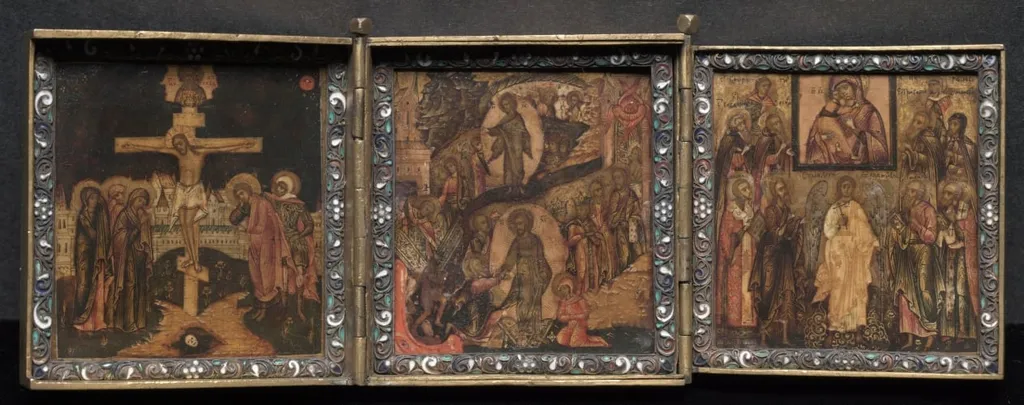
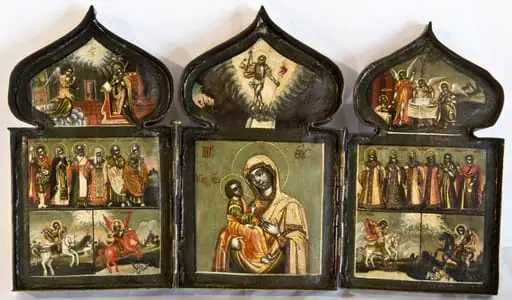
Portable Triptych Icon is an unspecified painting by the Baroque artist Unknown. It dates from 1604 and is held in the collection of the Cleveland Museum of Art. The object is a small, fold‑away triptych icon designed for personal devotion.
- Accession no.
- 1961.35
- Credit line
- Gift of Mrs. Harry F. Stratton
About this work
These portable icons were common in Russia in the 1600s, especially for people who wanted to pray on the go.
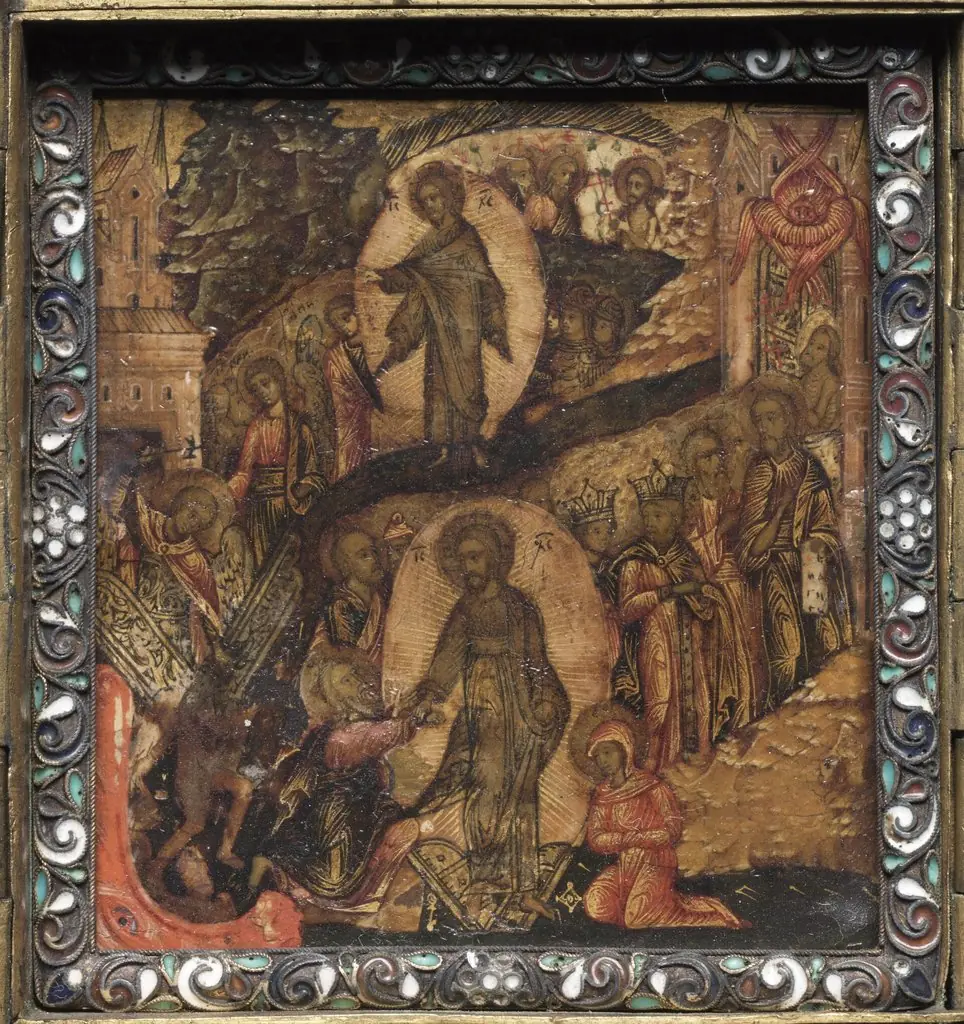
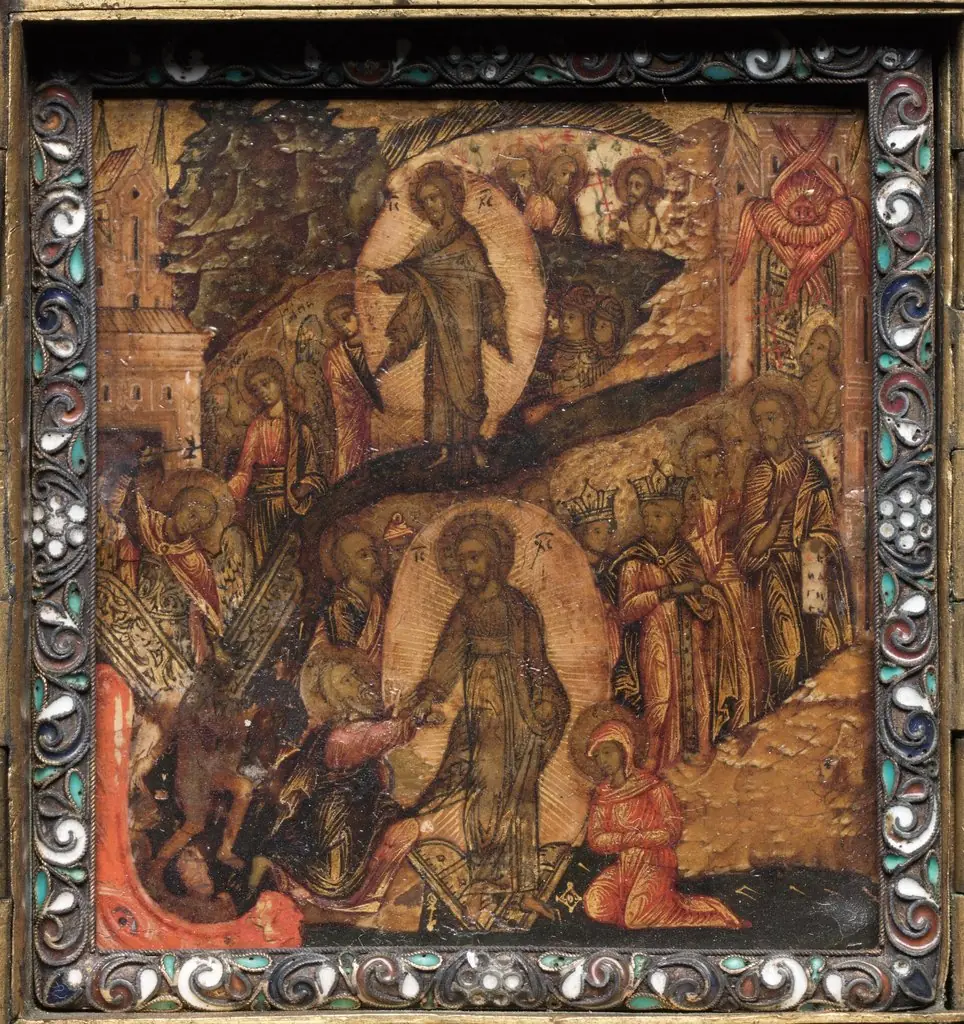
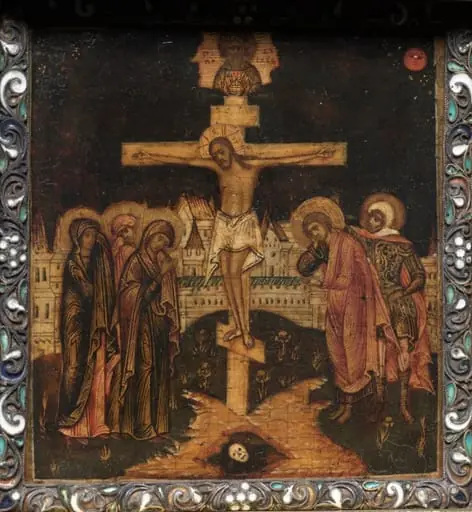
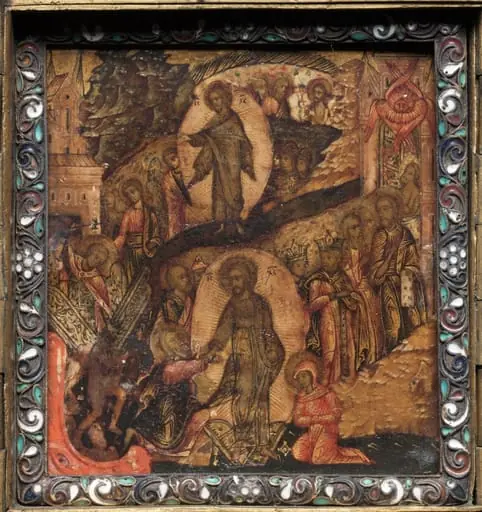
This small folding panel shows three religious scenes side by side. On the left, Jesus on the cross. In the middle, his rising from the tomb. On the right, people kneeling before a holy image of Mary.
It was made to be carried, maybe in a pocket or a bag, for private prayer. When closed, it looked like a tiny book. These portable icons were common in Russia in the 1600s, especially for people who wanted to pray on the go.
To see more like it, look up 17th century.
Overview
The object is a small, fold‑away triptych icon designed for personal devotion. When opened, three panels display distinct biblical scenes; when closed, the panels form a compact, book‑like shape that could be carried in a pocket or satchel. Such portable icons were a regular feature of Russian piety from the early modern period, allowing the faithful to pray wherever they traveled.
Subject & Meaning
The left panel depicts the Crucifixion, showing Christ nailed to the cross. The central image presents the Resurrection, often called the Anastasis, illustrating Christ’s emergence from the tomb. The right panel portrays worshippers kneeling before a miraculous image of the Vladimir Mother of God, emphasizing the intercessory role of the Theotokos in Russian devotional practice.
Technique & Style
Executed in tempera on wooden panels, the icon follows the conventional Byzantine‑Russian visual vocabulary: flat, gold‑leaf backgrounds, stylized figures, and a limited palette of rich reds, blues, and greens. The folding construction required precise joinery so that the panels could be sealed tightly, preserving the painted surfaces while maintaining a lightweight, transportable form.
History & Provenance
The triptych was likely commissioned by a lay patron for private meditation rather than for liturgical use. Portable icons of this type proliferated in the 17th‑century Russian lands, reflecting a growing demand for personal religious objects among the laity. Its provenance before entering the museum collection is undocumented, but its form and iconography align with known examples from that century.
Artist & collection