Artwork
Portrait of a Lady
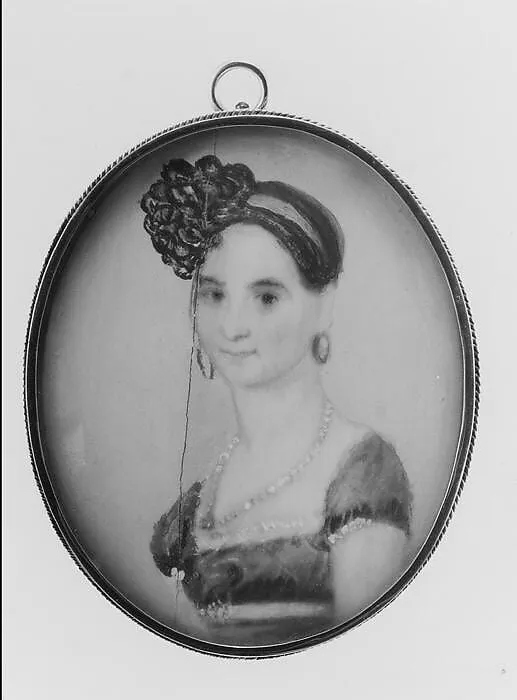
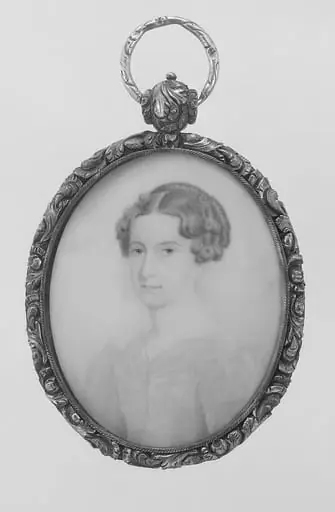
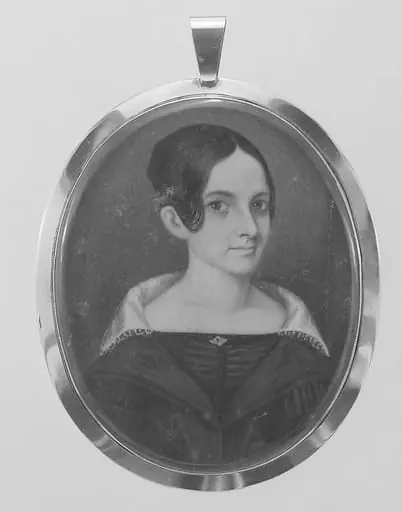
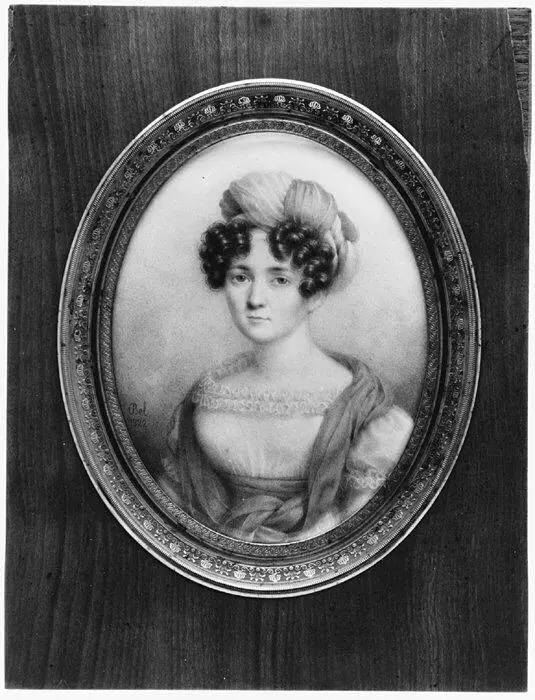
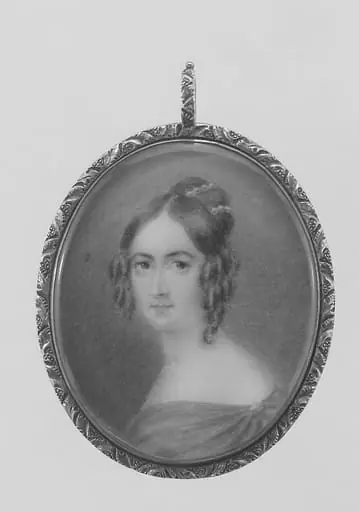
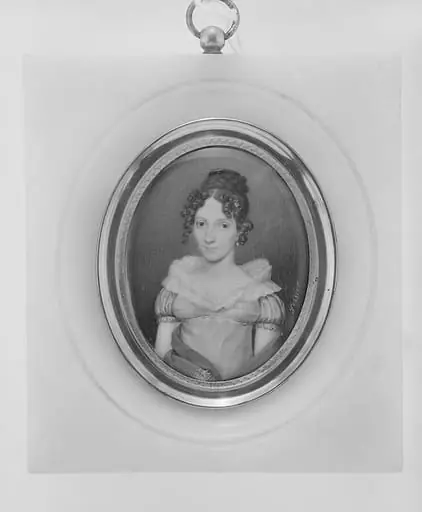
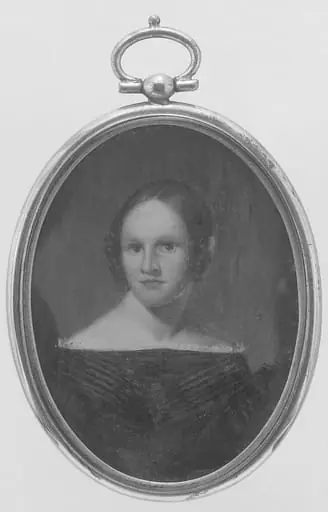
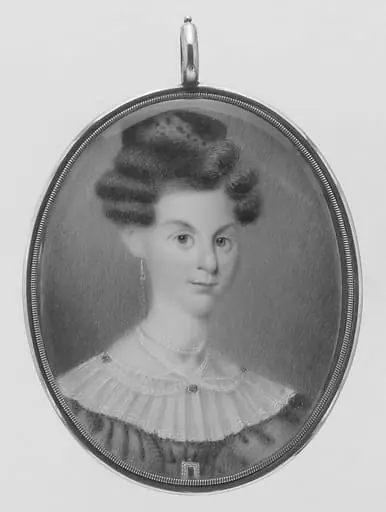
Portrait of a Lady is a watercolor painting. It dates from 1812 and is held in the collection of the Metropolitan Museum of Art.
About this work
Technique & Style
The watercolor medium allows for delicate, layered handling, with pigment applied in fine gradations to model facial features and fabric.
Portrait of a Lady is executed in watercolor on ivory, a miniature format that places it within the early nineteenth-century tradition of small-scale portraiture. The support is ivory, a smooth and luminous ground favored for its ability to transmit light through translucent washes, lending the sitter's complexion a soft, lifelike glow. The watercolor medium allows for delicate, layered handling, with pigment applied in fine gradations to model facial features and fabric.
The work measures approximately 7.6 by 6 centimeters, consistent with the intimate scale typical of ivory miniatures intended for private display. Housed in The American Wing of the Metropolitan Museum of Art, the piece is classified as a portrait depicting a woman and is dated 1812.
History & Provenance
The work titled Portrait of a Lady is a watercolor on ivory dating to 1812, attributed to an anonymous hand and listed in The American Wing's collection at the Metropolitan Museum of Art under accession number 2006.235.59. It portrays a woman in the portrait genre and measures 7.6 by 6 centimeters. The piece entered the Met's collection through an unspecified acquisition, and no record of a specific commission, prior ownership chain, or exhibition history is available in the sources.
Overview
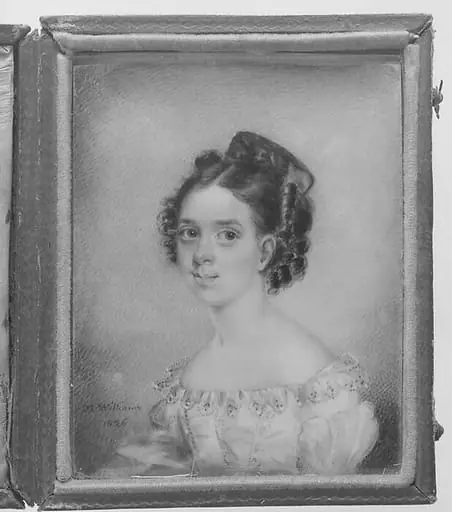
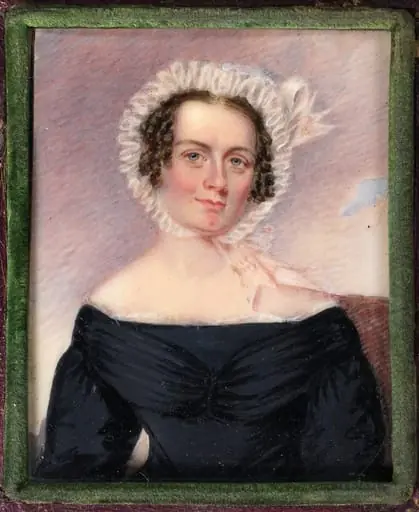
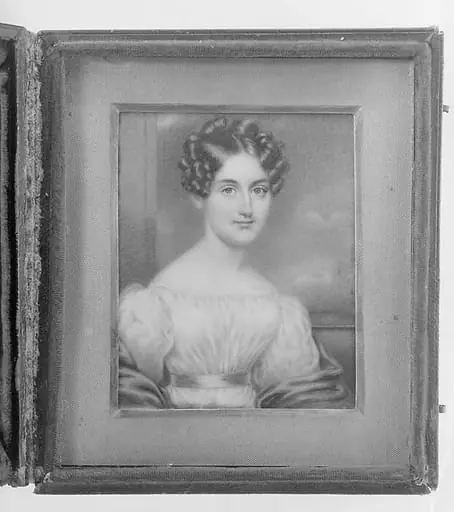
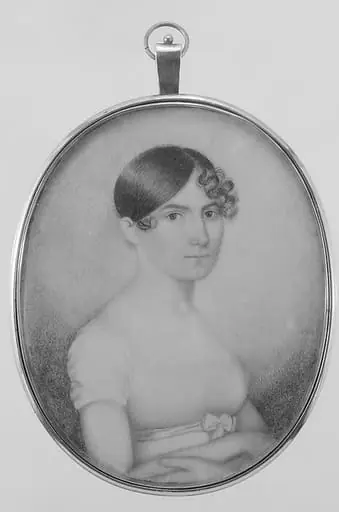
This small artwork, titled Portrait of a Lady, is rendered in watercolor on ivory. It depicts an unidentified woman, dressed in a high-necked white garment, gazing directly at the viewer. Her dark hair is neatly styled, and she holds a small book in her lap.
The background is a simple, soft gray, devoid of any specific setting or furnishings, focusing attention entirely on the sitter.
Subject & Meaning
The subject of this miniature is presented formally yet intimately. Her direct gaze engages the viewer, while her attire, a high-necked white dress and neatly styled dark hair, reflects early 19th-century fashion. The small book resting in her lap may allude to her literacy or religious devotion, common virtues celebrated in portraiture of the era. The neutral gray background further emphasizes the sitter's presence, removing any distracting elements.
Context
Miniature portraits like this one gained significant popularity in the early 19th century, particularly in America. Their small scale and durable medium made them suitable for personal keepsakes, often worn as jewelry or carried as mementos. These intimate objects served as cherished reminders of loved ones, allowing individuals to carry their images close at hand during a time when photography had not yet emerged to fulfill this role.
Artist & collection