Artwork
Portrait of a man
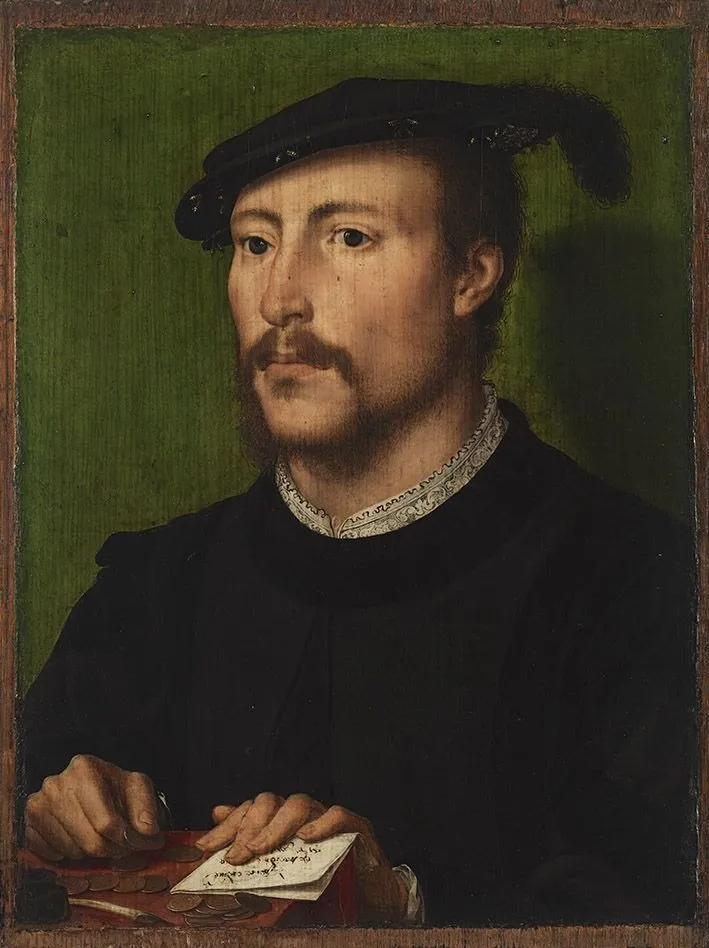
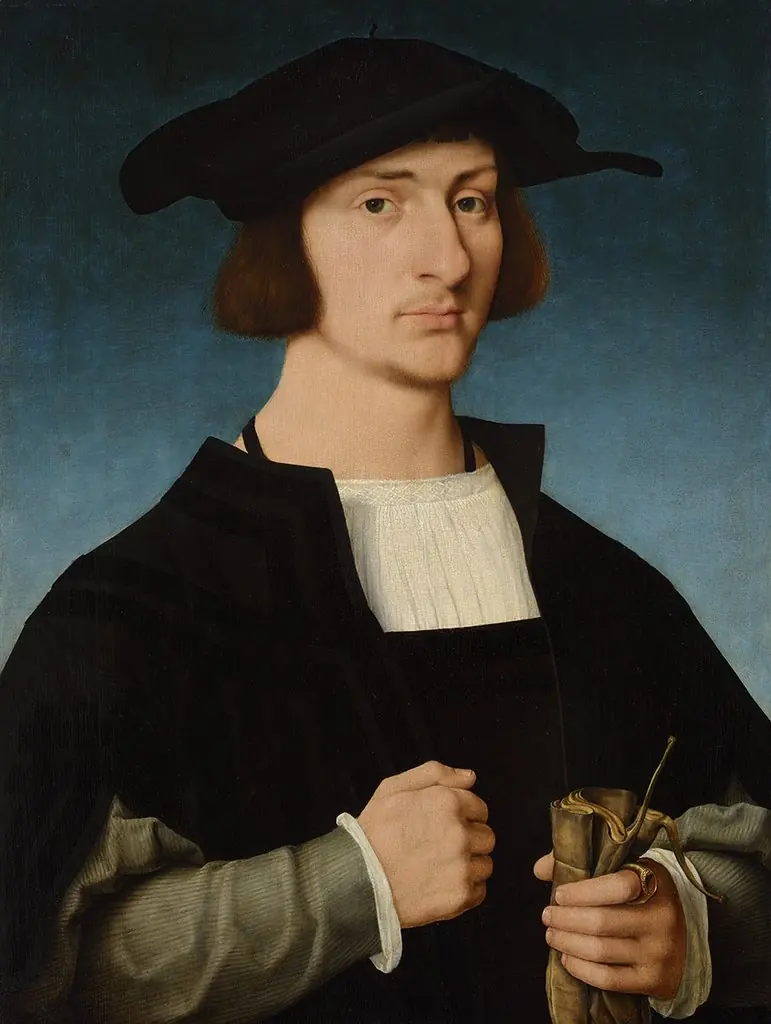
Portrait of a man is an oil painting by the Mannerist artist Unknown. It dates from 1531 and is held in the collection of the Bavarian State Painting Collections. The oil painting shows a seated man at a table, dressed in a black shirt and hat.
About this work
Subject & Meaning
The subject’s identity remains unspecified in surviving records, and the composition emphasizes physical likeness over narrative or allegorical meaning.
The painting depicts a solitary male sitter rendered in oil on panel, likely commissioned during the sitter's lifetime given its early date of 1531. The work belongs to the portrait genre and shows the man in a conventional three-quarter view typical of Northern Renaissance portraiture, though no overt symbolic attributes accompany the figure. The subject’s identity remains unspecified in surviving records, and the composition emphasizes physical likeness over narrative or allegorical meaning.
Technique & Style
Portrait of a man is executed in oil paint on a wooden panel, a support combination typical of small-scale portraiture from the early sixteenth century. The work is modest in scale, measuring 35.6 cm in height by 26.9 cm in width. Classified as a painting, it belongs to the portrait genre and depicts a single male sitter.
The use of oil on panel would have allowed for the fine detail and subtle tonal modeling associated with the medium, while the compact dimensions suggest an intimate, likely private format rather than a large commemorative commission.
The painting is held in the Bavarian State Painting Collections and displayed at the Alte Pinakothek in Munich.
History & Provenance
The Portrait of a Man is an oil painting on panel created in 1531 by an artist identified as French. The work depicts a male subject and is currently held within the Bavarian State Painting Collections at the Alte Pinakothek. While the specific commission details and the full chain of ownership prior to its museum acquisition are not detailed in the available records, the piece is firmly dated to the year 1531. The painting measures 35.6 cm in height and 26.9 cm in width.
The painting is held in the Bavarian State Painting Collections and is located at the Alte Pinakothek in Munich. Its inventory or accession number is not provided in the sources. The work has been part of the museum's collection, but no specific exhibition history is documented in the given sources.
Context
The painting is identified as a portrait by a German artist associated with the 'Französisch' circle, created in 1531 using oil on panel. It is housed in the Bavarian State Painting Collections at the Alte Pinakothek in Munich, forming part of their significant holdings of Northern Renaissance portraiture. Scholarship situates this work within the broader context of early Northern Renaissance portrait conventions, where the sitter's identity and status were conveyed through meticulous detail and compositional elements common in 16th-century German art.
The painting's dimensions of 35.6 cm by 26.9 cm align with typical portrait formats of the period, reflecting contemporary artistic practices concerning scale and presentation.
Overview
The oil painting shows a seated man at a table, dressed in a black shirt and hat. He holds a paper in his right hand and a coin in his left, while several other coins lie on the red‑cloth‑covered tabletop. A muted green backdrop isolates the figure, directing the viewer’s focus toward his composed expression.
Artist & collection









- Portrait of a Man
 Portrait of a Gentleman
 Emperor Charles V
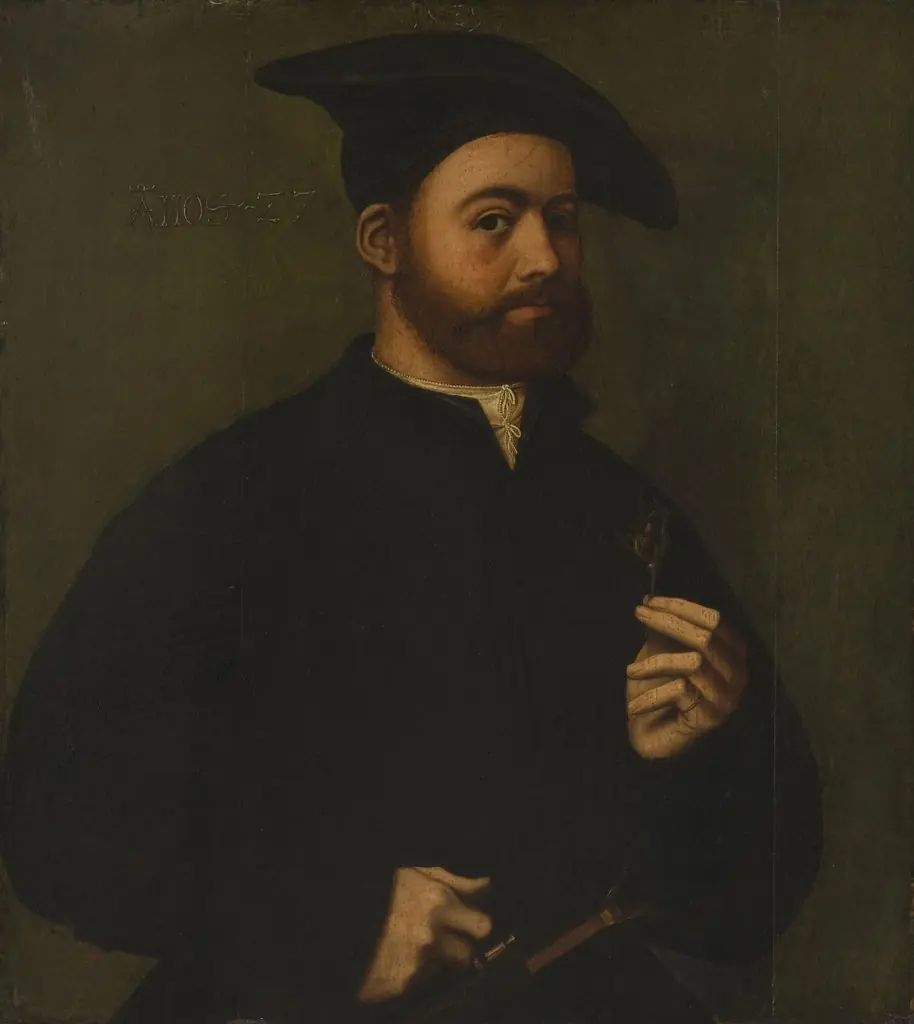 Portrait of a Man Holding a Rose
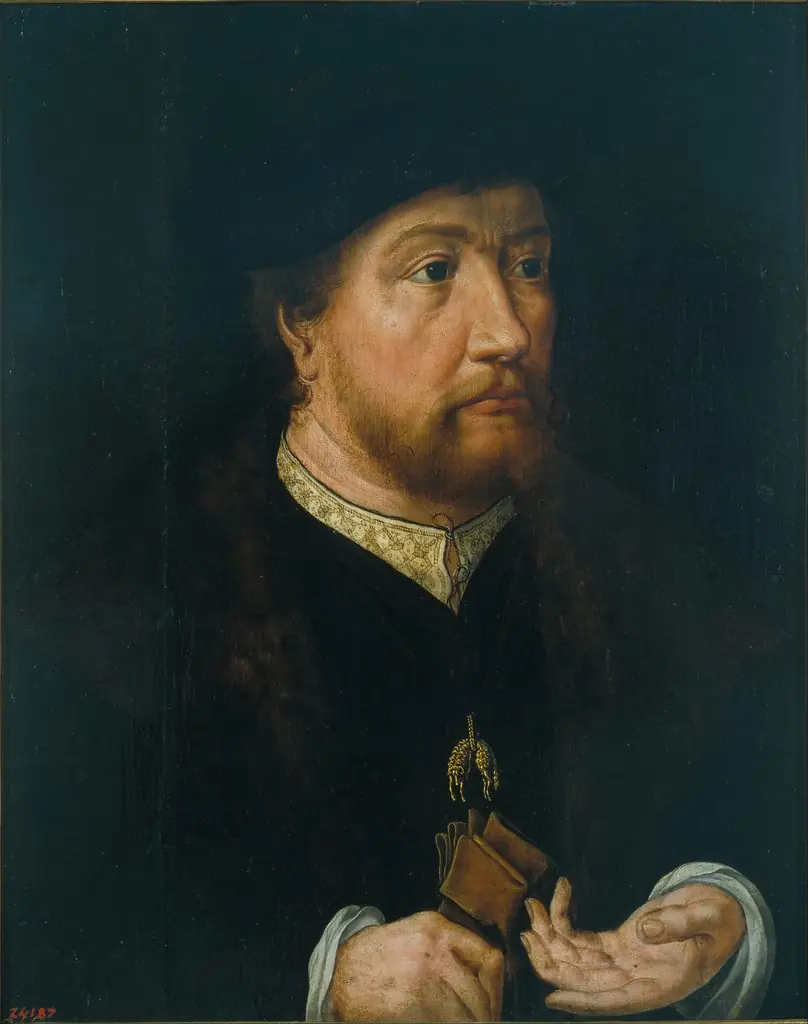 Portrait of Henry III, Count of Nassau
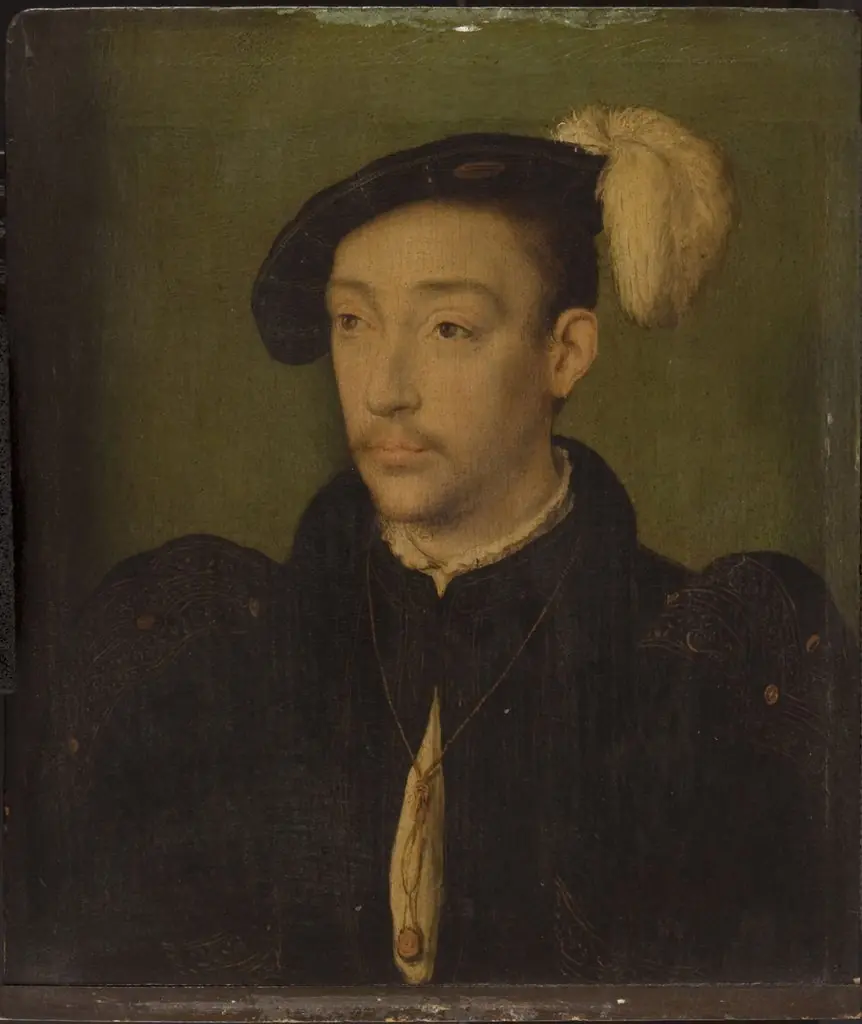 Portrait of the Dauphin Francis, Son of Francis I
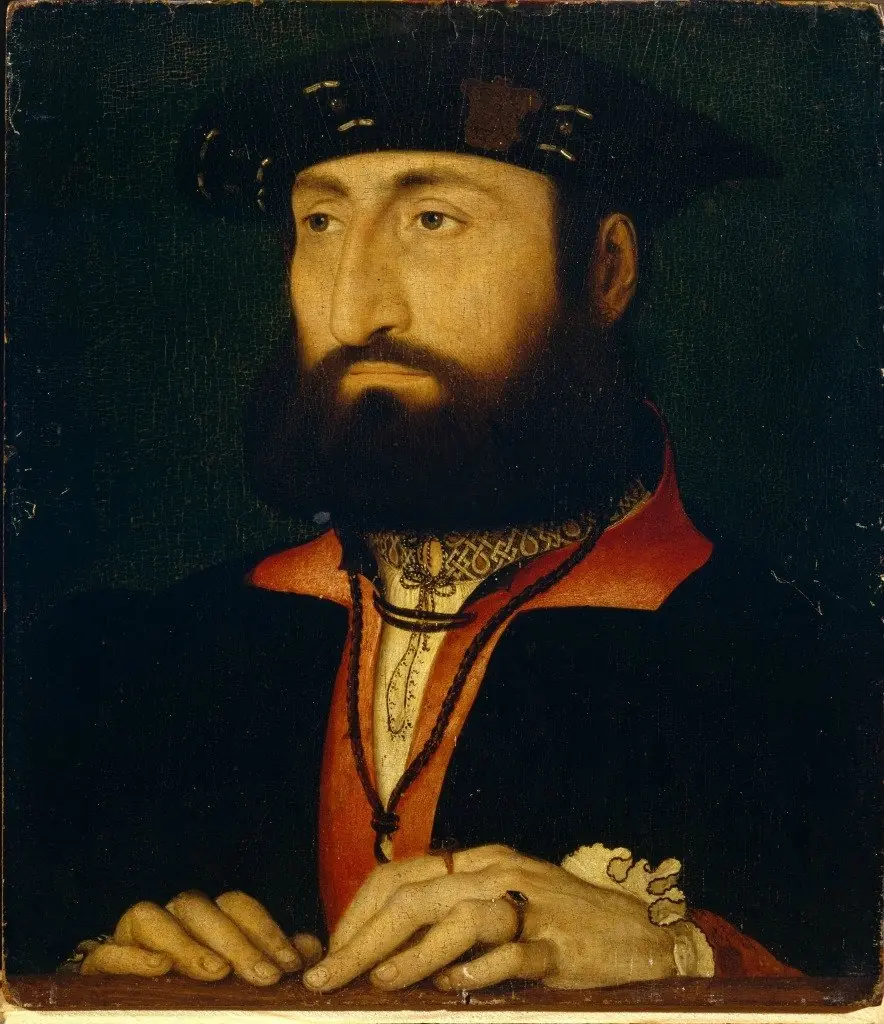 Portrait of Louis de Cleves
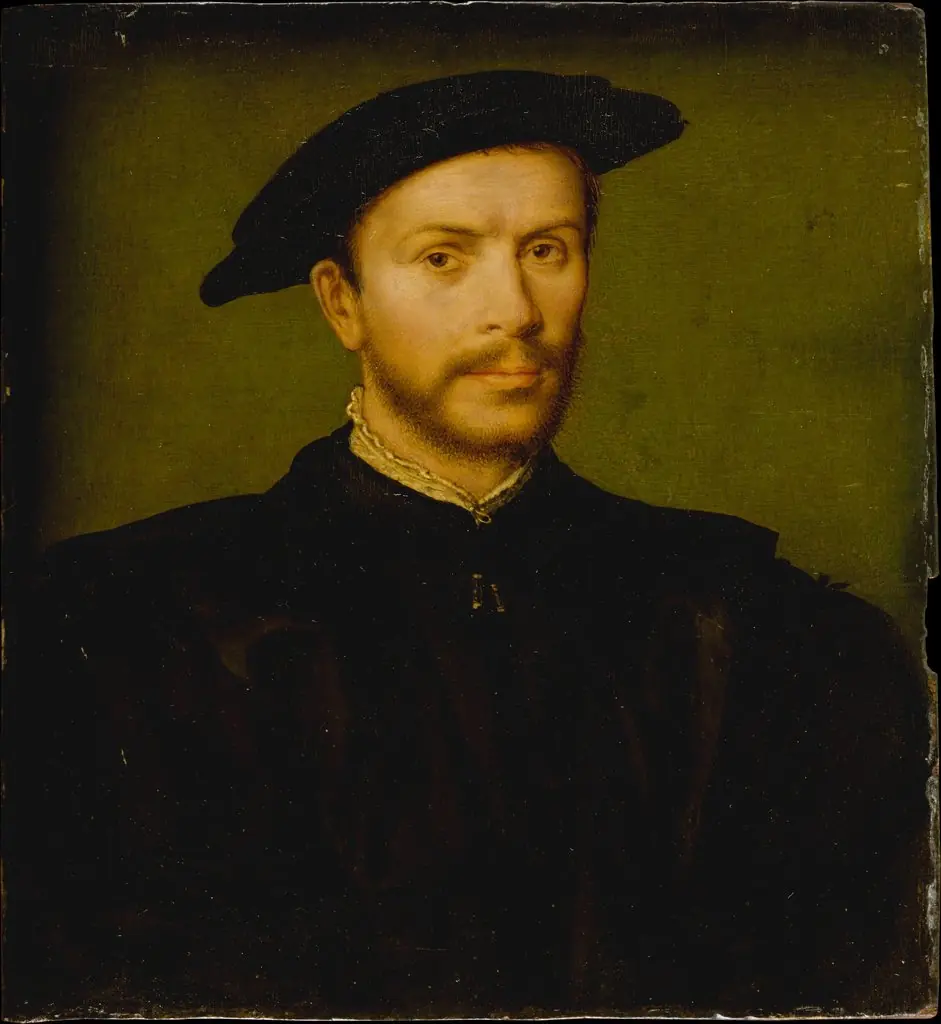 Portrait of a Bearded Man in Black
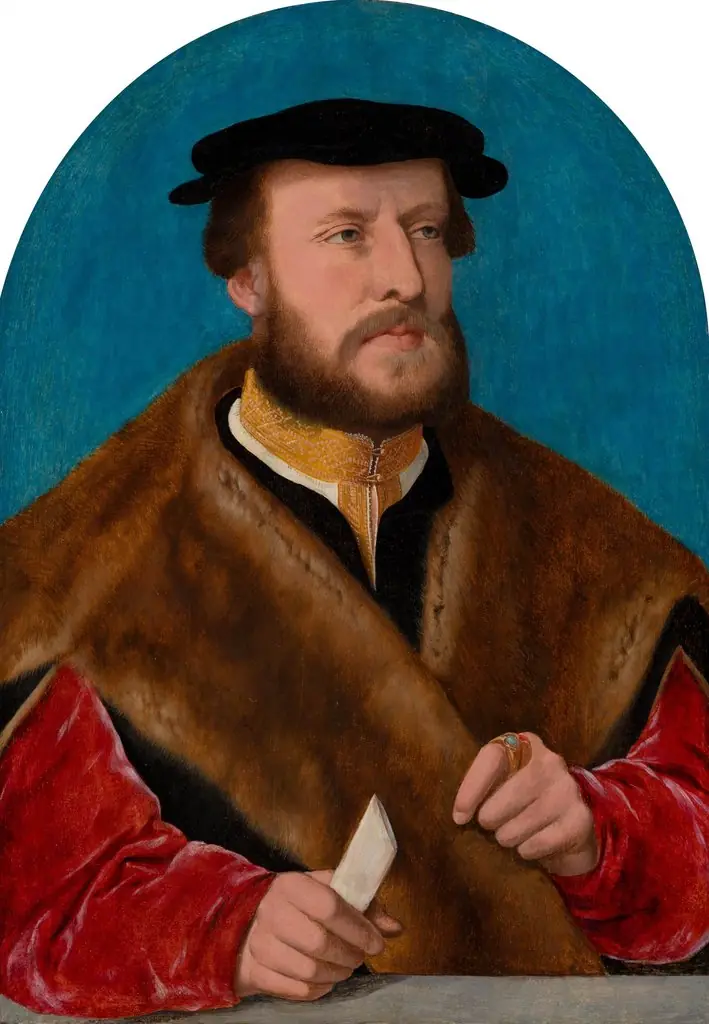 Portrait of Jakob Omphalius
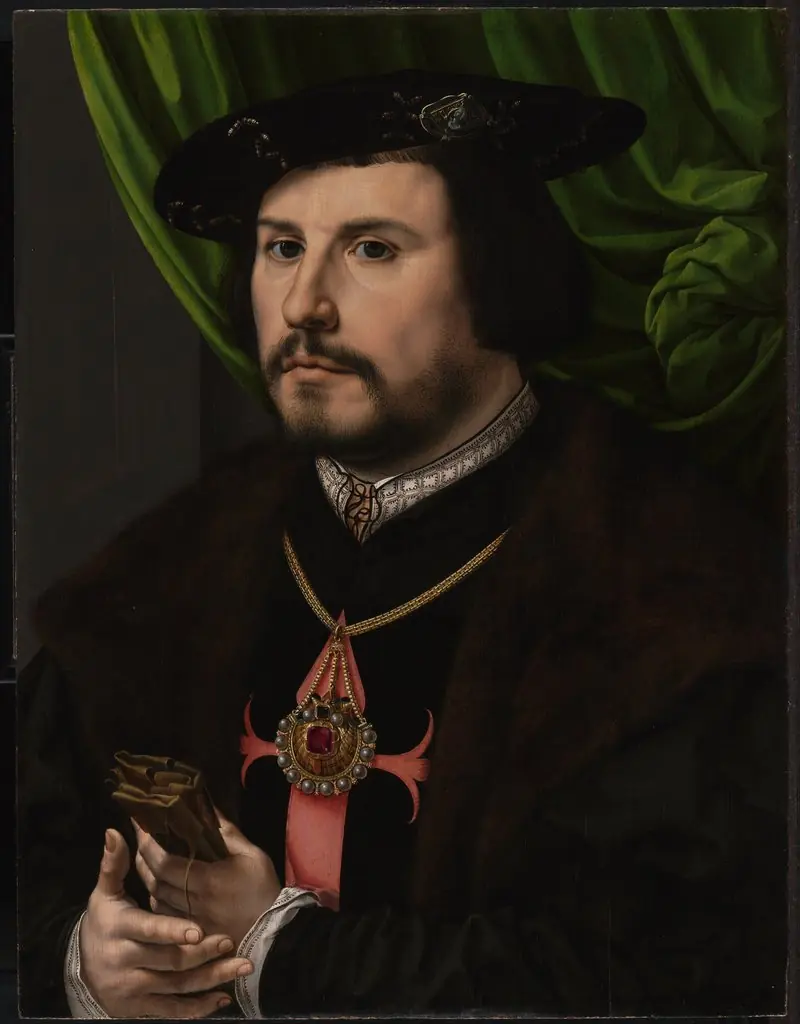 Portrait of Francisco de los Cobos y Molina
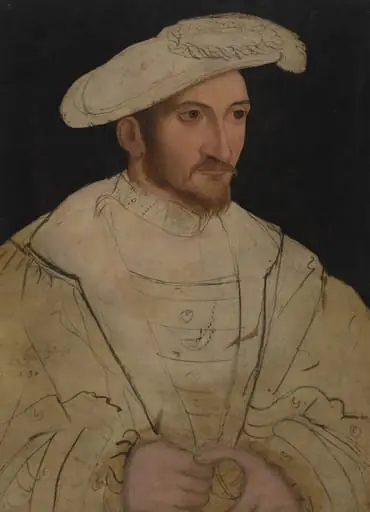 Pfalzgraf Friedrich III
 Portrait of a Young Man (Lyons)