Artwork
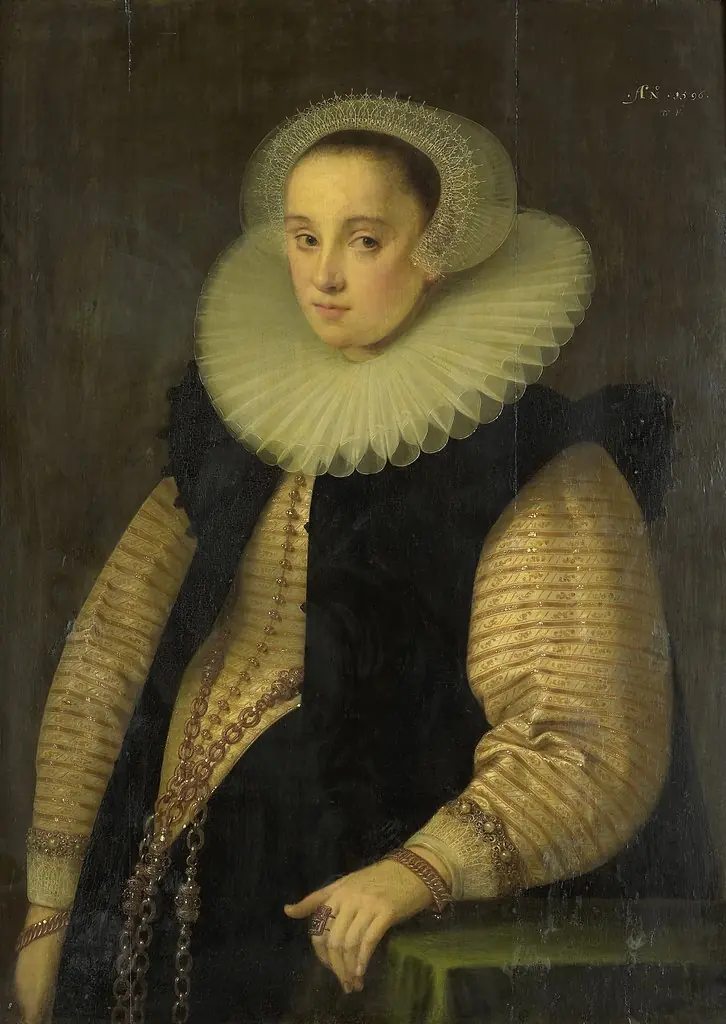
Portrait of a woman, probably Maria Schuurman (1575-1621)
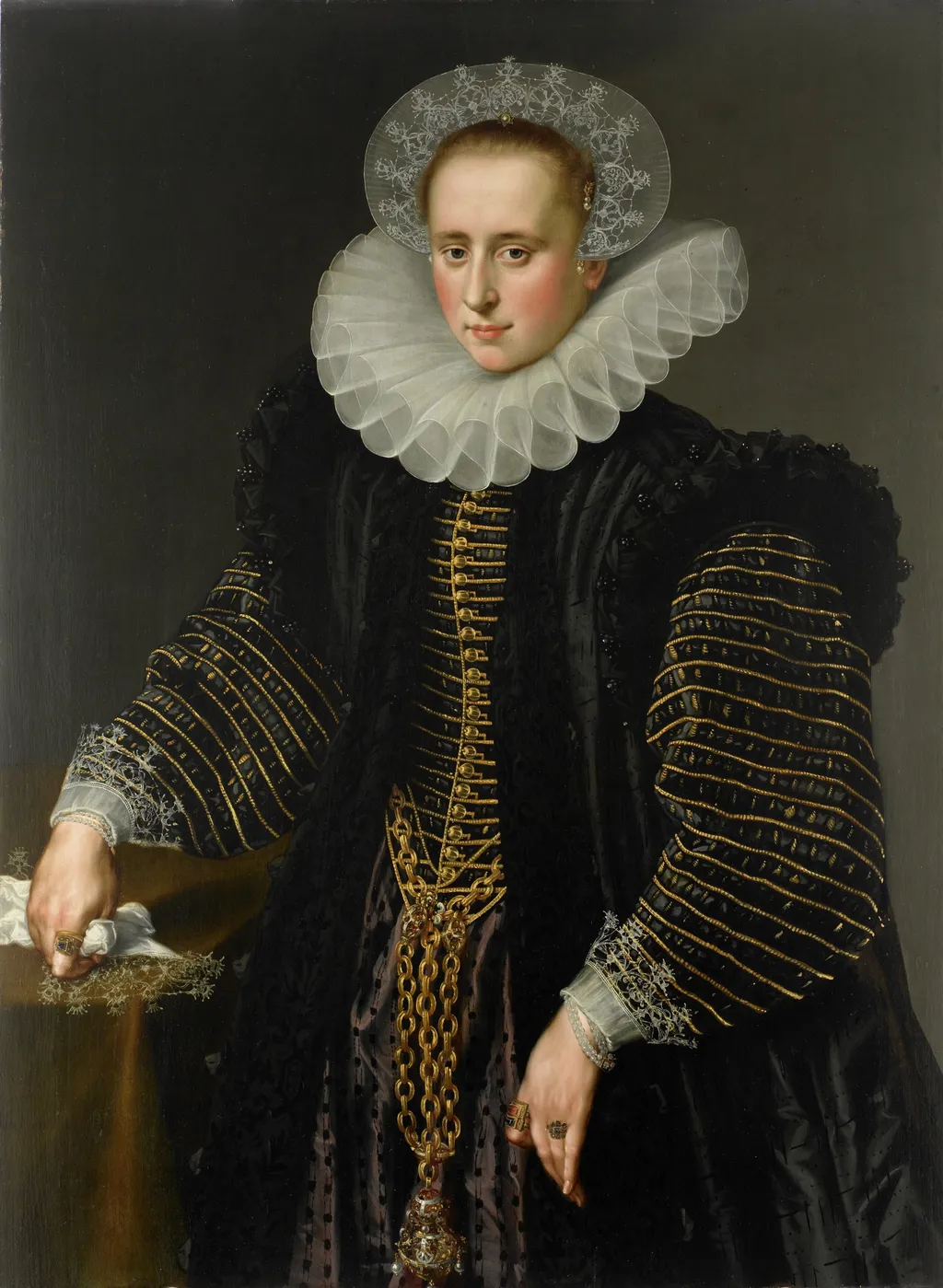
Portrait of a woman, probably Maria Schuurman (1575-1621) is an oil painting. It dates from 1600 and is held in the collection of the Rijksmuseum. The oil painting depicts a seated woman in a dark interior, illuminated against a deep background.
About this work
Technique & Style
The piece is held within the collection of the Rijksmuseum, specifically associated with the Lambert van Meerten Museum.
Created in 1599, this portrait is executed in oil paint on a panel support. The work originates from the Low Countries and measures 114 cm in height by 83.5 cm in width. Classified as a portrait, the painting depicts a woman, identified in some records as Anna Maria van Schurman.
The piece is held within the collection of the Rijksmuseum, specifically associated with the Lambert van Meerten Museum.
History & Provenance
The painting was produced in 1599, executed in oil on panel in the Low Countries. It is attributed to an anonymous artist and depicts a woman, probably Maria Schuurman. The work was at some point held by the Lambert van Meerten Museum, from which it entered the collection of the Rijksmuseum, where it is currently held.
The painting is held in the Rijksmuseum in Amsterdam, where it forms part of the collection of the Lambert van Meerten Museum. It is catalogued under the inventory system associated with these institutions.
As of the available records, the work has been identified with the Rijksmuseum’s holdings, though specific accession details remain unconfirmed in the provided sources. The painting has not been documented in major exhibitions beyond its institutional display.
Legacy
The painting has been part of the Rijksmuseum collection since 1885 and was later acquired by the Lambert van Meerten Museum, underscoring its recognized cultural value. Its attribution to Maria Schuurman has influenced scholarly understanding of early Dutch portraiture, particularly regarding women's representation in the late 16th century. The work's stylistic analysis contributed to reevaluations of anonymous portraiture in the Netherlands, shaping later interpretations of gender and identity in Dutch Golden Age art.
The painting is also referenced in modern studies of early modern Dutch women artists, highlighting its role in expanding the narrative beyond formal academy painters.
Overview
The oil painting depicts a seated woman in a dark interior, illuminated against a deep background. She is dressed in an opulent, dark gown with a wide, starched white collar edged in lace, and she wears gold chains and a pendant that catch the light. One hand rests on the dress while the other holds a small, delicate object, perhaps a glove or fan, and her expression is calm with a faint smile.
Subject & Meaning
The sitter is identified as Maria Schuurman (1575‑1621), a woman of status whose attire and jewelry signal wealth and social standing. The restrained pose, modest smile, and controlled gaze convey the period’s ideals of modesty and poise, while the inclusion of fine accessories hints at personal refinement and possibly familial connections.
Artist & collection

- Portrait of Hortensia del Prado (died 1627), Wife of Jean Fourmenois
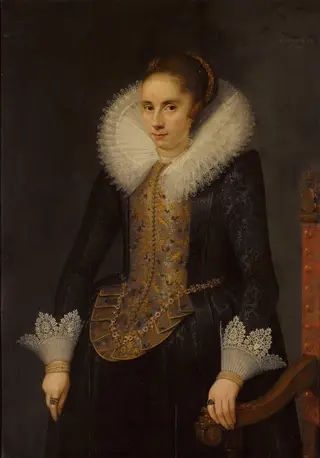 Untitled
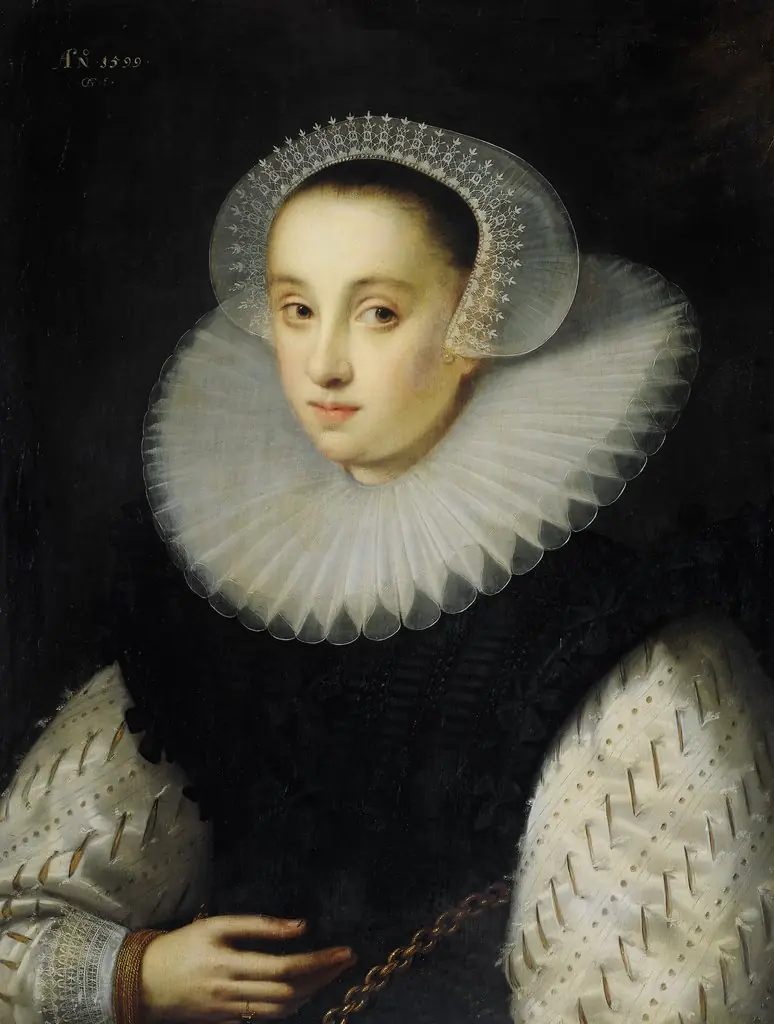 Portrait of Hortensia del Prado (died 1627)
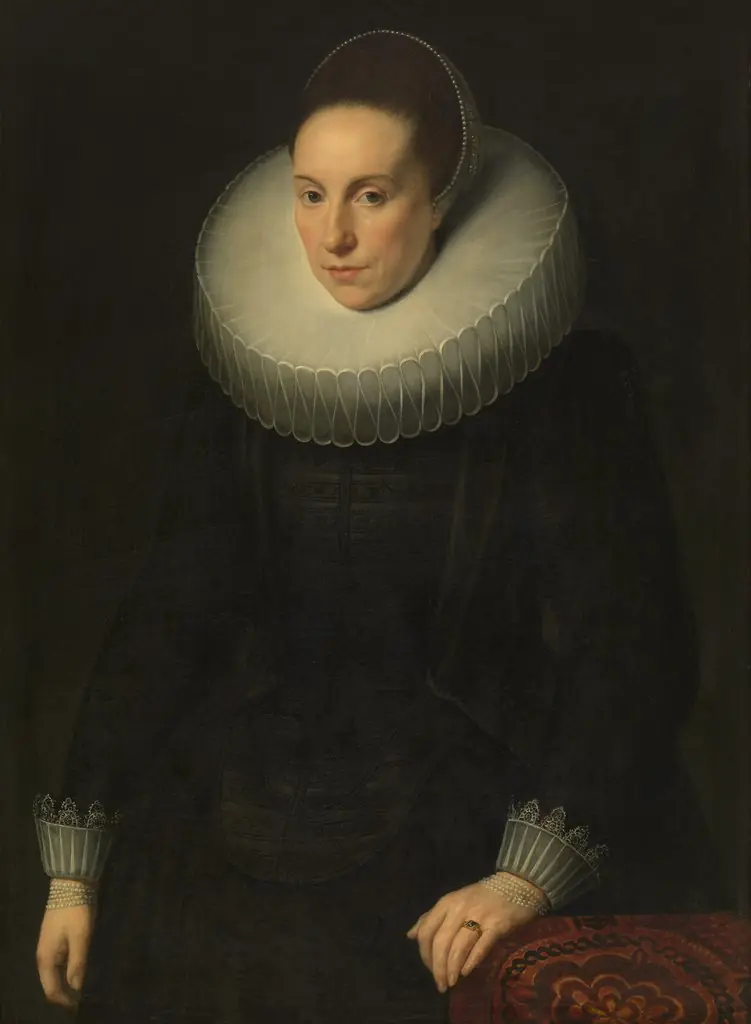 Portret van een vrouw
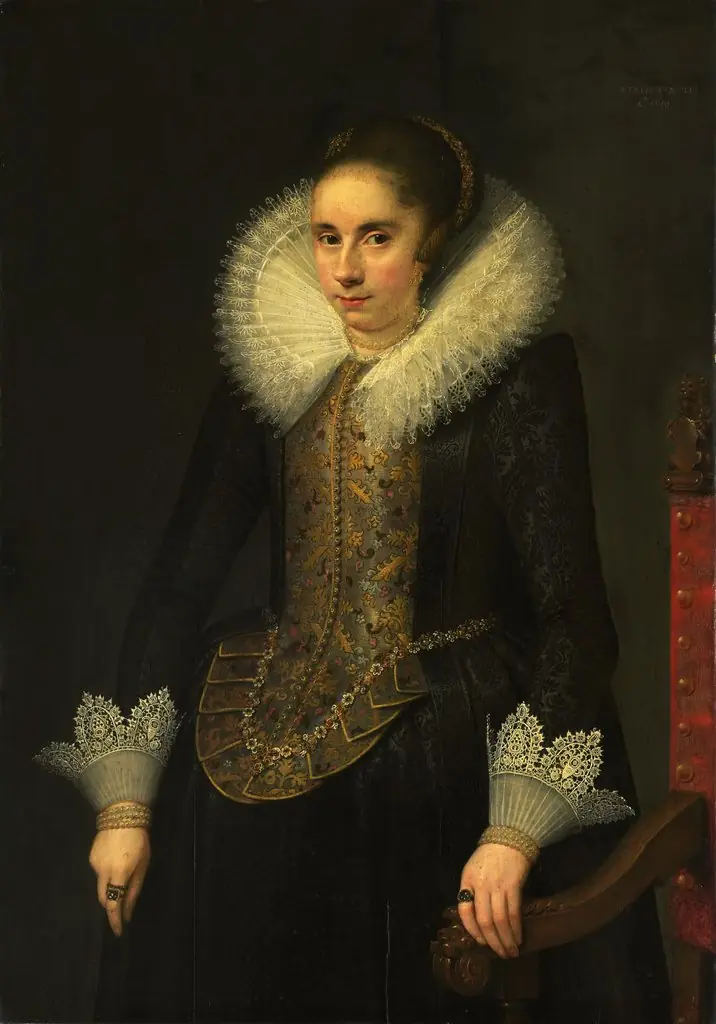 Portrait of Catharina Fourmenois (1598-1665)
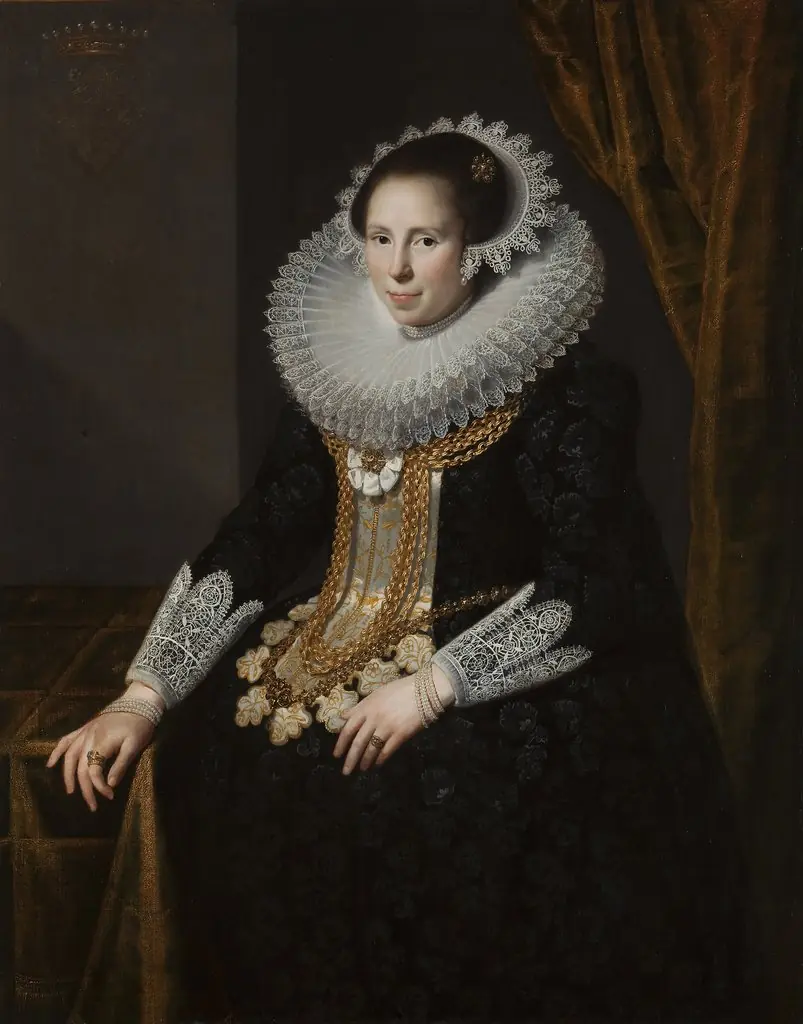 Portrait of Johanna Martens
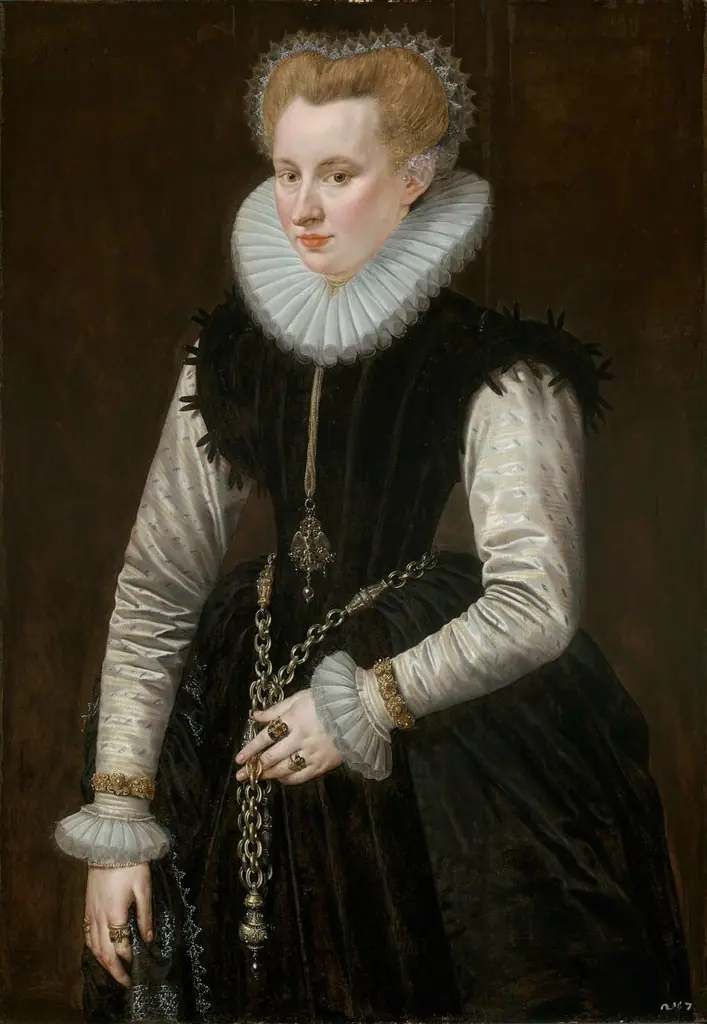 Portrait of a Woman
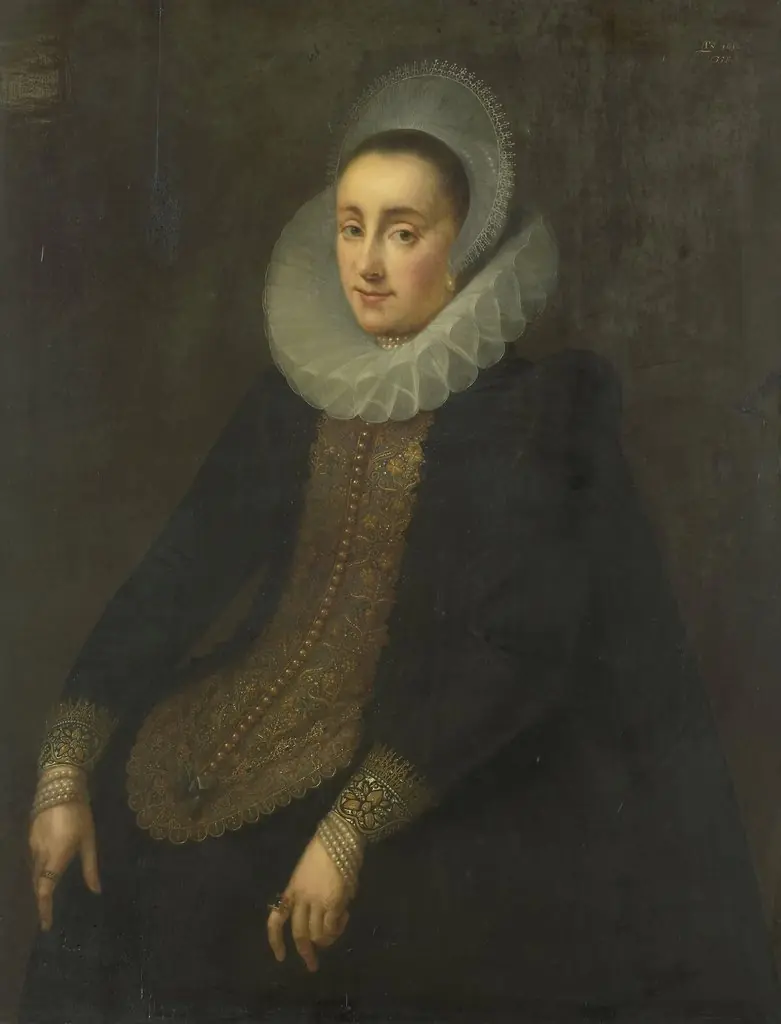 Portrait of Lucretia del Prado, Wife of Jeremias Boudinois
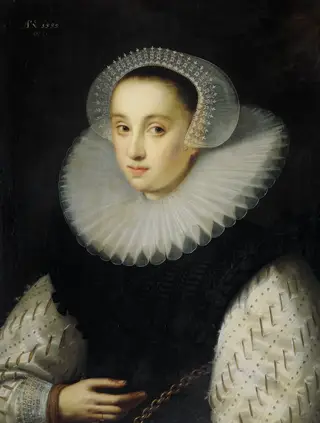 Hortensia del Prado (d 1627)
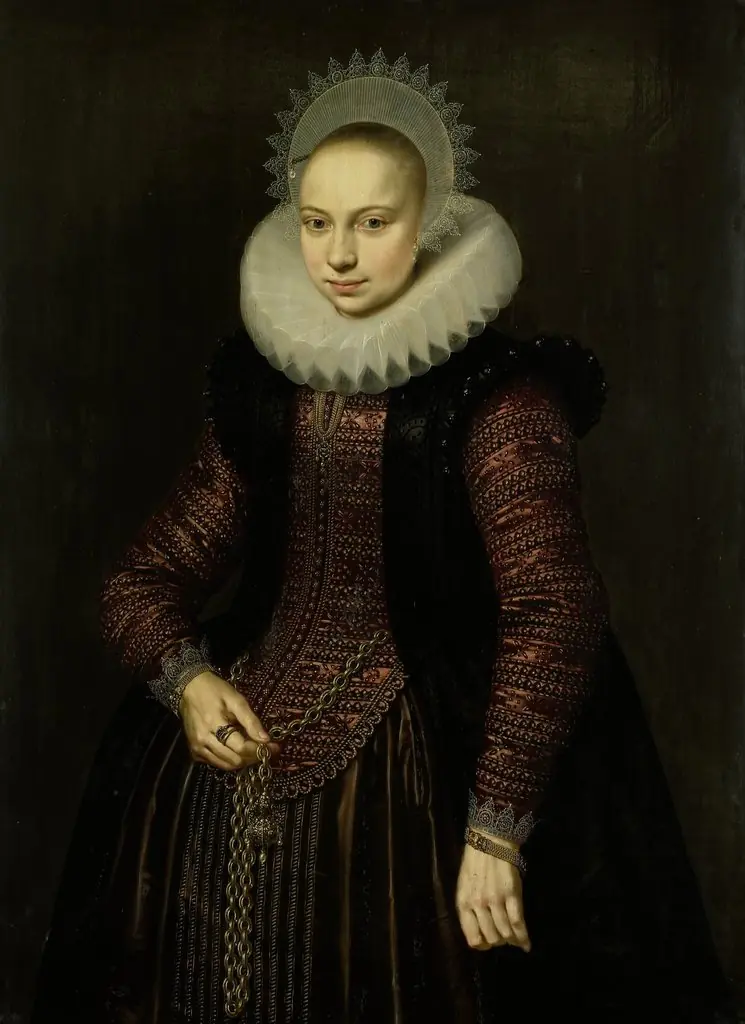 Portrait of Brechtje Overrijn van Schoterbosch (1592-1618)
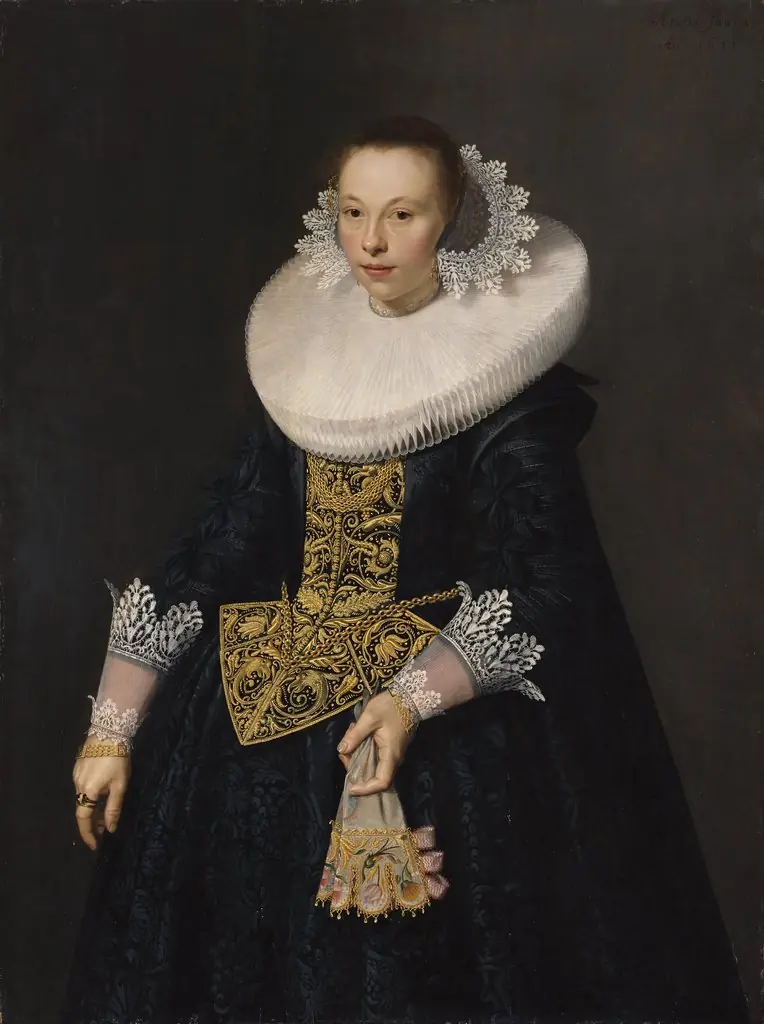 Portrait of a Young Woman
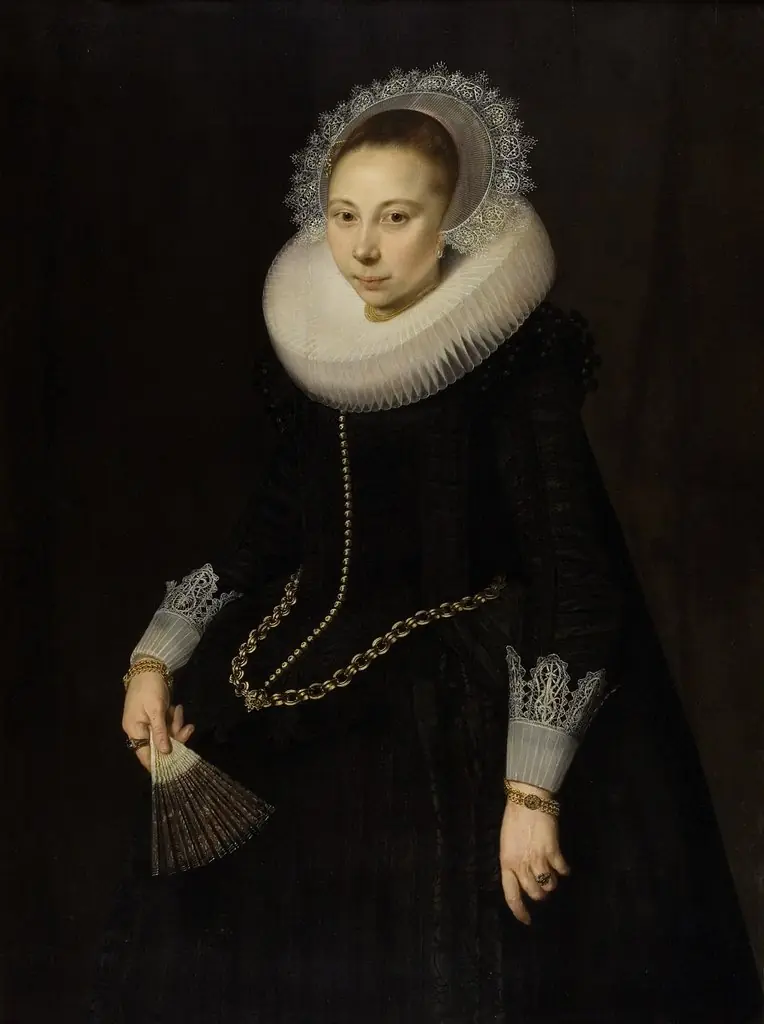 Portrait of Maria Overrijn van Schoterbosch (1599/1600-1638)