Artwork
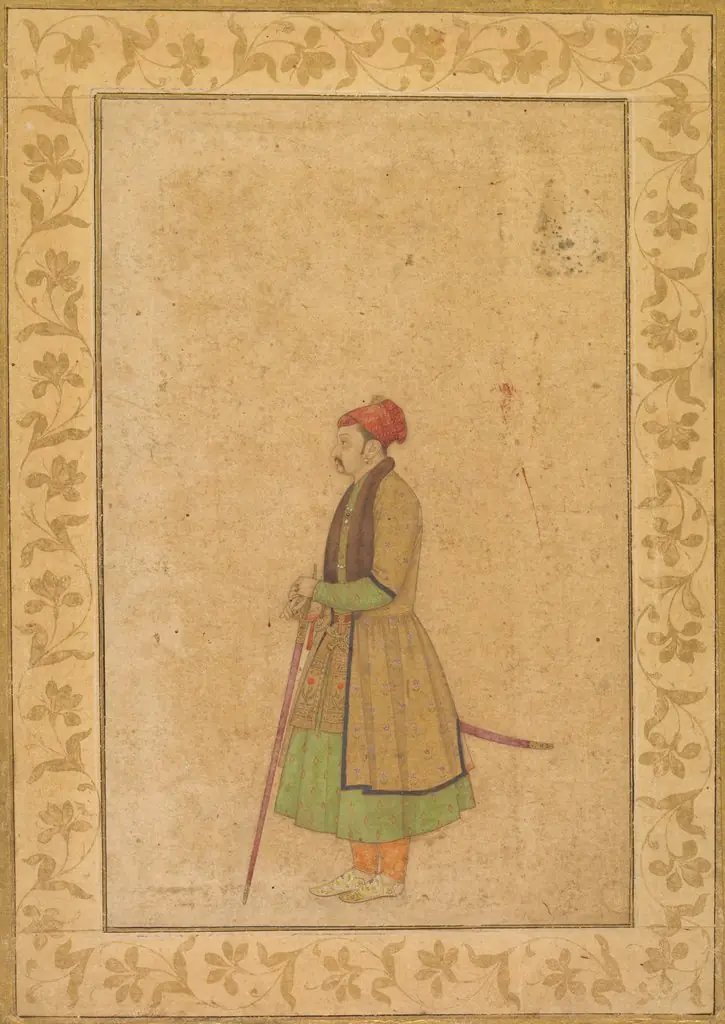
Portrait of Maharaja Rai Singh of Bikaner (reigned 1574-1612)
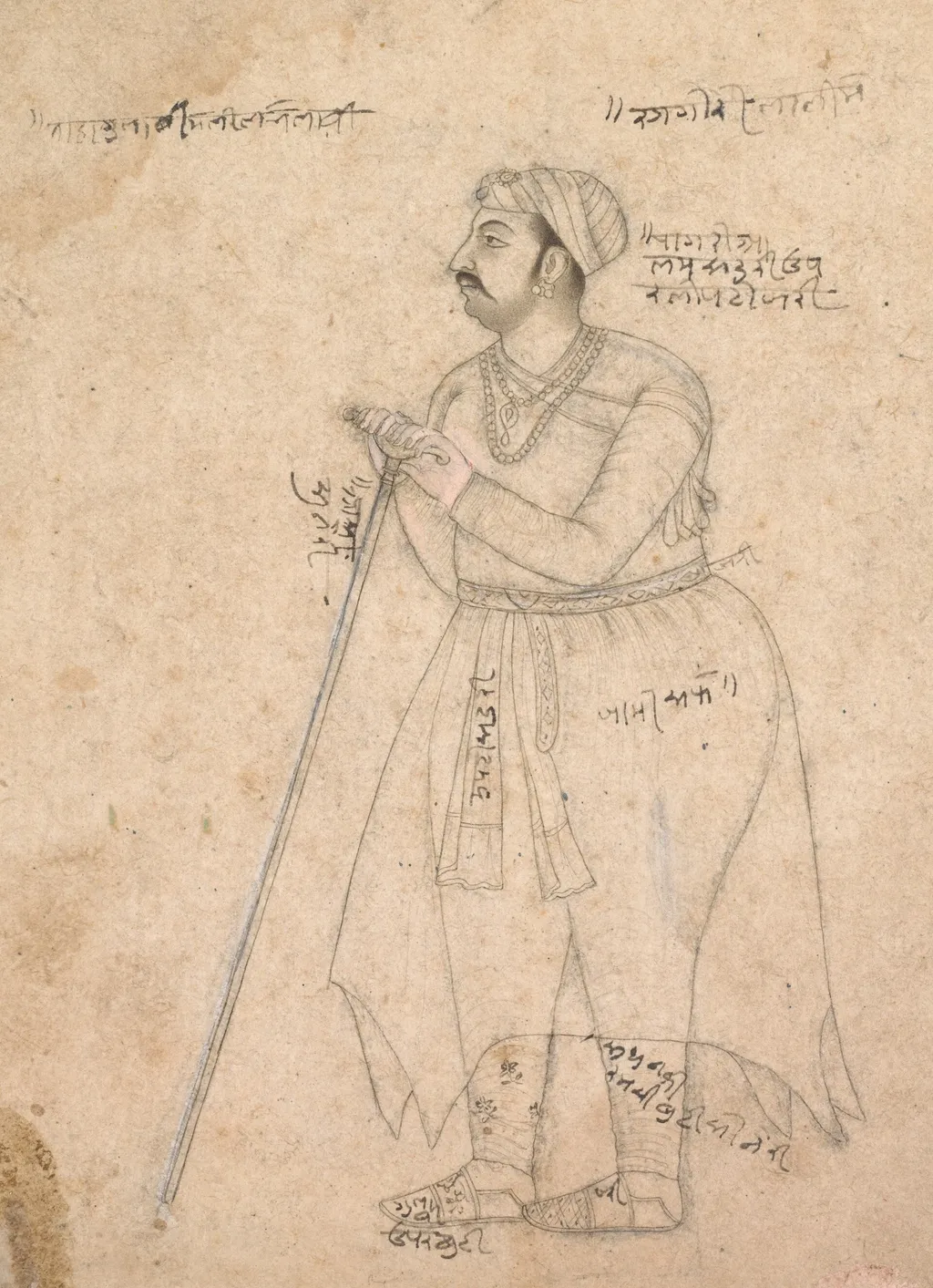
Portrait of Maharaja Rai Singh of Bikaner (reigned 1574-1612) is an unspecified painting. It dates from 1596 and is held in the collection of the Cleveland Museum of Art. This painting depicts Maharaja Rai Singh, who ruled Bikaner from 1574 to 1612.
About this work
Subject & Meaning
Its creation in the Mughal Empire underscores the political context in which Rajput rulers were integrated into imperial networks.
The painting portrays Maharaja Rai Singh of Bikaner, a ruler who held power from 1574 to 1612, within the Mughal cultural sphere. Executed circa 1590 by an anonymous artist, the work exemplifies Mughal court portraiture, employing standard visual conventions to convey the sitter’s sovereign status. Its creation in the Mughal Empire underscores the political context in which Rajput rulers were integrated into imperial networks.
The portrait thus serves as a record of elite identity and as a symbol of diplomatic ties between the Rajput and Mughal dynasties.
History & Provenance
Created in 1590 within the Mughal Empire, this portrait depicts Maharaja Rai Singh of Bikaner, who reigned from 1574 to 1612. While general records list the artist as unknown, specific attribution identifies the creator as Nur Muhammad, an Indian painter active between approximately 1580 and 1630. The work entered the collection of the Cleveland Museum of Art, where it is held under the accession number 1987.1100.
Context
Attributed to the artist Nur Muhammad, who was active in the Mughal Empire between approximately 1580 and 1630, this 1590 portrait is a significant example of early Mughal portraiture. The work depicts Maharaja Rai Singh of Bikaner, whose reign spanned from 1574 to 1612, reflecting the diplomatic and artistic exchanges between the Mughal court and the Rajput states. Held in the collection of the Cleveland Museum of Art, the painting illustrates the synthesis of Persian artistic traditions with Indian courtly themes that characterized the era.
Scholarship identifies this piece as a key document of the period's visual culture, highlighting the role of specific painters like Nur Muhammad in documenting regional rulers within the imperial sphere.
Overview
This painting depicts Maharaja Rai Singh, who ruled Bikaner from 1574 to 1612. The artwork presents a distinguished figure adorned in elaborate garments, conveying a sense of authority and readiness. The composition focuses intently on the individual, with a minimal background allowing the viewer's attention to remain on the subject's regal presence and detailed attire.
Technique & Style
Rendered as a drawing, this portrait emphasizes line and detail in depicting the Maharaja's features and intricate clothing. The artist employed a plain background, a common choice in such formal portraits, to ensure the viewer's focus remained entirely on the subject. This stylistic decision highlights the Maharaja's powerful presence and the fine craftsmanship of his attire, while the script adds an authentic cultural element.
Artist & collection

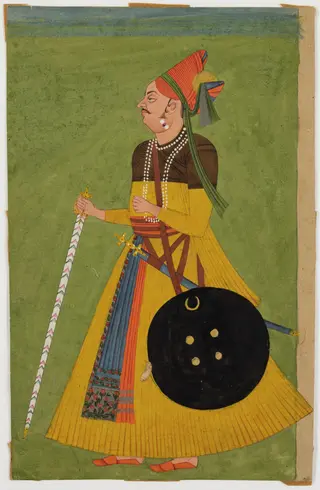 Portrait of a Nobleman
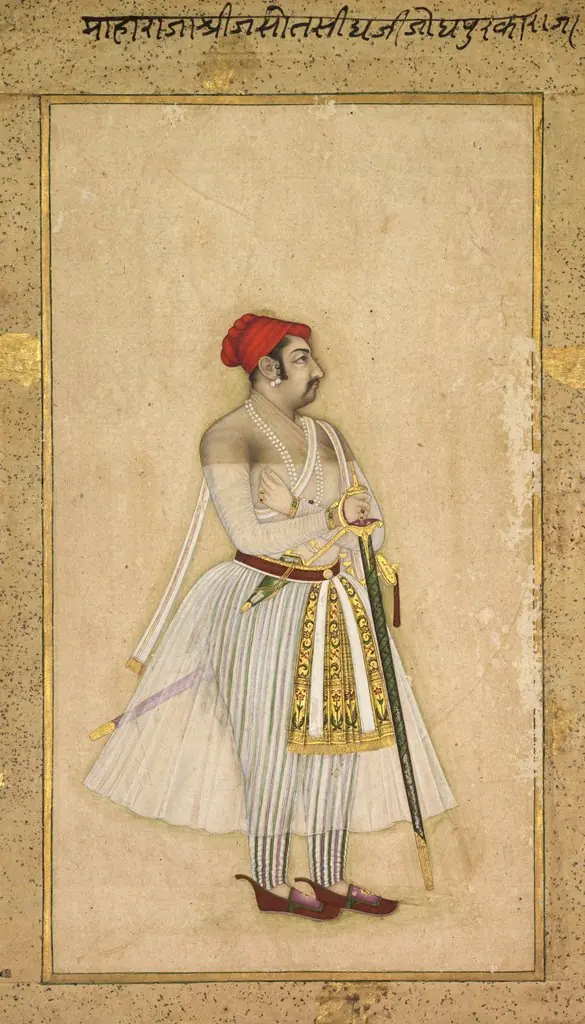 Jaswant Singh of Jodhpur (reigned 1635–1678)
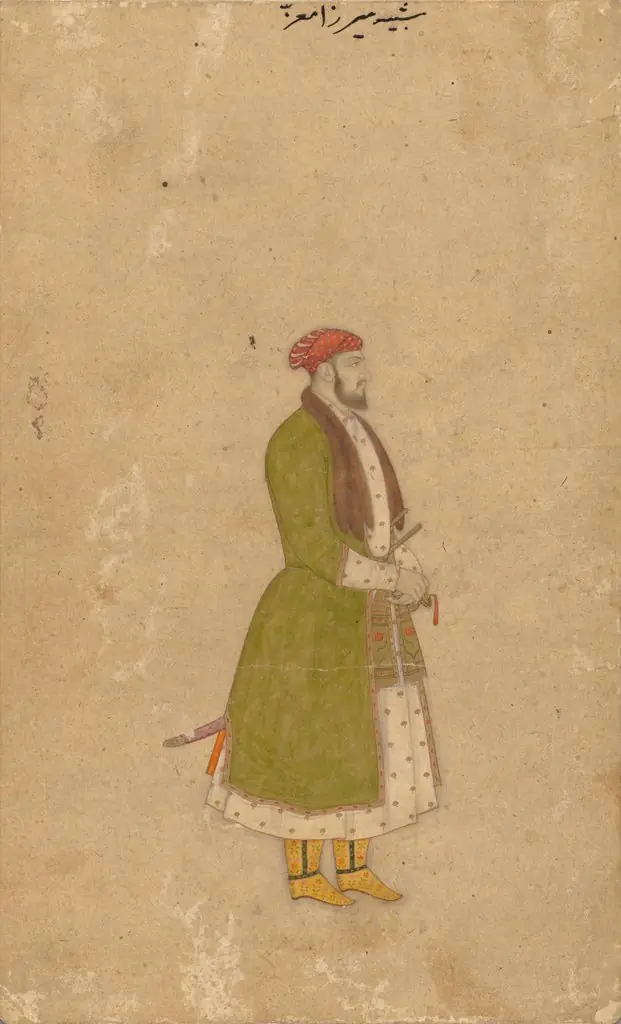 Portrait of the Courtier Mirza Muizz
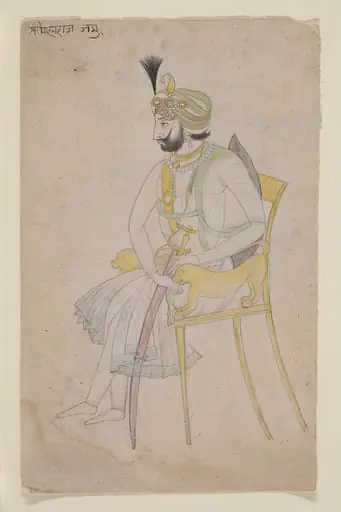 Untitled
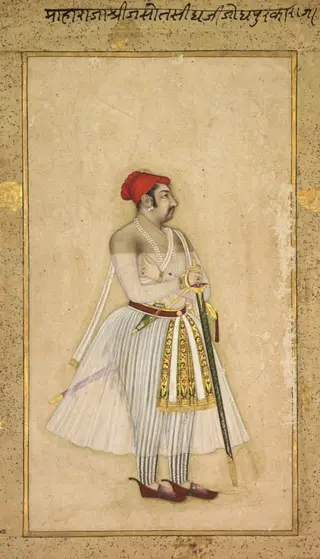 Jaswant Singh of Jodhpur (reigned 1635–1678)
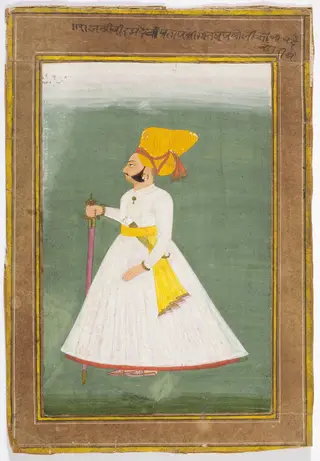 Portrait of Viram Deva
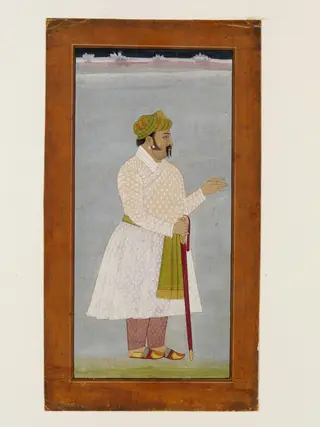 Rajah Birbar (Birbal)
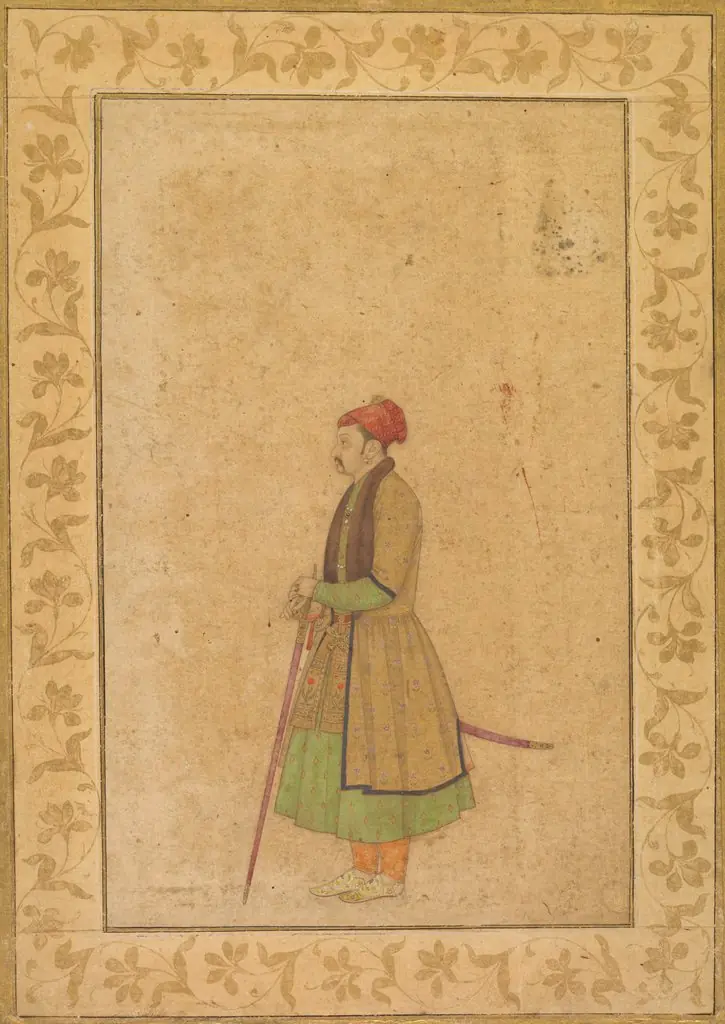 Portrait of Raja Ram Singh of Amber (r. 1667-1688) with a Deccan Sword (recto); Calligraphy (verso)
 Portrait of Raja Ram Singh of Amber (r. 1667-1688) with a Deccan Sword (recto)