Artwork
Portrait of Maximilian I, Holy Roman Emperor
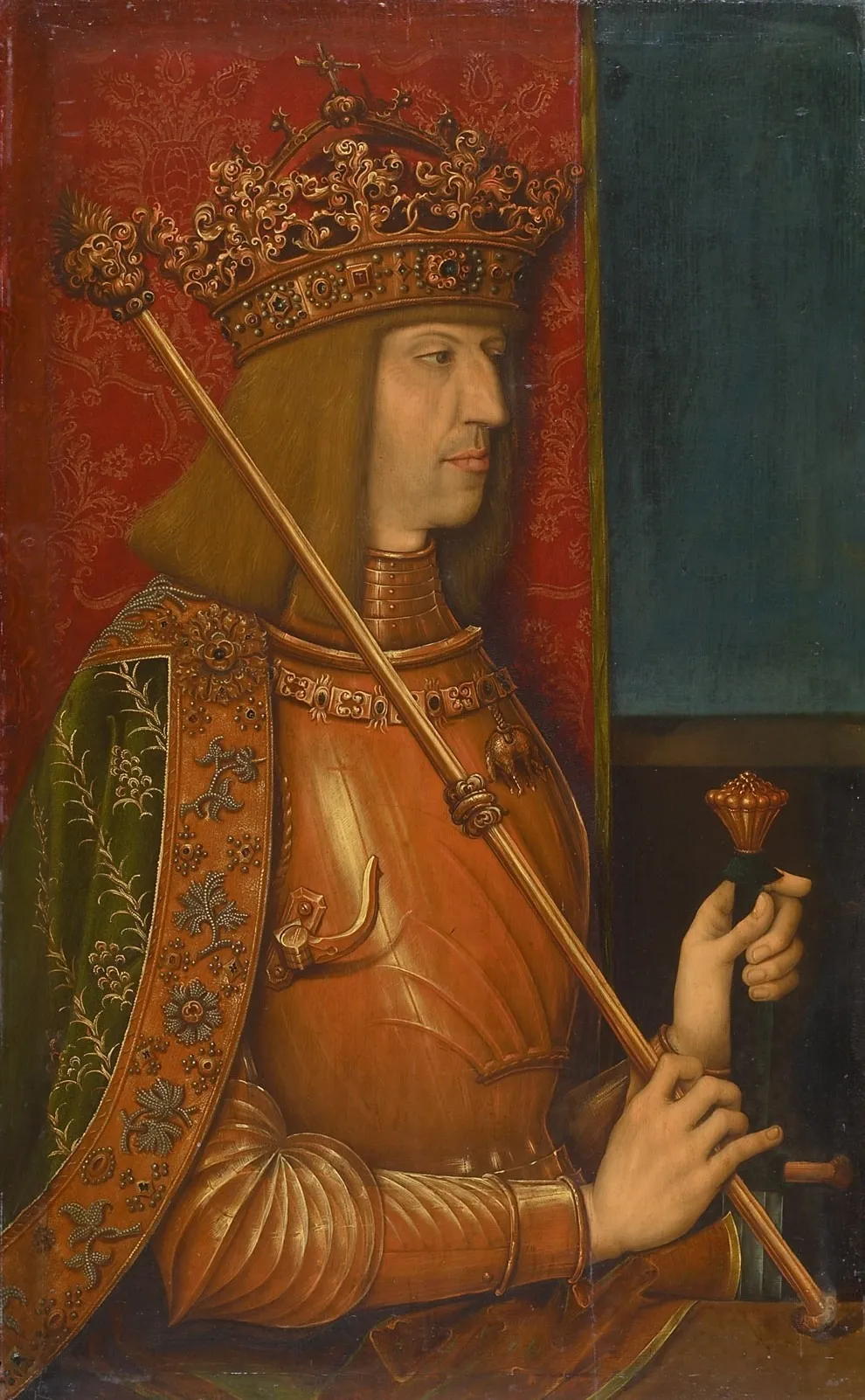
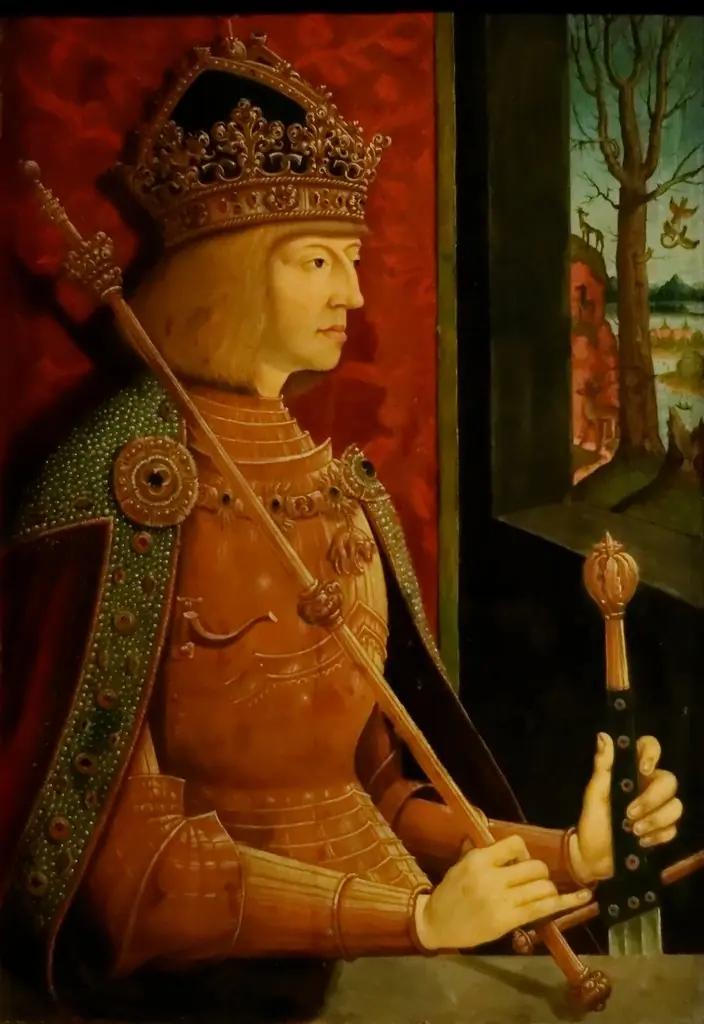
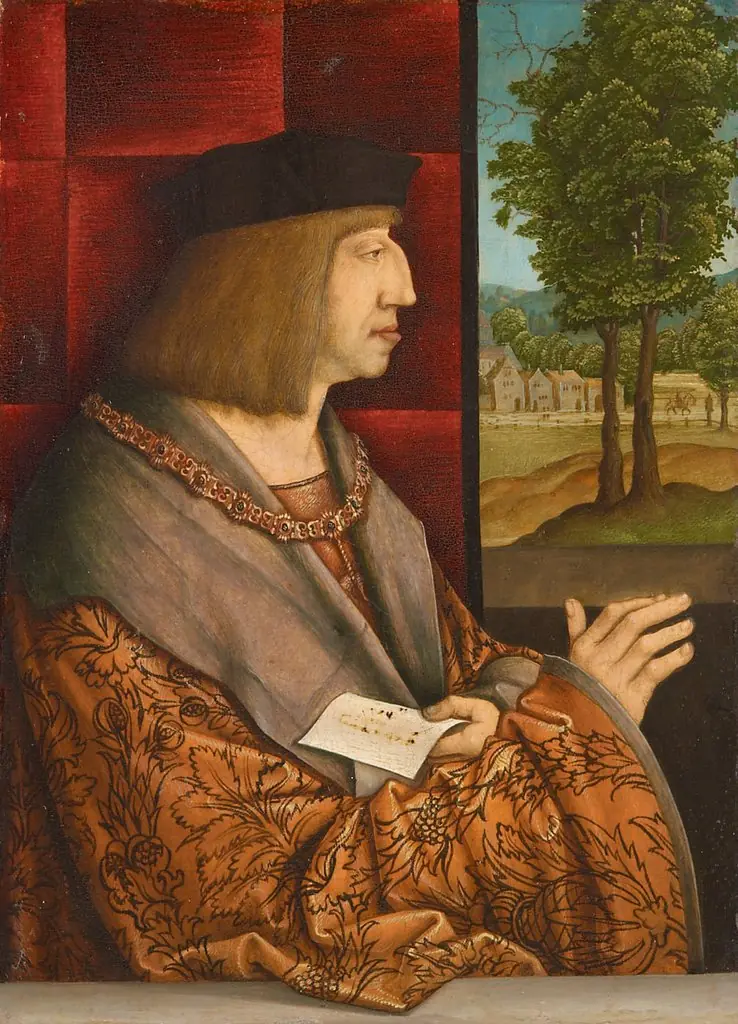
Portrait of Maximilian I, Holy Roman Emperor is an oil painting by the Northern Renaissance artist Unknown. It dates from 1507 and is held in the collection of the Kunsthistorisches Museum. The work is an oil painting portraying Maximilian I, Holy Roman Emperor, in full regalia.
About this work
Subject & Meaning
The image is identified as a work executed after the design of Bernhard Strigel, linking the visual representation to the style of that specific court painter.
The work depicts Maximilian I, Holy Roman Emperor, as its sole subject. Created in 1507, this oil painting on panel functions as a formal royal portrait, designed to represent the emperor's status and authority. The image is identified as a work executed after the design of Bernhard Strigel, linking the visual representation to the style of that specific court painter.
As a piece housed in the Kunsthistorisches Museum, the portrait serves as a historical record of the emperor's likeness during the early sixteenth century.
Technique & Style
The work is executed in oil paint on a wooden panel, measuring 85 cm by 52.5 cm. It portrays Maximilian I, Holy Roman Emperor, rendered in a formal, portrait style characteristic of early 16th-century Central European painting. The handling of light and surface detail reflects the influence of Bernhard Strigel, with precise modeling of facial features and richly textured drapery. The composition emphasizes the sitter’s authority through frontal posture and direct gaze, while the subdued palette underscores a sober, regal presence. The panel’s surface remains well-preserved, showing only minimal craquelure consistent with age.
History & Provenance
The portrait dates to 1507 and is executed in oil paint on panel, with recorded dimensions of 85 cm in height and 52.5 cm in width. It is a painting after Bernhard Strigel, depicting Maximilian I, Holy Roman Emperor. The work is held in the collection of the Kunsthistorisches Museum, where it remains on location.
Beyond its 1507 inception and its status as a derivative work after Strigel, the sources provide no further details on commission, intermediate ownership, or earlier provenance.
Context
The painting is recognized as a portrait of Maximilian I, Holy Roman Emperor, and is housed in the Kunsthistorisches Museum. It is attributed to an artist working after Bernhard Strigel, reflecting the stylistic influence of this prominent member of the Swabian school of the late 15th and early 16th centuries. The work was created in 1507 using oil paint on panel, measuring 85 cm in height and 52.5 cm in width, and depicts the emperor as its main subject.
Scholarly attention centers on its placement within the broader context of early Northern Renaissance portraiture and its relationship to the legacy of Bernhard Strigel, contributing to ongoing discussions about courtly representation and artistic transmission in the German lands.
Overview
The work is an oil painting portraying Maximilian I, Holy Roman Emperor, in full regalia. He is depicted wearing elaborate armor, a golden crown, and a fur‑trimmed cloak of deep red, gold and green, while holding a scepter topped with a spherical ornament. The background is dark, allowing the illuminated figure to dominate the composition.
Legacy
As a visual record of Maximilian I’s appearance and self‑presentation, the painting informs scholars of imperial fashion, armor design, and the visual language of authority in the late 15th and early 16th centuries.
Artist & collection