Artwork
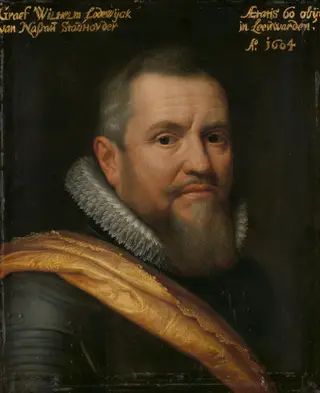
Portrait of Willem Lodewijk (1560-1620), Count of Nassau, nicknamed in Frisian 'us heit' (our father)
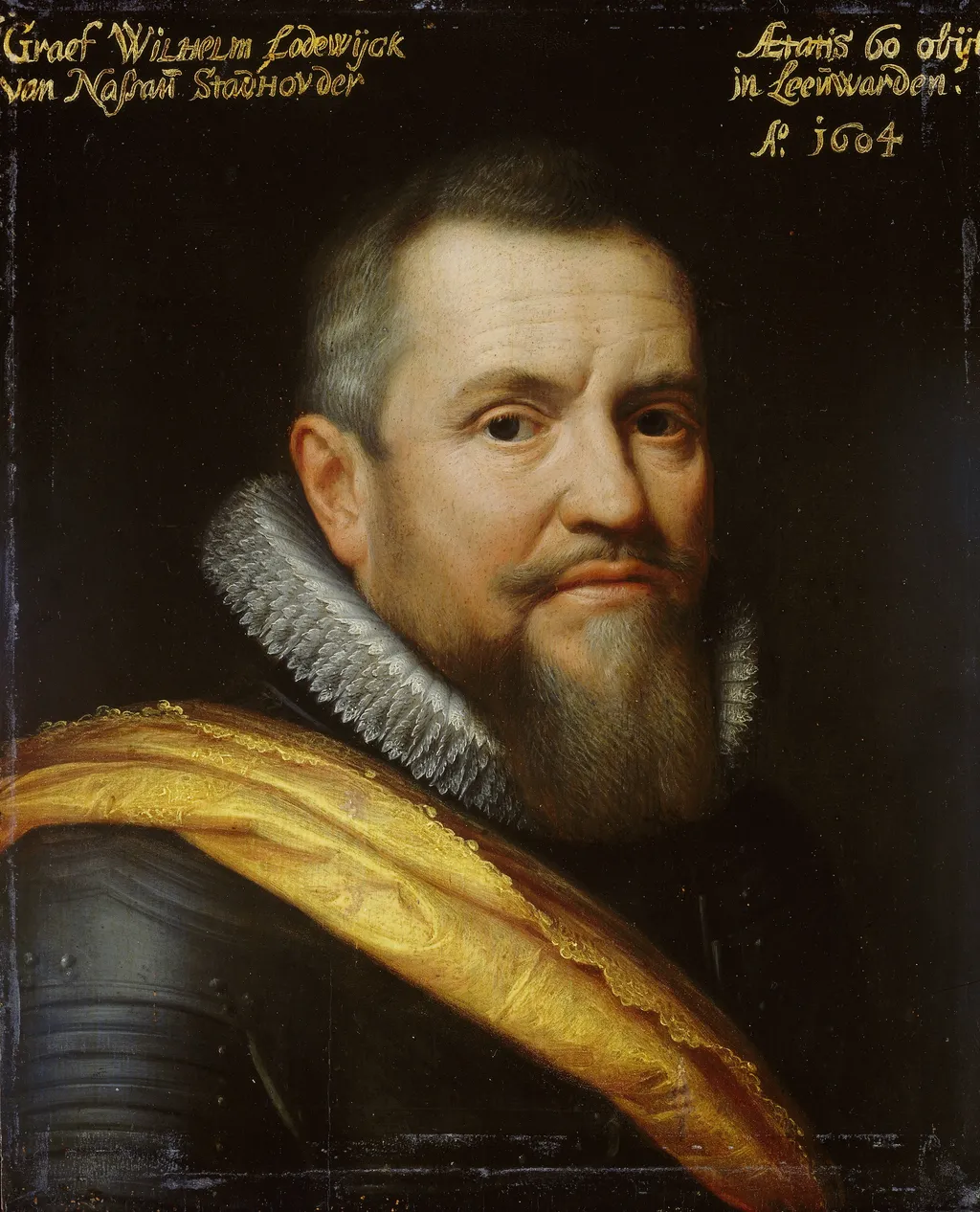
Portrait of Willem Lodewijk (1560-1620), Count of Nassau, nicknamed in Frisian 'us heit' (our father) is an oil painting. It dates from 1609 and is held in the collection of the Rijksmuseum. The oil portrait presents Willem Lodewijk, Count of Nassau (1560‑1620), a noble of the Dutch Republic.
About this work
Subject & Meaning
As a portrait, the image serves to commemorate his status and role, reflecting his significance to the region and his ownership by Maurice of Nassau.
The painting depicts William Louis, Count of Nassau-Dillenburg, a historical figure known in Frisian as 'us heit' (our father). Created in 1609, the work presents the Count as the central subject, identifying him by his full title and regional nickname. As a portrait, the image serves to commemorate his status and role, reflecting his significance to the region and his ownership by Maurice of Nassau.
Technique & Style
The portrait is executed in oil paint on a wooden panel support, measuring 29.8 cm in height and 24.1 cm in width. It is attributed to the workshop of Michiel Jansz. van Miereveld, reflecting the collaborative practices of Dutch portraiture workshops in the early 17th century.
The handling emphasizes clarity and precision, characteristic of van Miereveld’s style, with careful delineation of facial features and costume. The composition is tightly framed, focusing on the sitter’s head and shoulders against a neutral background, a common format for elite portraiture of the period. The subdued palette and restrained modeling suggest a restrained, dignified representation aligned with contemporary Dutch portrait conventions.
History & Provenance
The painting was created in 1609, as indicated by the inception date in the Rijksmuseum’s records and the source entry for the work.
The portrait is attributed to the workshop of Michiel Jansz. van Mierevelt and depicts Willem Lodewijk (1560–1620), Count of Nassau, known as ‘us heit’ in Frisian. It entered the collection of Maurice of Nassau, Prince of Orange, who is listed as the owner in the provenance data.
The painting is currently held by the Rijksmuseum Amsterdam, where it is displayed in hall 2.1 of the Stadhouderlijk Hof.
Overview
The oil portrait presents Willem Lodewijk, Count of Nassau (1560‑1620), a noble of the Dutch Republic. Rendered against a dark backdrop, the sitter faces the viewer with a composed, solemn expression, his gaze directed slightly to the right. His attire, a black, high‑collared shirt accented by a gold sash draped over the left shoulder, identifies his aristocratic status.
Context
Created during the late Renaissance period in the Dutch lands, the portrait aligns with contemporary conventions for representing nobility: a plain, dark background, minimal props, and emphasis on facial likeness. Such works served both as personal commemoration and as visual affirmation of lineage and status within the politically fragmented Holy Roman Empire.
Artist & collection

- Untitled
 Untitled
 Untitled
 Untitled
 Untitled
 Untitled
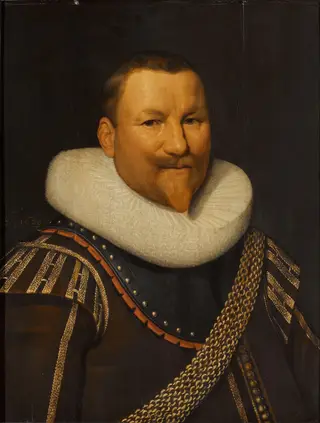
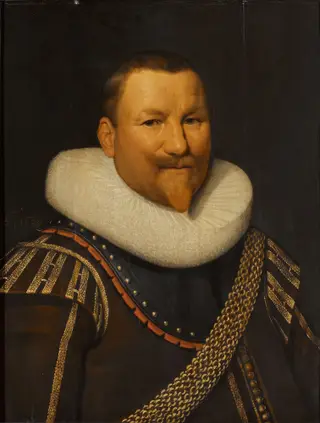 Portrait of Pieter Pietersz Heijn (1577-1629)
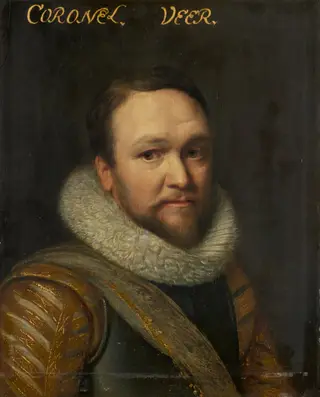 Untitled
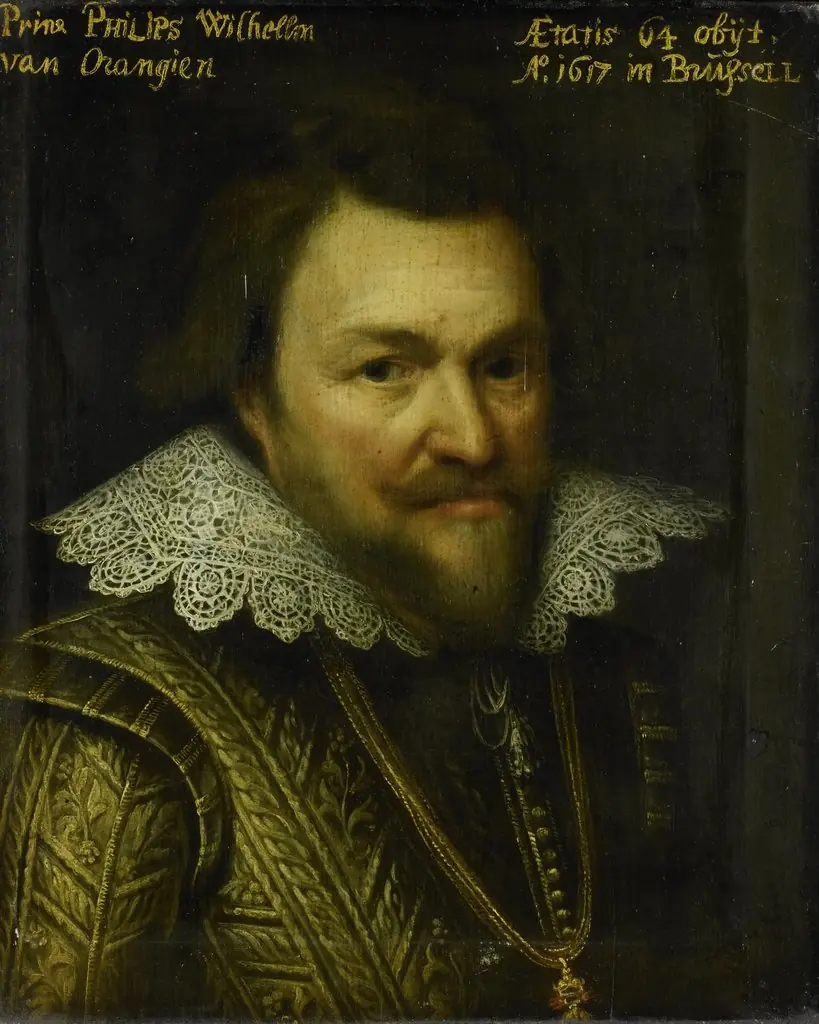 Portrait of Philips Willem (1554-1618), Prince of Orange
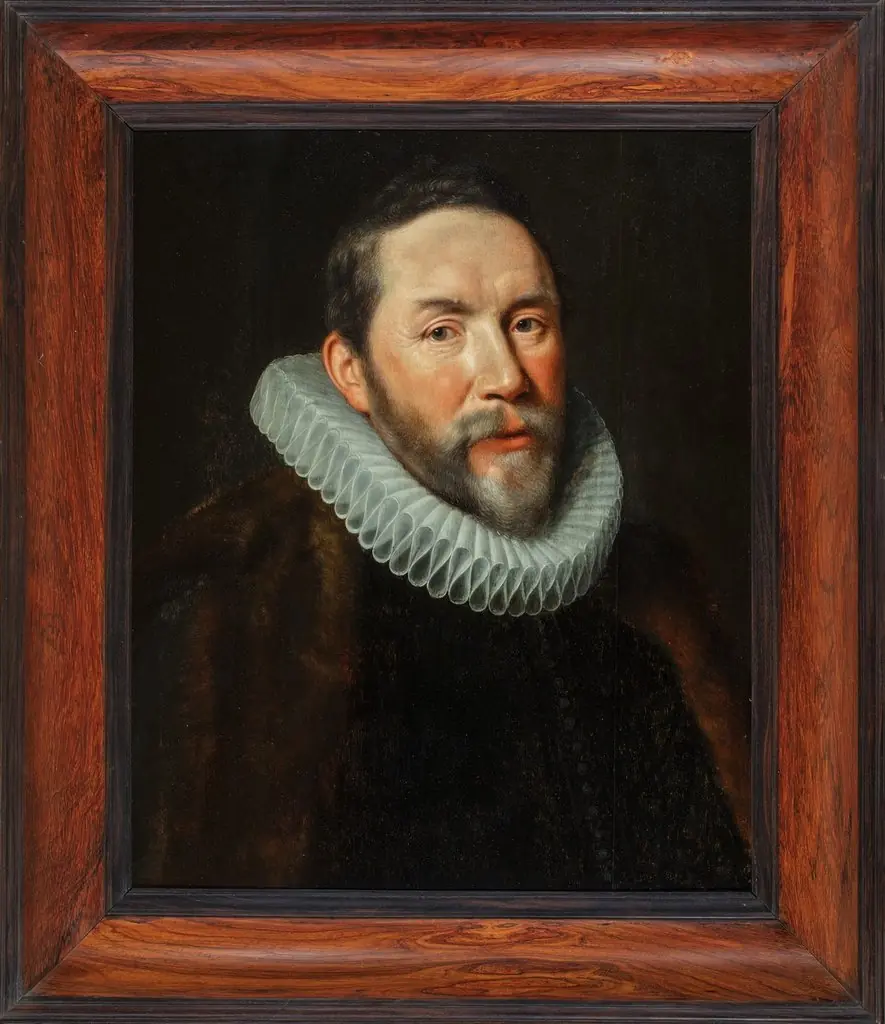 Portrait of Nicolaes Grevinckhoven (1577-1632)
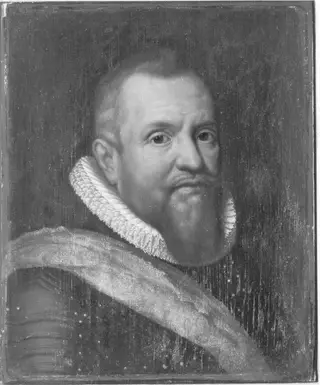 Bildnis des Willem Lodewijk, Graf von Nassau-Dietz (1560-1620)
 Portrait of Maurits (1567-1625), Prince of Orange