Artwork
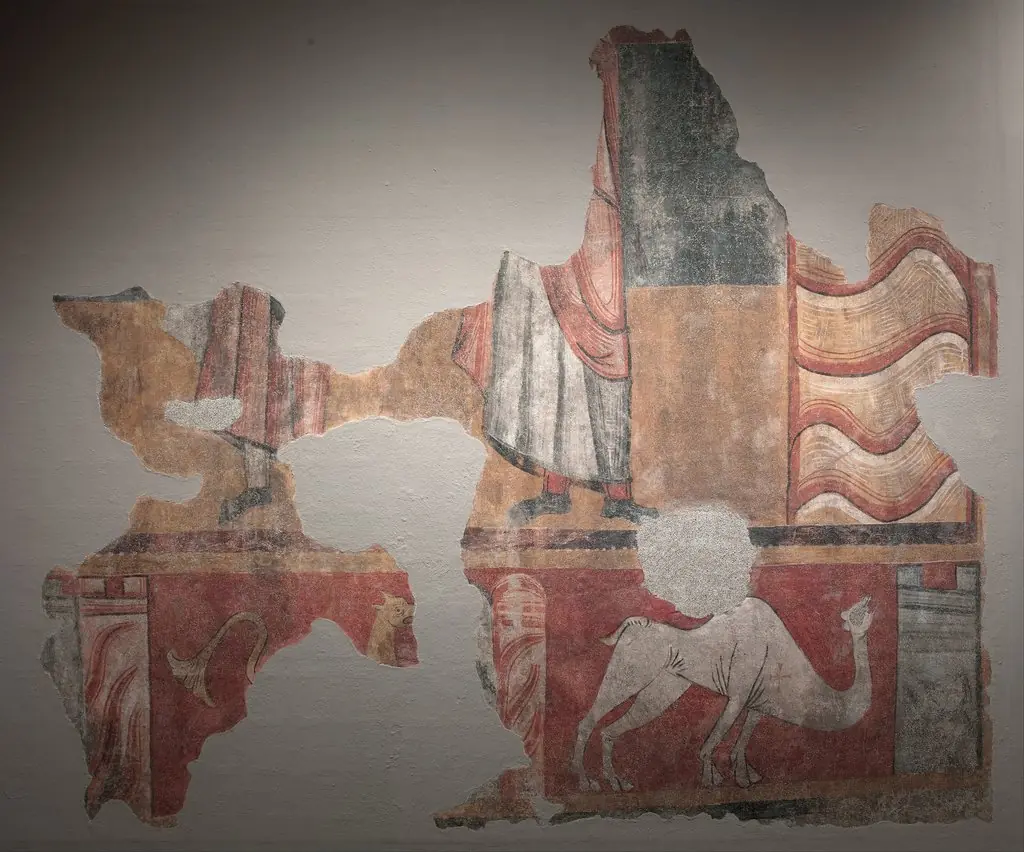
Profane paintings from Sigena: Deer eating fruit from a tree, lion holding a naked man and dismounted knight kneeling before a lady on a throne
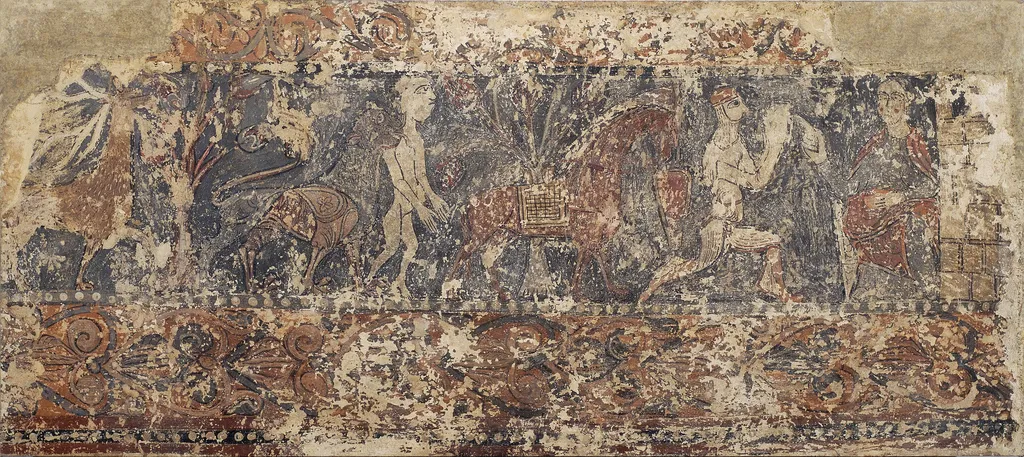
Profane paintings from Sigena: Deer eating fruit from a tree, lion holding a naked man and dismounted knight kneeling before a lady on a throne is an unspecified painting by the Romanesque artist Unknown. It dates from 1200 and is held in the collection of the Museu Nacional d'Art de Catalunya. This early 13th-century panel painting originates from the Royal Monastery of Santa María de Sigena in Aragon.
About this work
This painting depicts a scene with a deer eating fruit from a tree, a lion holding a naked man, and a dismounted knight kneeling before a lady on a throne.
This painting depicts a scene with a deer eating fruit from a tree, a lion holding a naked man, and a dismounted knight kneeling before a lady on a throne. The figures are arranged in a horizontal composition, with the deer and lion on the left and the knight and lady on the right. The painting features a mix of earthy tones, with shades of brown and beige dominating the palette.
The figures are rendered in a stylized manner, with bold lines and flat colors. The painting's use of bold lines and flat colors is reminiscent of the artistic style of the early 13th century.
Overview
This early 13th-century panel painting originates from the Royal Monastery of Santa María de Sigena in Aragon. It forms part of a series of secular-themed murals that once adorned the monastery’s refectory. The composition is horizontally arranged, presenting three distinct narrative scenes side by side: a deer feeding on fruit, a lion gripping a nude figure, and a knight kneeling before a crowned woman. The style reflects regional Romanesque conventions with minimal depth and restrained modeling.
Subject & Meaning
The imagery combines natural, symbolic, and courtly motifs likely drawn from medieval bestiaries and chivalric literature. The deer consuming fruit may reference spiritual longing or earthly temptation; the lion with the naked man could symbolize domination or divine judgment; the kneeling knight before a seated lady suggests feudal loyalty or courtly love. Together, these scenes may have served as moral allegories, blending pagan symbolism with Christian moral instruction for monastic viewers.
Technique & Style
Executed in tempera on wood, the painting employs flat planes of color with minimal shading, emphasizing outline over volume. Earthy pigments, ochres, umbers, and muted reds, dominate the palette, creating a subdued, grounded atmosphere. Figures are rendered with simplified anatomy and bold, unmodulated contours, characteristic of Aragonese Romanesque painting. The lack of perspective and spatial depth reinforces the symbolic, rather than naturalistic, intent of the imagery.
History & Provenance
Created around 1210–1220, the painting was originally part of a larger decorative cycle in Sigena’s refectory. After the monastery’s dissolution in the 19th century, the panels were dispersed. This fragment entered the collection of the Museu Nacional d'Art de Catalunya in Barcelona, where it is now preserved. Its survival is rare, as most monastic secular murals were lost to iconoclasm, neglect, or renovation.
Context
In early 13th-century Aragon, monastic communities often commissioned secular imagery alongside religious themes, reflecting a broader cultural engagement with courtly ideals and natural symbolism. The presence of such scenes in a Cistercian setting suggests a nuanced relationship between spiritual discipline and worldly allegory. Similar motifs appear in contemporary manuscripts and sculpture across the Pyrenees, indicating shared visual traditions in the region.
Legacy
The Sigena panels remain among the few surviving examples of secular Romanesque mural painting in Spain. Their preservation has allowed scholars to study how monastic environments incorporated non-religious narratives, challenging assumptions about medieval religious austerity. The work continues to inform interpretations of medieval visual culture, particularly in the interplay between nature, power, and moral allegory in Iberian art.
Artist & collection









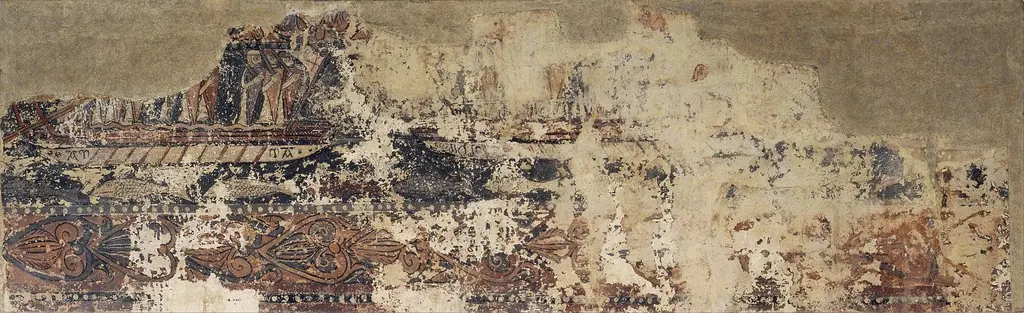 Naval battle between a Christian galley and a Saracen galley, profane paintings from Sigena
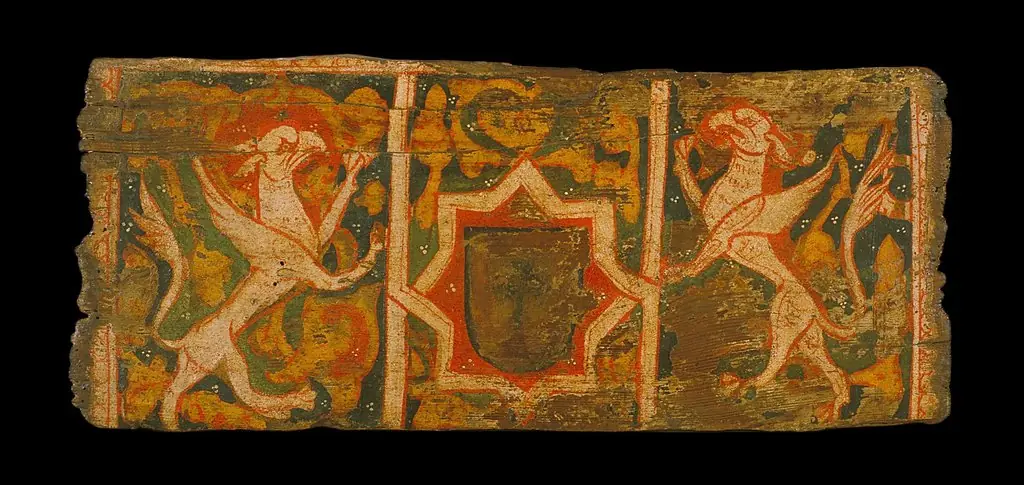 Coffered ceiling panel with coat of arms and griffins rampant
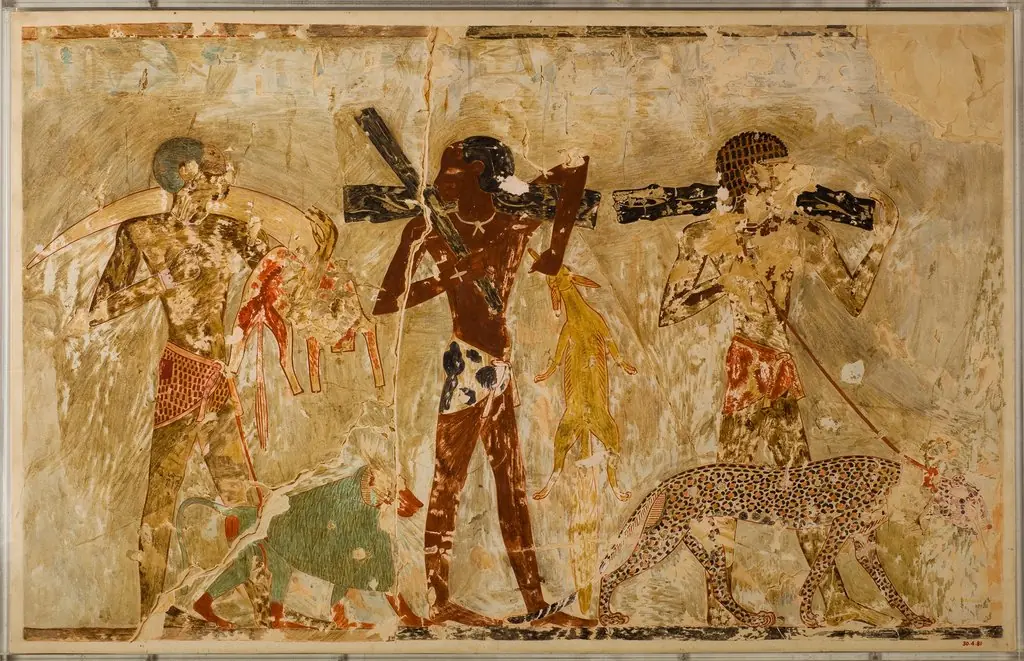 Facsimile painting from the tomb of Rekhmire
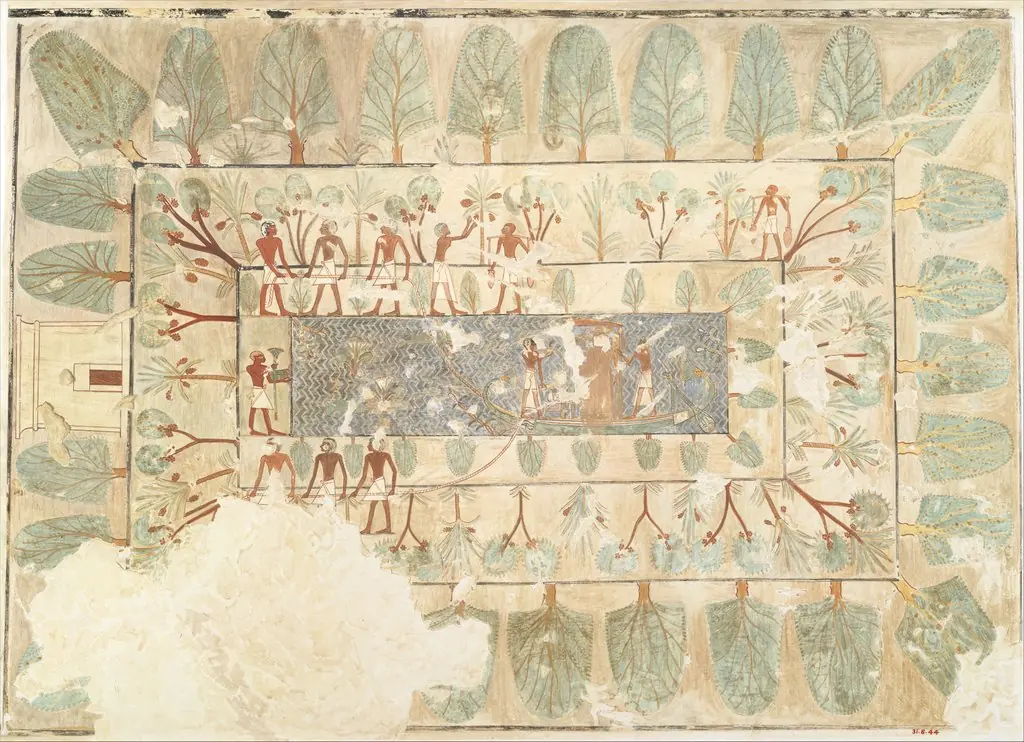 Deceased Being Towed in a Boat, Tomb of Rekhmire
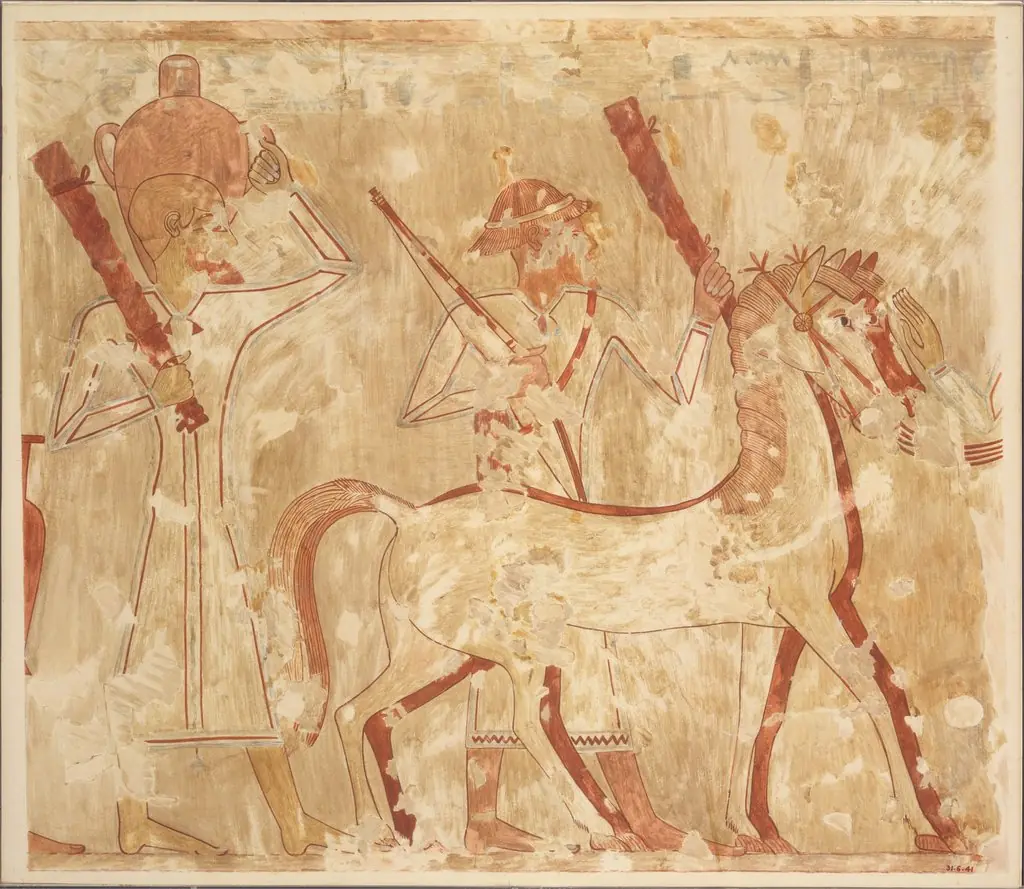 Syrians Bringing Horses, Tomb of Rekhmire
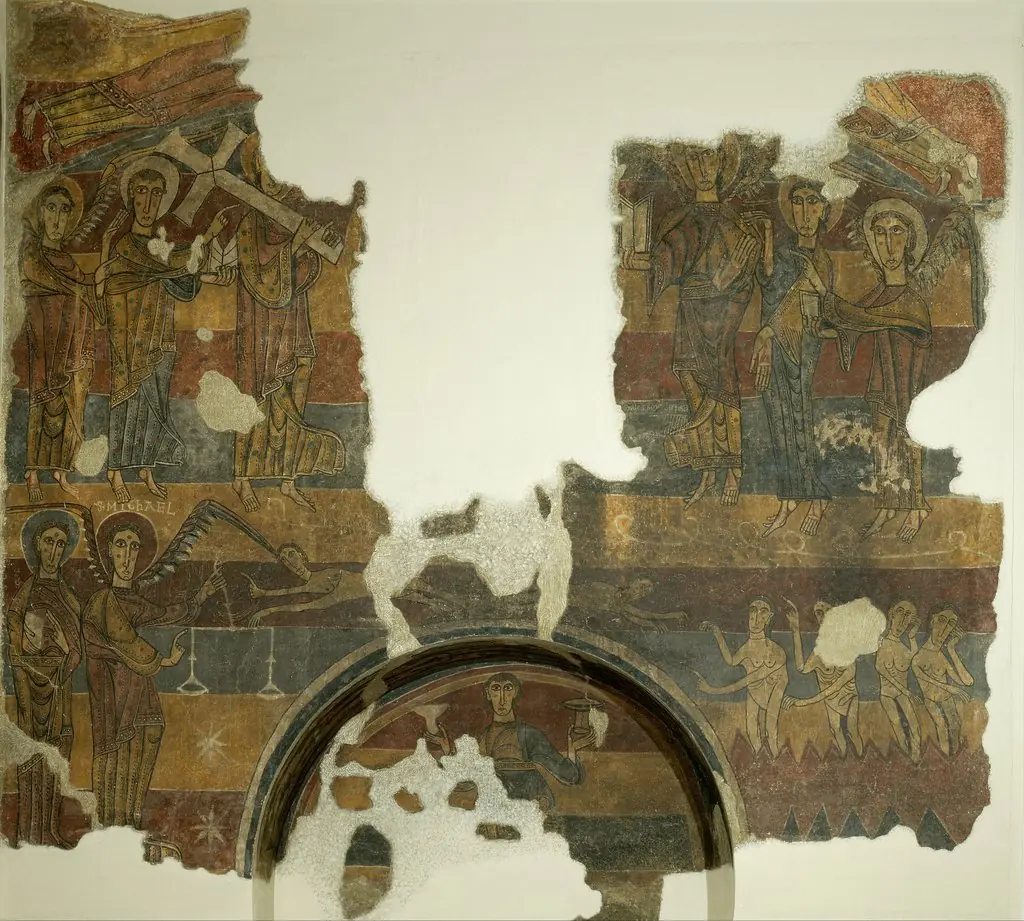 The Day of Judgement from Santa Maria de Taüll
 Figures, buildings and bestiary from Boí
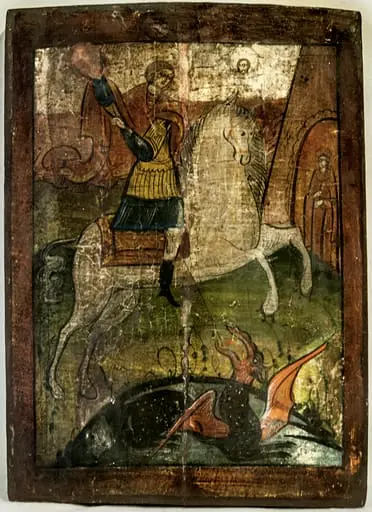 Tema iconografică este "Sfântul Gheorghe omorând balaurul". În prim plan, Sf. Gheorghe, în veșminte ostășești, călare pe un cal alb, cambrat, ridicat în două picioare, omoară balaurul plasat în registrul inferior. Veșmintele sfântului au o tentă țărănească(tunica albastră acoperită 3/4 de lorica argintie, pantaloni albi, cu motiv floral, cizme înalte. Calul are ambii ochi vizibili, coama bogată, coada în fuior. Partea dinspre privitor a ansamblului cal cu călăreț este supradimensionată, creând o impresie optică de înălțare a sfântului. În partea dreaptă, fata de împărat pe care o salvează sfântul, sub portalul palatului. privind scena. Veșminte lungi, simple, coroană împărătească. Înveșmântată în haine simple, lungi, cu coroană pe cap, privește scena cu brațele la piept. În colțul din stânga dreapta sus, Iisus Hristos așa cum apare pe sfântul Keramion. Nimbul cruciger. Balaurul plasat în registrul inferior asemănător unui grifon, corp diform, terminat cu o coadă în săgeată, aripile și capul roșii. Motiv mai elaborat decât în alte icoane unde redarea balaurului este minimizată. Compoziția este dinamică, chipurile expresive, gesturile bine realizate. Linia desenului variază, contribuind la efectul optic. Fondul foiței argintii(superior), relief din benzi late în tonuri de brun, brun roșcat, galben, alb, verde, cu elemente de vegetație. Bordura roșiatică lată, specifică icoanelor de tip krashnuska. Inscripție pe chenar, în partea superioară.