Artwork
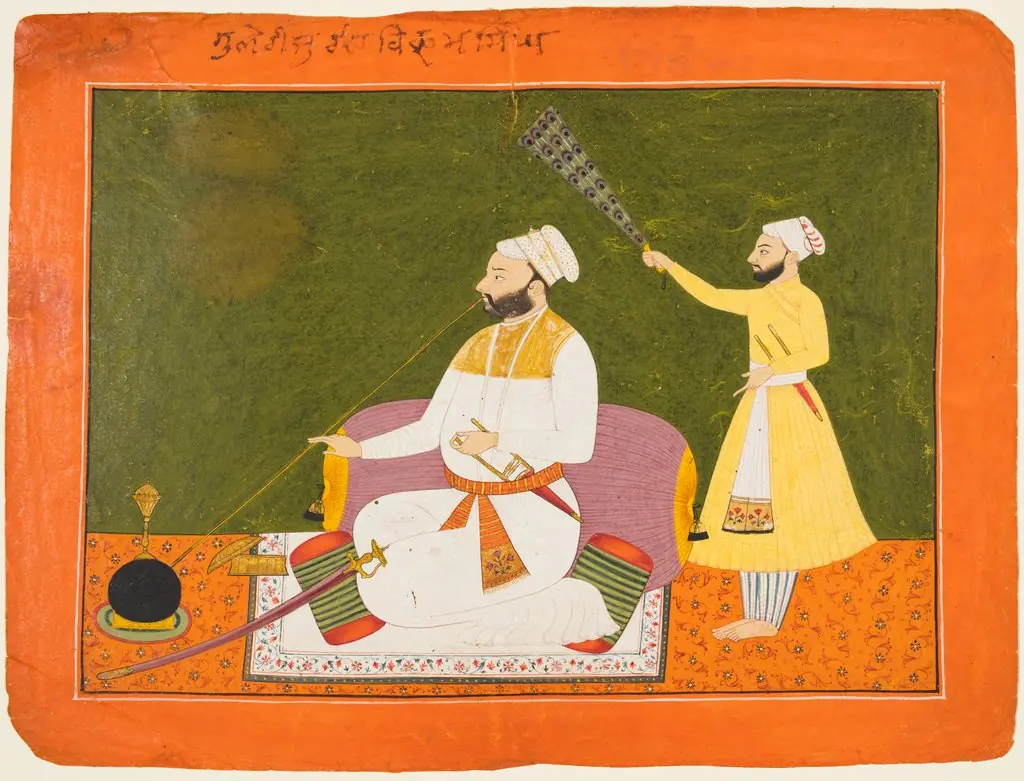
Raja Bikram Singh of Guler smoking a hookah
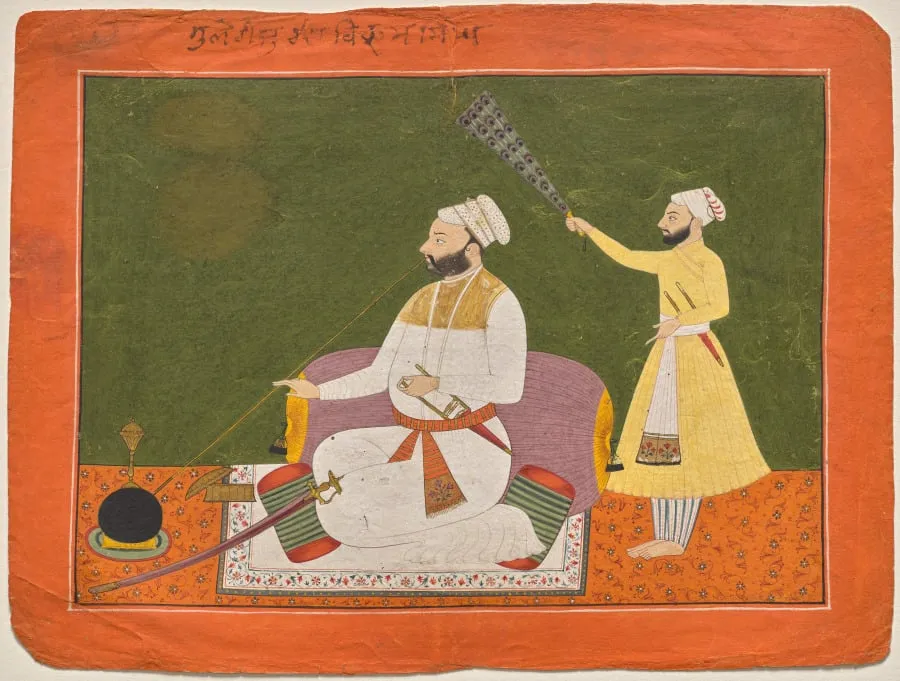
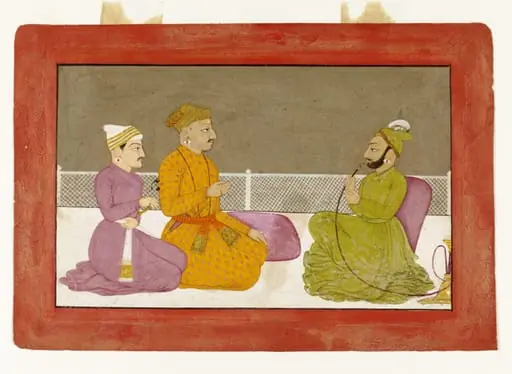
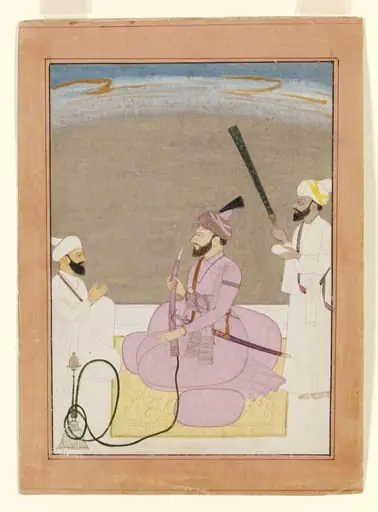
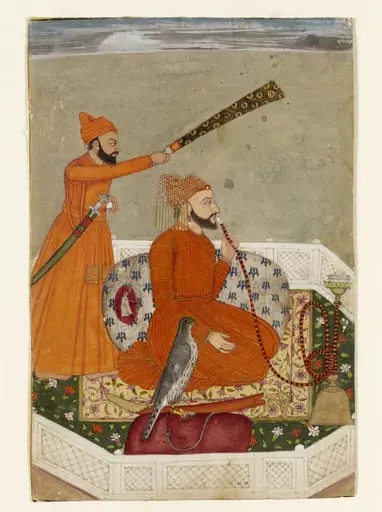
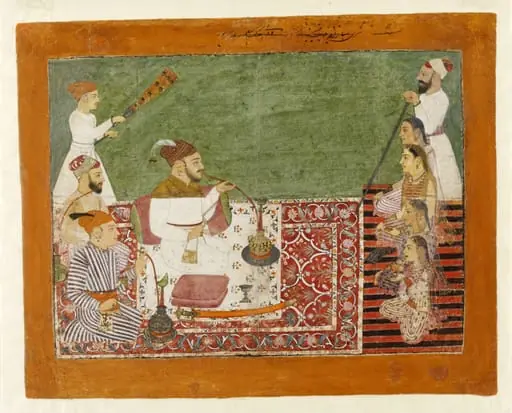
Raja Bikram Singh of Guler smoking a hookah is an unspecified painting by the Baroque artist Unknown. It dates from 1684 and is held in the collection of the Cleveland Museum of Art. The work is a portrait of Raja Bikram Singh, a ruler of the Guler kingdom in northern India, rendered in the late seventeenth century.
- Accession no.
- 2018.89
- Credit line
- Purchase and partial gift from the Catherine and Ralph Benkaim Collection; Severance and Greta Millikin Purchase Fund
About this work
Overview
The work is a portrait of Raja Bikram Singh, a ruler of the Guler kingdom in northern India, rendered in the late seventeenth century. Executed in the neighboring Chamba school, it is among the earliest known depictions of a Guler chief. The composition shows the monarch seated on the floor, a long hookah pipe held to his mouth, and a servant fanning him with a fly‑whisk.
Subject & Meaning
The painting presents the raja in a dignified, domestic setting, emphasizing his status through attire and accessories. The striped robe, elaborate bolsters, and the act of smoking a hookah convey both regal authority and refined leisure, while the attendant’s fan suggests courtly service and the comforts of royal life.
Technique & Style
Characteristic of early Chamba portraiture, the piece employs bright pigments, predominantly red, gold, and deep blue, to delineate clothing and background. The figure is rendered with a straightforward pose, a straight‑bore hookah, and precise linear detailing, reflecting a transition from mythic iconography to realistic representation of individuals.
History & Provenance
Likely commissioned during the reign of Raja Chattar Singh (1664–1690), the portrait was produced in Chamba, a nearby hill kingdom known for its courtly art. Its creation marks a moment when Guler patrons began to seek visual documentation of their own lineage, employing Chamba artists for the task.
Context
The work belongs to the broader Pahari painting tradition of the western Himalayas, where small courts fostered a distinctive style blending Indian and Tibetan influences. At this time, portraiture was emerging as a genre, moving away from purely religious subjects toward secular depictions of rulers and nobles.
Artist & collection