Artwork
Vivaca Ragaputra, a Leaf from Ragamala Series
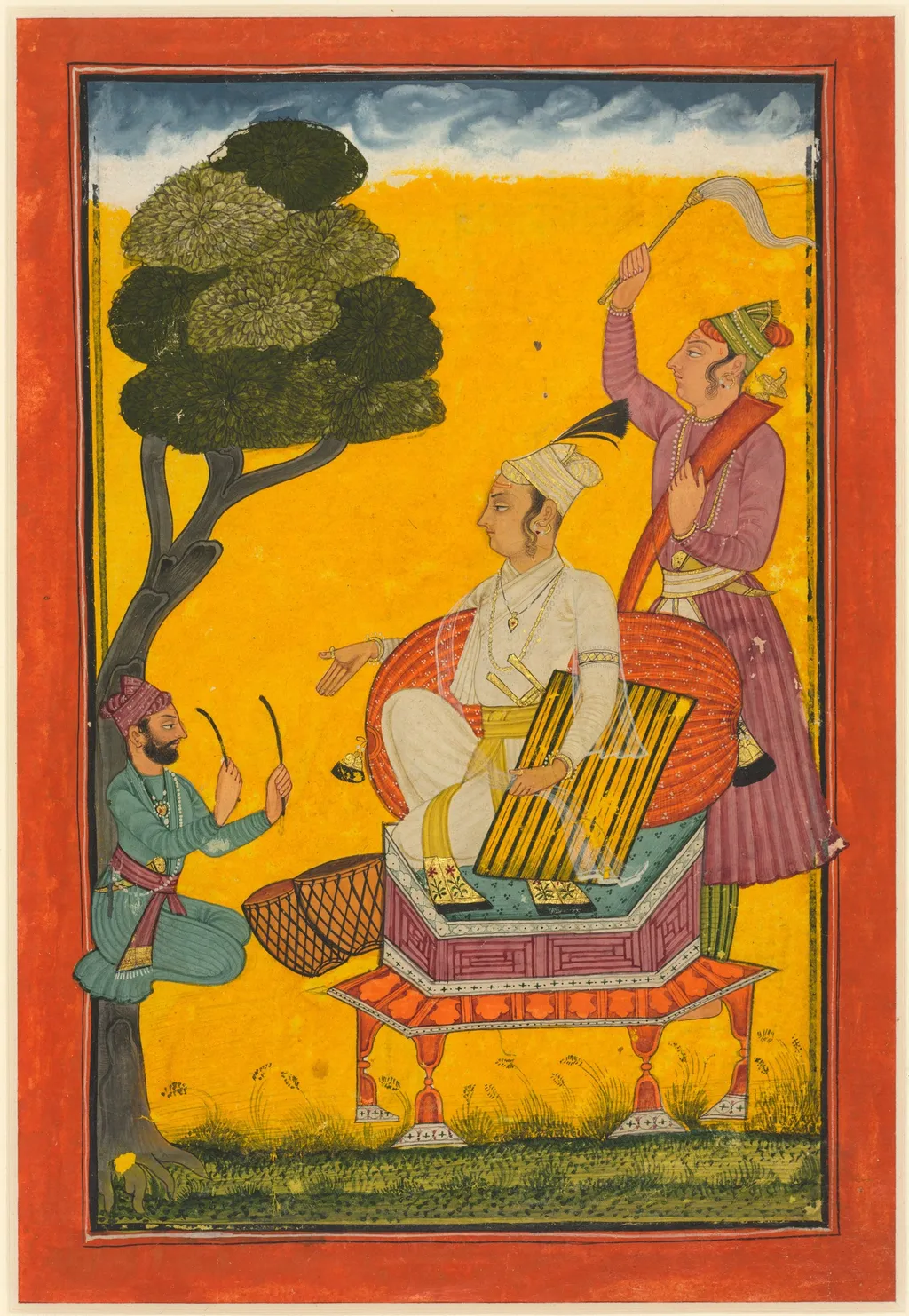
Vivaca Ragaputra, a Leaf from Ragamala Series is an unspecified painting. It dates from 1715 and is held in the collection of the Cleveland Museum of Art.
About this work
History & Provenance
Vivaca Ragaputra, a Leaf from Ragamala Series was created in 1715. The artwork is classified as a painting by an unknown artist. It is currently held in the collection of the Cleveland Museum of Art, where it is cataloged with the accession number 2011.214.
Context
Vivaca Ragaputra, a Leaf from Ragamala Series, created in 1715, exemplifies the miniature painting tradition associated with the Ragamala series, reflecting the Mughal-influenced artistic milieu of its time. The work's attribution to an unknown artist and its presence in the Cleveland Museum of Art collection underscore its significance within the broader context of Indian miniature painting, where thematic series like Ragamala combined musical modes with visual narratives. Its classification as a painting from 1715 situates it within the early phase of the series' production, highlighting the interplay between musical symbolism and visual art in early modern Indian artistic expression.
Legacy
Vivaca Ragaputra, a Leaf from Ragamala Series, created circa 1715, has been recognized as a significant example of early Indian miniature painting within the Ragamala tradition. Its inclusion in the Cleveland Museum of Art's collection has facilitated scholarly study of the stylistic and thematic elements characteristic of 18th-century Indian courtly art. The work continues to influence contemporary discussions on cross-cultural musical and visual motifs in South Asian artistic heritage, reflecting its enduring relevance in both academic and curatorial contexts.
Overview
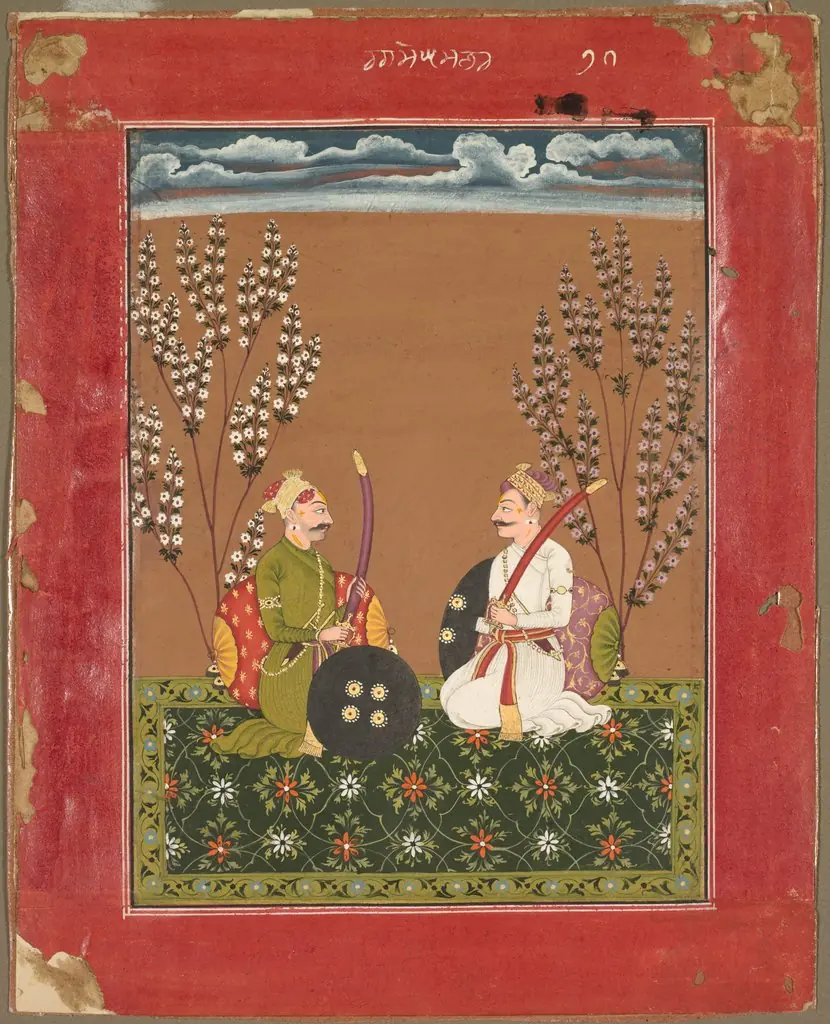
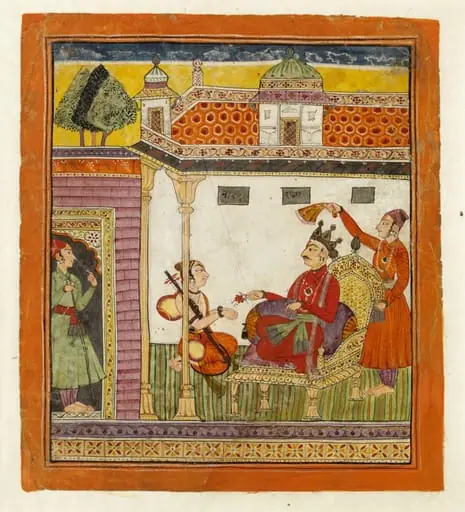
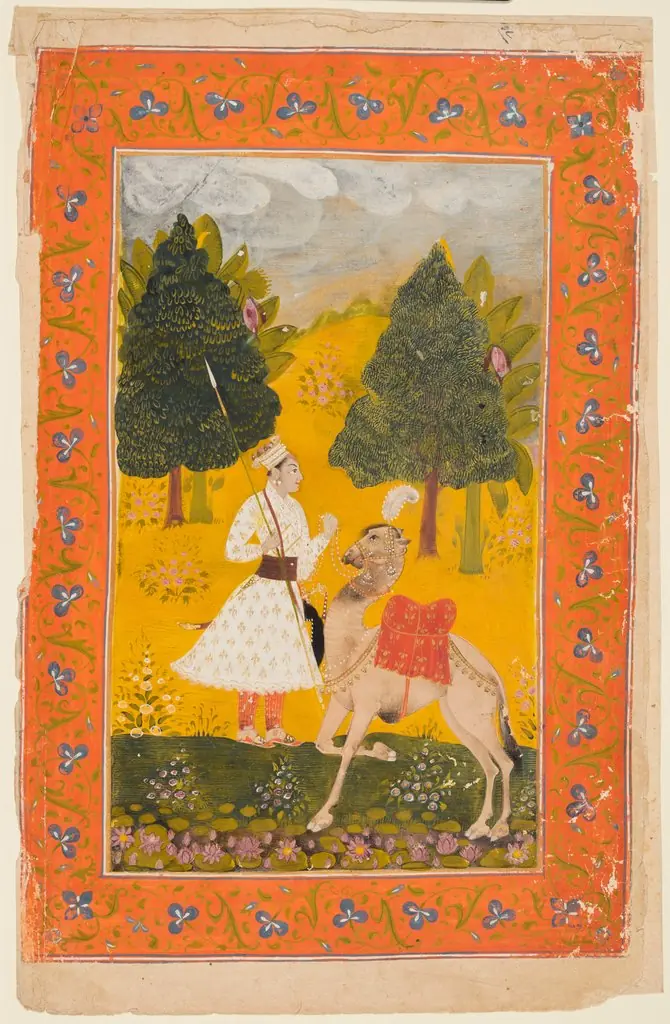
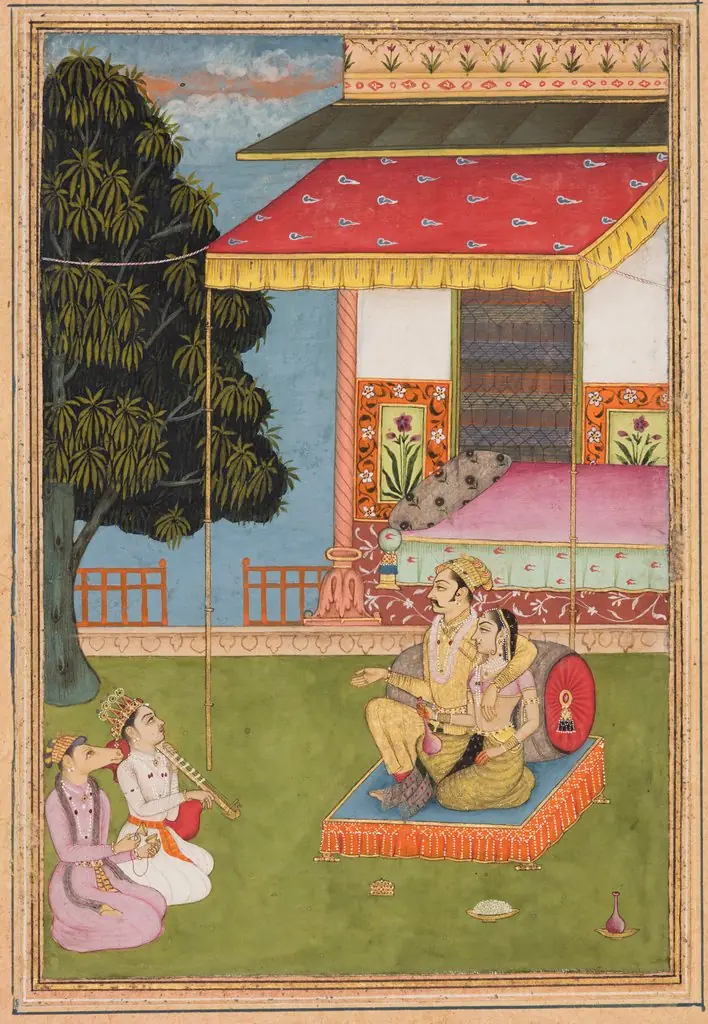
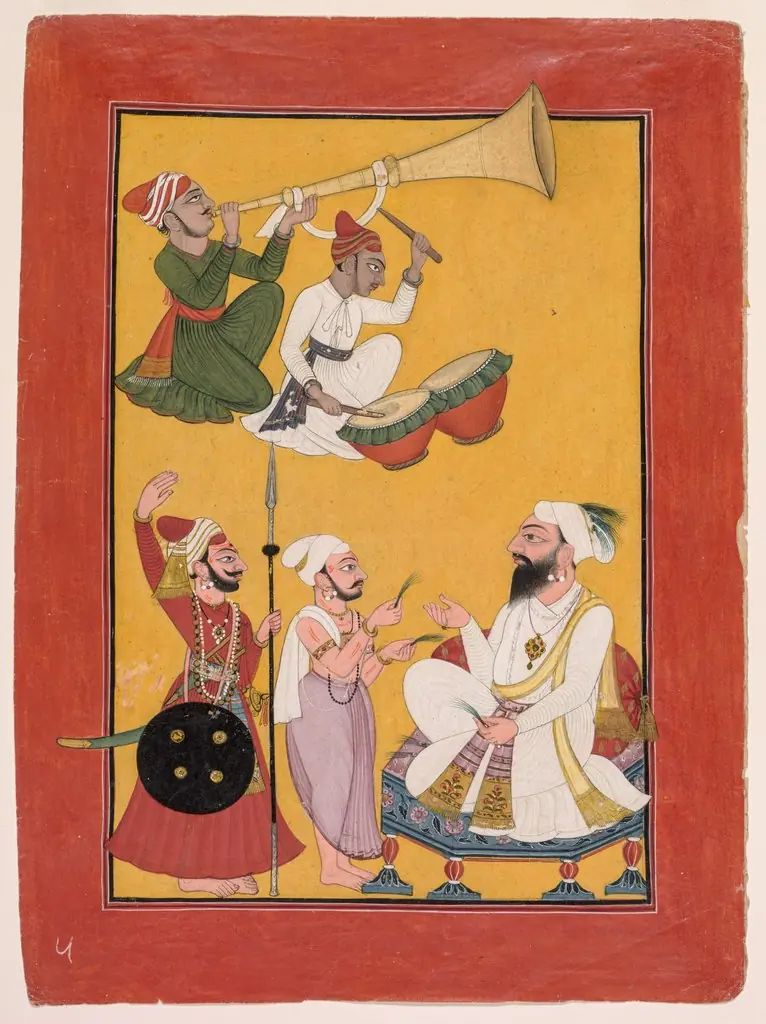
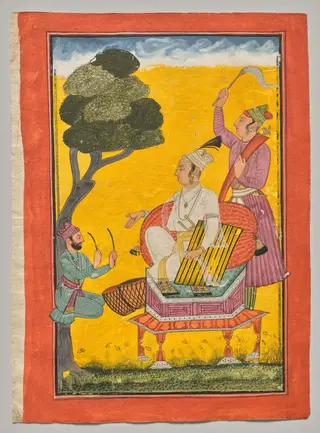
Vivaca Ragaputra, a leaf from the Ragamala series, is a painted composition that presents three figures dressed in traditional Indian attire. The central figure occupies a raised platform, supported by an elaborately patterned table, and is distinguished by a white turban and garment. The work is set against a yellow ground that recedes into a blue sky, creating a simple yet structured backdrop.
Subject & Meaning
Their varied postures and accessories hint at a narrative rooted in Indian cultural or religious practice.
The scene depicts three men engaged in distinct activities: the central figure holds a slender, elongated object, possibly a ceremonial staff; to his right, a man in purple gestures with a fan‑like implement; on the left, a figure in green stands near a tree, clutching a curved object that may be a weapon or ritual tool. Their varied postures and accessories hint at a narrative rooted in Indian cultural or religious practice.
Technique & Style
Executed in a flat, decorative manner, the painting employs bold color blocks, white, purple, green, and yellow, against a clear blue sky. The figures are rendered with minimal modeling, emphasizing outline and pattern over volumetric shading. Intricate designs on the supporting table illustrate a concern for ornamental detail typical of the Ragamala tradition.
Artist & collection