Artwork
Retaule de la infantesa de Crist
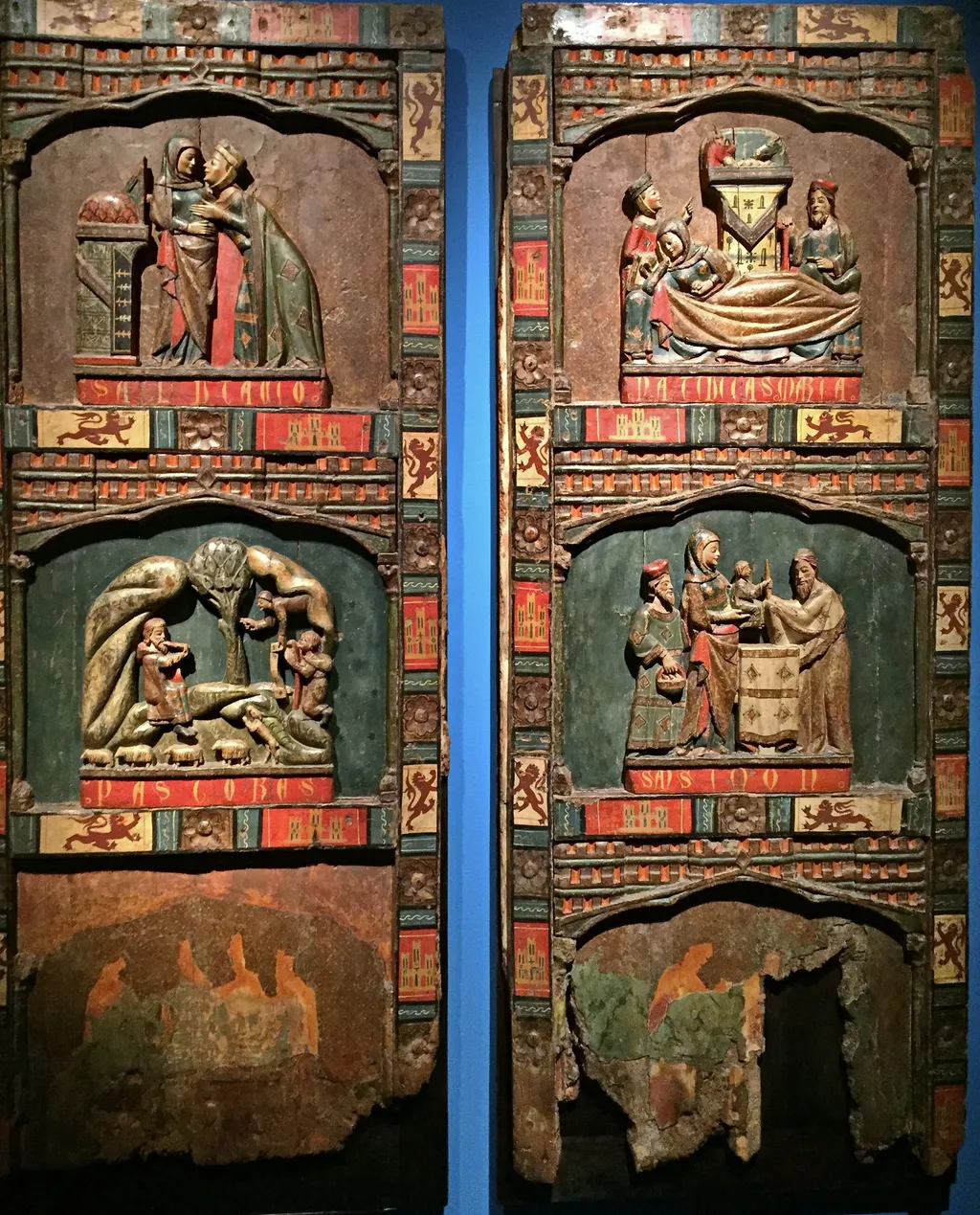
Retaule de la infantesa de Crist is a tempera painting by the Romanesque artist Unknown. It dates from 1250 and is held in the collection of the Museu Nacional d'Art de Catalunya. A small devotional panel painted in tempera, this work depicts the childhood of Christ through a series of intimate scenes.
About this work
Overview
A small devotional panel painted in tempera, this work depicts the childhood of Christ through a series of intimate scenes. Created for private prayer, it reflects the spiritual focus of late medieval piety, emphasizing Christ’s early life as a source of contemplation rather than grand narrative.
Subject & Meaning
The panel illustrates episodes from Christ’s infancy, including the Nativity, Adoration of the Magi, and Flight into Egypt. These moments highlight divine presence in humble settings, reinforcing the theological idea of God’s accessibility through human vulnerability and domestic life.
Technique & Style
Executed in tempera on wood, the painting employs fine brushwork and flat, decorative surfaces typical of late Gothic traditions. Gold leaf accents highlight sacred figures, while spatial depth is minimized, prioritizing symbolic clarity over naturalism to guide meditative focus.
History & Provenance
The panel likely originated in a Catalan or Aragonese workshop during the 14th or early 15th century. It remained in private ecclesiastical collections until the 19th century, when it entered a public collection, its attribution refined through stylistic comparison with regional altarpiece fragments.
Context
Produced during a period when domestic devotion grew among the nobility and urban elites, such panels served as portable aids for prayer. They echo larger altarpieces but condense sacred history into a single, accessible object, reflecting the era’s emphasis on personal spiritual experience.
Legacy
Though not widely known outside regional art studies, the work exemplifies the quiet intensity of late medieval Catalan devotional art. Its survival offers insight into how religious imagery functioned in private life, influencing later regional traditions of intimate sacred representation.
Artist & collection









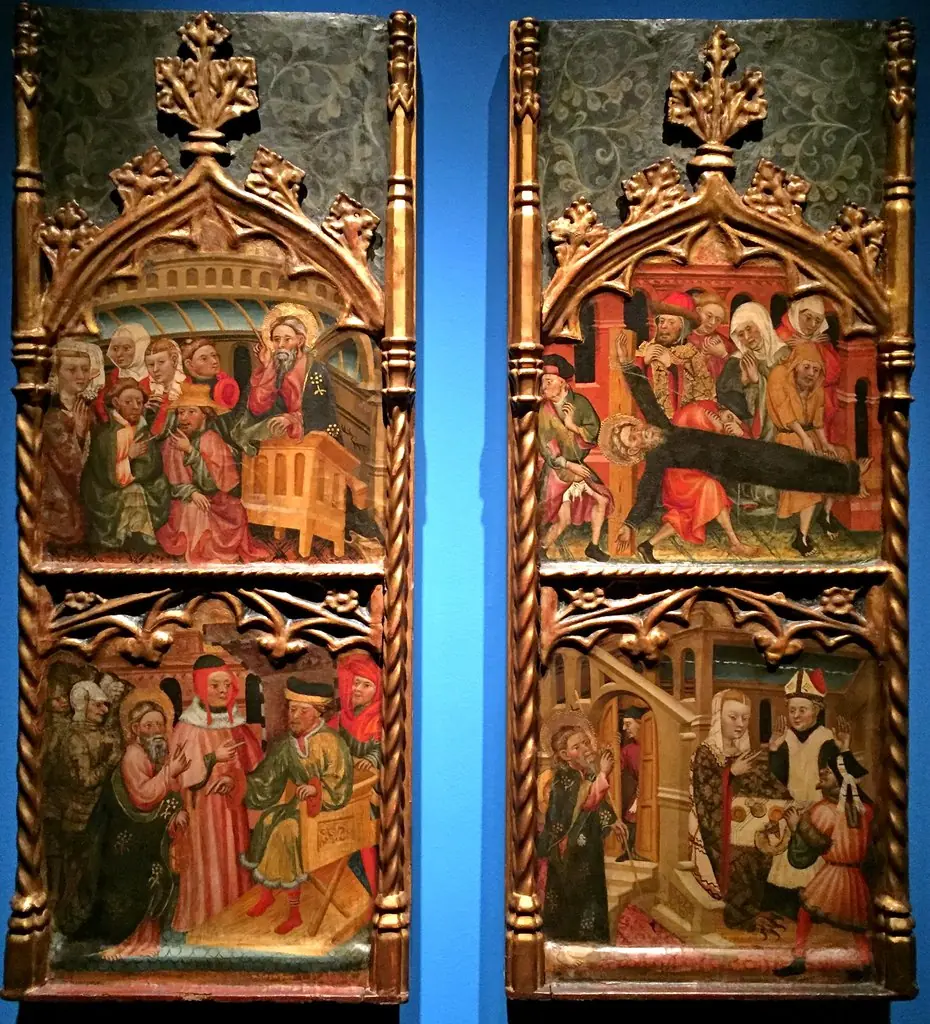 Carrers laterals del retaules de Sant Andreu de Pere Teixidor
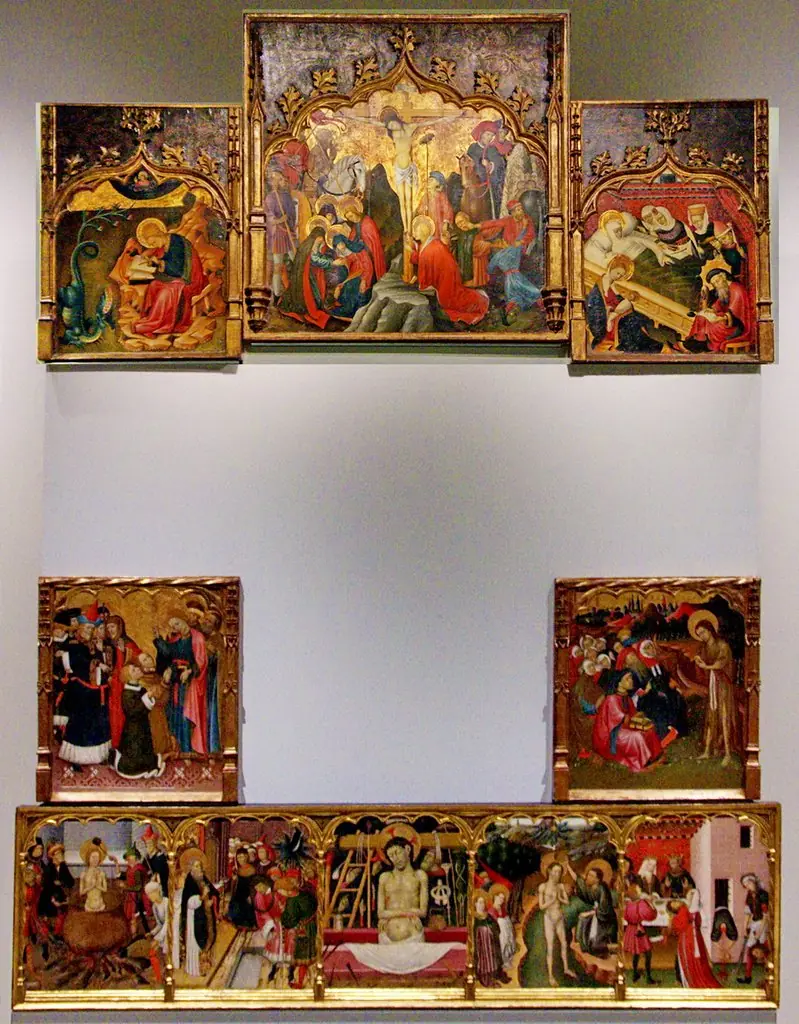 Altarpiece of the Saints John
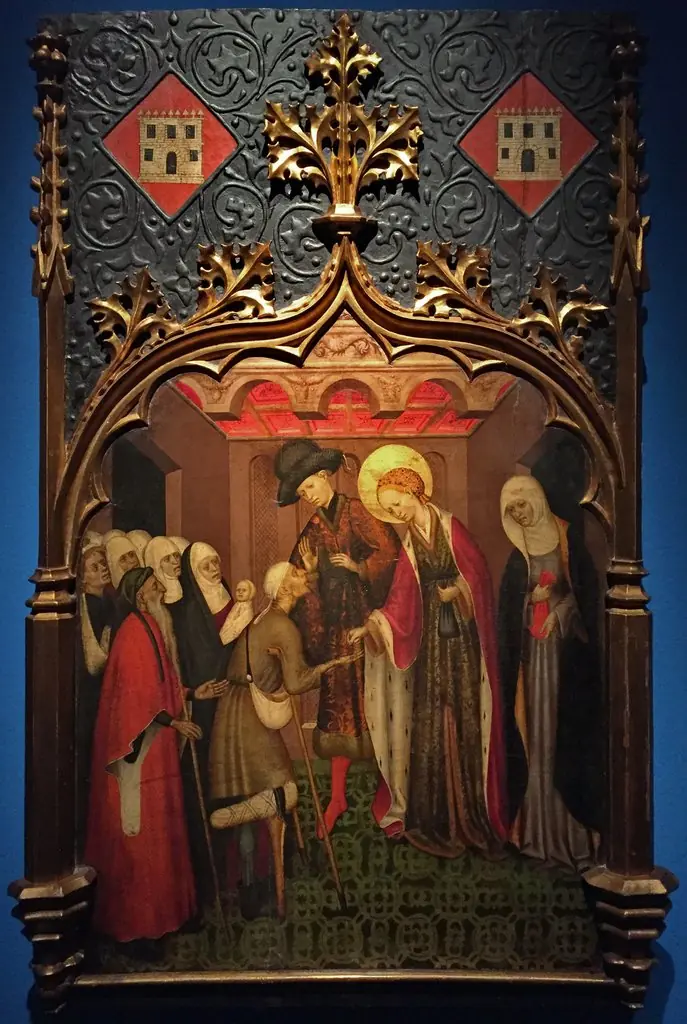 Santa Llúcia repartint almoines
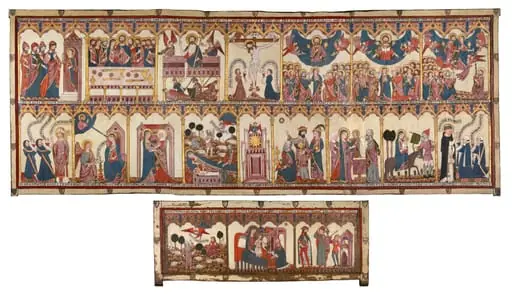 Retable and Frontal of the Life of Christ and the Virgin
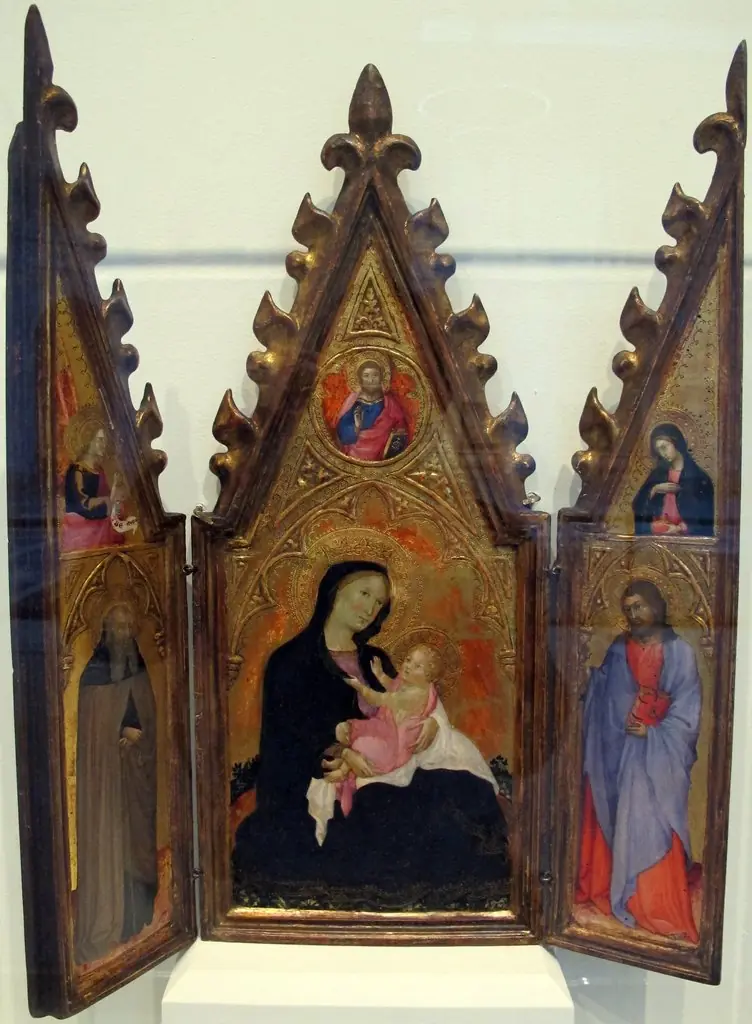 trittico con madonna dell'umiltà, ss. antonio abate jacopo
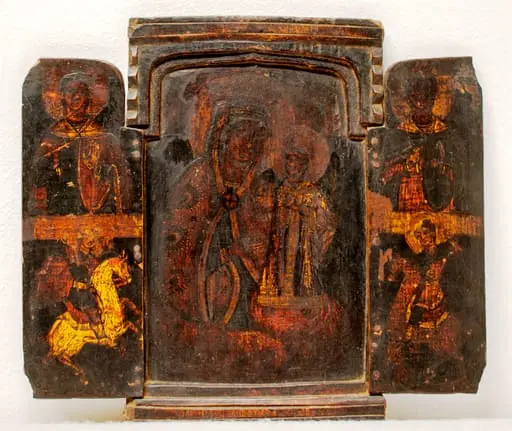 Pe panoul central este reprezentată Maica Domnului Hodighitria(Călăuzitoarea). Pruncul stă în picioare, amândoi fiind înveșmântați în straie împărătești. Maica ține Pruncul cu mâna stângă, cu dreapta arată către El. Voleul stâng, jumătatea inferioară - Sfântul Gheorghe călare pe cal alb. Înveșmântat în costum românesc de oștean medieval, mantie roșie. Calul cu picioarele din față ridicate, harnașament de culoare roșie. Deasupra e posibil să fie tot sfântul Gheorghe, în stânga ținând crucea, cu dreapta face gestul păcii, al liniștii.(prin analogie cu 34530). Simetric, pe latura dreaptă a tripticului se află jos, Sf. Dumitru, călare pe cal roșu, în poziție asemănătoare cu a SF. Gheorghe, iar sus probabil tot el, în altă ipostază iconografică(analogie) . Veșmintele au culorile inversate(tunica roșie -dreapta, albastru-stânga, mantie roșu -stânga, albastru - dreapta), la fel la sfinții războinici, probabil în legătură cu reprezentarea populară a timpului. Inițial, tripticul se închidea, dovadă inscripția care se continuă pe cele două uși. Ulterior a fost fixat cu cuie de fier, iar prinderea se făcea cu o sfoară legată de două cuie bătute pe cant.