Artwork
Ofrena de sant Joaquim i santa Anna al Temple
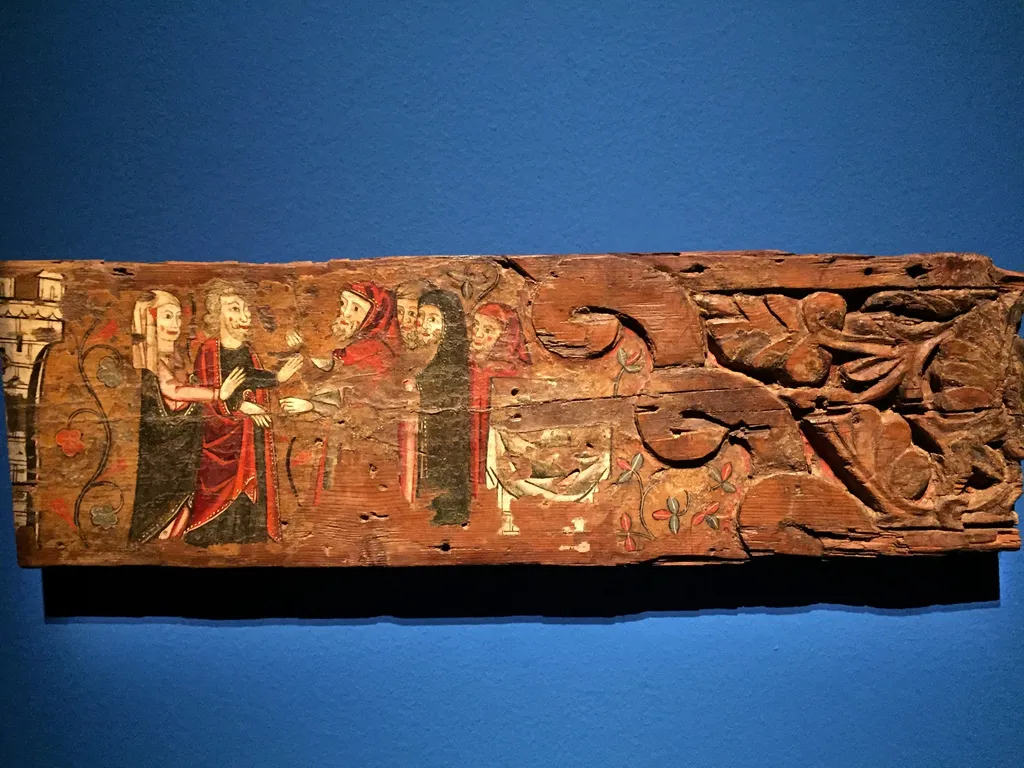
Ofrena de sant Joaquim i santa Anna al Temple is a tempera painting by the Gothic painting artist Unknown. It dates from 1300 and is held in the collection of the Museu Nacional d'Art de Catalunya.
About this work
Overview
This tempera painting on wood depicts a devotional scene featuring four figures in flowing robes, arranged centrally against a warm golden-brown background.
This tempera painting on wood depicts a devotional scene featuring four figures in flowing robes, arranged centrally against a warm golden-brown background. A single figure holds a bowl, suggesting an act of offering. The composition is restrained, with minimal spatial depth and no perspective, emphasizing ritual over narrative complexity. Decorative leaf-and-vine carvings frame the right edge, integrating the painted surface with its wooden support.
Subject & Meaning
The figures represent Saint Joachim and Saint Anne, parents of the Virgin Mary, engaged in a ceremonial offering at the Temple in Jerusalem. The bowl likely contains a gift, possibly symbolic of their piety or the dedication of their daughter to divine service. The scene reflects medieval devotional practices, honoring the holiness of Mary’s lineage through quiet, solemn ritual rather than dramatic spectacle.
Technique & Style
Executed in tempera, the painting employs flat, bold outlines and simplified forms, typical of late medieval panel painting. Colors are limited to earthy reds and browns, enhancing the solemn tone. Shading is minimal, and figures lack individualized features, prioritizing symbolic presence over naturalism.
The wooden panel’s surface is treated as a unified field, with decorative carving extending the visual language beyond paint.
History & Provenance
The work originates from a religious context in Catalonia or nearby regions during the 13th or 14th century, likely created for private devotion or a small chapel. Its survival suggests it was preserved within a monastic or familial setting. The integration of carved ornamentation implies it may have been part of a larger altarpiece or devotional object, though its original setting is now unknown.
Context
This painting reflects the devotional culture of late medieval Iberia, where images of Saint Joachim and Saint Anne were increasingly venerated as models of holy parenthood. Its stylistic simplicity aligns with regional traditions that favored symbolic clarity over illusionistic detail. Such works served as aids to prayer, reinforcing familial sanctity within a society deeply invested in lineage and spiritual inheritance.
Legacy
Though not widely known outside regional collections, the painting exemplifies the quiet dignity of medieval Catalan religious art. Its preservation offers insight into how ordinary devotional objects conveyed theological ideas through form and gesture. It stands as a testament to the enduring role of domestic and local piety in shaping visual culture before the rise of Renaissance naturalism.
Artist & collection









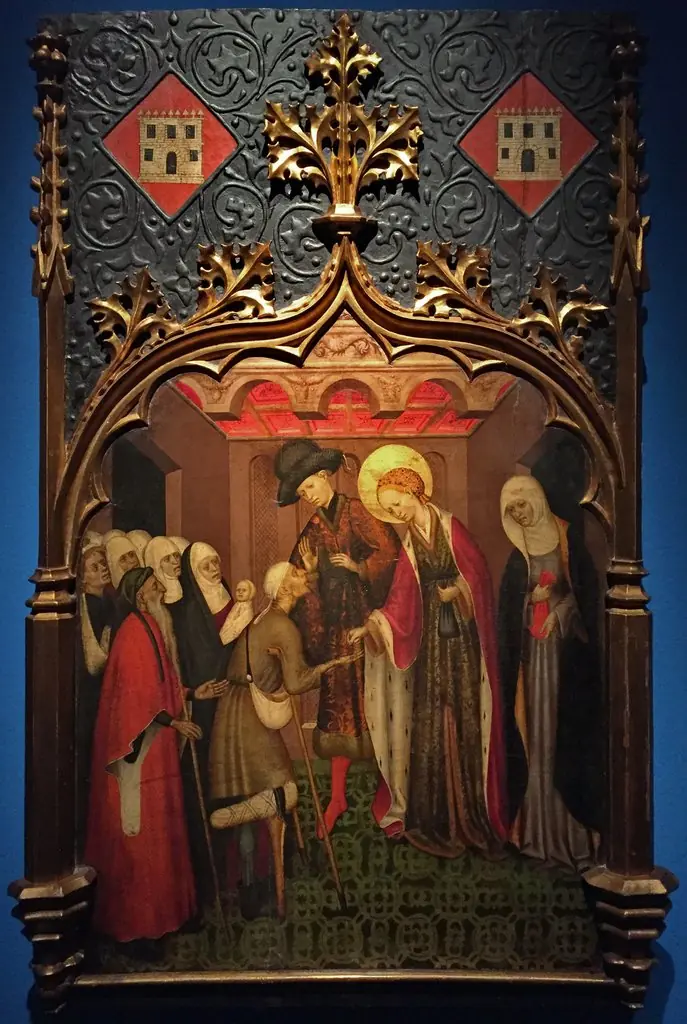 Santa Llúcia repartint almoines
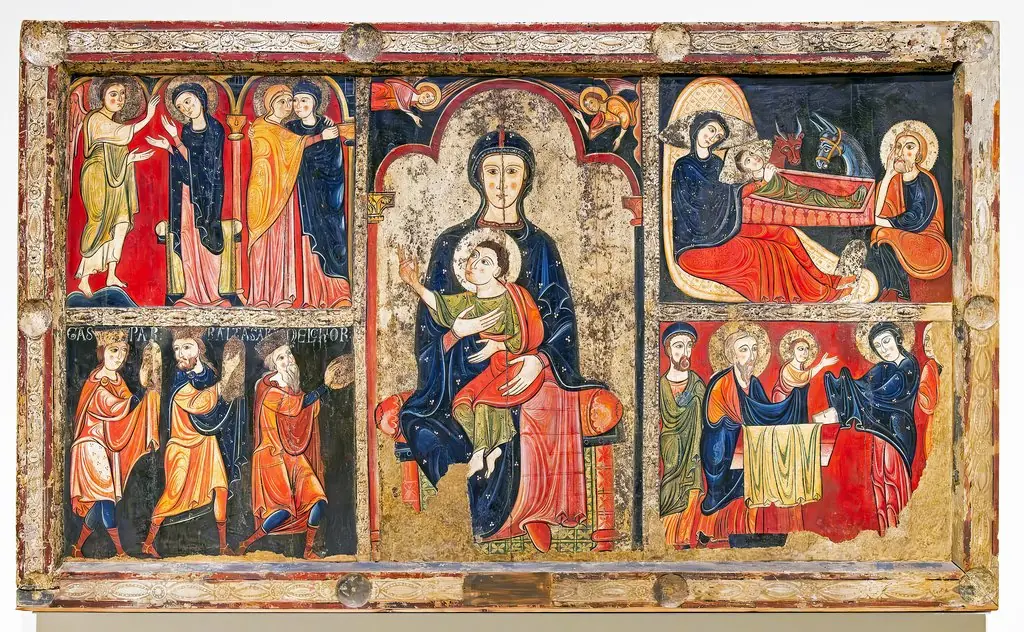 Altar frontal from Avià
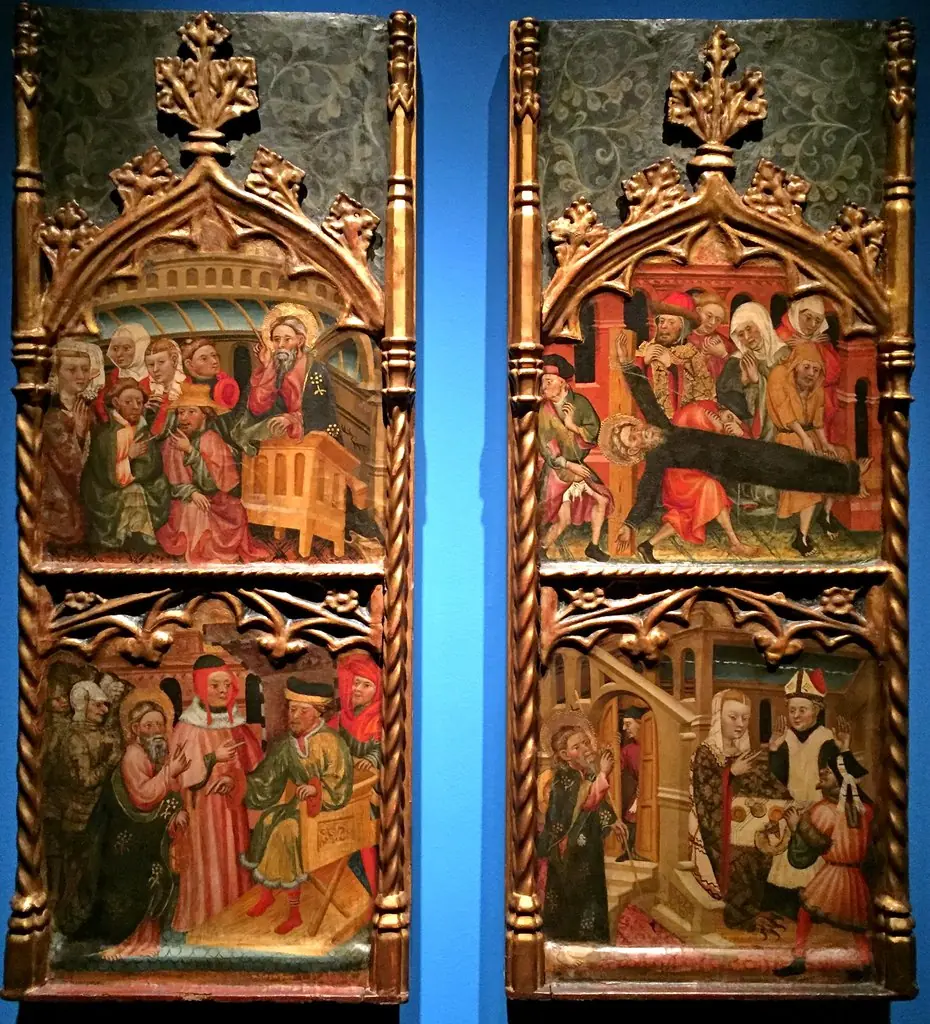 Carrers laterals del retaules de Sant Andreu de Pere Teixidor
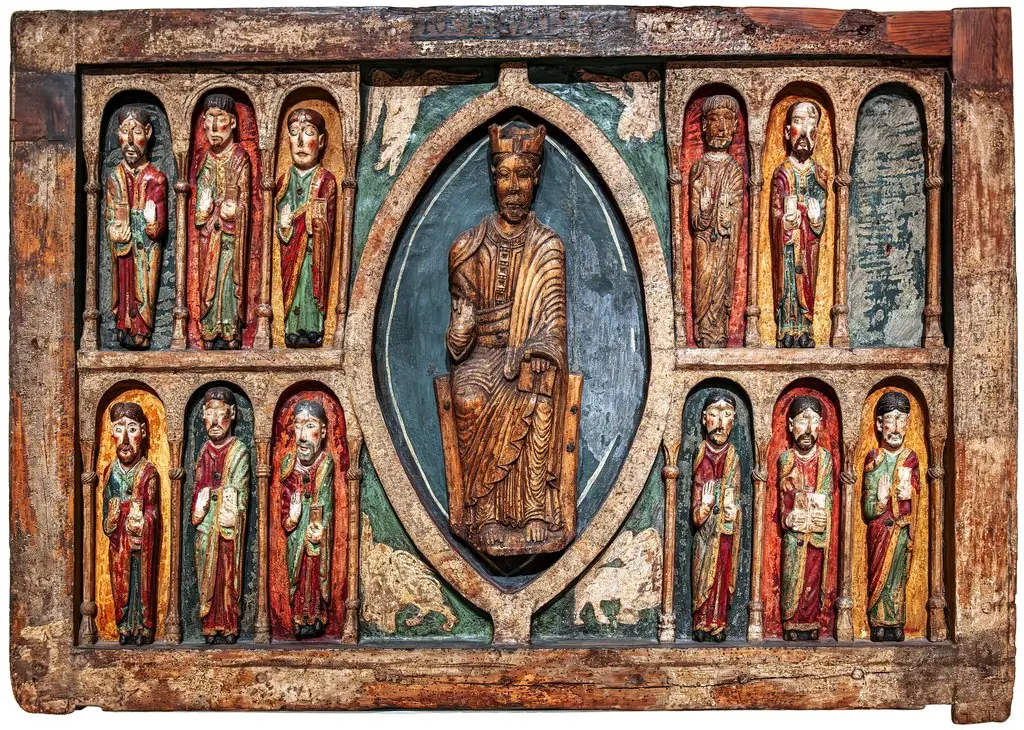 Altar frontal from Santa Maria in Taüll
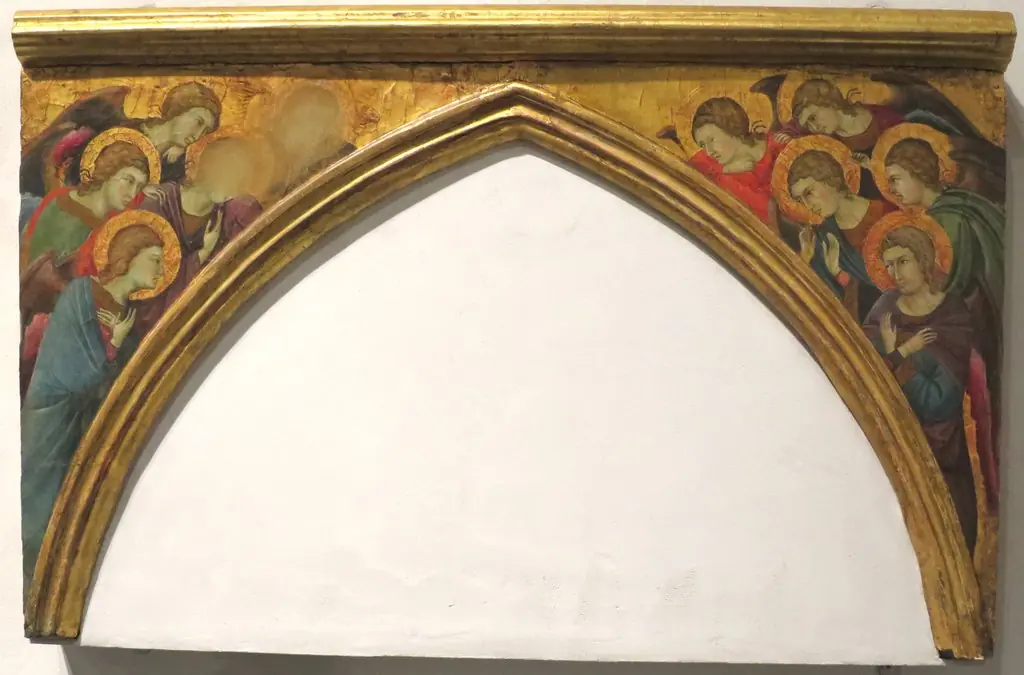 Worshipping Angels
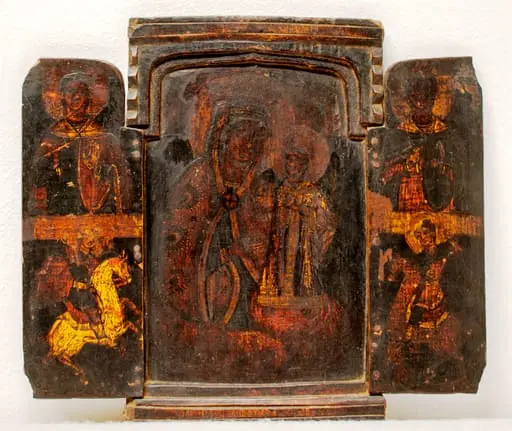 Pe panoul central este reprezentată Maica Domnului Hodighitria(Călăuzitoarea). Pruncul stă în picioare, amândoi fiind înveșmântați în straie împărătești. Maica ține Pruncul cu mâna stângă, cu dreapta arată către El. Voleul stâng, jumătatea inferioară - Sfântul Gheorghe călare pe cal alb. Înveșmântat în costum românesc de oștean medieval, mantie roșie. Calul cu picioarele din față ridicate, harnașament de culoare roșie. Deasupra e posibil să fie tot sfântul Gheorghe, în stânga ținând crucea, cu dreapta face gestul păcii, al liniștii.(prin analogie cu 34530). Simetric, pe latura dreaptă a tripticului se află jos, Sf. Dumitru, călare pe cal roșu, în poziție asemănătoare cu a SF. Gheorghe, iar sus probabil tot el, în altă ipostază iconografică(analogie) . Veșmintele au culorile inversate(tunica roșie -dreapta, albastru-stânga, mantie roșu -stânga, albastru - dreapta), la fel la sfinții războinici, probabil în legătură cu reprezentarea populară a timpului. Inițial, tripticul se închidea, dovadă inscripția care se continuă pe cele două uși. Ulterior a fost fixat cu cuie de fier, iar prinderea se făcea cu o sfoară legată de două cuie bătute pe cant.
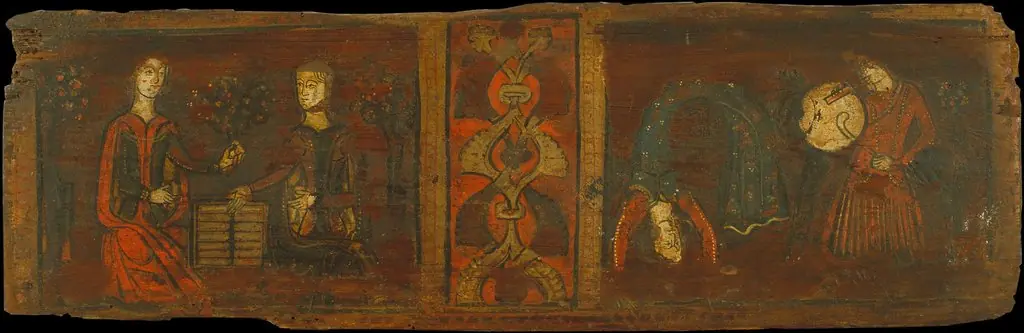 Small coffered ceiling panel with scenes of gallantry and dancing
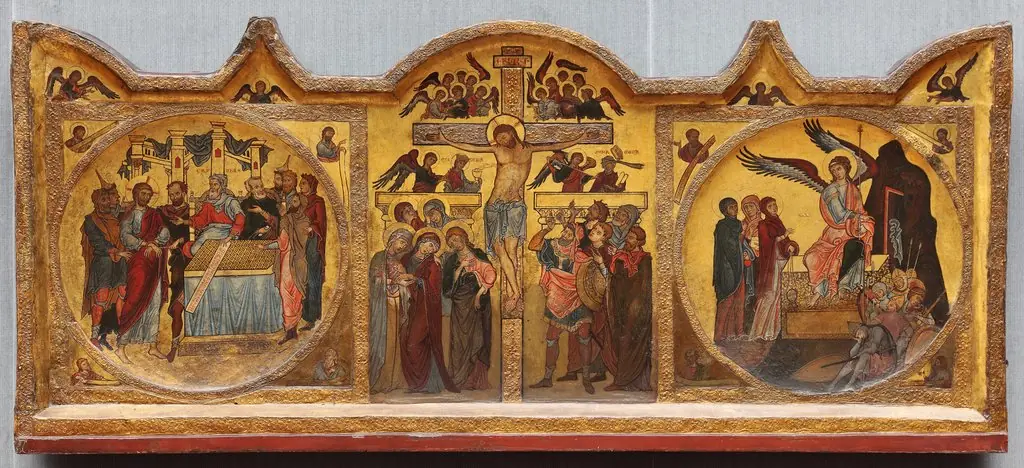 Crucifixion retable from Soest
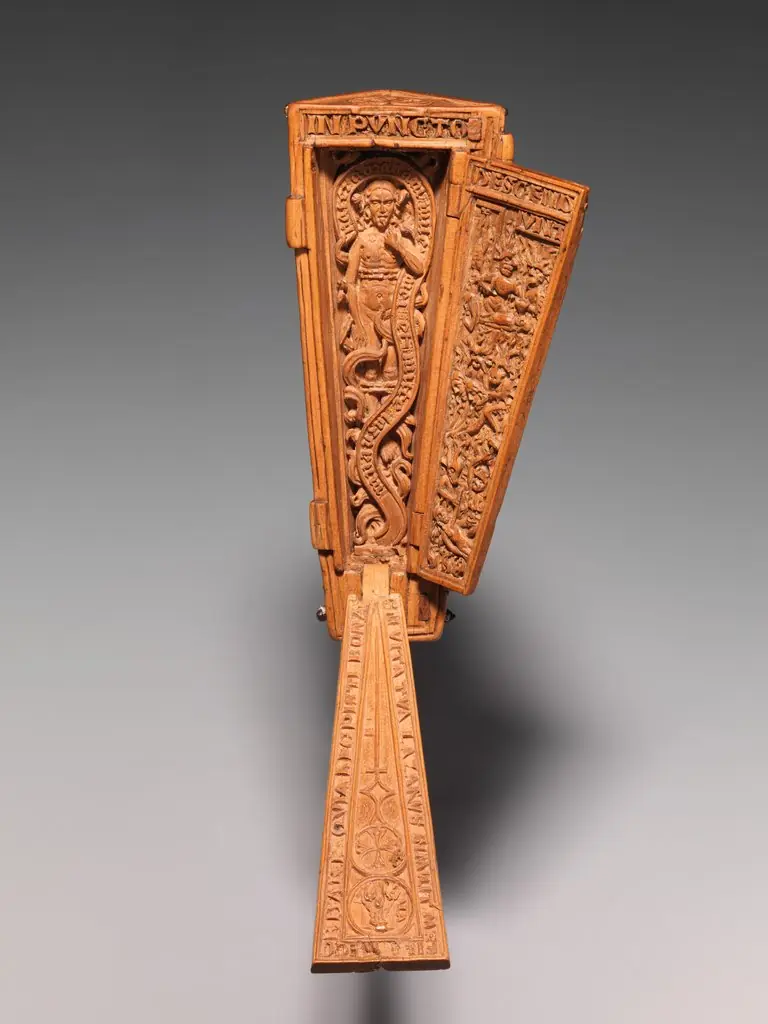 Memento Mori: Dives in Hell