Artwork
Returning Home
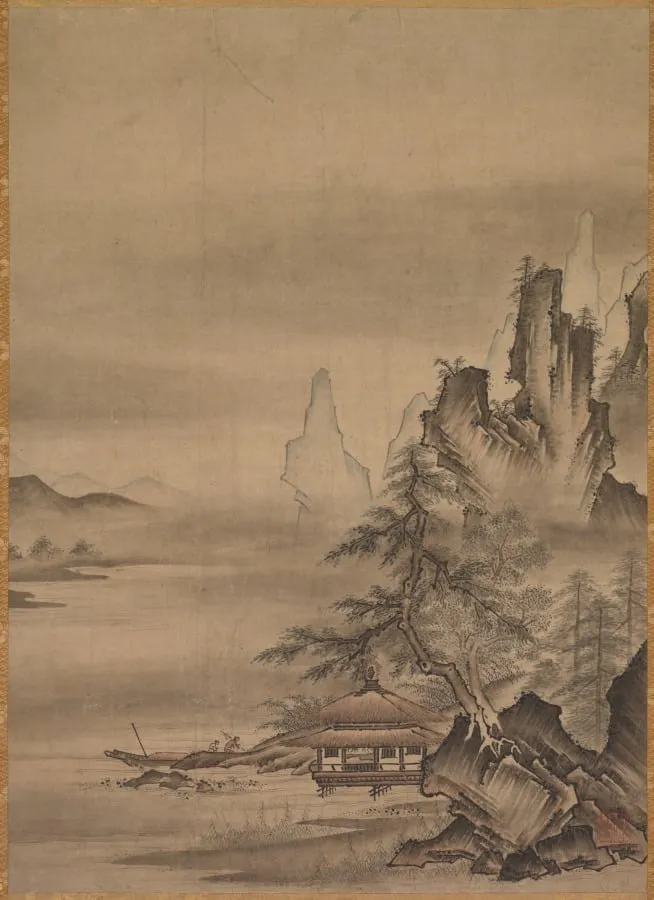
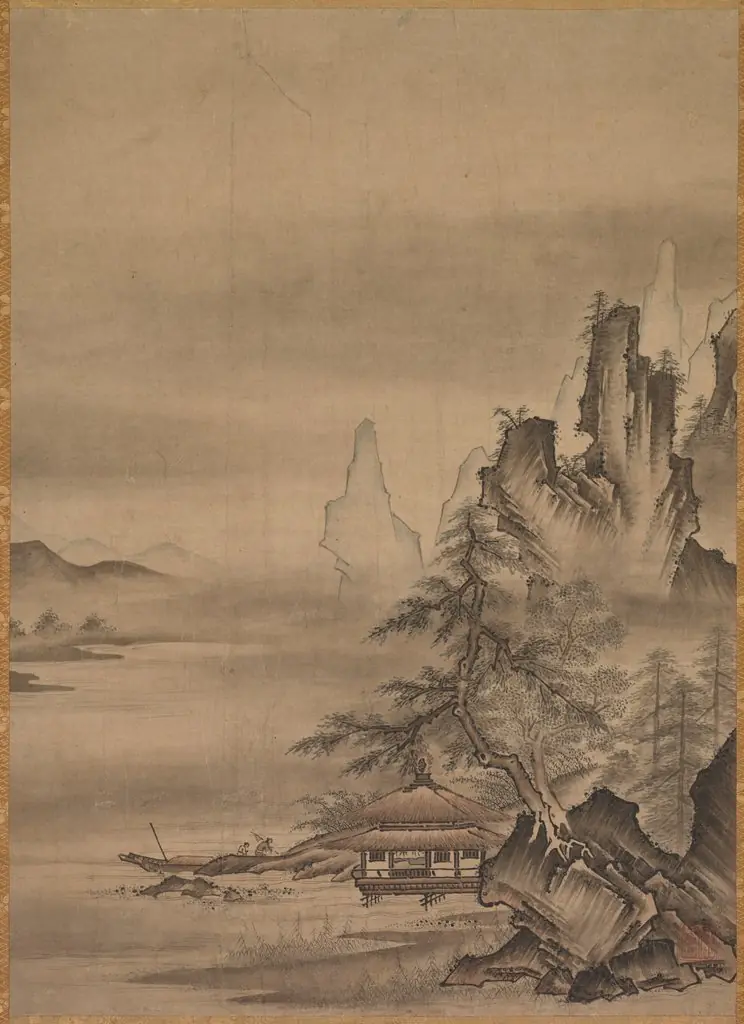
Returning Home is an unspecified painting by the Joseon dynasty painting artist Unknown. It dates from 1504 and is held in the collection of the Cleveland Museum of Art.
- Accession no.
- 2015.513
- Credit line
- Gift from the Collection of George Gund III
About this work
The painting was once thought to be by a Zen monk named Shōkei, but the signature was added later, someone hoped it matched his style.
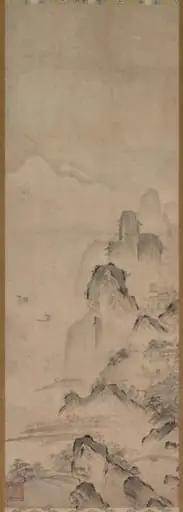
You see a quiet village at dusk: a winding river, a few thatched roofs, and a single traveler walking home with a staff.
The painting was once thought to be by a Zen monk named Shōkei, but the signature was added later, someone hoped it matched his style. It’s a small trick that tells us how much people valued his work, even centuries ago.
Look up the Muromachi period (1392–1573) to see more paintings like this one.
Overview
This ink landscape depicts a quiet village at dusk, with a winding river, scattered thatched roofs, and a lone traveler returning home with a staff. Though once attributed to the Zen monk-painter Shōkei, the seal bearing his name was added later by an unknown hand, reflecting a later collector’s desire to align the work with a respected artistic tradition.
Subject & Meaning
The scene conveys solitude and quiet completion, evoking the daily rhythm of rural life. The traveler’s journey home, framed by receding mountains and ancient pines clinging to rock, suggests a contemplative return, not just physical, but perhaps spiritual. The subdued tones and empty spaces invite stillness, aligning with Zen-inflected ideals of simplicity and impermanence.
Technique & Style
Rendered in monochrome ink, the composition emphasizes asymmetry and atmospheric depth. Pines cling dramatically to a foreground boulder, while distant peaks fade into mist, a technique derived from Tenshō Shūbun’s tradition. The heavy weighting of elements to one side reflects regional Kanto stylistic tendencies, distinct from the more balanced Kyoto school approaches.
History & Provenance
The painting was unsigned and later fitted with a forged seal mimicking that of Kenkō Shōkei, a 15th-century monk-painter from Kamakura. This alteration occurred centuries after its creation, indicating the enduring prestige of Shōkei’s style among collectors. The work’s true author remains unknown, though its lineage connects to Kanto-area artists influenced by the Kano school.
Context
Created during the Muromachi period, the painting reflects the widespread influence of Zen monastic aesthetics and the Kano school’s adaptation of earlier Chinese-inspired landscapes. Regional artists in the Kanto area, such as Maejima Sōyū, developed localized variations of these forms, blending monastic ideals with local topography and patronage.
Legacy
The deliberate addition of Shōkei’s seal reveals how later viewers sought to anchor anonymous works within established artistic lineages. This act underscores the value placed on Zen-derived painting traditions, even when original authorship was lost. The painting now stands as a testament to evolving perceptions of authenticity and artistic authority in premodern Japan.
Artist & collection









- Scholar's Visit
 Returning Home
 Sunset Glow over a Fishing Village, from Eight Views of Xiao-Xiang
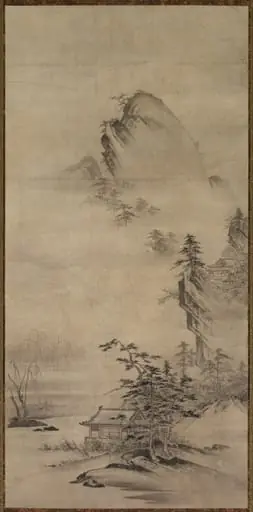 Landscape with a Pavilion
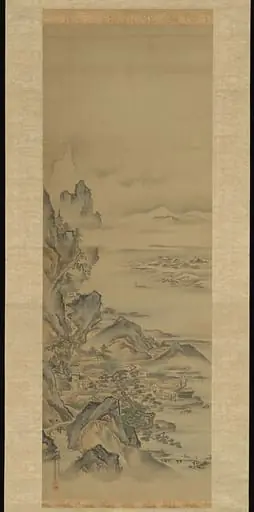 狩野探水守常筆 蓬莱山・瀟湘八景図|Mount Penglai with Eight Views of Xiao and Xiang
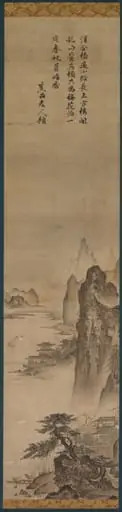 Landscape
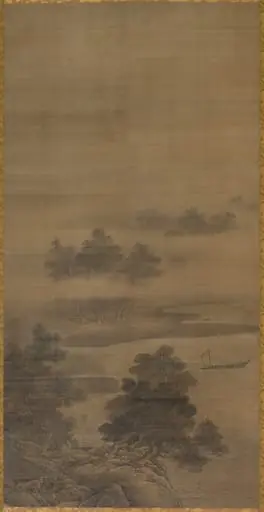 Returning Sails off a Distant Shore, from Eight Views of Xiao-Xiang
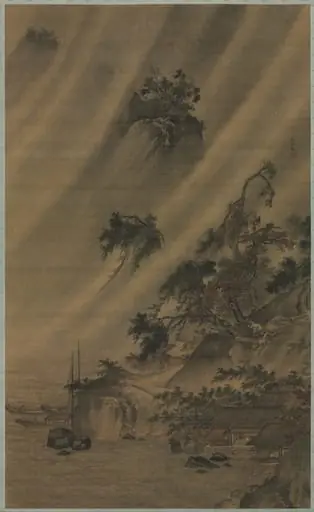 River Village in a Rainstorm
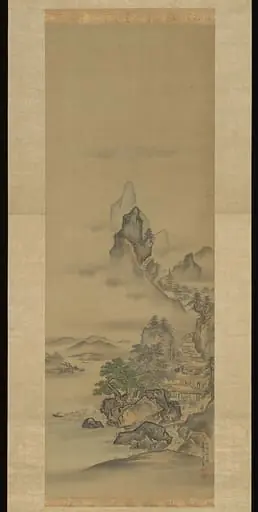 狩野探水守常筆 蓬莱山・瀟湘八景図|Mount Penglai with Eight Views of Xiao and Xiang
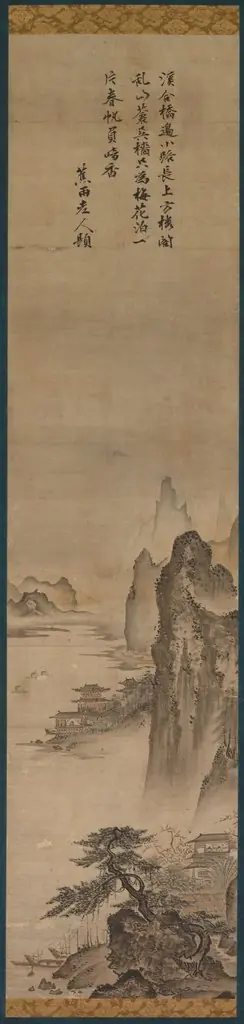 Landscape
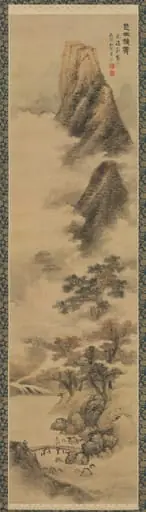 Clearing Autumn Mists in the Chu Mountains
 Landscape