Artwork
Roundel with Mary of Egypt crossing the Jordan
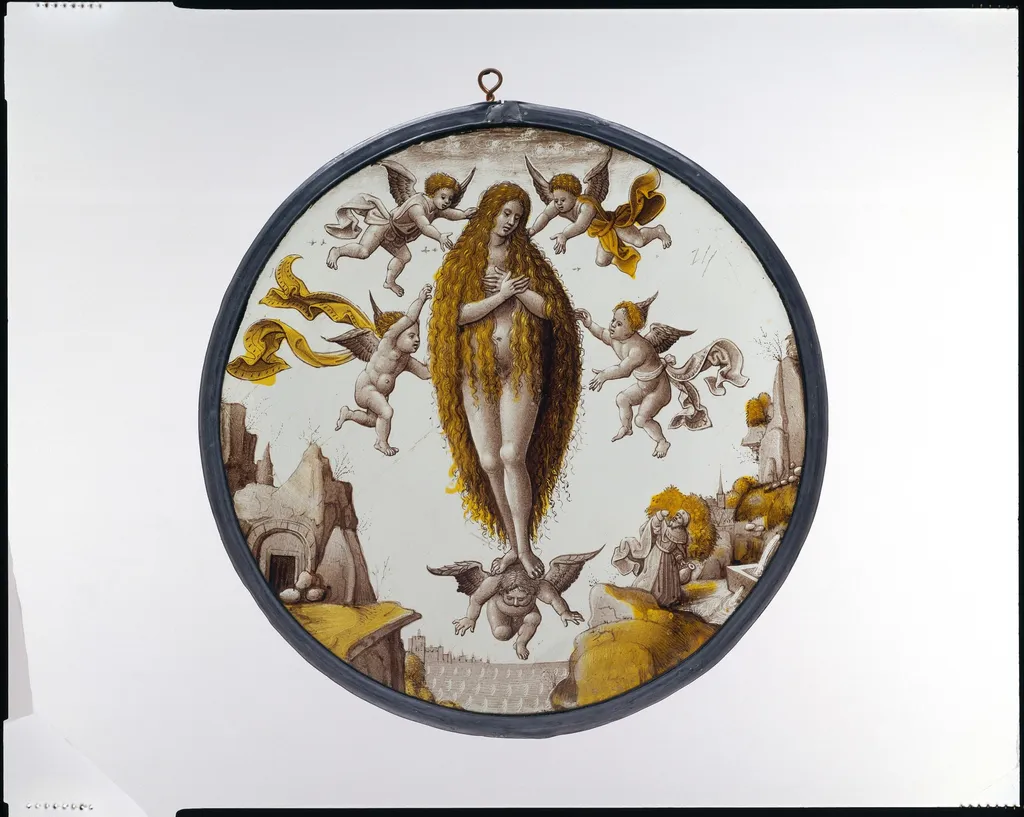
Roundel with Mary of Egypt crossing the Jordan is an unspecified painting. It dates from 1525 and is held in the collection of the Metropolitan Museum of Art.
About this work
Subject & Meaning
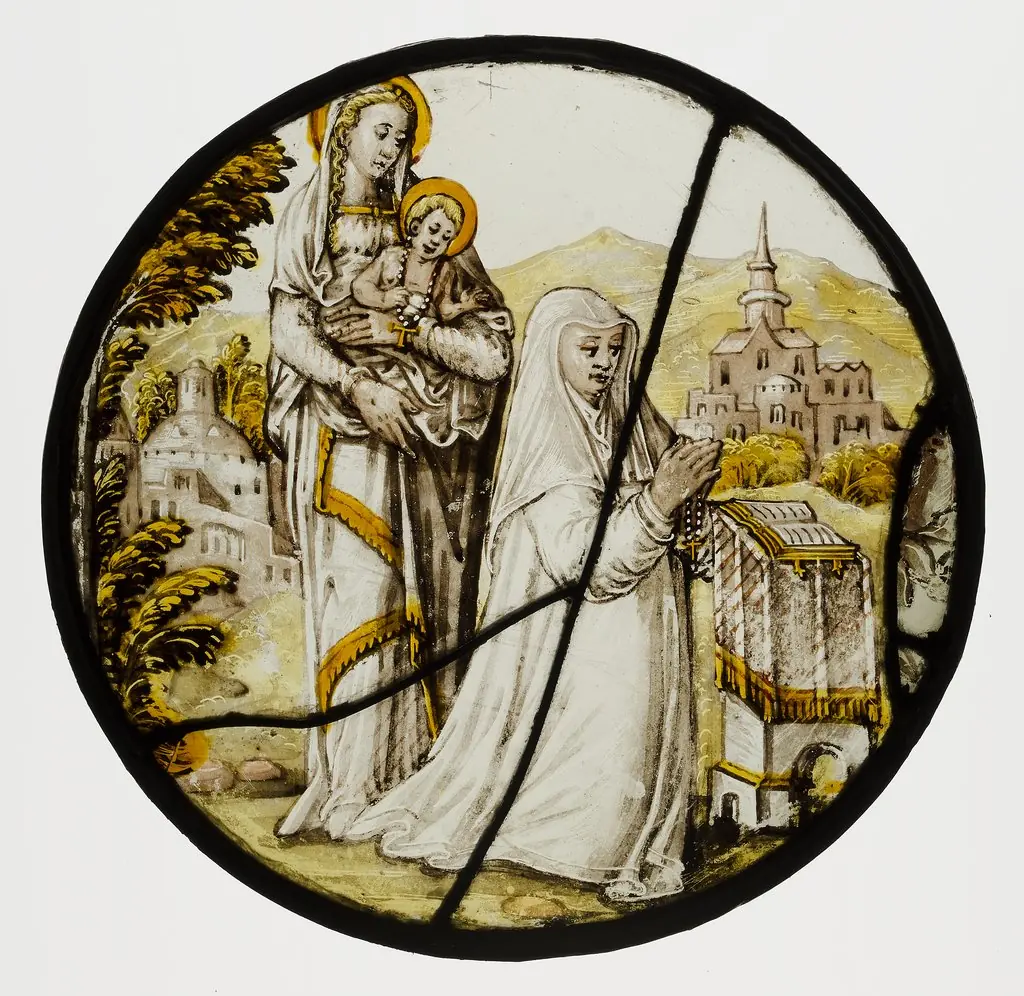
The roundel illustrates Mary of Egypt, a saint celebrated for her conversion and ascetic life, shown in the act of crossing the Jordan River.
The roundel illustrates Mary of Egypt, a saint celebrated for her conversion and ascetic life, shown in the act of crossing the Jordan River. This scene functions as a visual narrative of pilgrimage and spiritual renewal, emphasizing the transition from a life of sin to repentance. The depiction aligns with traditional iconography in which the Jordan crossing symbolizes purification and the beginning of a holy journey.
By focusing on a solitary female figure in motion, the work underscores themes of redemption and divine grace within a religious context. The piece is part of the Metropolitan Museum of Art's collection and dates to 1525.
History & Provenance
This anonymous religious painting, titled Roundel with Mary of Egypt crossing the Jordan, was created in 1525. The work is currently held in the collection of the Metropolitan Museum of Art, where it remains located. No further details regarding its specific commission, earlier ownership history, or the circumstances of its creation are provided in the available records.
The Roundel with Mary of Egypt crossing the Jordan is held in the collection of the Metropolitan Museum of Art. This anonymous religious painting, dated to 1525, is part of the museum's permanent holdings. The work is cataloged within the institution's archives as an anonymous creation depicting a woman, specifically the saint crossing the Jordan.
No specific inventory number or exhibition history is provided in the available records, though the piece remains a documented part of the museum's collection.
Overview
This circular painting, known as "Roundel with Mary of Egypt crossing the Jordan," presents a central female figure immersed in a river, her long hair appearing to merge with the water. She is encircled by several small, winged infants, some holding decorative ribbons. A fortified town, complete with towers and a church, is visible on a hill in the background. The artwork, though compact, is characterized by its lively composition and intricate details.
Technique & Style
Despite its modest dimensions, this roundel demonstrates a notable concentration of visual information and dynamic energy. The artist has rendered the central figure's long hair to appear as if it actively flows with the river's current, enhancing the sense of motion. The surrounding winged infants are depicted in various states of flight or suspension, contributing to the overall impression of a scene bustling with activity and intricate visual elements.
Artist & collection

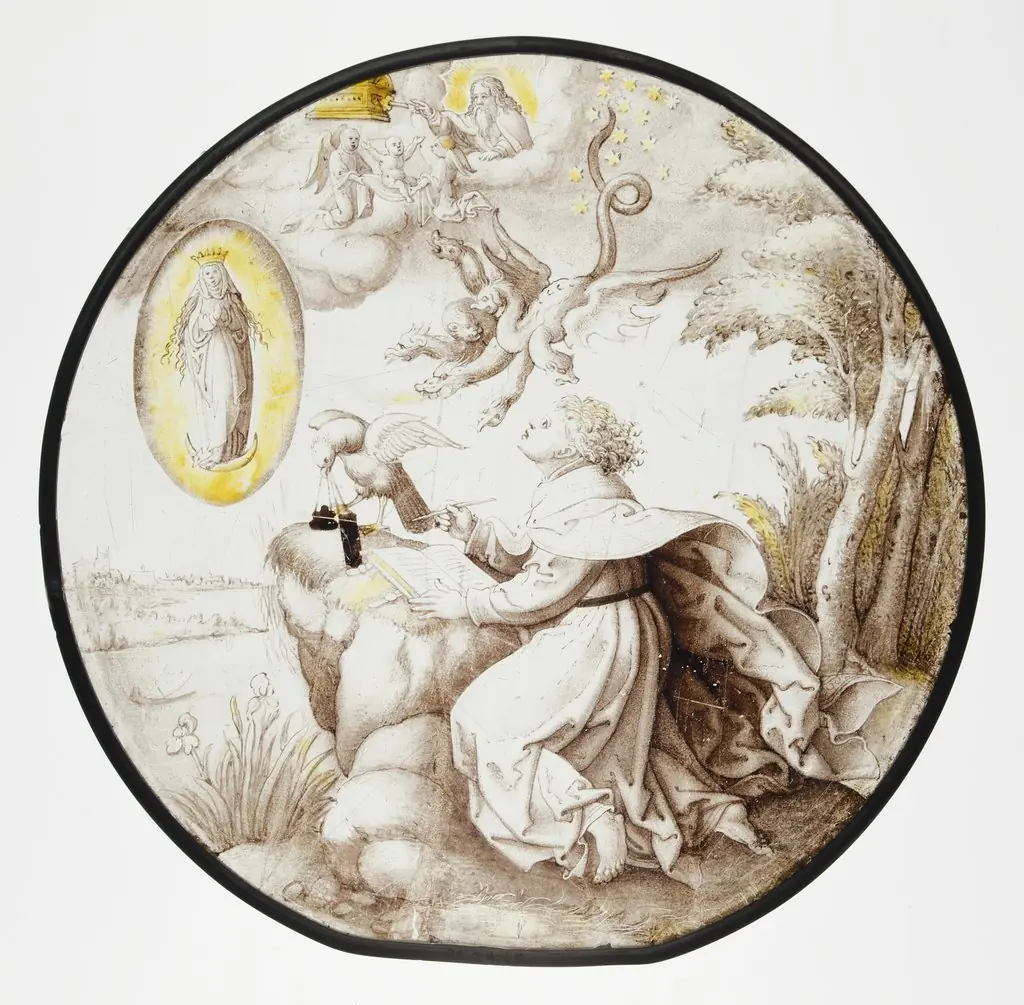 Roundel with Saint John on Patmos with Apocalyptic Vision
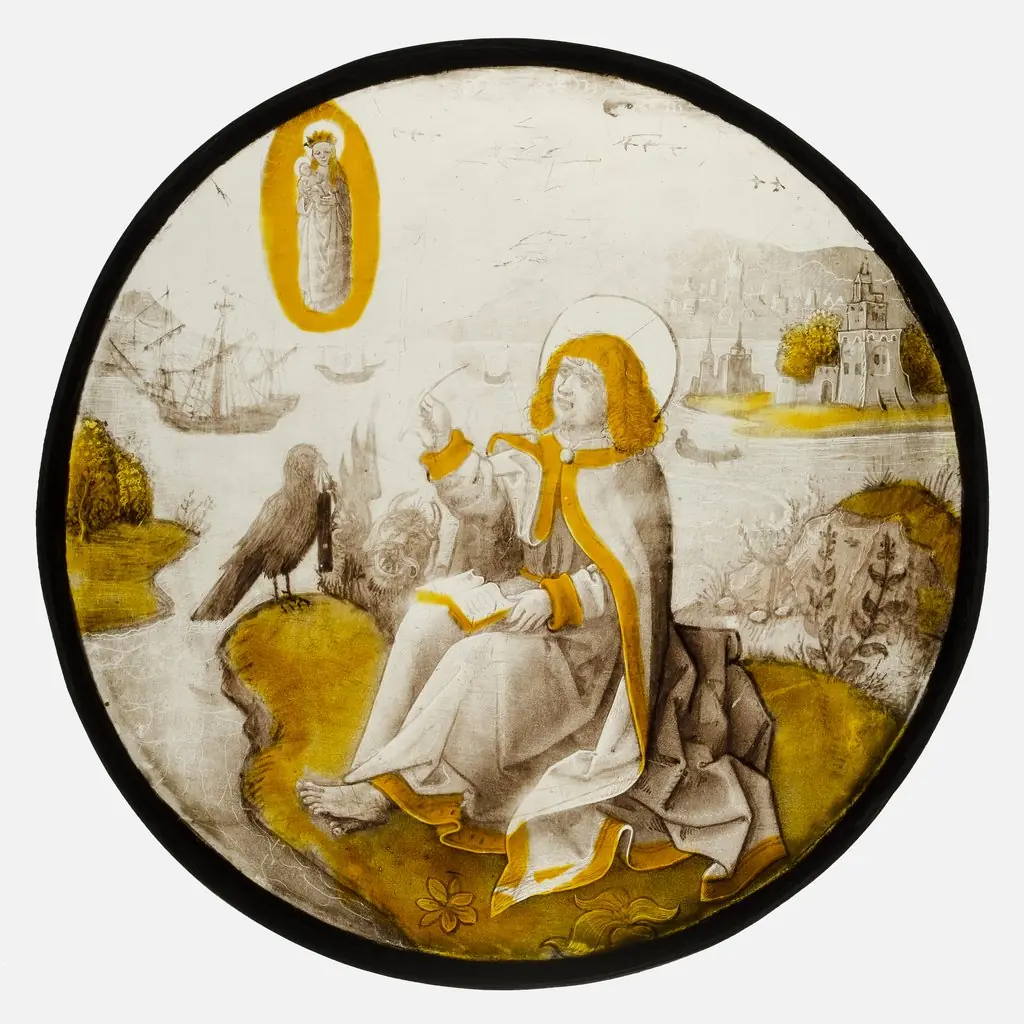 Roundel with Saint John on Patmos
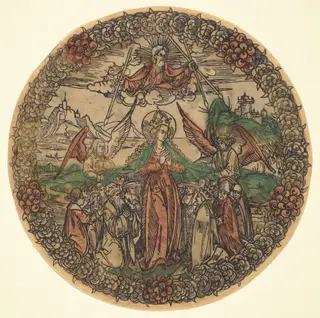 Madonna in a Wreath of Roses
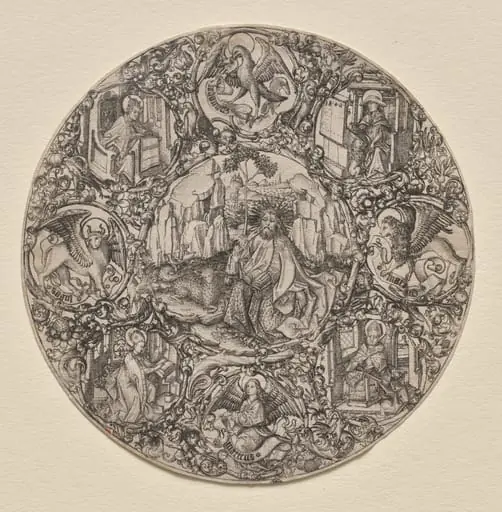 St. John the Baptist Surrounded by the Evangelists and Four Fathers of the Latin Church
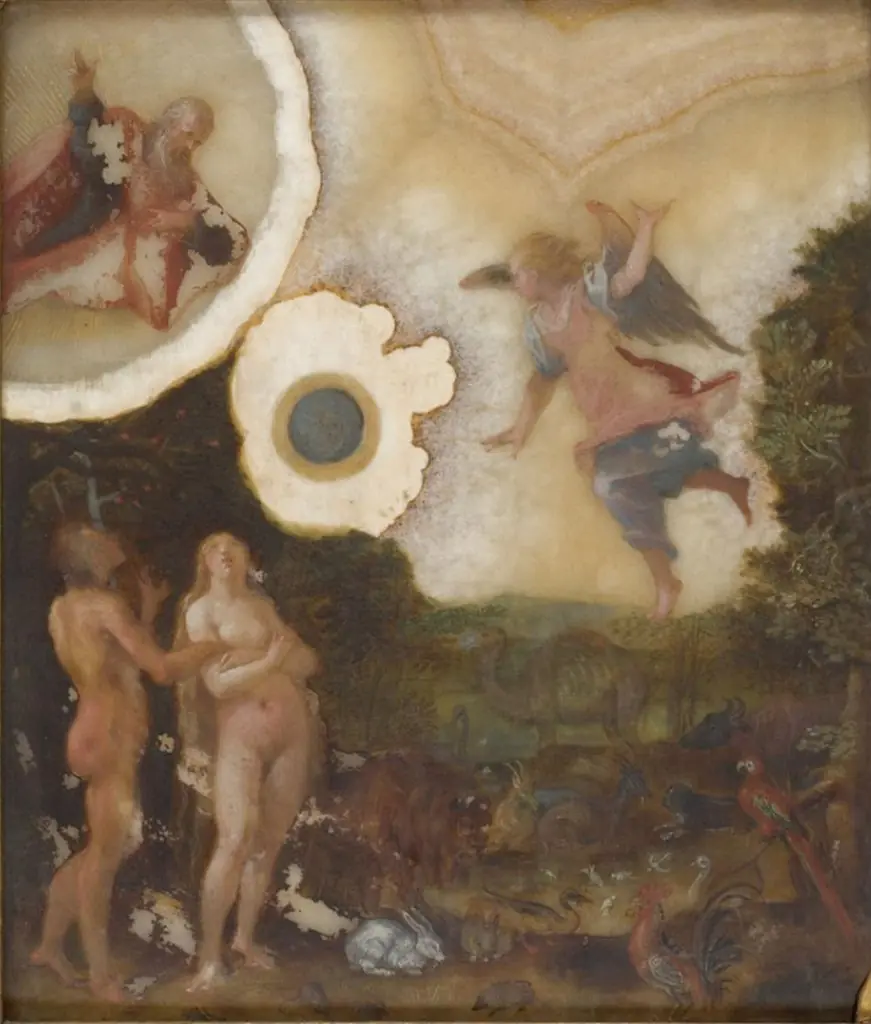 Expulsion from earthly Paradise.
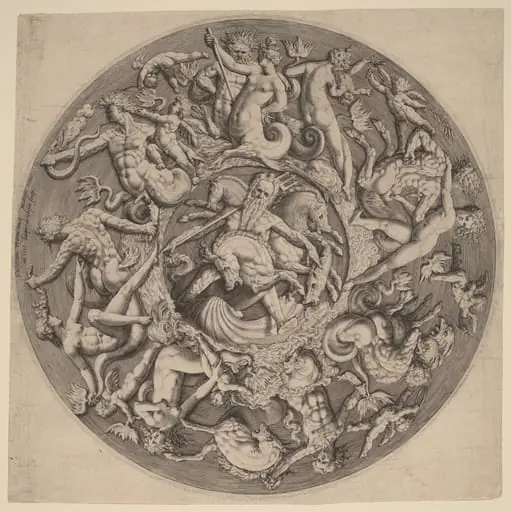 Neptune's Kingdom
 Allegorical Figure of a Woman with a Shield or a Mirror (Prudence?)