Artwork
Saint Margaret and the Dragon
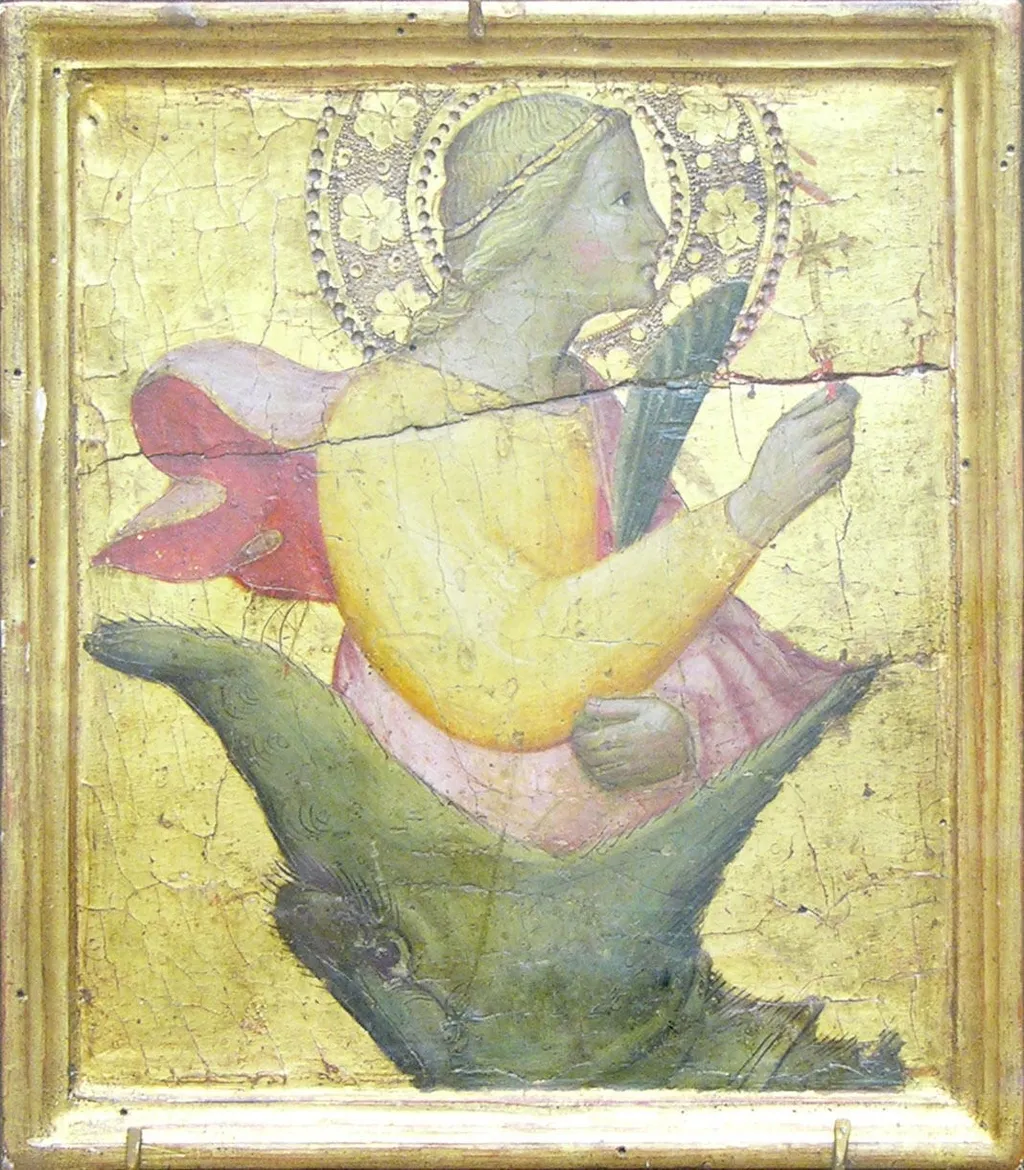
Saint Margaret and the Dragon is a tempera painting. It dates from 1396 and is held in the collection of the Metropolitan Museum of Art.
About this work
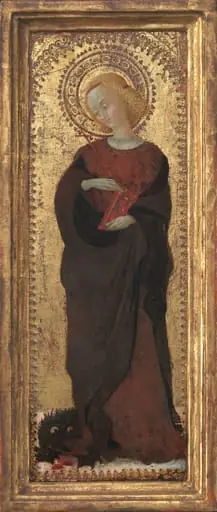
The background is faded gold, and the woman’s face is blurred but surrounded by a golden halo.
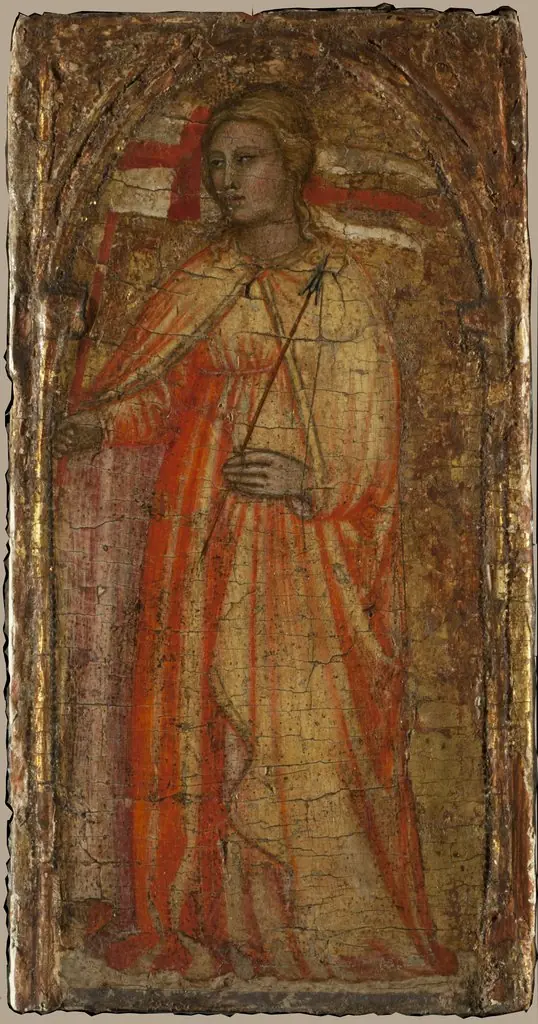
This painting shows a woman in a green dress holding a red object over a dragon’s head. The background is faded gold, and the woman’s face is blurred but surrounded by a golden halo. The dragon’s mouth is open, but the woman looks calm.
The red thing she holds is often a cross in stories about saints fighting dragons. This painting is old, made around 1400, and shows a mix of fear and faith.
Look up tempera to see how artists made paint like this back then.
Subject & Meaning
The painting shows Saint Margaret, a virgin martyr, confronting a dragon that symbolizes the forces of evil she overcomes through Christian faith. Her attribute of a dragon is a standard iconographic element in depictions of her legend, representing both the devil and the monstrous challenges faced by believers. The work, executed in tempera on panel around 1390 by the workshop of Agnolo Gaddi, was intended for devotional use and reflects the late‑medieval emphasis on female sanctity and miraculous protection.
It is currently housed in the Metropolitan Museum of Art.
Technique & Style
Created around 1390 by the Workshop of Agnolo Gaddi, this religious painting depicts Margaret the Virgin. The work is executed in tempera on a panel support. Measuring 23.2 cm in height and 20.3 cm in width, the piece features a female figure as its central subject. The classification of the object confirms its status as a painted work within the religious genre.
History & Provenance
The painting Saint Margaret and the Dragon was created around 1390, as established by its inception date. Attributed to the Workshop of Agnolo Gaddi, it reflects the religious art conventions of late 14th-century Florence.
The work entered the collection of the Metropolitan Museum of Art, where it remains housed. Its provenance prior to acquisition by the museum is unrecorded in available sources, though its small scale (23.2 × 20.3 cm) suggests it may have been intended for private devotion rather than public display. No specific commission details or earlier owners have been documented.
Overview
This painting, titled Saint Margaret and the Dragon, depicts a pivotal moment from the legend of Saint Margaret of Antioch. Executed in tempera around 1400, the work presents a serene female figure confronting a formidable dragon. The composition highlights the saint's unwavering faith amidst a challenging encounter, characteristic of devotional art from the late medieval period. It serves as an illustrative example of early Renaissance painting techniques and thematic concerns.
Context
Created around the turn of the 15th century, Saint Margaret and the Dragon reflects the spiritual and cultural landscape of the late medieval era. This period was marked by a deep engagement with religious narratives that often explored themes of divine intervention, human vulnerability, and unwavering belief. Such images provided visual affirmations of faith, offering comfort and moral guidance in a world frequently perceived as fraught with both earthly and spiritual dangers.
Artist & collection