Artwork
Saint Roch

Saint Roch is an unspecified painting by the Baroque artist Unknown. It dates from 1604 and is held in the collection of the Cleveland Museum of Art.
- Accession no.
- 1997.239
- Credit line
- Gift of The Honorable Joseph P. Carroll and Roberta Carroll, M.D.
About this work
Overview
His bare feet and simple attire suggest humility and journey, while the staff with a red knob may symbolize authority or pilgrimage.
This painting depicts Saint Roch, a Christian saint known for his pilgrimage and care for plague victims. Rendered in a restrained, quiet manner, the figure stands alone against a neutral background, emphasizing solitude and devotion. His bare feet and simple attire suggest humility and journey, while the staff with a red knob may symbolize authority or pilgrimage. The faint floral border at the base subtly grounds the figure in a natural, earthly realm.
Subject & Meaning
Saint Roch is portrayed as a weary traveler, his expression reflecting endurance rather than triumph. His bare feet and staff align with traditional iconography of pilgrims who walked great distances in service to others. The flowers at the lower edge may allude to healing or divine favor, common associations in his hagiography.
The faintly legible inscription confirms his identity, reinforcing the devotional purpose of the image for viewers seeking intercession or solace.
Technique & Style
The painting employs a muted palette and soft modeling to convey quiet solemnity. Light falls gently on the figure, defining form without dramatic contrast. The background is deliberately unadorned, focusing attention on the saint’s presence.
Brushwork is restrained, avoiding ornamental excess, which lends the work a sense of intimacy and contemplative stillness characteristic of certain regional Baroque traditions.
History & Provenance
The painting’s origin is not fully documented, but its style suggests it was produced in a European devotional context during the 17th century. Likely created for private worship or a small chapel, it reflects the widespread veneration of Saint Roch during periods of epidemic. Its preservation indicates continued reverence, though its early ownership and movement remain unclear due to limited archival traces.
Context
During the 1600s, Saint Roch was widely invoked against plague and disease, especially in Italy and Spain. Images of him were common in hospitals and public spaces, serving both spiritual and communal functions. This painting’s simplicity reflects a shift from elaborate altarpieces toward more personal, meditative representations, suited to private devotion amid recurring outbreaks and social uncertainty.
Legacy
Though not widely exhibited or studied today, the painting contributes to a broader tradition of humble saintly portraiture in early modern Europe. Its quiet dignity and focus on endurance over spectacle offer insight into how religious identity was visually sustained outside major artistic centers. It remains a quiet testament to the role of personal faith in times of crisis.
Artist & collection









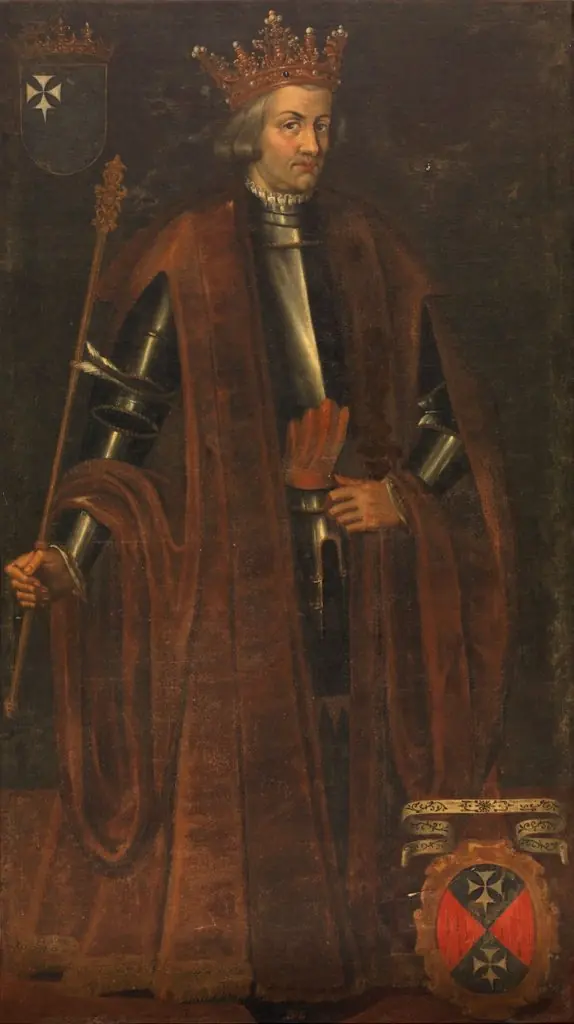
- Alfonso IV El Benigno
 A papal Saint
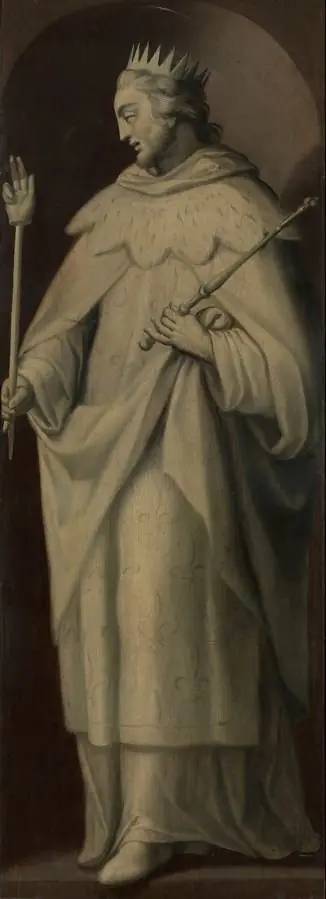 St Louis IX, King of France
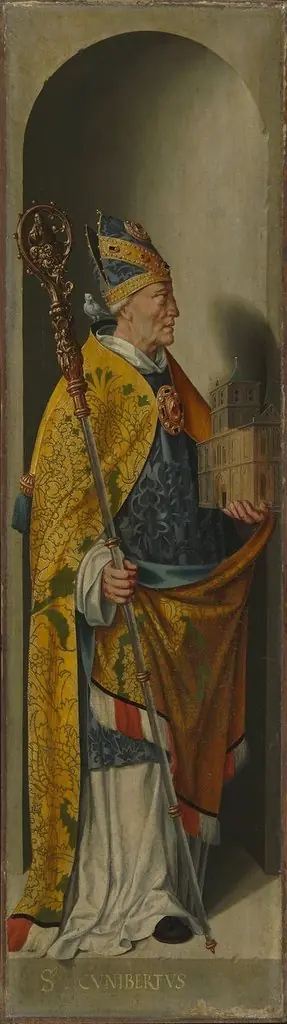 Beweinungsaltar, Flügelaußenseite: Hl. Kunibert
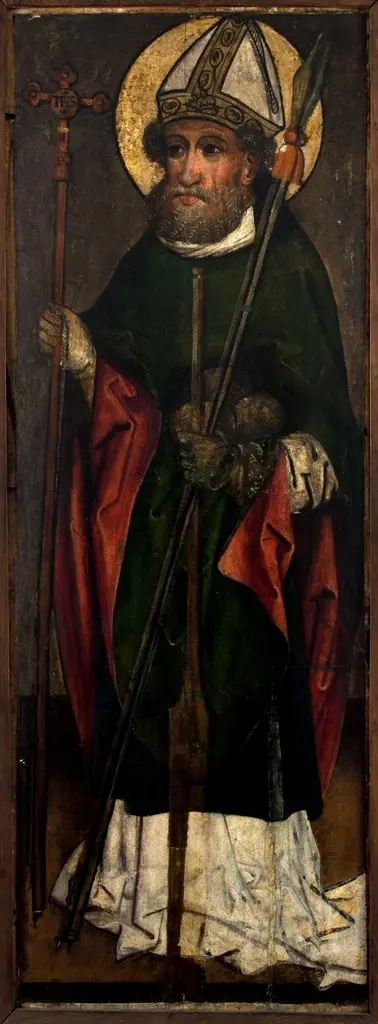 St Adalbert (obverse); Mary from the scene of the Annunciation (reverse). Wing of the altar retable from Snoza
 Bishop Saint from an Augustinian altarpiece
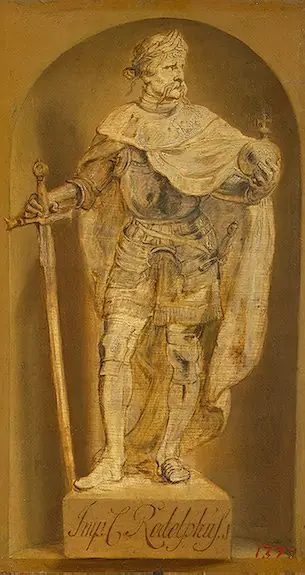 Statue of Rudolf II in a niche
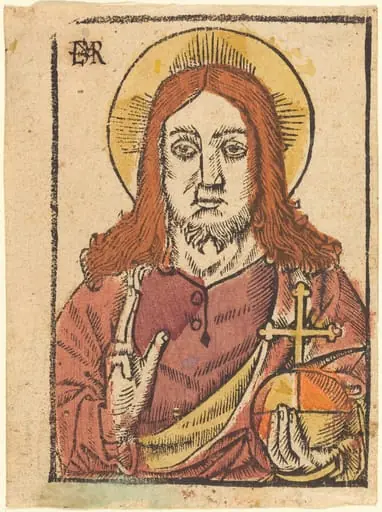 Salvator Mundi
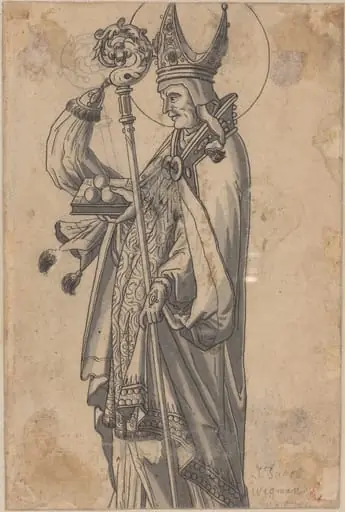 Saint Nicholas (verso)
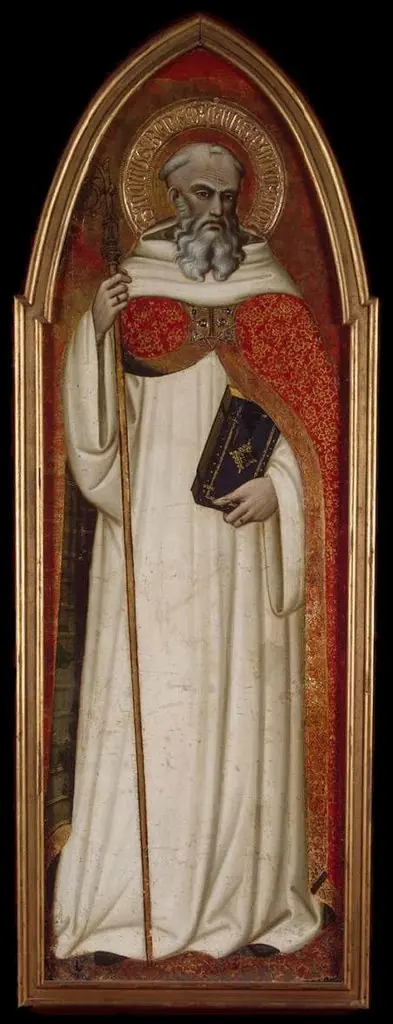 St Benedict (wing of a polyptych)
 Portrait of king Władysław Jagiełło (1348–1434)
 Standing Male Figure