Artwork
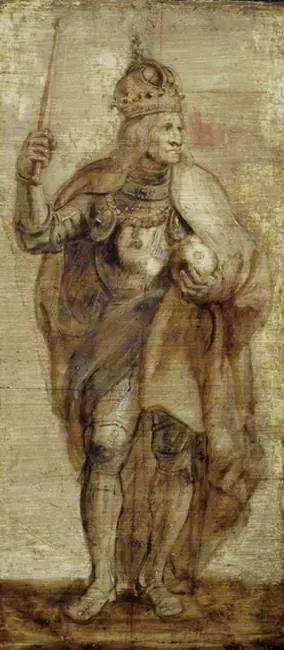
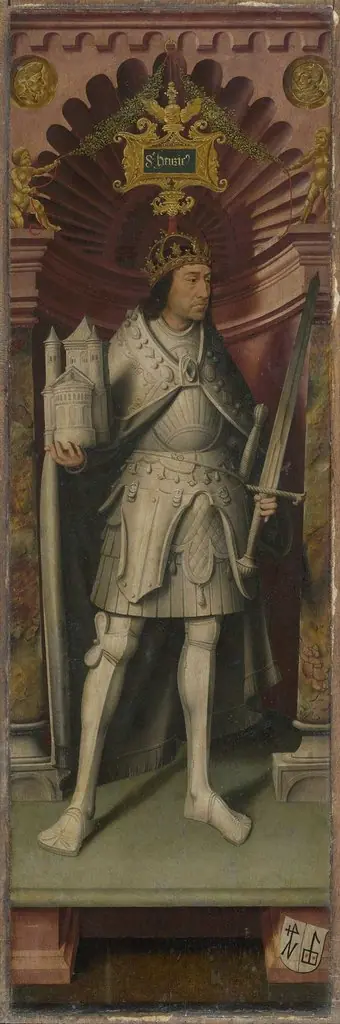
Statue of Rudolf II in a niche
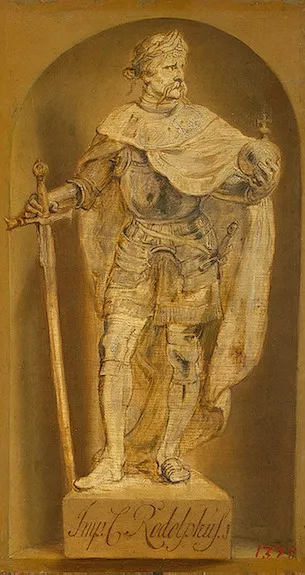
Statue of Rudolf II in a niche is an oil painting by the Flemish Baroque painting artist Peter Paul Rubens. It dates from 1634 and is held in the collection of the Hermitage Museum.
About this work
Subject & Meaning
By combining these elements within a portrait genre, the painting represents the power and status of the Holy Roman Emperor at the time of its creation in 1634.
The work depicts Emperor Rudolf II as its main subject, presenting him in a formal portrait composition. The iconography includes specific regalia held by the figure, namely a sword and an orb, which serve as traditional symbols of imperial authority and sovereignty. By combining these elements within a portrait genre, the painting represents the power and status of the Holy Roman Emperor at the time of its creation in 1634.
Technique & Style
The work is an oil painting executed on oak panel, reflecting Rubens' characteristic technique of layered glazes that produce a luminous surface and a three‑dimensional sense of depth. The composition captures Rudolf II within a shallow niche, his figure rendered with a dignified pose and subtle chiaroscuro that emphasizes the texture of the velvet drapery and the metallic sheen of the sword and orb. The formal treatment balances naturalistic detail with a restrained, almost sculptural modeling of the emperor's features, while the limited spatial setting underscores the portrait's focus on status and authority.
History & Provenance
The work, titled Statue of Rudolf II in a niche, was created by Peter Paul Rubens in 1634. Executed in oil paint on an oak panel, the portrait depicts Emperor Rudolf II holding a sword and orb. The piece was produced in Flanders and is currently held in the collection of the Hermitage Museum.
While specific details regarding the original commission or the precise chain of ownership leading to its current location are not detailed in the available records, the work's creation is firmly dated to the year 1634.
The work is held in the Hermitage Museum. Its accession number is not specified in the sources. It was created in 1634 in Flanders and depicts Emperor Rudolf II with a sword and orb. The artwork was exhibited in the Hermitage Museum's collection display.
The Hermitage Museum holds the piece within its collection.
Exhibition history is limited to its display within the museum's collection.
Overview
Peter Paul Rubens painted the work known as Statue of Rudolf II in a niche in 1634. Executed in oil on canvas, the composition presents the Habsburg emperor in a sculptural pose within a shallow, curved recess. The figure is rendered in the dynamic, richly colored manner typical of Flemish Baroque portraiture, emphasizing the ruler’s authority and presence.
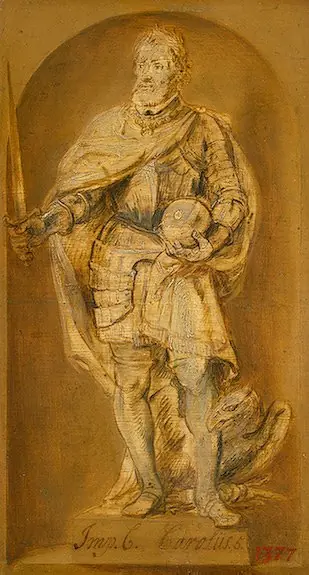
Artist & collection
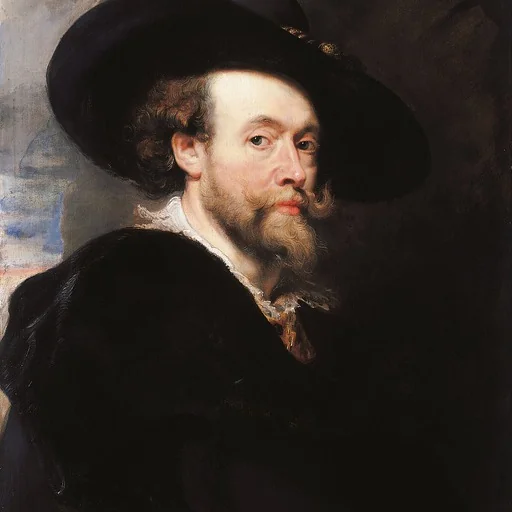
Artist
Sir Peter Paul Rubens ( ROO-bənz; Dutch:; 28 June 1577 – 30 May 1640) was a Flemish artist and diplomat.