Artwork
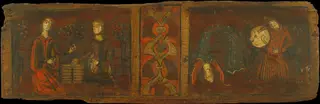
Scenes from the Life of Christ: Disrobing Youths from the Entry into Jerusalem, Flagellation, and Angel at the Sepulchre
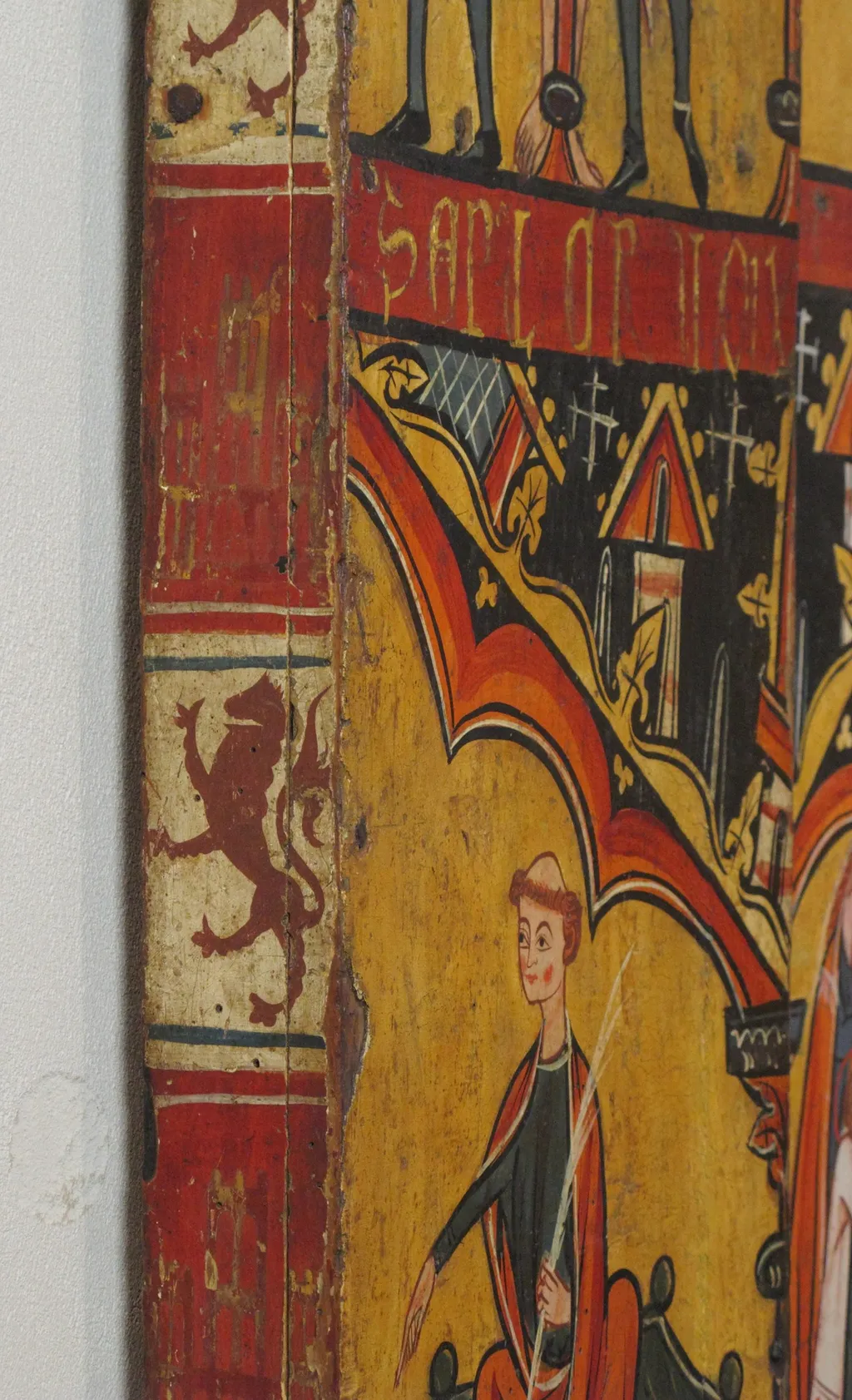
Scenes from the Life of Christ: Disrobing Youths from the Entry into Jerusalem, Flagellation, and Angel at the Sepulchre is a tempera painting. It dates from 1250 and is held in the collection of the Metropolitan Museum of Art.
About this work
Subject & Meaning
As a religious artwork of the 13th‑century, it functions as a visual meditation on the path from triumph to crucifixion and the promise of resurrection.
The painting illustrates three sequential moments from the Passion narrative: the Entry into Jerusalem where Christ is greeted, the Flagellation scene depicting Christ's scourging, and the Angel at the Sepulchre announcing the Resurrection. Executed in tempera on panel around 1250, the work belongs to the religious genre and is now held by the Metropolitan Museum of Art. Iconographically the composition follows established cycles of Christ's life, emphasizing suffering and redemption.
As a religious artwork of the 13th‑century, it functions as a visual meditation on the path from triumph to crucifixion and the promise of resurrection.
History & Provenance
Created circa 1250, this tempera-on-panel work is attributed to an anonymous artist. The painting, which depicts scenes including the disrobing youths from the Entry into Jerusalem, the Flagellation, and the Angel at the Sepulchre, currently resides in the collection of the Metropolitan Museum of Art. While the specific circumstances of its original commission and the detailed chain of ownership prior to its museum acquisition are not recorded in the available documentation, its inception is firmly placed in the mid-thirteenth century.
The work is classified as religious art and remains part of the Metropolitan Museum's holdings, where its material composition and subject matter are preserved for study.
Context
Dating to circa 1250, this tempera panel illustrates three episodes from the Life of Christ, the disrobing youths from the Entry into Jerusalem, the Flagellation, and the Angel at the Sepulchre, and is attributed to an anonymous master. Its execution in tempera on a wooden support and its iconographic program situate it within the corpus of 13th‑century European religious painting, reflecting the devotional practices of the period. The work is documented in the Metropolitan Museum of Art’s collection and remains relevant to studies of medieval visual culture, offering insight into workshop practices and the transmission of narrative cycles in early panel painting.
Overview
This tempera painting, titled Scenes from the Life of Christ: Disrobing Youths from the Entry into Jerusalem, Flagellation, and Angel at the Sepulchre, is a fragment from a larger devotional series. Created over seven centuries ago, its bright palette and formal composition reflect the artistic conventions of its period. Although part of a Christological cycle, this specific panel notably depicts an episode from the Old Testament, suggesting a broader narrative approach.
Technique & Style
The artwork employs tempera, a durable medium created by suspending pigments in an egg-yolk binder, which contributes to its enduring color. The visual presentation features a gold-leaf background, now somewhat faded, accented by prominent red stripes and sharp black outlines defining figures and forms. The depicted architecture is characterized by angular structures topped with small crosses, while the human figures maintain a somewhat stiff and stylized posture, typical of early painting traditions.
Artist & collection

- Small coffered ceiling panel with scenes of gallantry and dancing
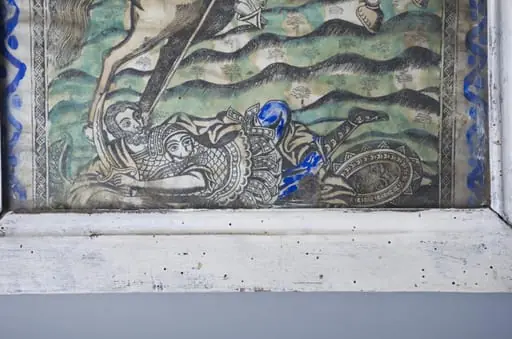 Icoană de formă patrulateră, cu rama compusă din patru fâșii de lemn îmbinate între ele. Toate cele patru elemente componente ale cadrului sunt prevăzute cu o șănțuire concavă, longitudinală. Tema iconografică este reprezentată de Sf. Dumitru călare, îmbrăcat în echipament militar (platoșă și suliță). În câmpul inferior al icoanei, sunt reprezentate două personaje, culcate la pământ, împunse cu sulița de către Sf. Dumitru. Pe fundalul temei este reprezentată imaginea unui oraș fortificat cu ziduri crenelate din cărămidă. Cromatica: negru, albastru, roșu, verde.
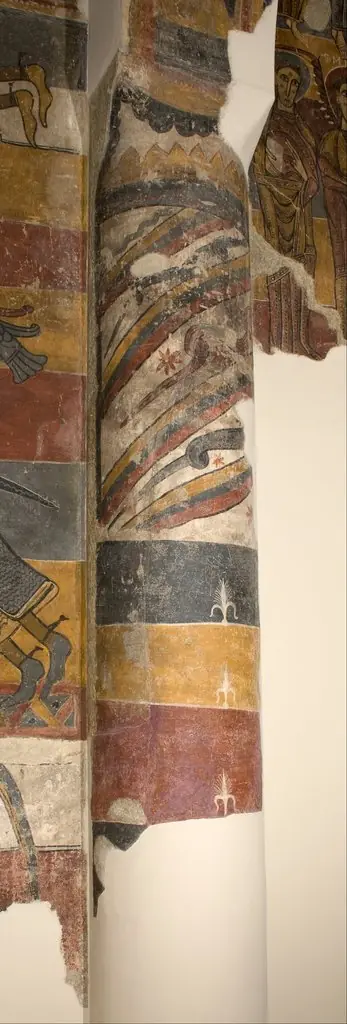 Decorated shaft and capital from Santa Maria de Taüll
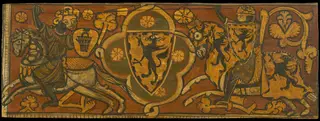 Coffered ceiling panel with a fight between a Christian knight and a Muslim
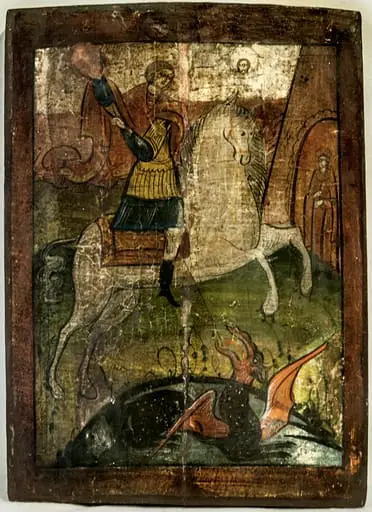 Tema iconografică este "Sfântul Gheorghe omorând balaurul". În prim plan, Sf. Gheorghe, în veșminte ostășești, călare pe un cal alb, cambrat, ridicat în două picioare, omoară balaurul plasat în registrul inferior. Veșmintele sfântului au o tentă țărănească(tunica albastră acoperită 3/4 de lorica argintie, pantaloni albi, cu motiv floral, cizme înalte. Calul are ambii ochi vizibili, coama bogată, coada în fuior. Partea dinspre privitor a ansamblului cal cu călăreț este supradimensionată, creând o impresie optică de înălțare a sfântului. În partea dreaptă, fata de împărat pe care o salvează sfântul, sub portalul palatului. privind scena. Veșminte lungi, simple, coroană împărătească. Înveșmântată în haine simple, lungi, cu coroană pe cap, privește scena cu brațele la piept. În colțul din stânga dreapta sus, Iisus Hristos așa cum apare pe sfântul Keramion. Nimbul cruciger. Balaurul plasat în registrul inferior asemănător unui grifon, corp diform, terminat cu o coadă în săgeată, aripile și capul roșii. Motiv mai elaborat decât în alte icoane unde redarea balaurului este minimizată. Compoziția este dinamică, chipurile expresive, gesturile bine realizate. Linia desenului variază, contribuind la efectul optic. Fondul foiței argintii(superior), relief din benzi late în tonuri de brun, brun roșcat, galben, alb, verde, cu elemente de vegetație. Bordura roșiatică lată, specifică icoanelor de tip krashnuska. Inscripție pe chenar, în partea superioară.
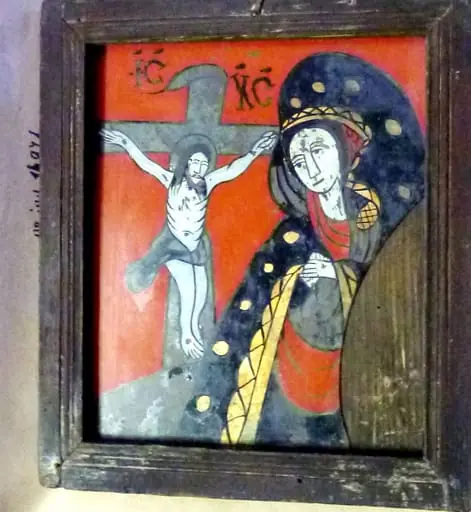 Maica Domnului Indurearata
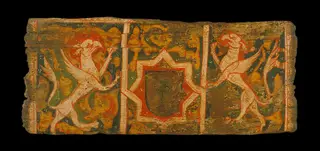 Coffered ceiling panel with coat of arms and griffins rampant
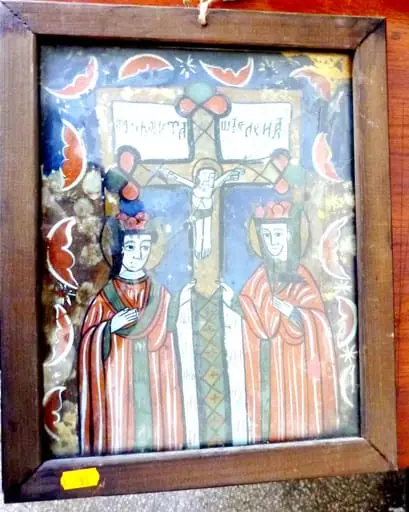 lada de haine
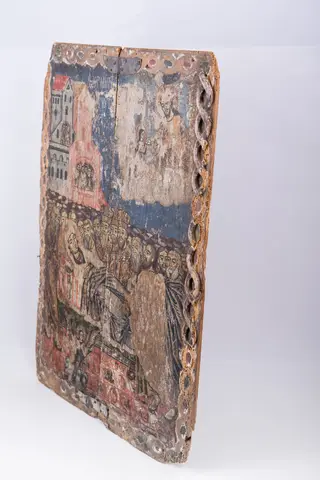 Trupul adormit al Maicii Domnului este susținut pe brațe de o mulțime de credincioși, preoți, arhierei, mitropoliți, ucenici, sfinți părinți. Mulțimea de oameni este sugerată printr-o mare de capete. Trăsăturile Chipului Maicii Domnului sunt pictate cu măiestrie. În registrul inferior, pe o pardoseală roz este un înger ocrotitor. În registrul superior, în dreapta sunt elemente de arhitectură, la ferestre fiind iarăși și iarăși personaje privind cu tristețe și îndurerare. Toate chipurile din icoană arată tristețea și durerea despărțirii de Maica Domnului mult-iubită. În stânga, Dumnezeu-Tatăl o ia de mână pe Maica Domnului, ridicând-o la Cer, și cuprinzând-o în brațele părintești. Maica Domnului este asemenea unei fetițe, ca în icoana cu Intrarea Maicii Domnului în biserică. Cromatica este armonioasă, delicată și rafinată: roșu sângeriu, roz, albastru cobalt, gri, alb, bej, brun, negru. Inscripția din româno-chirilică se traduce Adormirea Maicii Domnului IC XC Iisus Hristos. Icoana este încadrată de un chenar decorativ geometrizant reprezentat de un lanț ondulatoriu.
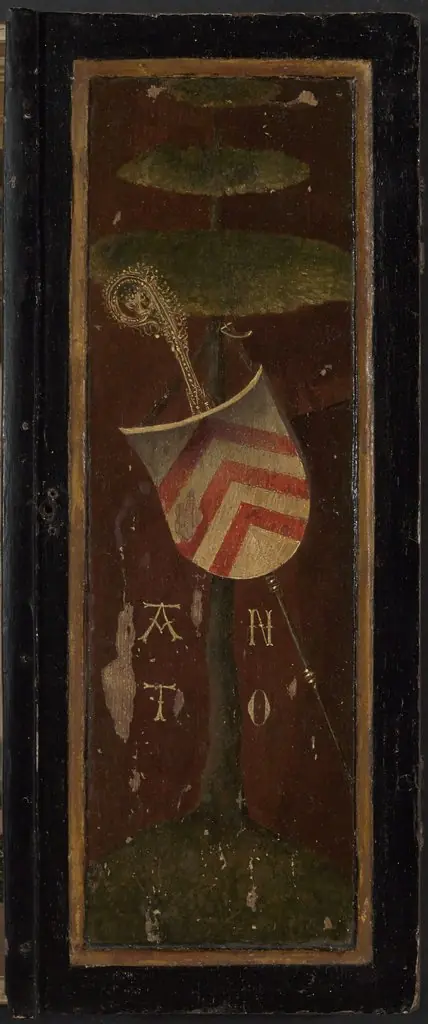 Blazon of Antonius Tsgrooten
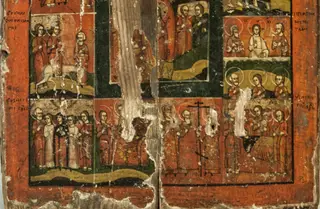 Compului
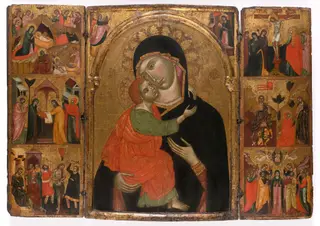 Virgin and Child with Scenes from the Life of Christ