Artwork
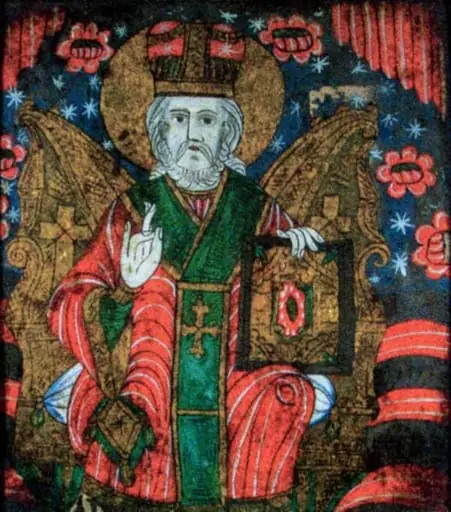
Sfânta Treime (Sf. Troiță într-un trup)
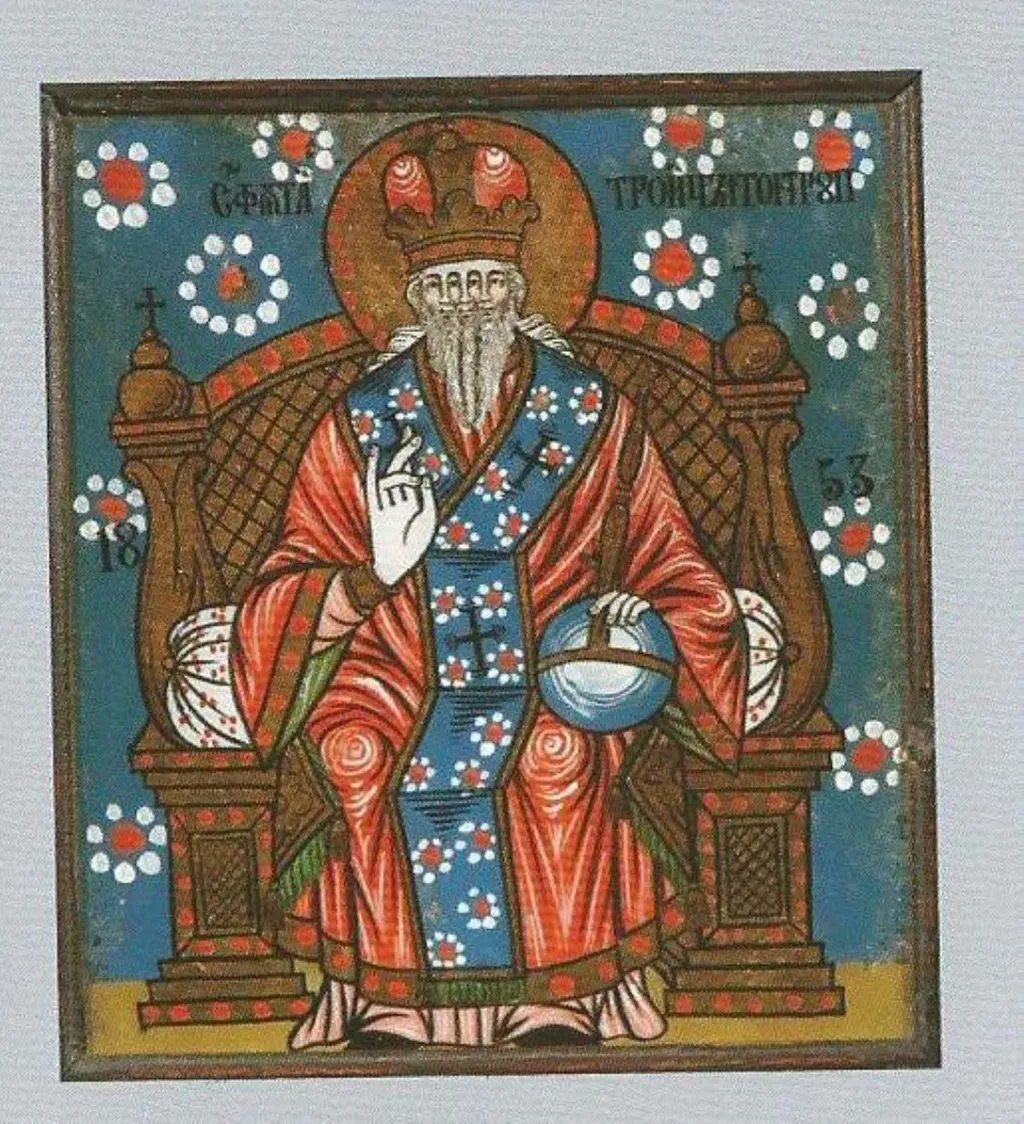
Sfânta Treime (Sf. Troiță într-un trup) is a drawing by the Impressionist artist Unknown. It dates from 1853 and is held in the collection of the National Museum of Art of Romania. Sfânta Treime (Sf.
About this work
Overview
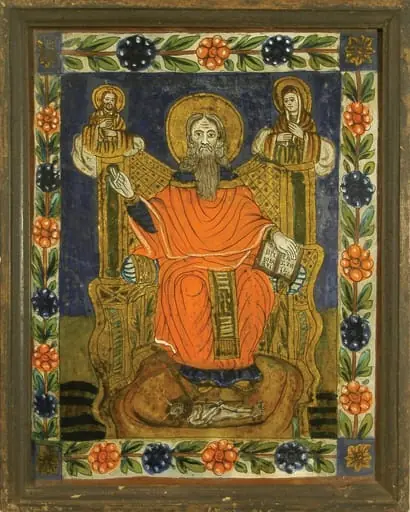
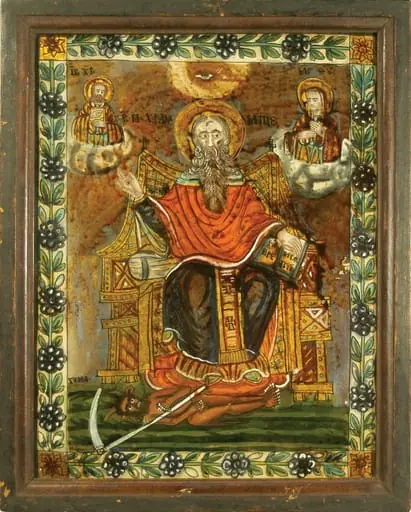
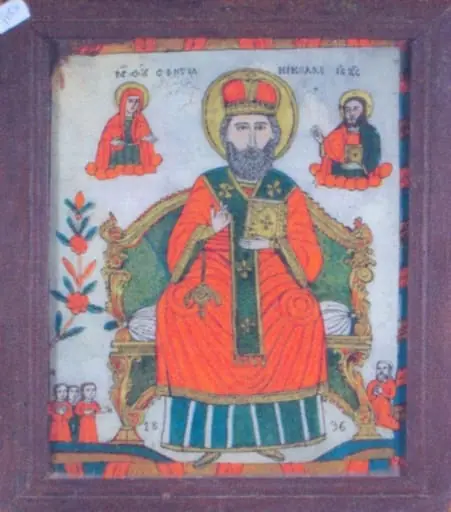
Sfânta Treime (Sf. Troiță într-un trup) is a religious painting depicting a singular, bearded figure in vibrant attire, conveying a blend of spiritual and symbolic elements through its composition and details.
Subject & Meaning
The subject, dressed in red robes adorned with tiny white cross-like dots (achieved through stippling), a golden crown, and holding a scroll and blue bowl, likely represents a unified embodiment of the Holy Trinity (Sf. Troiță într-un trup translates to 'Holy Trinity in one body'). The symbols suggest wisdom, teaching, and divine authority.
Technique & Style
The artist employed stippling to create the cross-like pattern on the subject's robe, demonstrating a meticulous and detailed approach. The bold color palette (red, blue, gold, and yellow against a dark blue background with red-and-white flowers) adds to the piece's visual vibrancy and symbolic depth.
Context
Given the title and depiction, the painting is rooted in Christian theology, specifically the concept of the Holy Trinity. The singular figure embodies the unity of the Father, Son, and Holy Spirit, reflecting theological themes common in Eastern European or Orthodox Christian art traditions.
Legacy
Without specific historical or provenance details provided, the painting's direct influence or recognition within the broader art historical canon cannot be accurately assessed. However, it contributes to the visual representation of religious themes in art.
Artist & collection