Artwork
Jizō Bosatsu (Sanskrit: Ksitigharba)
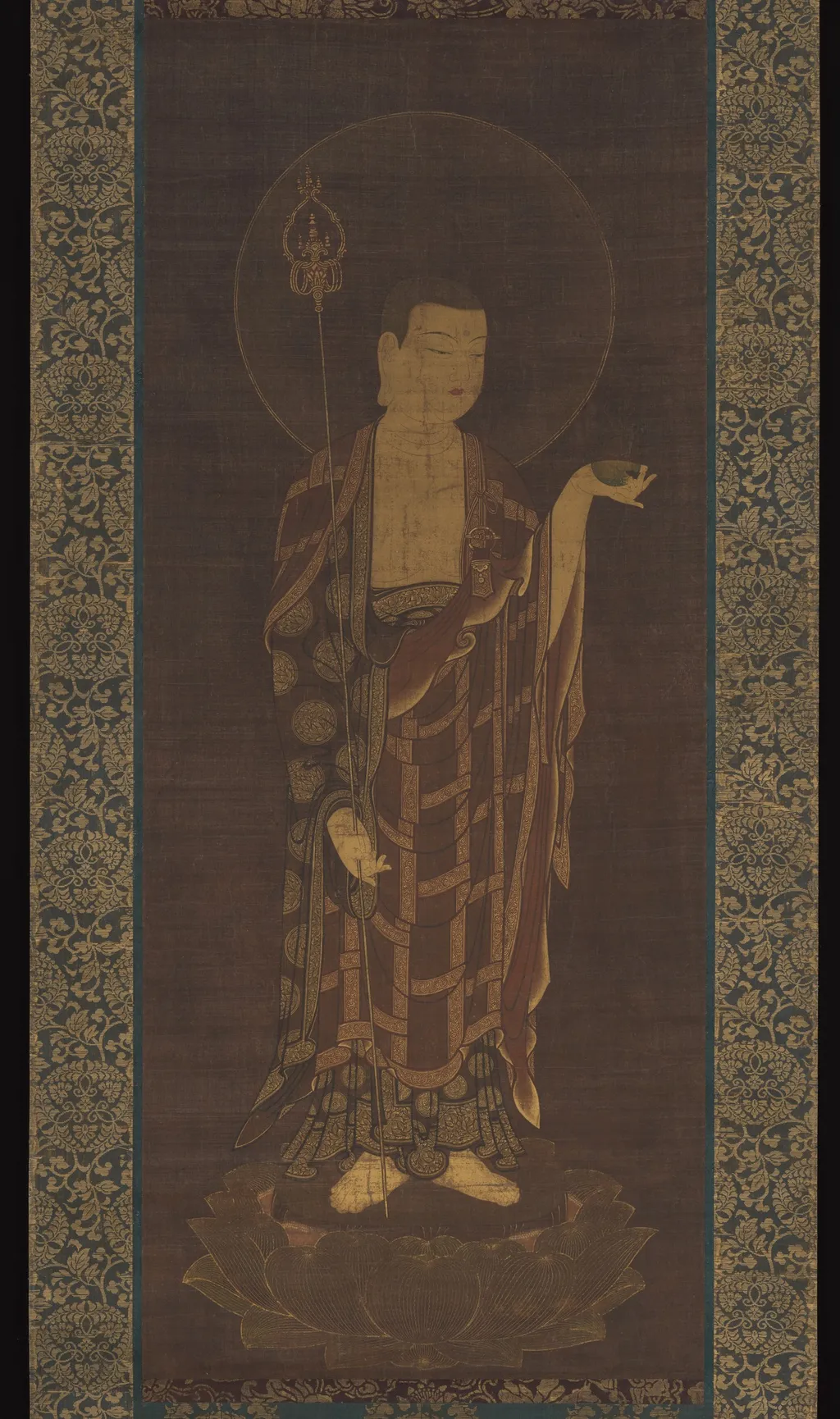
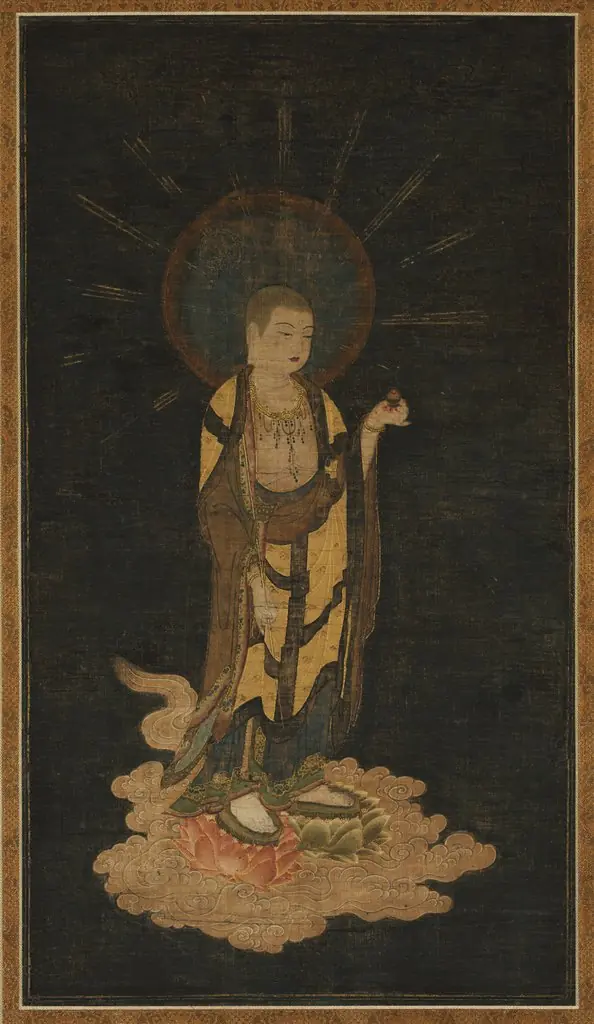
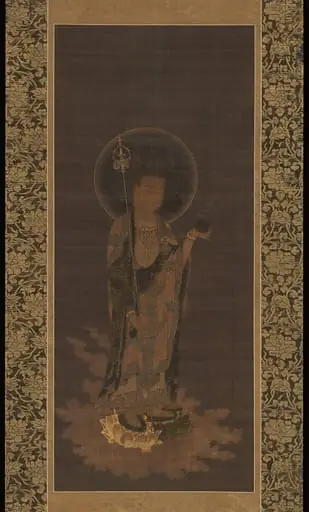
Jizō Bosatsu (Sanskrit: Ksitigharba) is an unspecified painting by Unknown. It dates from 1350 and is held in the collection of the Metropolitan Museum of Art.
About this work
Overview
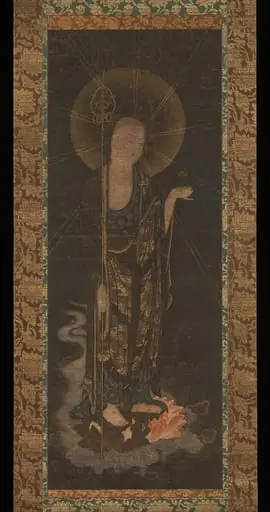
The work depicts a solitary, robed figure standing upon a lotus blossom, set against a dark field edged with a gold border filled with intricate motifs. The figure’s expression is serene, with a faint smile, and one hand holds a small object. The robe is rendered in brown tones highlighted with gold patterns, while the surrounding darkness accentuates the luminous quality of the face.
Subject & Meaning
The central figure represents Jizō Bosatsu, known in Sanskrit as Ksitigharba, a bodhisattva associated with protection and guidance of travelers and the deceased. The lotus base signifies purity emerging from murky waters, a common Buddhist symbol of spiritual awakening. The gentle smile and calm demeanor convey compassion and reassurance, aligning with Jizō’s role as a compassionate guardian.
Technique & Style
The painting employs a chiaroscuro approach, contrasting the illuminated facial features and golden details with the deep, muted background.
The painting employs a chiaroscuro approach, contrasting the illuminated facial features and golden details with the deep, muted background. Subtle gradations of light create a halo-like glow around the face, enhancing its three‑dimensional presence. Gold leaf or pigment outlines the border and robe patterns, adding a reflective quality that catches ambient light, while the overall composition balances simplicity with decorative richness.
Context
Rendered within a tradition of Buddhist devotional art, the piece reflects the synthesis of Indian iconography and East Asian aesthetic conventions. The use of lotus, gold ornamentation, and the serene expression follows established visual codes for bodhisattvas, while the dark backdrop and emphasis on light suggest an influence of later Chinese and Japanese painting techniques that foreground spiritual illumination.
Artist & collection