Artwork
Welcoming Descent of Amida Buddha (Raigō)
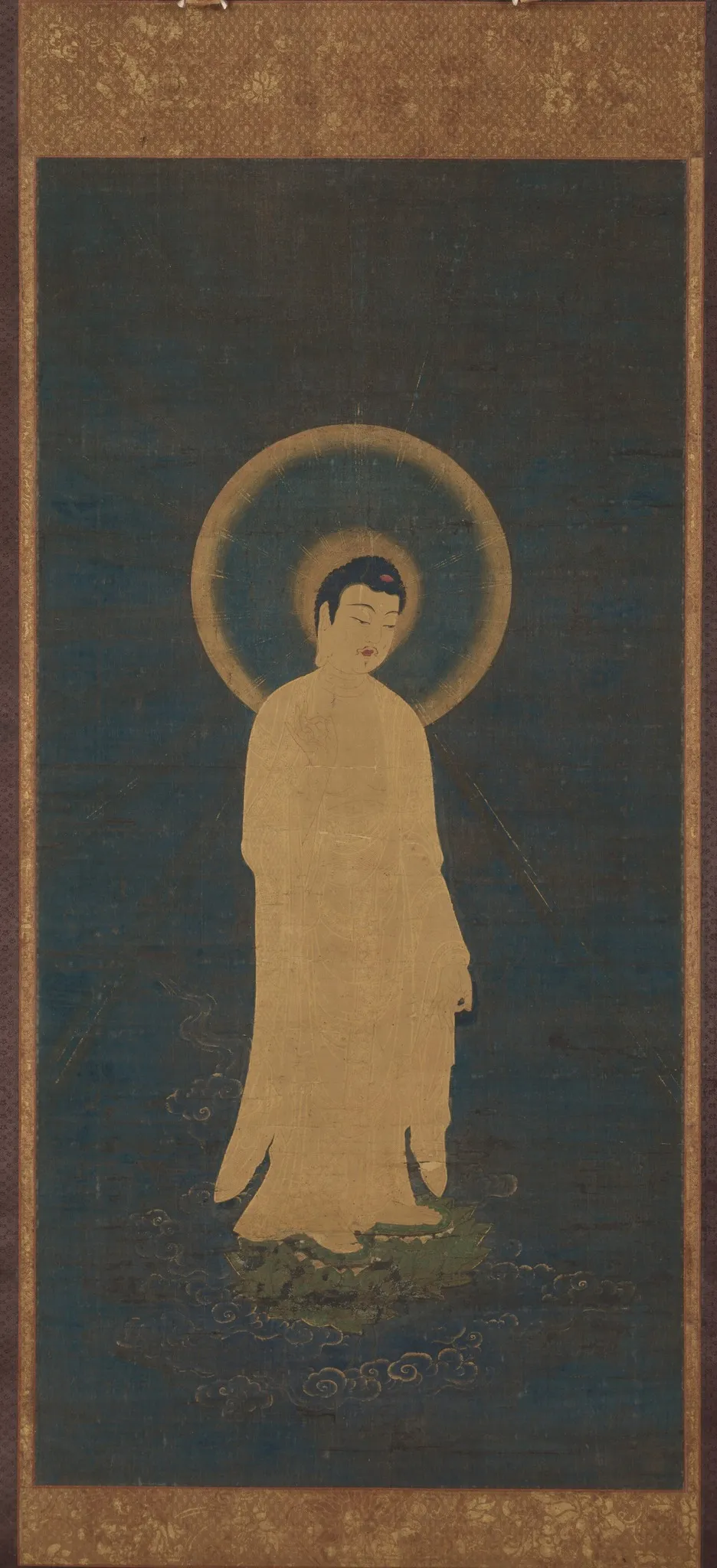
Welcoming Descent of Amida Buddha (Raigō) is an unspecified painting. It dates from 1301 and is held in the collection of the Cleveland Museum of Art.
About this work
Technique & Style
The work is a 13th-century Japanese painting executed in ink and color on silk, depicting Amida Buddha's descent in a welcoming manner.
The work is a 13th-century Japanese painting executed in ink and color on silk, depicting Amida Buddha's descent in a welcoming manner. It originates from Japan and resides in the Cleveland Museum of Art's collection. The composition features the Buddha descending amid clouds, rendered with delicate line work and subtle pigmentation characteristic of early Kamakura period religious imagery. Formal analysis notes the dynamic diagonal movement and hierarchical scale emphasizing divine arrival.
History & Provenance
The work known as Welcoming Descent of Amida Buddha (Raigō) was created in 1301 in Japan. It is attributed to an unknown artist and was originally commissioned as a devotional painting. The piece entered the collection of the Cleveland Museum of Art, where it remains on view.
The painting Welcoming Descent of Amida Buddha (Raigō) is held in the collection of the Cleveland Museum of Art. The work, created in 1301, is identified within the museum's records by the accession number 1993.42. While the piece dates to the early fourteenth century and originates from Japan, the provided sources do not list specific past exhibitions or loan history for this object.
Overview
The work titled Welcoming Descent of Amida Buddha (Raigō) depicts a solitary figure standing upon a small green ground. The figure is clothed in a long, light‑colored robe and gazes forward with a tranquil expression and a faint smile. A luminous golden circle behind the head functions as a halo, set against a deep, dark‑blue backdrop that contains subtle, swirling cloud forms.
Subject & Meaning
The serene countenance, radiant halo, and ethereal lighting identify the subject as Amida Buddha, a central figure in Pure Land Buddhism who is believed to descend to welcome souls into the Western Paradise. The composition emphasizes the Buddha’s compassionate arrival, contrasting the figure’s calm presence with the surrounding darkness to suggest spiritual illumination amidst worldly obscurity.
Context
Raigō scenes commonly illustrate Amida’s descent at the moment of death, a motif that reinforced the promise of salvation in Pure Land belief. The painting’s dark, cloud‑filled sky reflects the transitional space between the earthly realm and the celestial, a visual metaphor for the soul’s passage toward enlightenment.
Legacy
Works of this type have informed later Japanese religious art, influencing the visual language of Buddhist iconography and the portrayal of divine light. The painting continues to serve as a reference point for scholars examining the interplay of light, symbolism, and devotional narrative in East Asian Buddhist visual culture.
Artist & collection

 Welcoming Descent of Amida Buddha (Raigō)
 阿弥陀如来像|Welcoming Descent of Amida Buddha
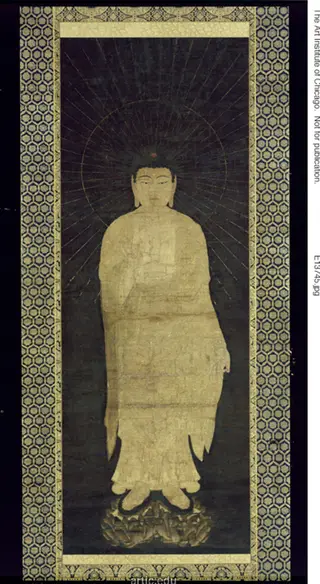 The Buddha Amida, from the triptych Approach of the Amida Trinity
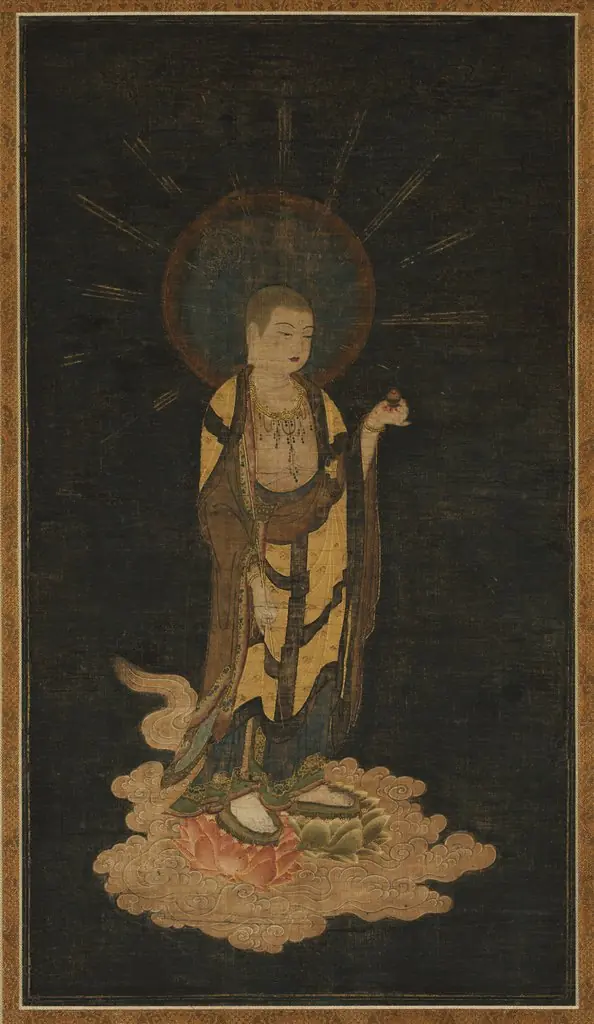 Welcoming Descent of Jizō
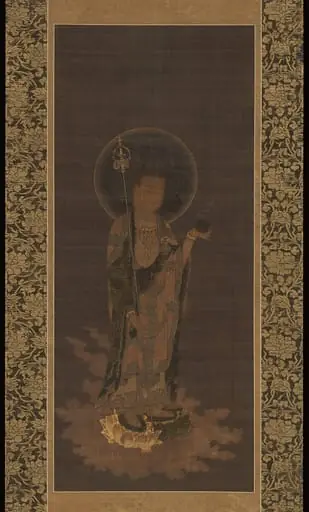 地蔵菩薩来迎図|Welcoming Descent of the Bodhisattva Jizō
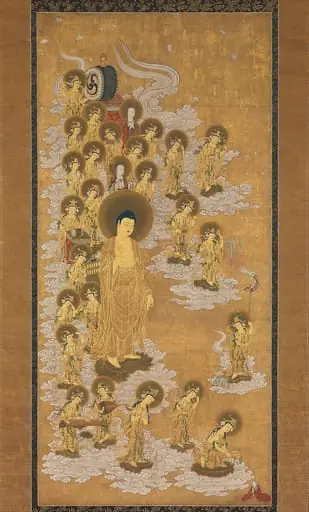 阿弥陀二十五菩薩来迎図|Welcoming Descent of Amida Buddha and Twenty-five Bodhisattvas
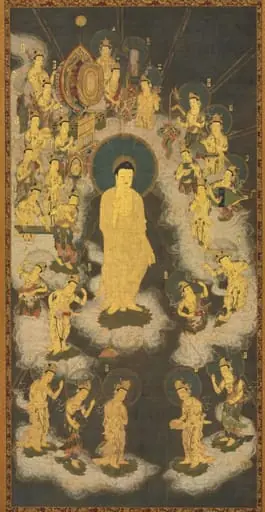 Welcoming Descent of Amida (Amida Raigō)
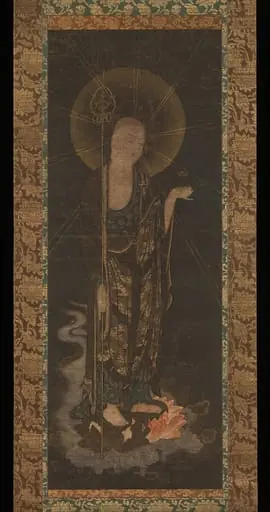 地蔵来迎図|Welcoming Descent of Jizō
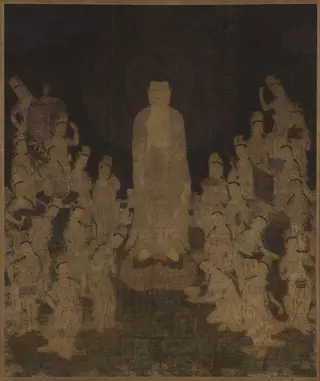 Welcoming Descent of Amida with Twenty-Five Bodhisattvas