Artwork
Tabernacle frame
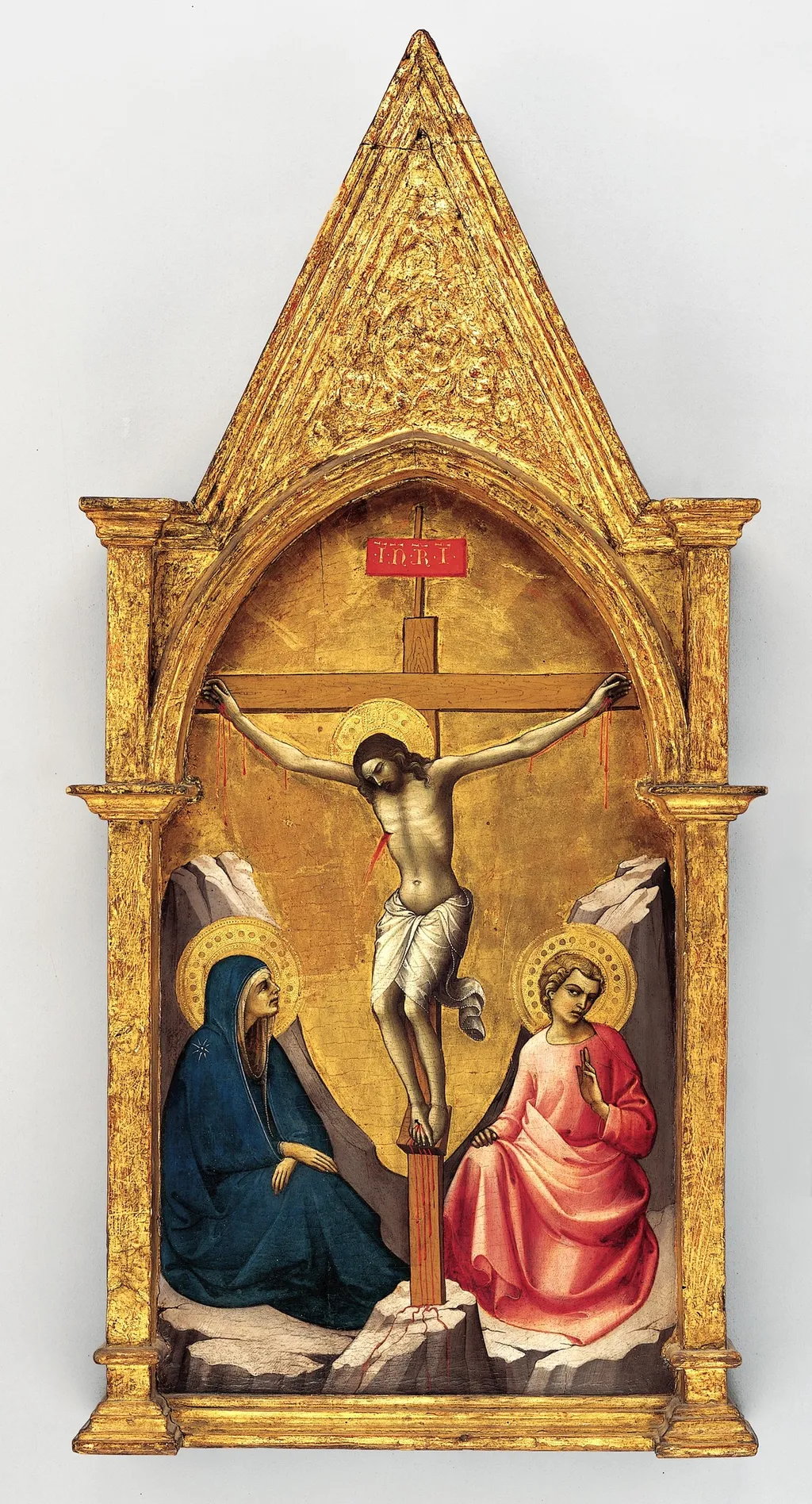
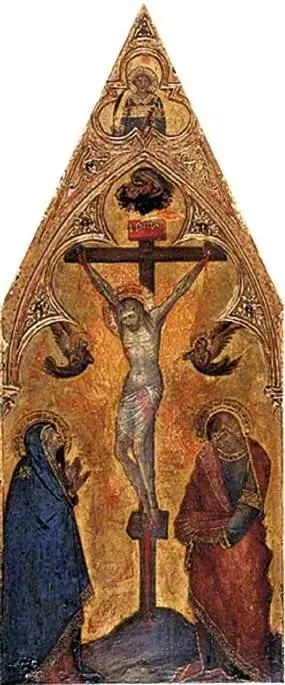
Tabernacle frame is an unspecified painting. It dates from 1404 and is held in the collection of the Metropolitan Museum of Art. The work presents a crucifixion tableau framed by a gilded, window‑shaped border that evokes a church opening.
About this work
History & Provenance
No further details regarding its specific commission or intermediate ownership history are provided in the available records.
Created in 1404, this anonymous religious painting was at one point owned by Robert Lehman. The work subsequently entered the collection of the Metropolitan Museum of Art, where it is currently held. No further details regarding its specific commission or intermediate ownership history are provided in the available records.
The work is held in the collection of the Metropolitan Museum of Art in New York. Its accession number is 1975.1.1, and it was formerly owned by Robert Lehman. The piece has been exhibited at the Metropolitan Museum of Art as part of displays on religious art.
Overview
The work presents a crucifixion tableau framed by a gilded, window‑shaped border that evokes a church opening. Central to the composition is a figure nailed to a cross with outstretched arms, flanked by a kneeling woman in blue on the left and a standing, red‑clad figure on the right. The background is a flat gold field, and each character bears a stylized face with a halo.
Subject & Meaning
The central figure represents the crucified Christ, while the kneeling woman, identified by her blue attire, appears to be a devotee, perhaps the Virgin Mary, in a posture of prayer. The standing figure in red, gesturing upward, may symbolize a saint or apostle offering intercession. The overall arrangement suggests a devotional focus, inviting contemplation of the Passion.
Technique & Style
Executed in a highly stylized manner, the painting employs flat gold ground and simplified facial features, characteristic of medieval iconography. Halos and bold outlines delineate the holy figures, while the use of vivid primary colors, blue, red, and gold, creates a visual hierarchy. The composition lacks naturalistic shading, favoring symbolic clarity over chiaroscuro.
Context
The work reflects a tradition of portable devotional images intended for private worship or liturgical display. Its emphasis on symbolic color, flat gold background, and iconic gestures aligns it with late medieval or early Renaissance devotional panels that prioritized theological messaging over realistic representation.
Artist & collection

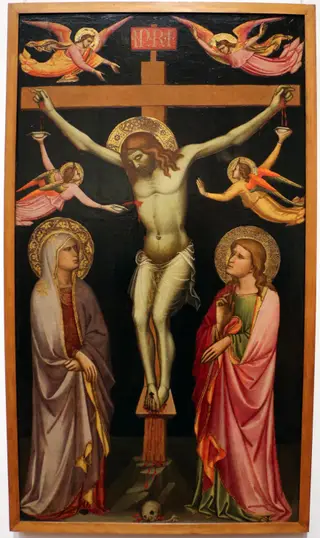 Crucifixion
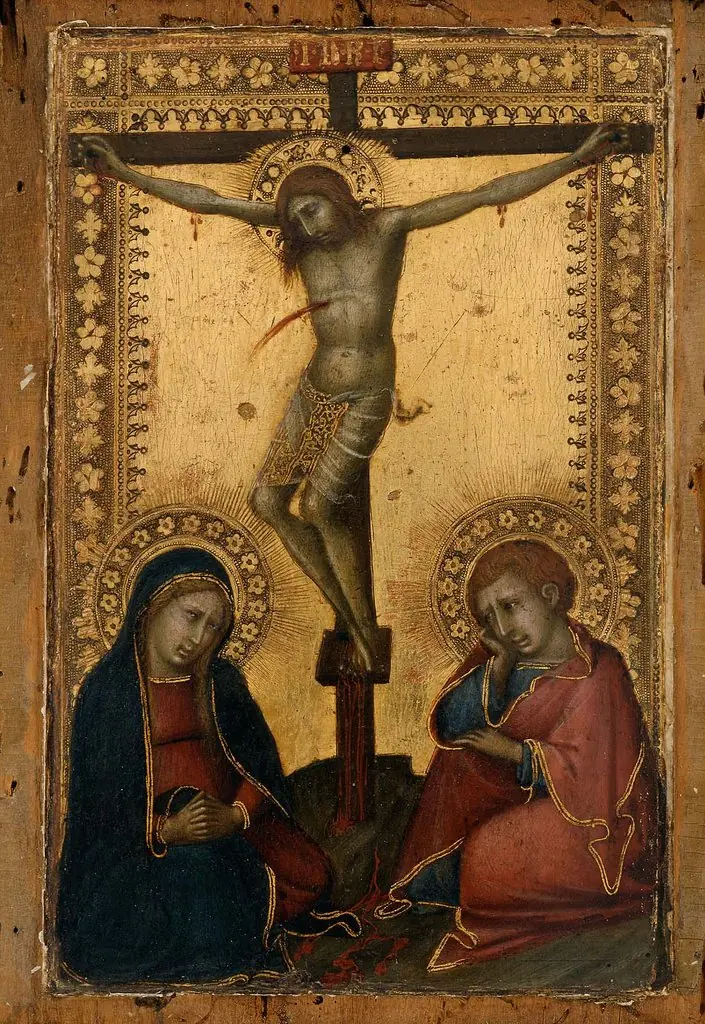 Crucified Christ with the Virgin and Saint John the Evangelist
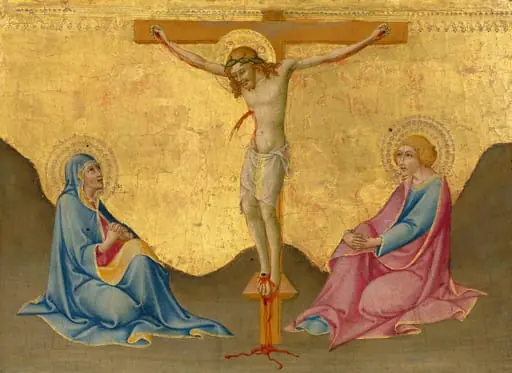 The Crucifixion
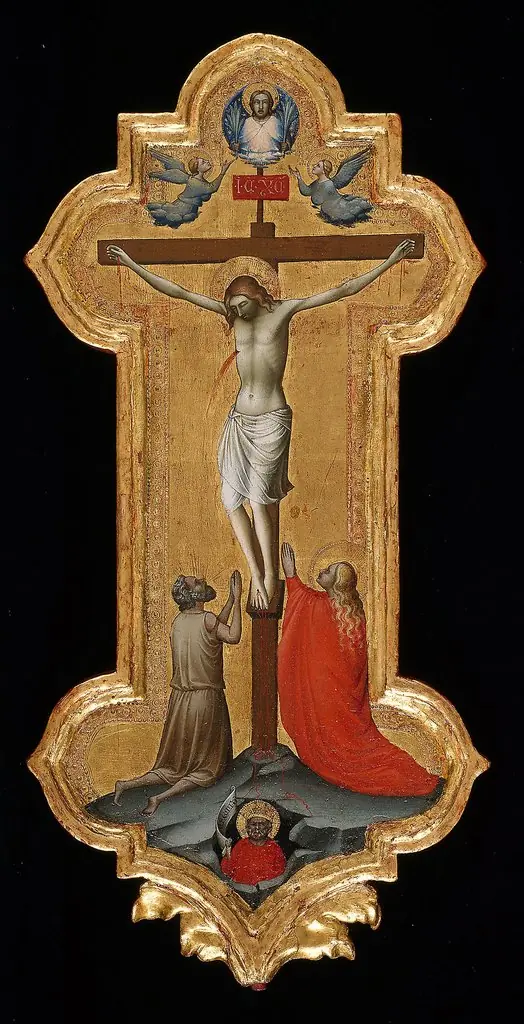 Processional Cross
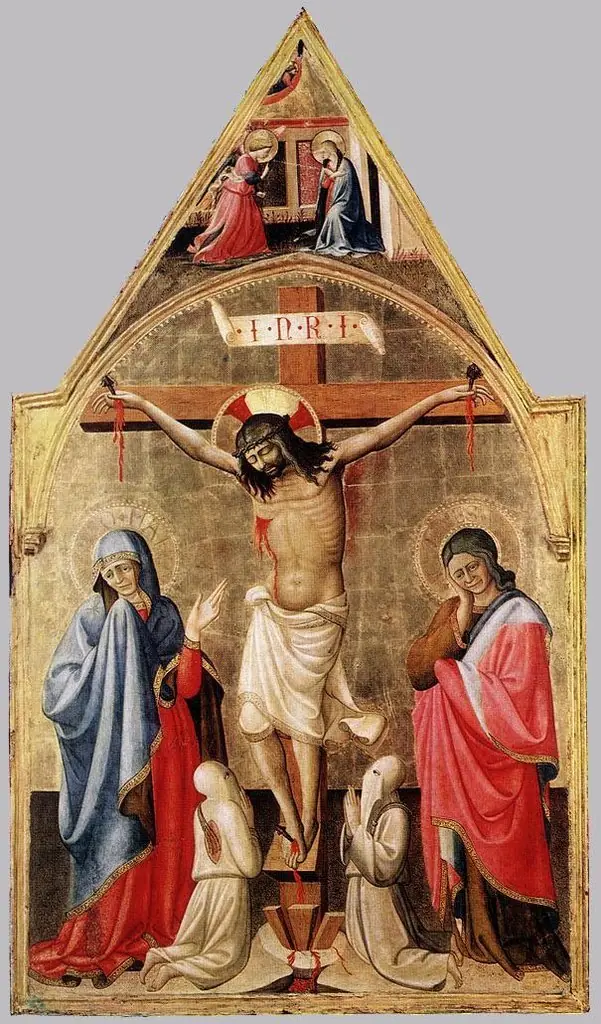 Crucifixion with Mary and St John the Evangelist
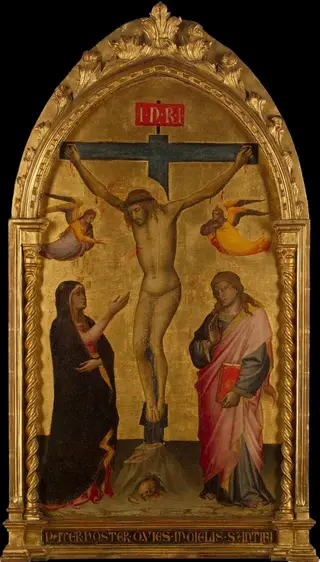 Crucifixion with the Virgin and St John
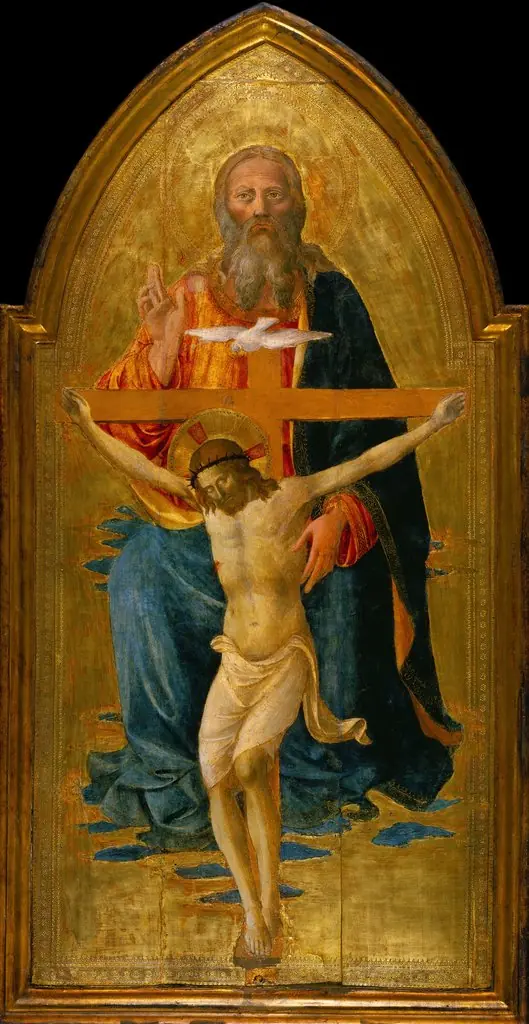 The Trinity
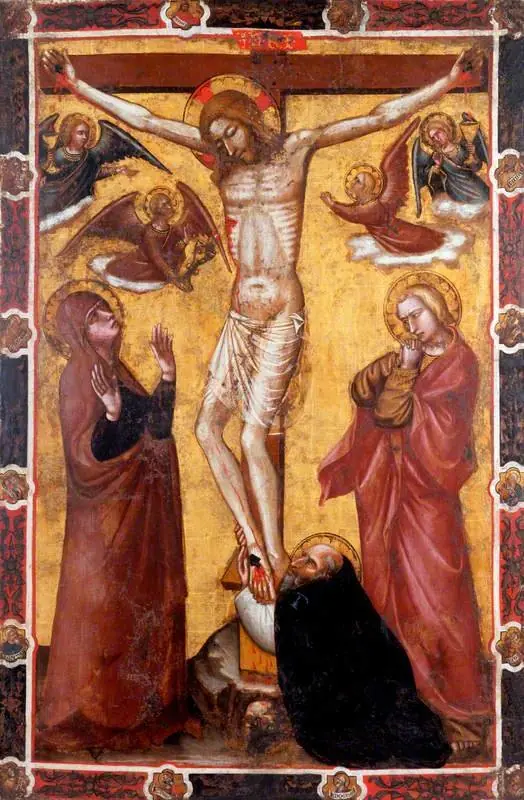 The Crucifixion with the Virgin and Saint John; Saint Anthony Abbot at the Foot of the Cross (one side of a processional banner) (formerly attributed to Barnaba da Modena)
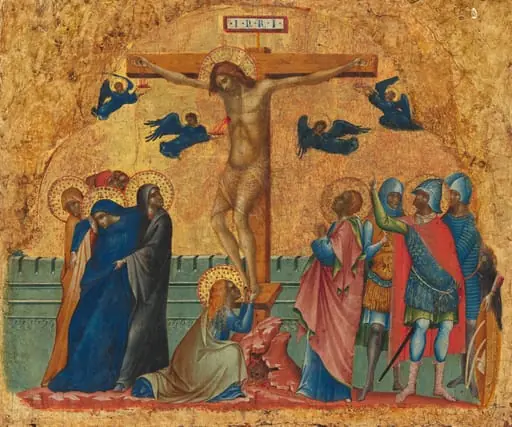 The Crucifixion
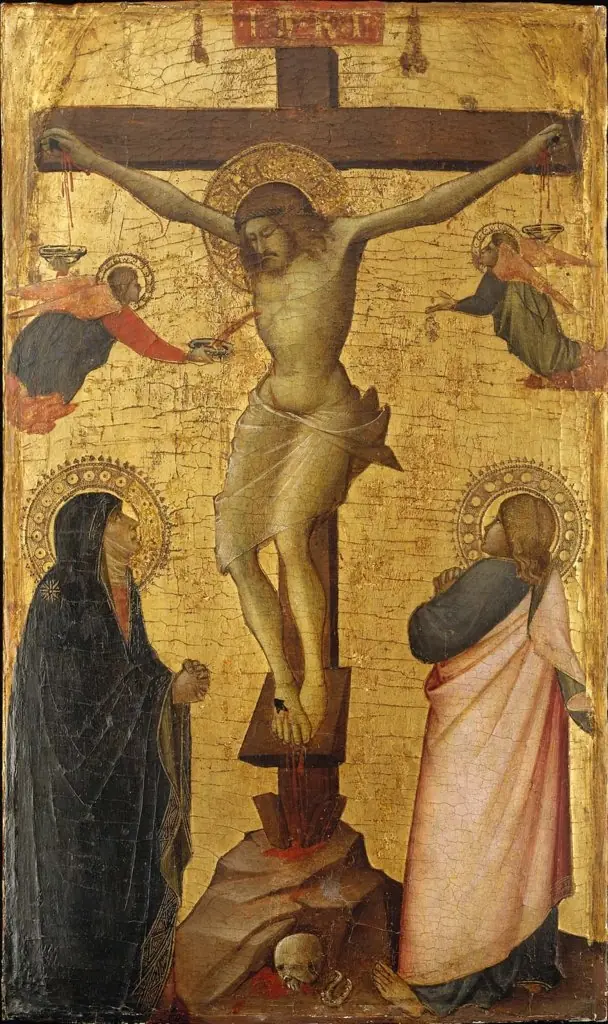 The Crucifixion with the Virgin and Saint John
 The Crucifixion
- Christ on the Cross