Artwork
Temptation of Christ
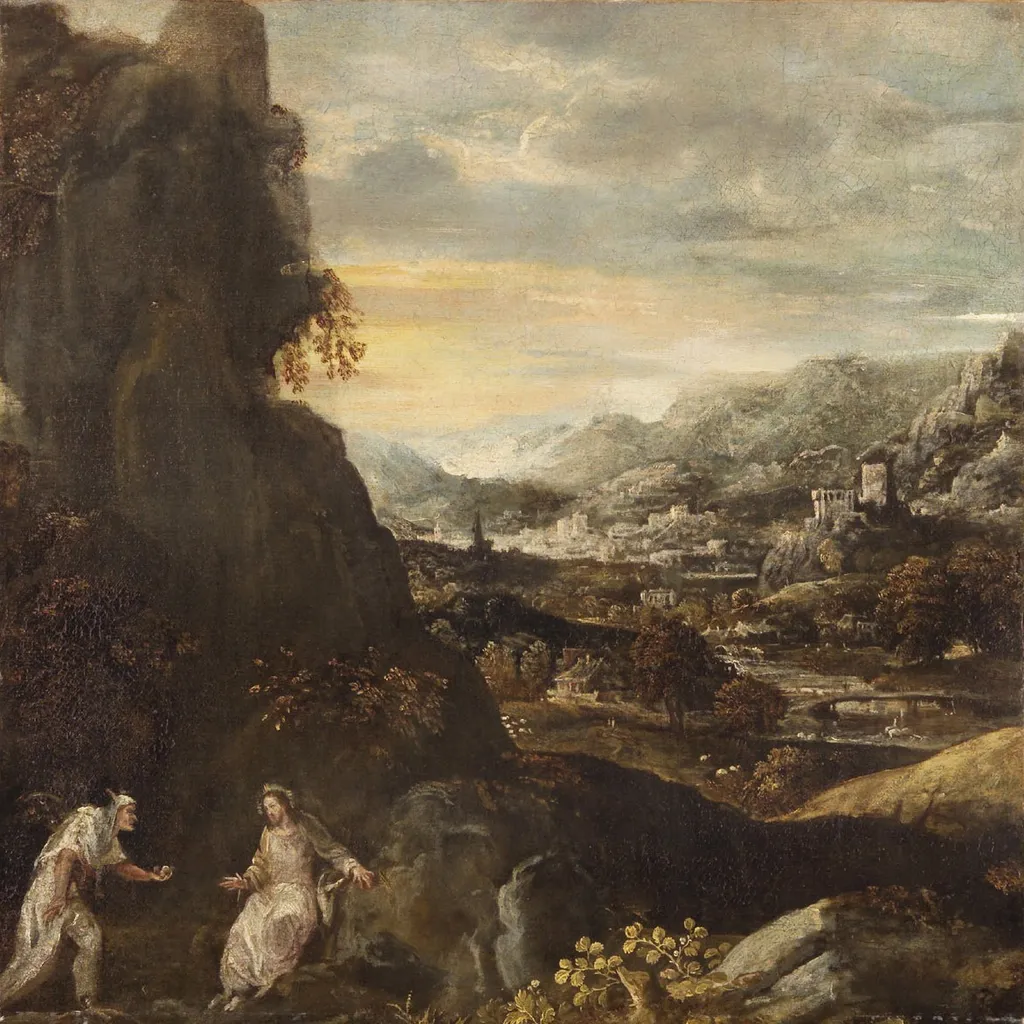
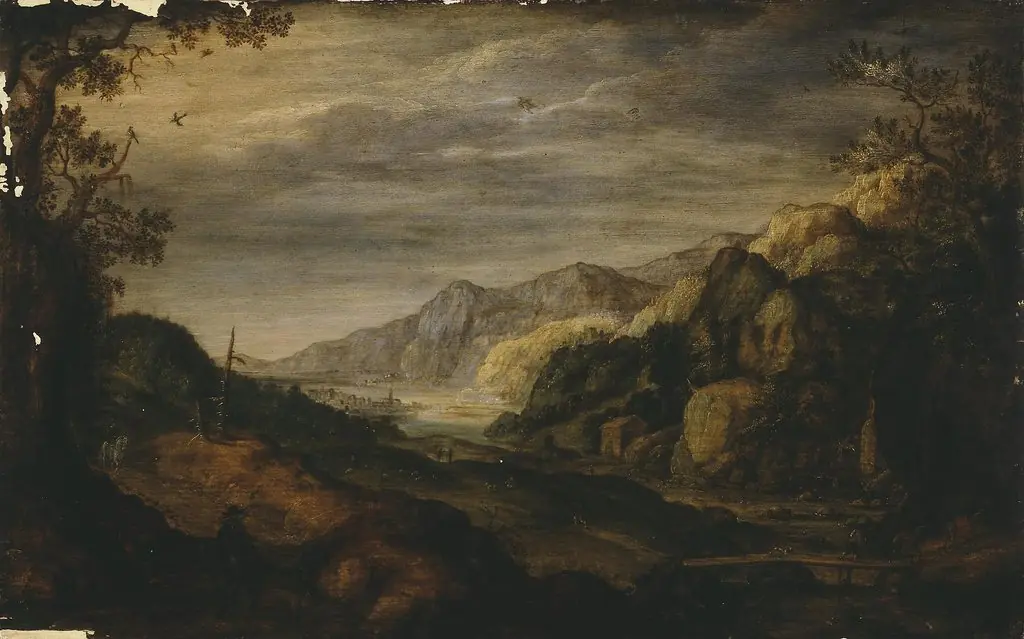
Temptation of Christ is an unspecified painting by the Mannerist artist Unknown. It dates from 1570 and is held in the collection of the Kunsthistorisches Museum. The work portrays the biblical episode in which Christ confronts Satan’s temptations.
About this work
Subject & Meaning
The painting depicts the biblical episode known as the Temptation of Jesus, a religious narrative centered on the confrontation between Jesus Christ and Satan.
The painting depicts the biblical episode known as the Temptation of Jesus, a religious narrative centered on the confrontation between Jesus Christ and Satan. As the main subject of the work, this scene illustrates the moment Christ is tempted by the devil, a standard theme in religious art. The composition explicitly features these two figures, representing the spiritual struggle between divine integrity and evil. Created in 1570, the work serves as a visual representation of this specific theological event.
Technique & Style
The work is executed in oil on panel, measuring 51.5 cm in height by 50.5 cm in width. It depicts the biblical moment of Christ being tempted by Satan in the desert, with the figure of Satan rendered as a dark, winged presence. The composition emphasizes dramatic chiaroscuro and a tightly confined spatial setting, characteristic of late Mannerist religious painting in the Venetian tradition.
The handling of light and gesture underscores the psychological tension of the encounter, reflecting the stylistic influence of Venetian masters while maintaining a distinct narrative focus on spiritual trial.
History & Provenance
The Temptation of Christ is a religious painting dated to 1570, with its inception recorded as 1 January 1570. It is attributed to a Flemish artist active in Venice and depicts the biblical encounter between Jesus Christ and Satan. The work is held in the collection of the Kunsthistorisches Museum, where it remains on display.
No further details regarding an original commission, prior ownership, or intermediate provenance are documented in the available sources.
Held by the Kunsthistorisches Museum in Vienna, the work is catalogued under the inventory number 1995.1.1. It entered the museum’s collection through a 1995 acquisition and has been displayed in the museum’s permanent religious art gallery since 1996. The painting was featured in the exhibition "Baroque Masterpieces from the Habsburg Collections" held at the Kunsthistorisches Museum in 2002.
Legacy
The painting has shaped religious art discourse since its creation, particularly through its depiction of Christ's confrontation with Satan, which influenced Baroque interpretations of temptation. Its formal qualities, measured at 51.5 cm by 50.5 cm, established compositional standards later adopted by artists exploring biblical narratives. The work's placement in a major public collection ensured ongoing scholarly attention to its theological themes and technical execution.
Overview
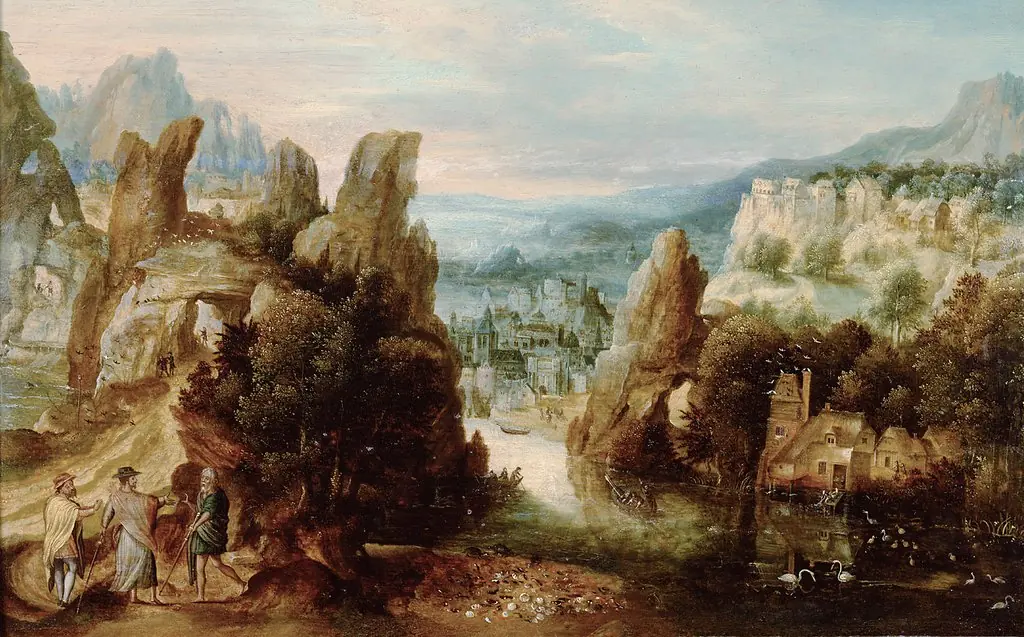
The work portrays the biblical episode in which Christ confronts Satan’s temptations. Set against a rugged, mountainous terrain, the composition places the central figures on a rocky outcrop beneath a cloudy sky, with a distant city visible on the horizon.
Context
The inclusion of a far‑off cityscape situates the biblical narrative within a recognizable world, linking the spiritual trial to earthly realms. The atmospheric sky and rugged geology reflect the tradition of landscape integration common in religious paintings of the period.
Artist & collection









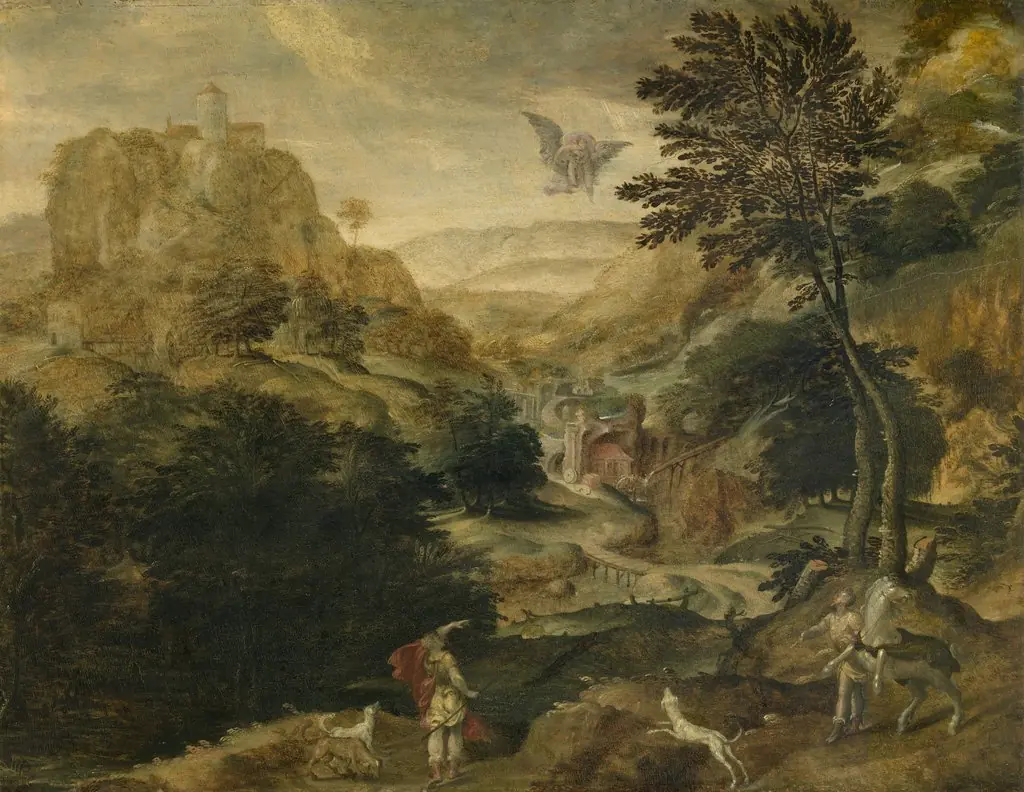
- Abduction of Ganymedes
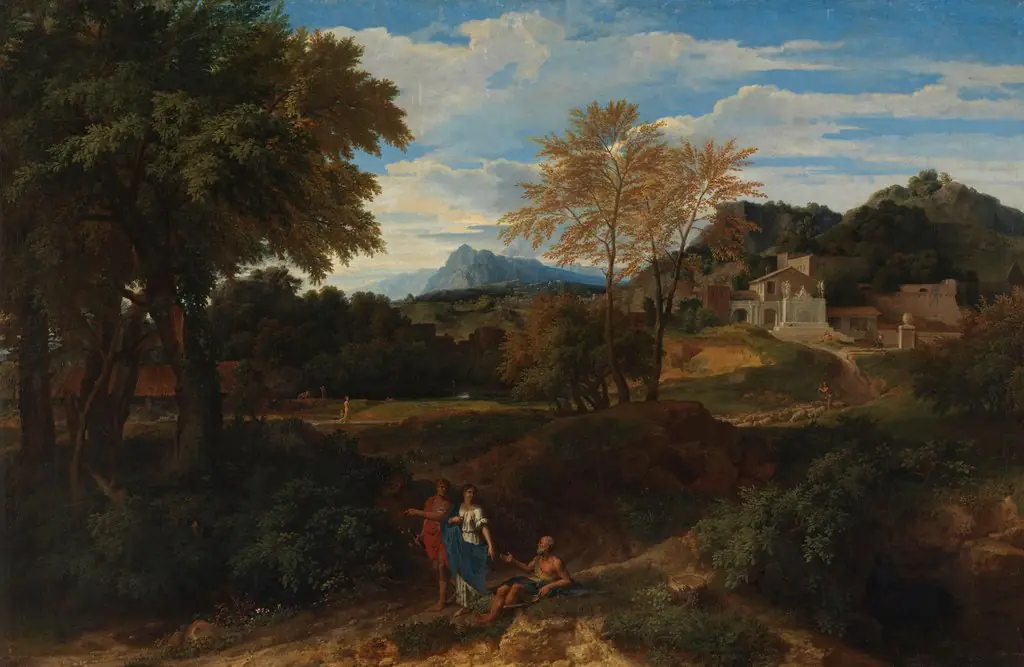 Klassische Landschaft
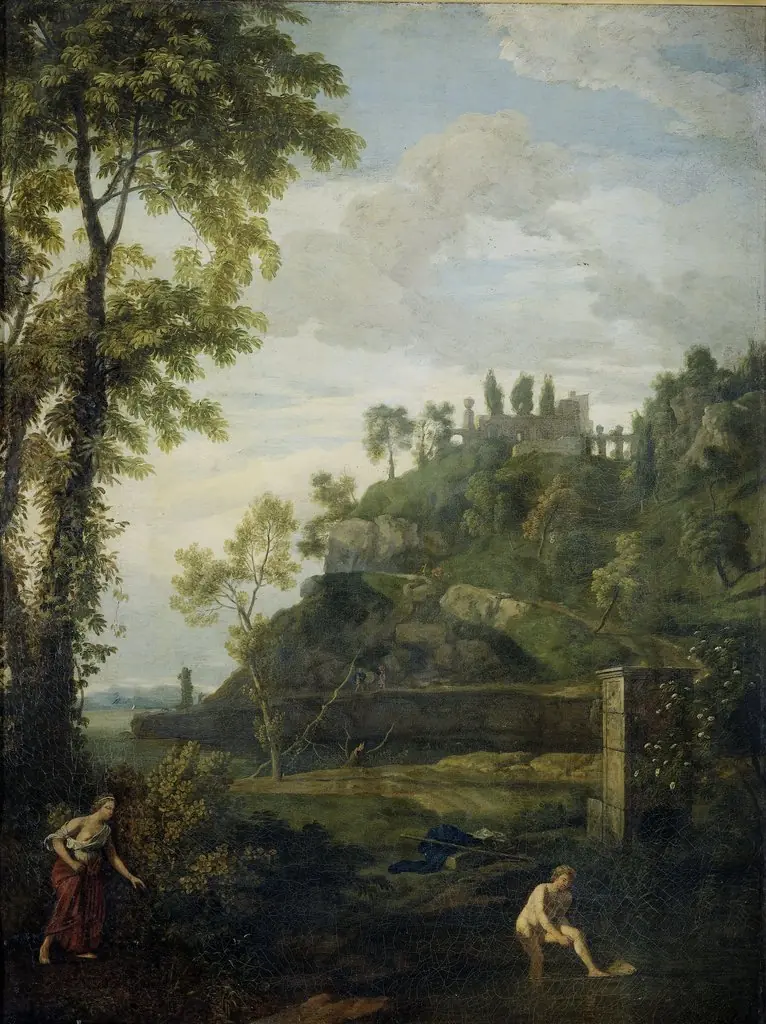 Arcadian landscape with Salmacis and Hermaphroditus
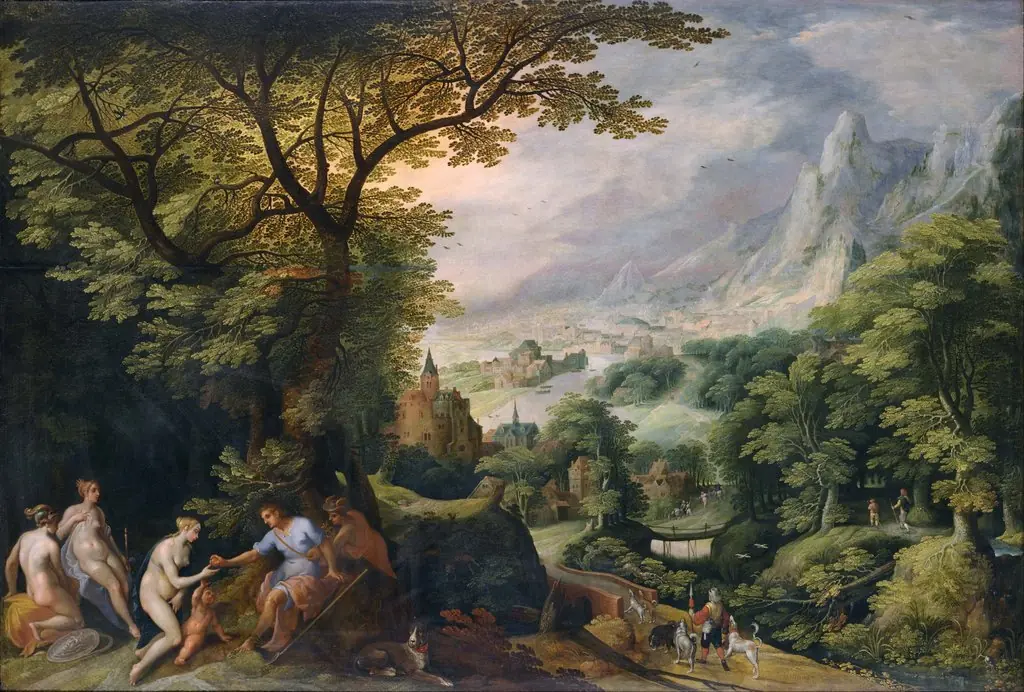 Landscape with the Judgement of Paris
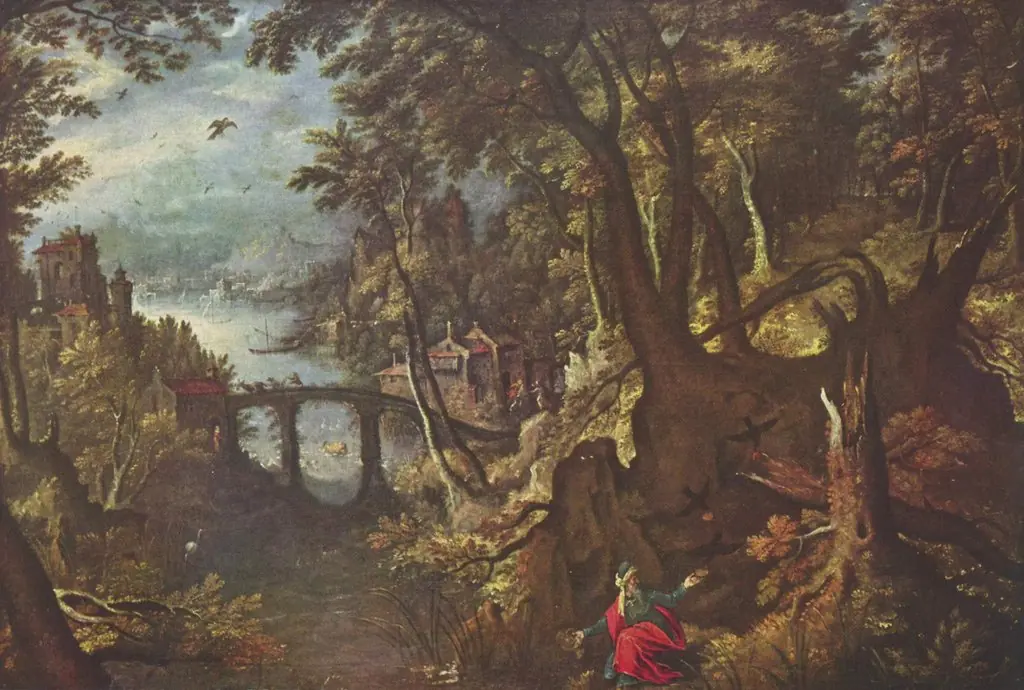 Elijah fed by the raven
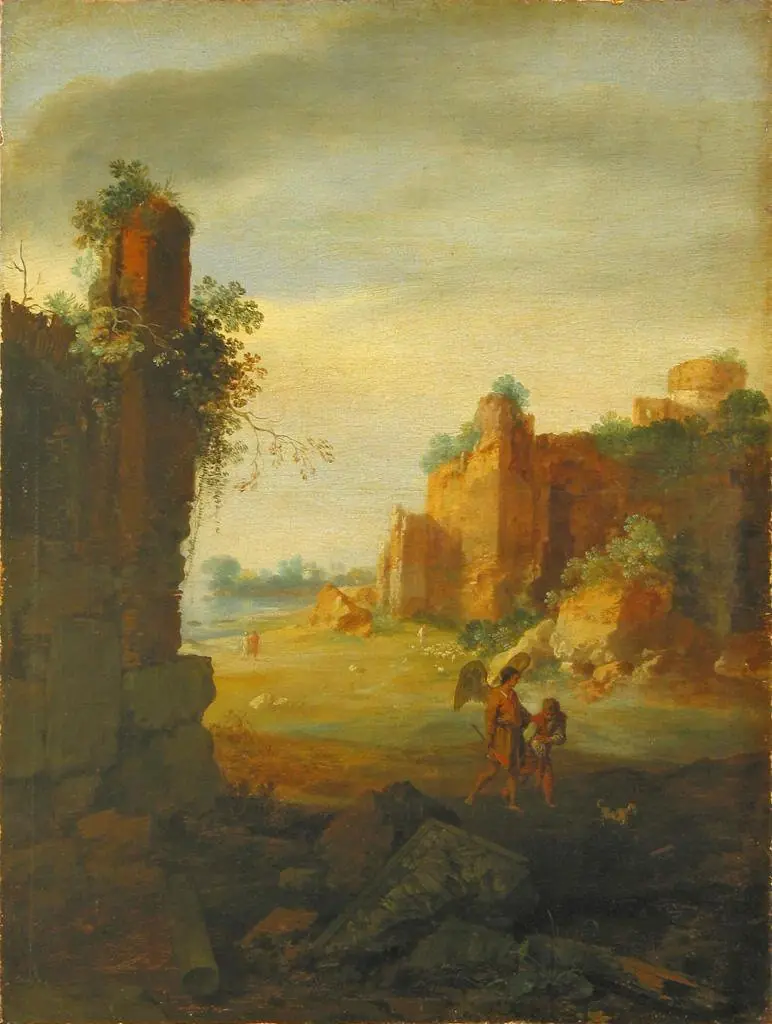 Landscape with Tobias and the Angel
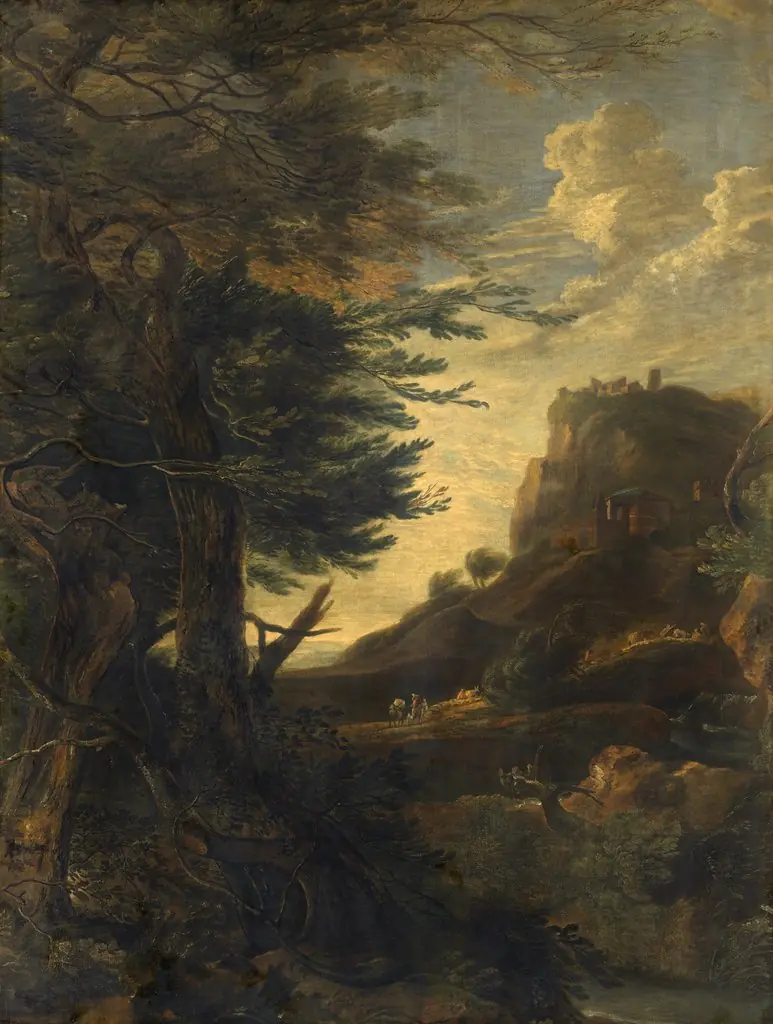 Landscape
 Landschaft mit dem Gang nach Emmaus
 Mountainous landscape
 Landscape with a Group of Wanderers
 Landscape with Conversion of Saint Paul
 Mountainous Landscape