Artwork
The Adoration of the Kings
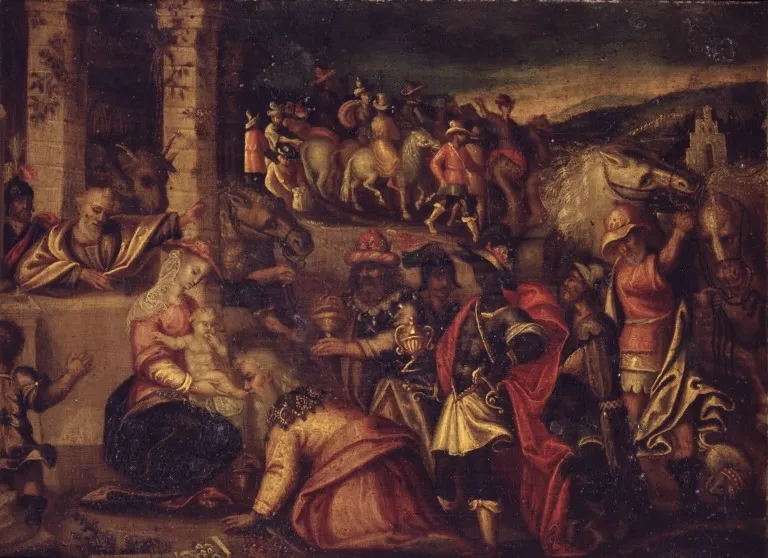
The Adoration of the Kings is an unspecified painting by the Mannerist artist Unknown. It dates from 1597 and is held in the collection of the Statens Museum for Kunst.
About this work
Subject & Meaning
The work is classified as a religious painting, with the Christ Child identified as the central figure and the adoration of the Magi named as the main subject.
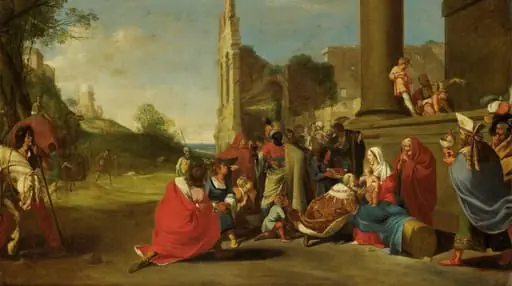
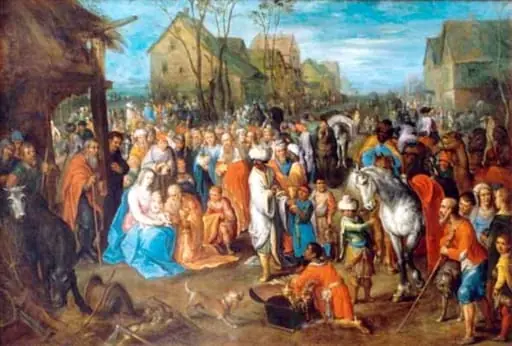
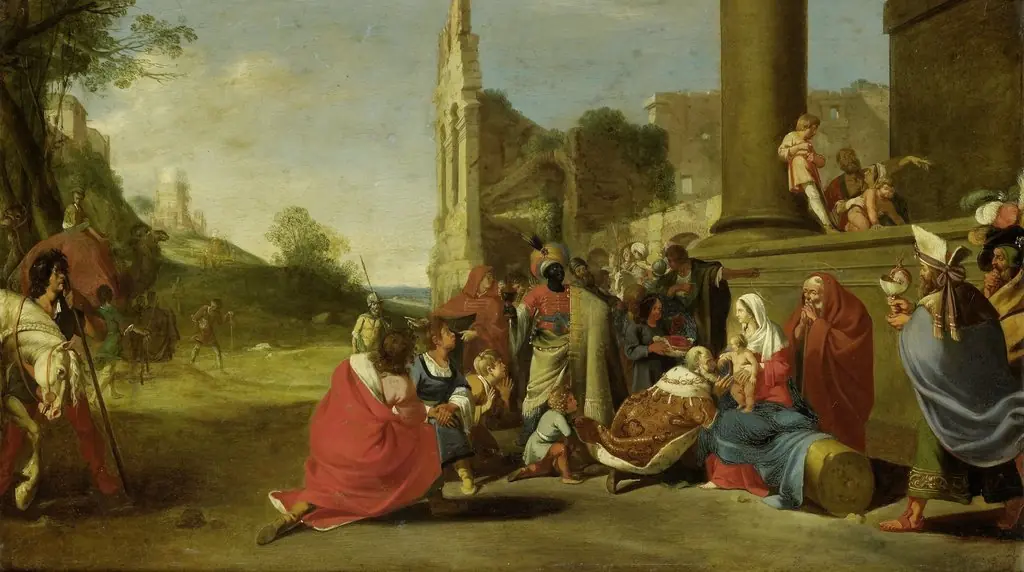
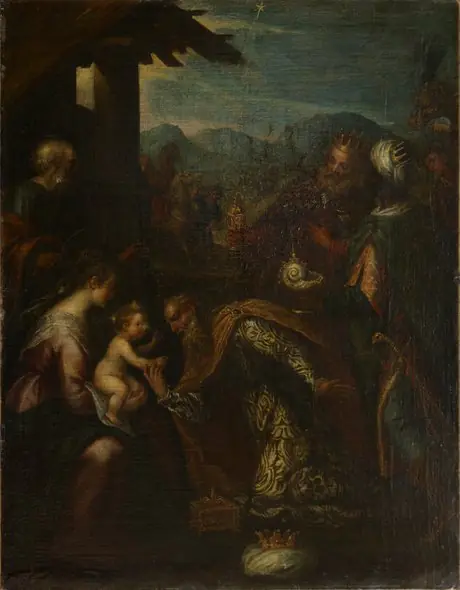
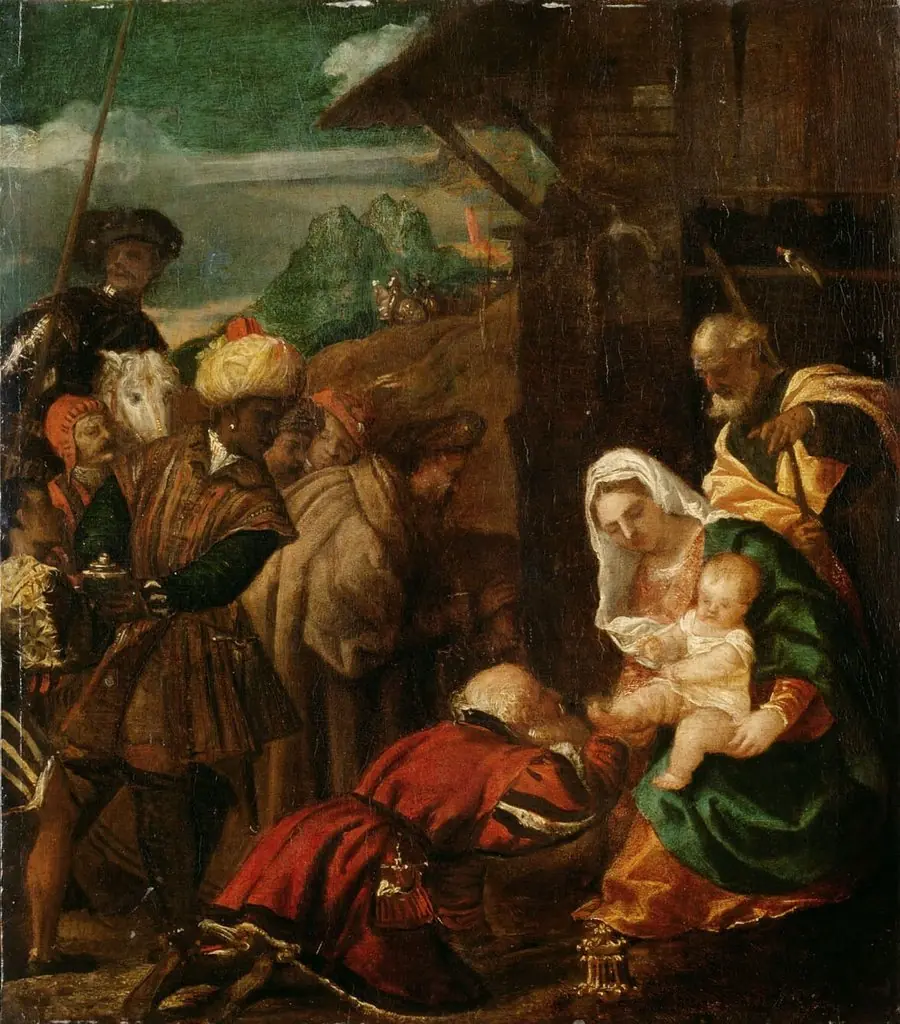
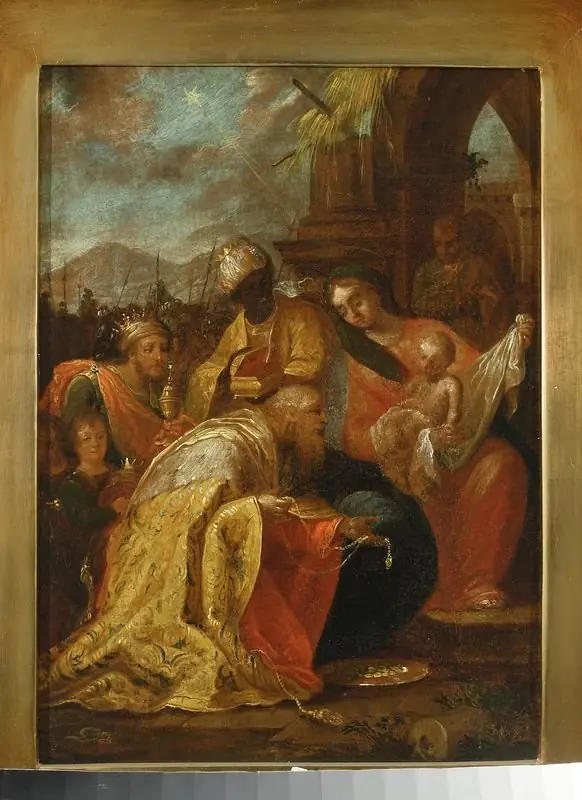
The painting depicts the Adoration of the Magi, a religious scene in which the Magi pay homage to the Christ Child. The work is classified as a religious painting, with the Christ Child identified as the central figure and the adoration of the Magi named as the main subject. As an Adoration of the Kings composition, the scene conveys the New Testament episode of the wise men presenting gifts to the infant Jesus, a subject traditionally used to express themes of divine revelation to the Gentile world and the acknowledgment of Christ's kingship.
The large scale of the canvas, measuring 180.0 by 245.0, supports a multi-figure devotional narrative rather than an intimate devotional image.
The iconography centers on the veneration of the Christ Child by the Magi, situating the work within the long tradition of late sixteenth-century religious painting devoted to this episode.
Context
The Adoration of the Kings, painted in 1593 by an anonymous artist from the workshop of KMS 3880, depicts the biblical scene of the Magi presenting gifts to the infant Christ, reflecting Counter-Reformation emphasis on devotional imagery. Its composition and scale (180.0 cm × 245.0 cm) align with late Renaissance religious painting conventions, situating it within the broader tradition of Nativity subjects in Northern European art. The work is part of the collection at Statens Museum for Kunst, where it has been studied in scholarship on 16th-century devotional practices and artistic patronage.
Overview
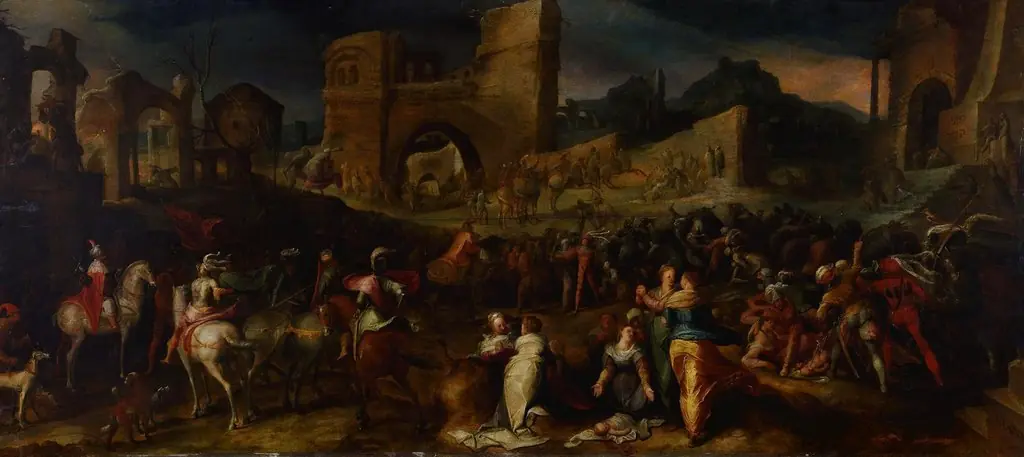
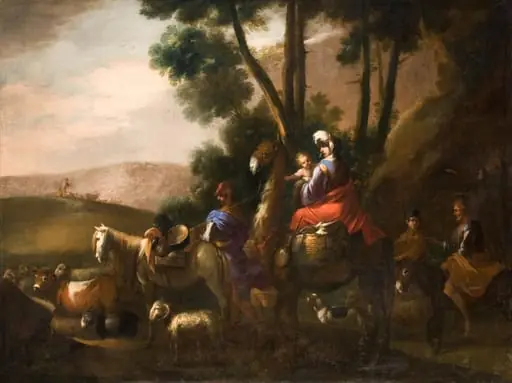
The work depicts a bustling tableau centered on a woman cradling an infant, surrounded by attendants in opulent red and gold garments and armored figures. Beyond the immediate group, a chaotic battle unfolds with mounted soldiers near a fortified structure. The composition is dominated by stark contrasts of light and shadow, drawing the eye to the infant while enveloping the surrounding drama in darkness.
Technique & Style
The artist employs chiaroscuro, using intense illumination on the central figures against deep, enveloping shadows to create a three‑dimensional effect. Rich, saturated reds and golds on the robes contrast with the muted blues of the woman's attire, while the metallic sheen of armor reflects limited light, enhancing the dramatic atmosphere characteristic of late Renaissance or early Baroque visual strategies.
Legacy
Through its striking use of light and composition, the painting has been referenced in discussions of how artists balance narrative clarity with emotional intensity. Its treatment of a holy infant amid conflict continues to inform scholarly analysis of devotional art that incorporates secular, martial elements, illustrating the complex interplay of faith and power in visual culture.
Artist & collection