Artwork
The bird-trap
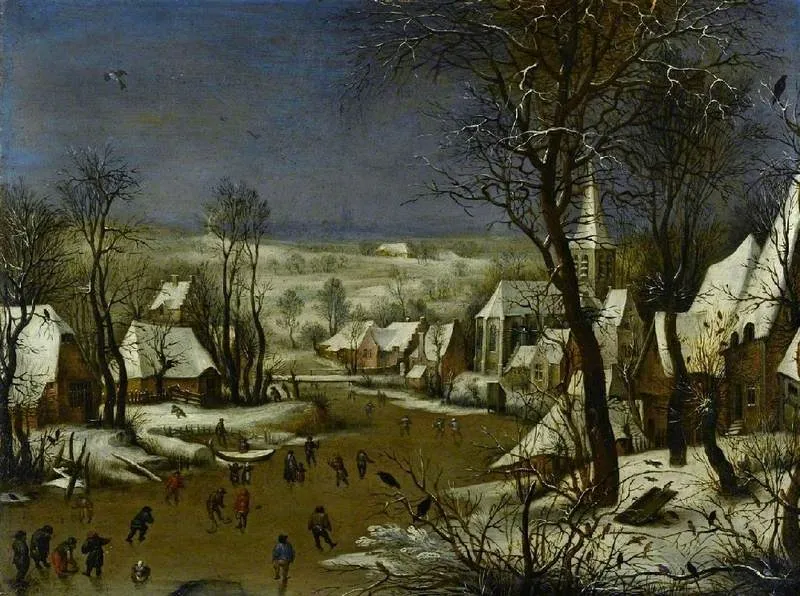
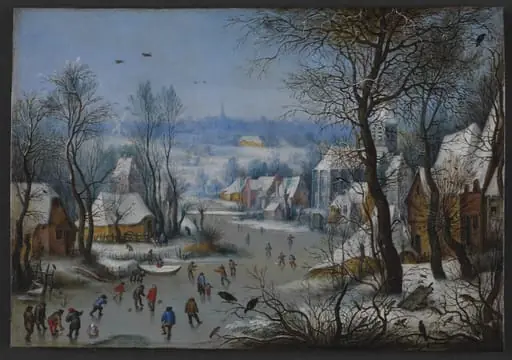
The bird-trap is an oil painting by Unknown. It is held in the collection of the Fitzwilliam Museum.
About this work
Overview
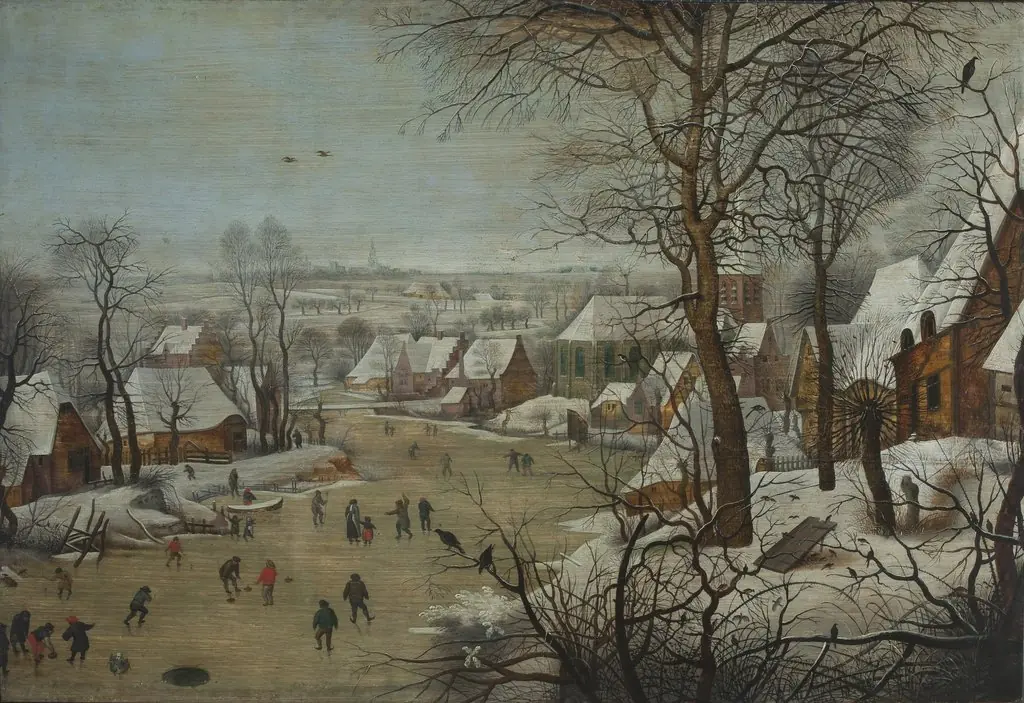
The work is a seventeenth-century copy after Pieter Bruegel the Elder's influential 1565 panel painting Winter Landscape with a Bird Trap.
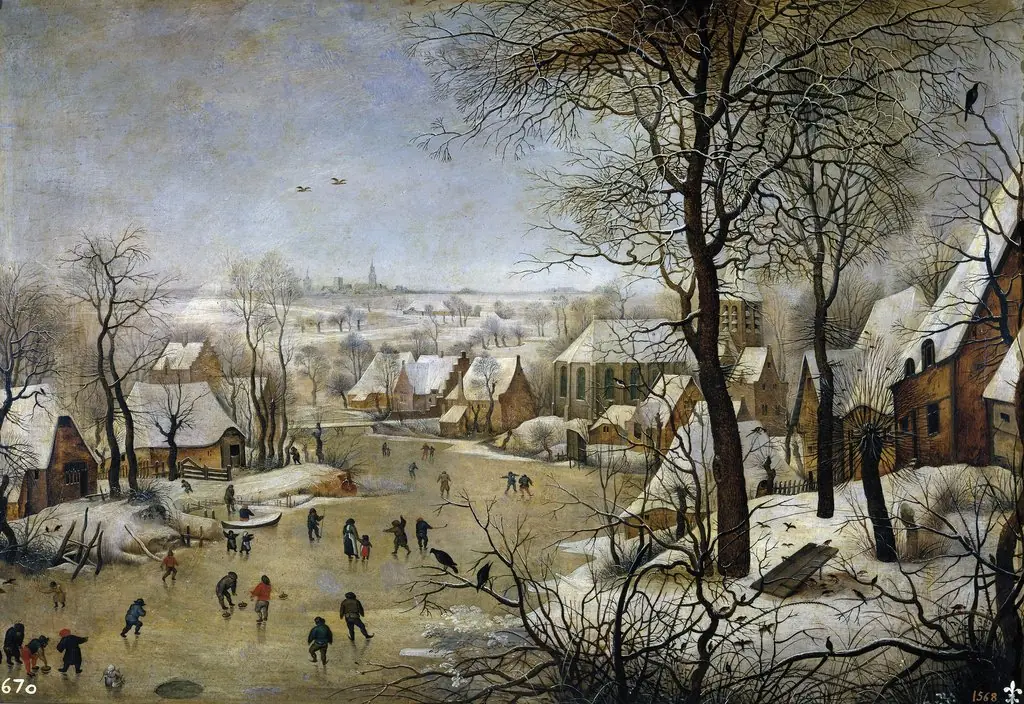
The Bird-Trap is an oil on copper landscape painting measuring 18.5 by 24.6 centimeters, currently held in the Fitzwilliam Museum under accession number 248. The work is a seventeenth-century copy after Pieter Bruegel the Elder's influential 1565 panel painting Winter Landscape with a Bird Trap. While the artist of the Fitzwilliam version is recorded as unknown, the composition is famously associated with the Brueghel family workshop, particularly Pieter Brueghel the Younger, who produced numerous documented copies of his father's prototype between 1601 and 1626. The painting depicts a frozen village waterway populated by skating figures and walkers, framed by snow-dusted trees and steep-roofed houses, with the eponymous bird trap set in the foreground snow.
Subject & Meaning
The scene captures a vibrant winter day where villagers skate and walk across a frozen river, gathered in social groups near a church spire and snow-capped dwellings. In the lower right foreground, an old door propped up by a stick serves as a bird trap, with food scattered beneath it as bait and birds gathering nearby, while a rope connects the trap to a nearby house. Crows perch on the bare branches in the foreground, scaled prominently in relation to the human figures. Art historians have long debated the iconography of the trap motif, which was added over the snowy background at a late stage in Bruegel the Elder's original composition. Interpretations often frame the work as a moral allegory: the fragile ice symbolizes the spiritual dangers facing Christians on the path to heaven, while the trap represents Satan seizing human souls, drawing a parallel between the blindness of the baited birds and the carelessness of the people on the precarious ice. No single interpretation has achieved universal scholarly acceptance.
Technique & Style
Executed in oil on a small copper support, the Fitzwilliam painting exhibits the meticulous detail and smooth, polished finish characteristic of Northern European landscape traditions. The composition relies on a muted palette of browns, greys, whites, and dull blues, with soft, cool shadows defining the winter atmosphere. Fine brushwork carefully renders the twisting trunks and branches of the leafless trees, the clustered architecture, and the numerous small figures populating the ice. In contrast, the heavy grey-blue sky is more smoothly blended. The original 1565 panel by Bruegel the Elder was painted on oak with a sketch-like underdrawing and a spontaneous wet-in-wet application, though the Fitzwilliam work belongs to the later Baroque era of the seventeenth century, reflecting the Brueghel workshop's emphasis on detailed, realistic representation of rural life.
History & Provenance
The Fitzwilliam Museum painting was bequeathed to the collection by Daniel Mesman in 1834. The work is one of many early copies derived from Pieter Bruegel the Elder's 1565 prototype, which is housed in the Oldmasters Museum in Brussels. The original Brussels panel itself was not widely recognized until its rediscovery in 1925, and its status underwent re-investigation as recently as 2012. The immense popularity of the composition in the seventeenth century led to extensive replication. The art historian Klaus Ertz documented 127 copies in his 2000 monograph, classifying 45 as autograph works by Pieter Brueghel the Younger, 51 as doubtful, and 31 as notable rejections. The copies typically feature a slightly extended scene compared to the original, most noticeably at the bottom left corner.
Context
The original 1565 composition by Pieter Bruegel the Elder emerged during a brief but pivotal period when the artist produced five snowy landscapes, effectively establishing the winter landscape as an independent genre in Western art. This creative burst has been linked to the sharp decrease in northern European temperatures, particularly the notably harsh winter of 1564 and 1565. The village depicted is believed to be Sint-Anna-Pede near Brussels. The Brueghel family workshop capitalized on the enduring appeal of this composition. The copies often emphasize subtle variations, such as the arrangement of the bird trap, the game of curling, a hole in the ice, or even the insertion of religious motifs like the Rest on the Flight into Egypt, reflecting the intersection of genre painting, moralistic themes, and contemporary engravings.
Legacy
The enduring popularity of the bird trap composition is evidenced by the sheer volume of copies produced throughout the seventeenth century. The combination of an idyllic winter scene with lurking symbolism about mortality resonated deeply with audiences, allowing painters like Hendrick Avercamp to build successful careers around the newly established winter landscape genre. In the modern art market, copies attributed to Pieter Brueghel the Younger remain highly sought after. A notable auction record was set in July 2014, when a copy sold at Sotheby's London for 3.4 million pounds, while another version sold at Sotheby's New York in January 2014 for 2.3 million dollars, underscoring the lasting commercial and cultural value of the Brueghel workshop's variations.
Artist & collection