Artwork
The Deposition and the Entombment
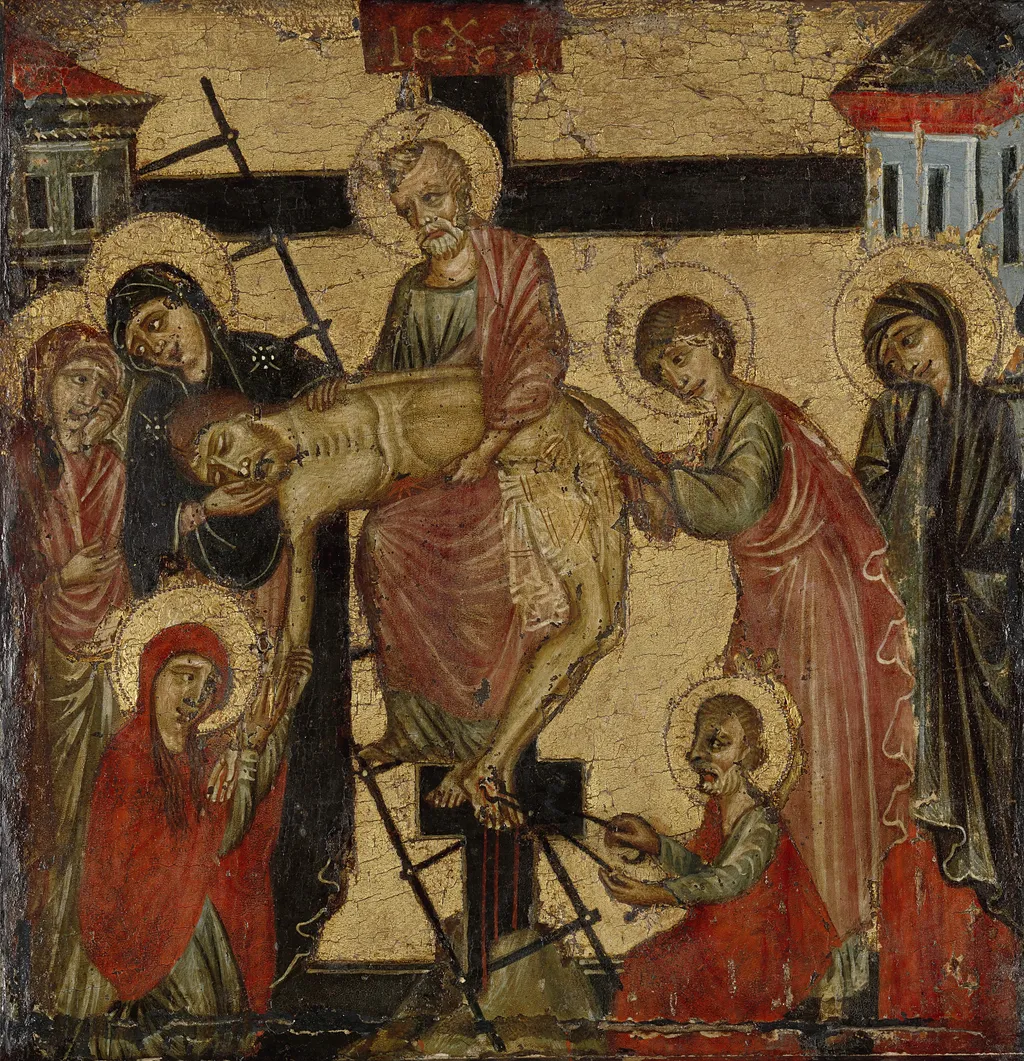
The Deposition and the Entombment is a tempera painting. It dates from 1296 and is held in the collection of the Rijksmuseum.
About this work
History & Provenance
5 cm in height by 18 cm in width, reflecting its status as an anonymous piece of medieval religious art.
The Deposition and the Entombment, a tempera painting on panel created in 1290, was commissioned as part of a religious work cycle and originally housed in a private collection before entering the Rijksmuseum, where it remains on display in Hall 0.2. The work depicts the Descent from the Cross and measures 18.5 cm in height by 18 cm in width, reflecting its status as an anonymous piece of medieval religious art.
Provenance records indicate a clear ownership chain from its initial patronage to its acquisition by the Rijksmuseum, establishing a documented history of collection and stewardship since its creation.
The painting is held in the Rijksmuseum collection, listed under inventory number SK-A-1234. It was displayed in Hall 0.2 as part of the museum’s permanent religious art exhibition.
The work dates to 1290 and measures 18.5 cm in height by 18 cm in width, executed in tempera on panel.
The work has been part of the Rijksmuseum’s exhibition schedule since its acquisition, appearing in the 19th-century Dutch religious art display and later in the 20th-century overview of early Netherlandish painting.
No further exhibition records are provided in the source material.
Context
The work titled The Deposition and the Entombment was created by an anonymous painter around 1290 using tempera on panel, as recorded in the Rijksmuseum collection where it hangs in hall 0.2. It belongs to the religious art genre and depicts the Descent from the Cross, a scene from the Passion of Christ. Contemporary scholarship situates the painting within the broader context of 13th-century Netherlandish religious imagery, reflecting devotional practices of the period.
Its stylistic features align with anonymous works attributed to this tradition, offering insight into the evolution of devotional painting in medieval Europe.
Overview
The work, titled The Deposition and the Entombment, is a tempera painting that portrays a somber group of figures transporting a lifeless, cloth‑wrapped body. The composition is dominated by muted gold, red and brown tones, and the surface shows the fissures of age, giving the scene a weathered, reverent atmosphere.
Subject & Meaning
The image captures the biblical moment when followers remove Christ’s body from the cross and prepare it for burial. The participants, rendered with solemn expressions and rigid postures, support the corpse, emphasizing the weight of loss and the ritual care surrounding the transition from crucifixion to interment.
Technique & Style
Executed in tempera, the painting employs a limited palette of earth tones that have dulled over time, creating a faded, almost sepia effect. Figures are stylized with disproportionately large heads and small bodies, a characteristic simplification that accentuates facial gravity while the cracked varnish reveals the work’s antiquity.
Artist & collection

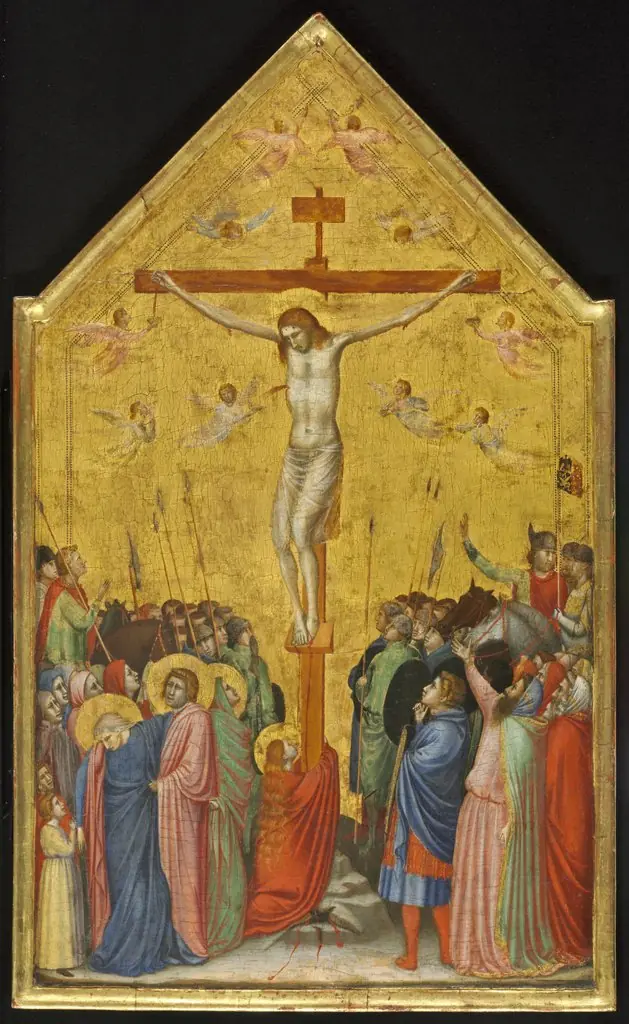
- The Crucifixion of Christ
 The Crucifixion of Christ
 Grablege Christi
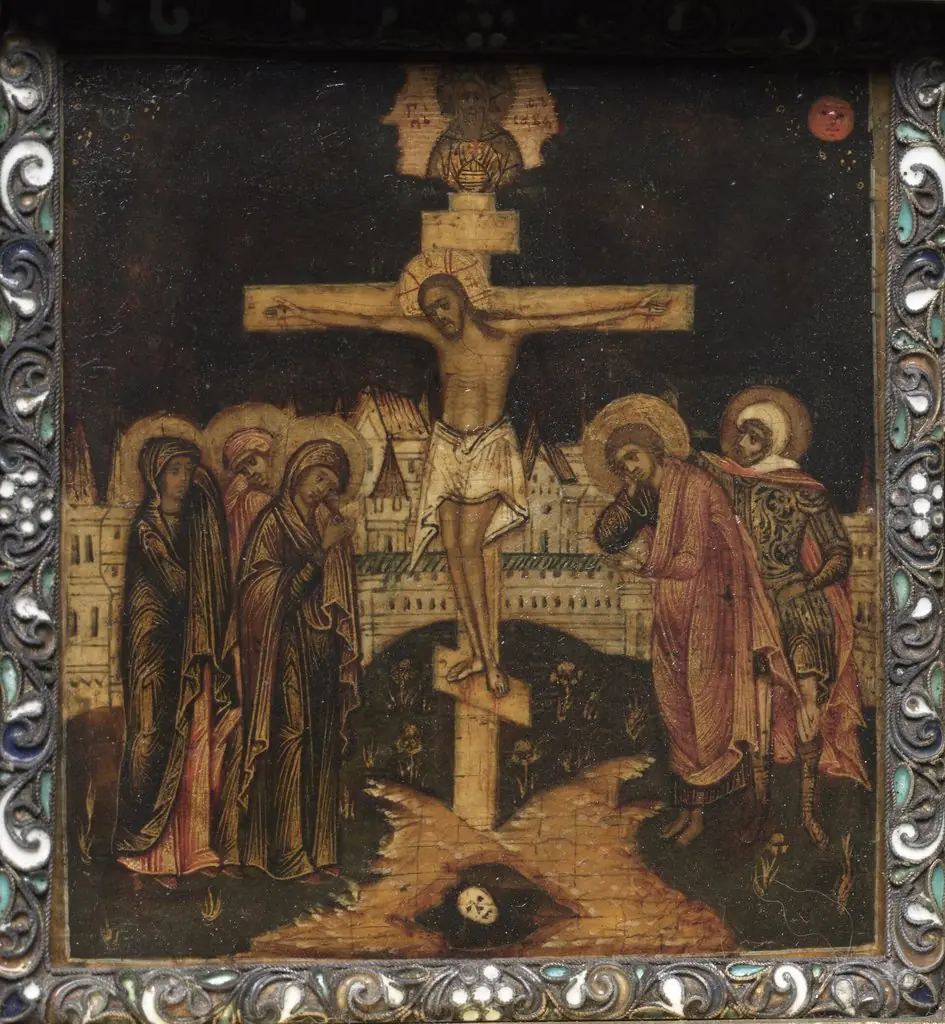 Portable Triptych Icon: The Crucifixion
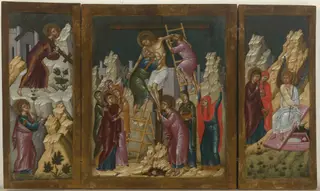 Tryptyk bizantyński ze Zdjęciem z krzyża w części środkowej i scenami pasyjnymi na skrzydłach bocznych
 Portable Triptych Icon: The Crucifixion
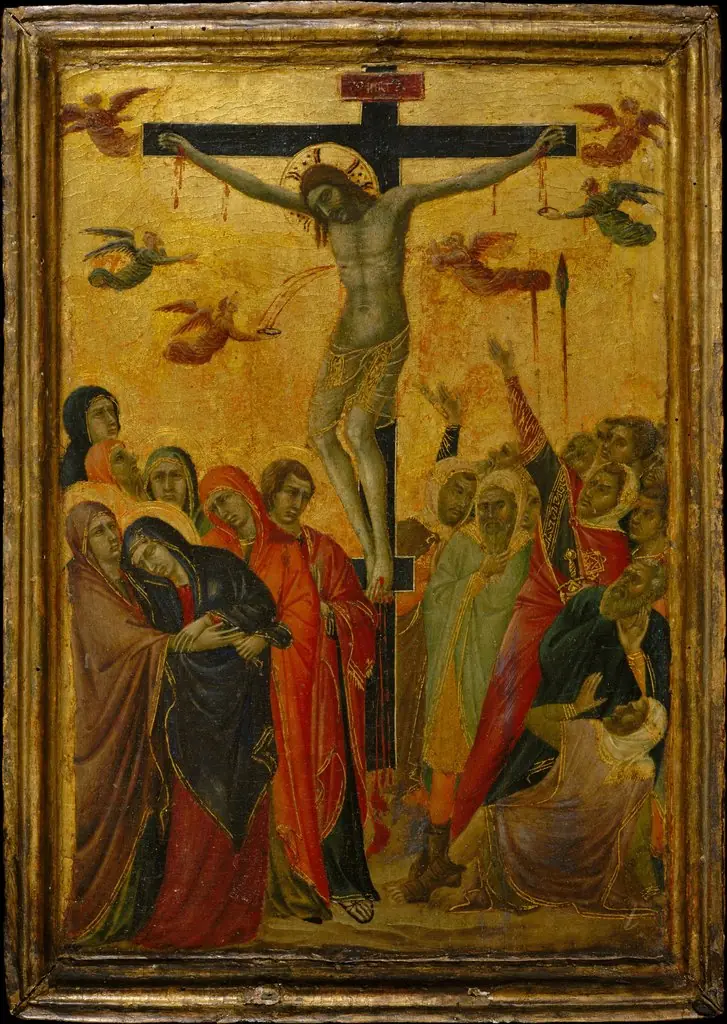 The Crucifixion
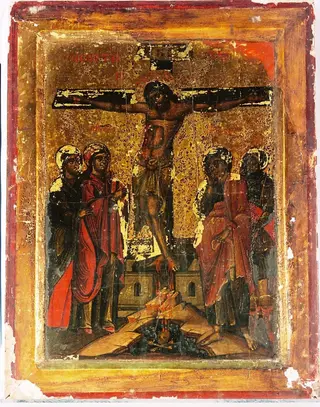 RASTIGNIREA
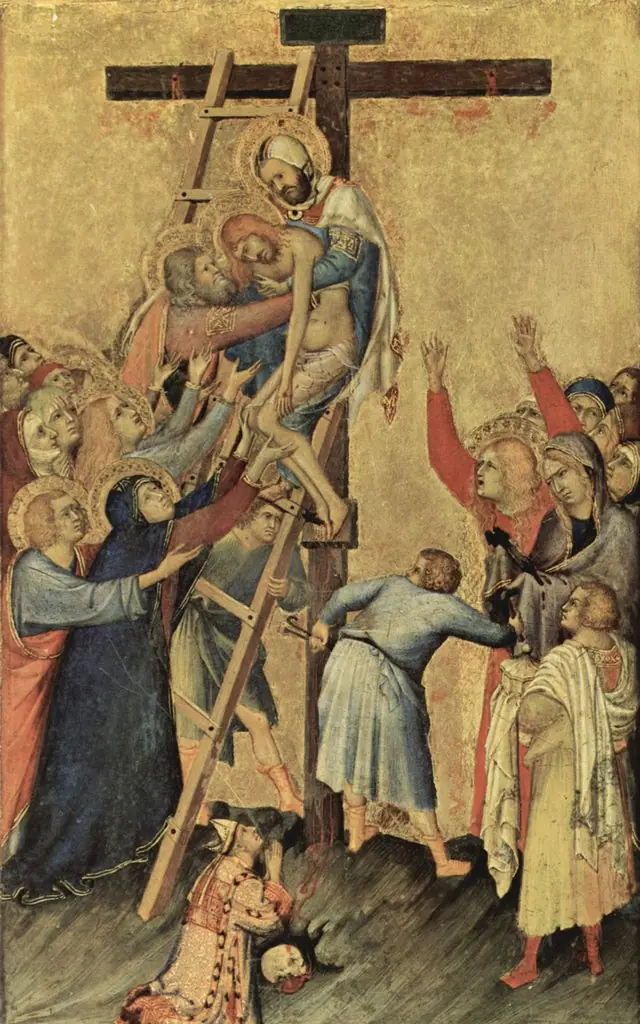 Descent from the Cross
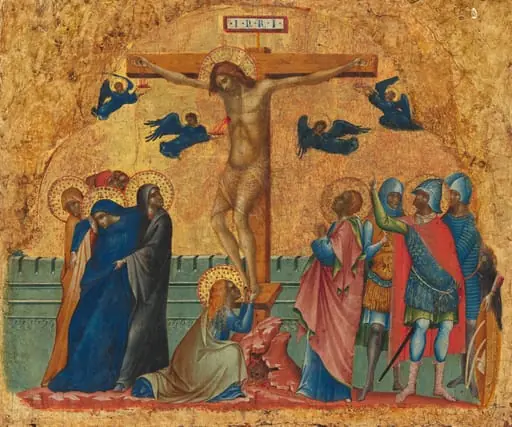 The Crucifixion
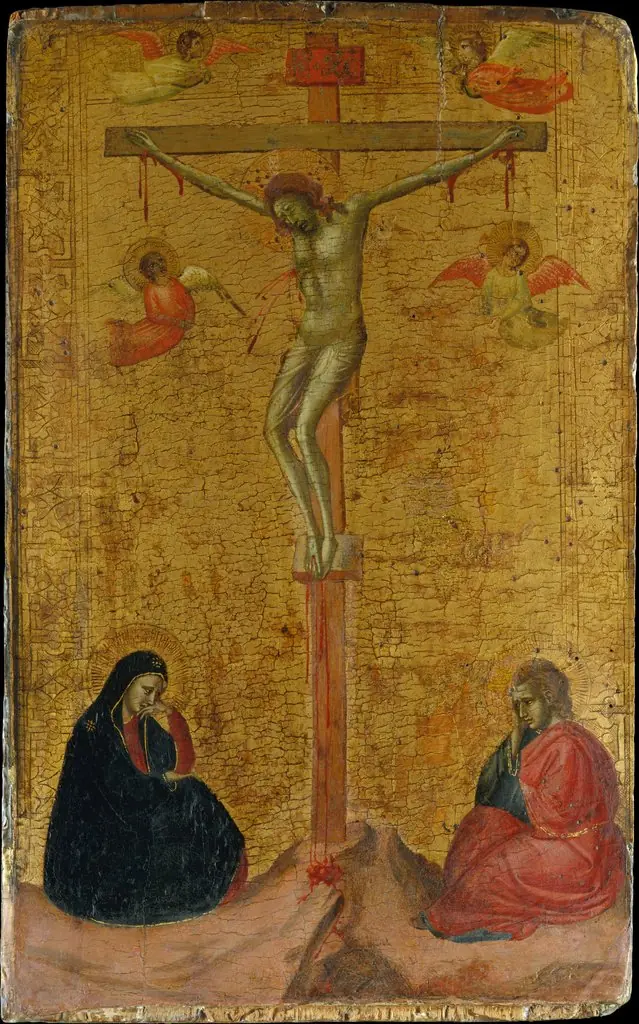 The Crucifixion
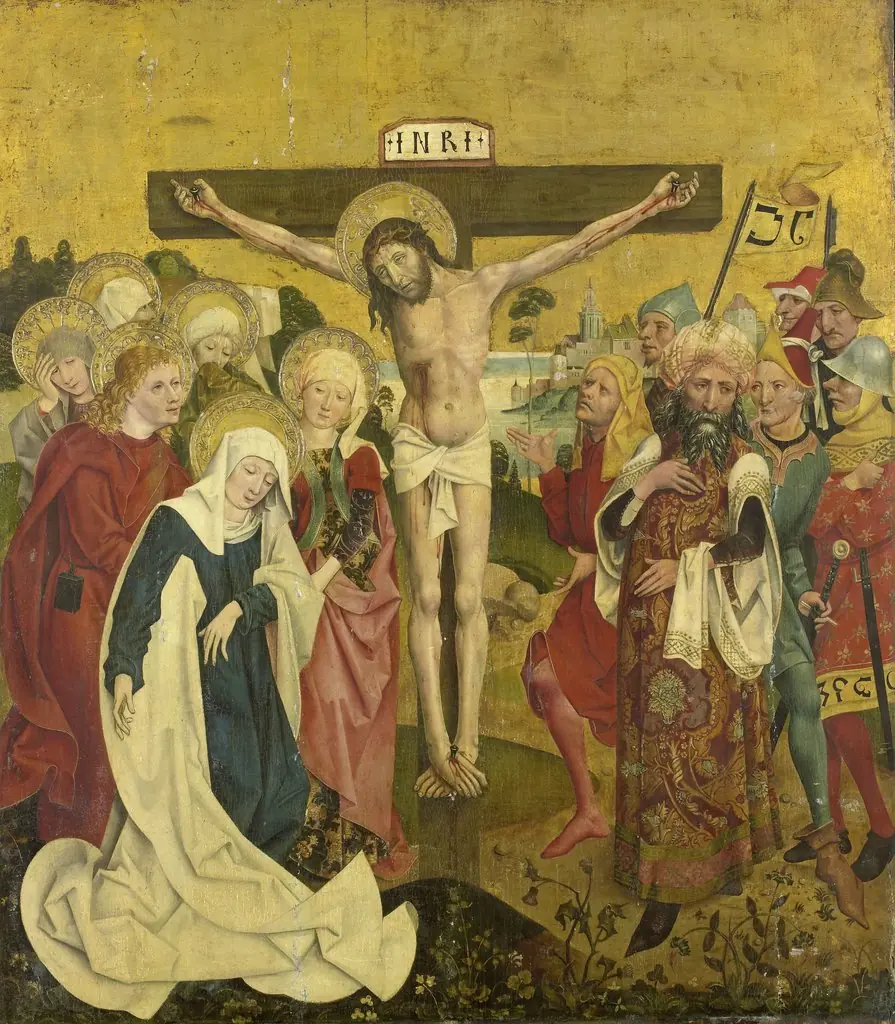 Crucifixion