Artwork
The Emperor Charles V with a Dog
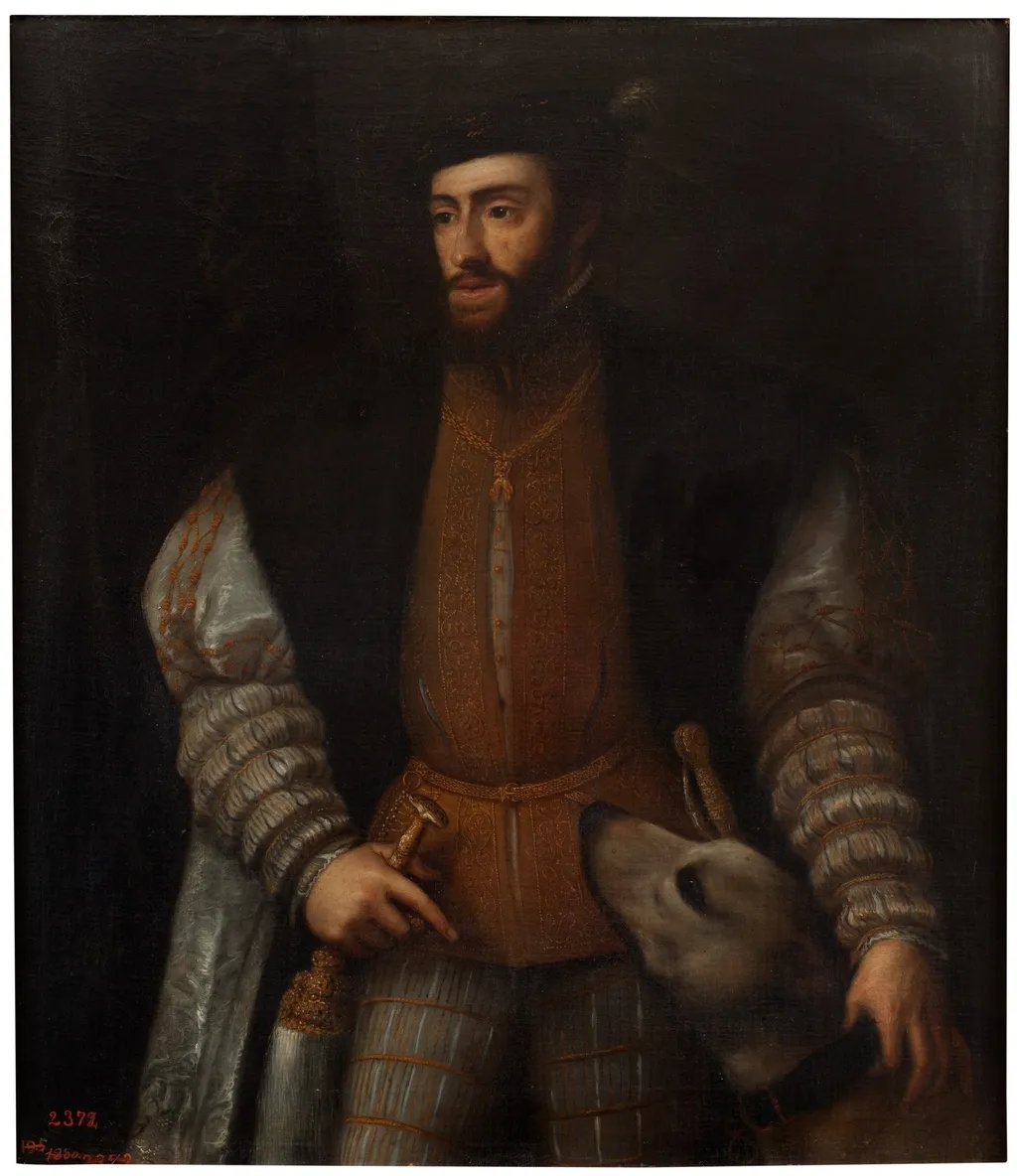
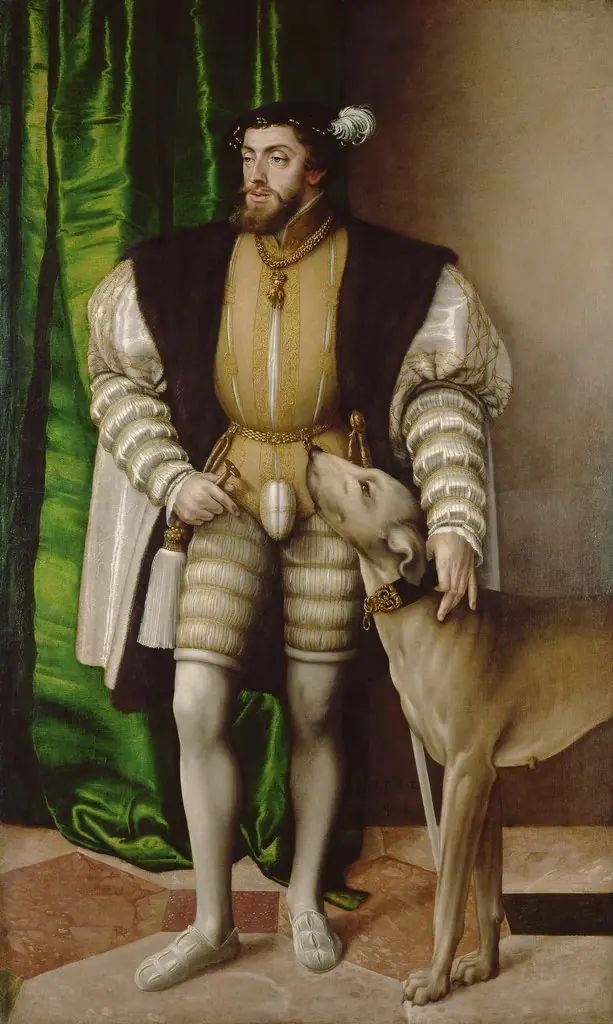
The Emperor Charles V with a Dog is an oil painting by the Mannerist artist Unknown. It dates from 1551 and is held in the collection of the Museo del Prado. The work presents a solitary figure in elaborate dress, accompanied by a light‑coloured dog with a dark nose.
About this work
Technique & Style
The work is an oil painting on canvas measuring 112 cm in height and 99 cm in width.
The work is an oil painting on canvas measuring 112 cm in height and 99 cm in width.
Stylistically, it adopts the formal portraiture conventions associated with the mid-sixteenth century, emphasizing the sitter’s authority through compositional stability and restrained coloration. The handling of the brushwork aligns with Venetian-inflected court portraiture, where delicate transitions in flesh tones and fabric textures convey both presence and dignity. The inclusion of the dog contributes to the portrait’s emblematic character, reinforcing themes of loyalty and sovereignty typical of imperial imagery of the period.
History & Provenance
The painting known as The Emperor Charles V with a Dog was created in 1551. It is an oil-on-canvas portrait depicting Charles V, executed by an anonymous artist working after the style of Titian. This work is considered a copy or version based on the original Portrait of Charles V with a Dog.
The piece measures 112 cm in height and 99 cm in width. It is currently held in the collection of the Museo del Prado.
The painting is held in the collection of the Museo del Prado, where it is also located. The work, created in 1551, depicts Emperor Charles V with a dog and is executed in oil on canvas. It measures 112 cm in height and 99 cm in width.
The piece is considered a work by an anonymous artist based on Titian's original portrait of the same subject. No specific inventory number or exhibition history for this particular version is provided in the available sources.
Overview
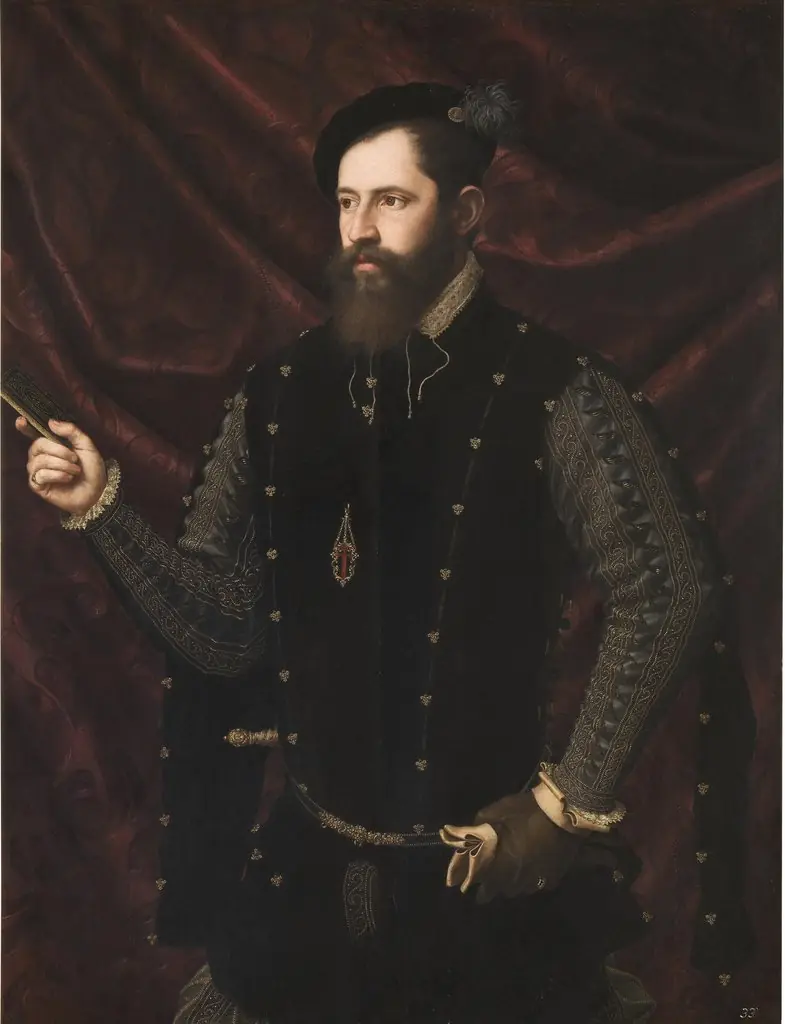
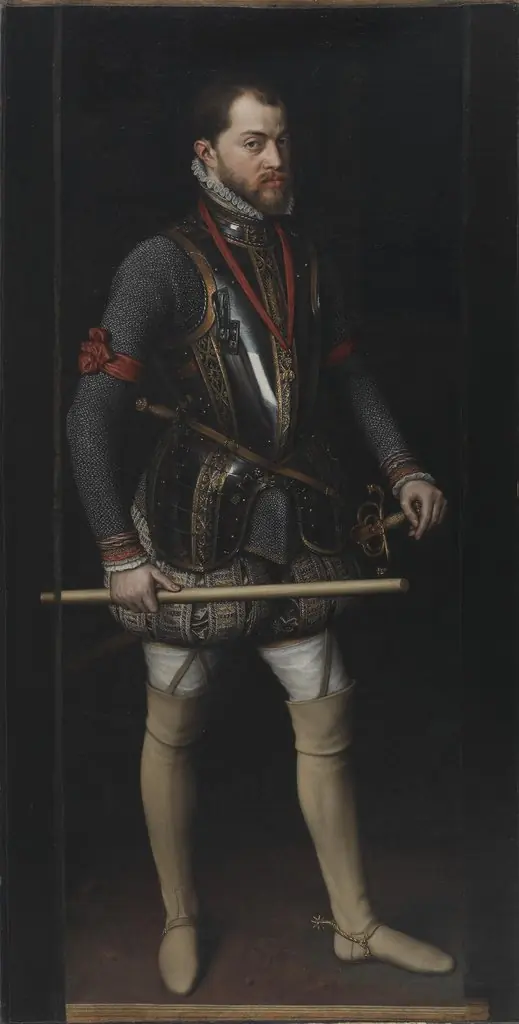
The work presents a solitary figure in elaborate dress, accompanied by a light‑coloured dog with a dark nose. The subject stands upright, sword at his side, and holds a small object in his right hand, suggesting a formal pose. The composition is rendered in oil on canvas, employing strong contrasts of light and shadow to model the figures.
Subject & Meaning
The gentleman’s sumptuous attire, brown vest embroidered with gold, white shirt, striped breeches, indicates high rank or ceremonial function, while the presence of the dog, a traditional symbol of loyalty, reinforces his status. The small object he grasps may be an emblem of authority, though its precise identity remains unclear.
Context
The attire and accessories correspond to early‑modern European court dress, pointing to a possible depiction of a ruler or high noble, such as Charles V. The inclusion of a dog aligns with contemporary portrait conventions that linked the sitter to virtues of fidelity and power.
Legacy
Although the identity of the sitter is not definitively established, the painting serves as an example of the period’s portrait tradition, illustrating how clothing, objects, and animal companions were employed to convey rank and character within a single, carefully composed image.
Artist & collection