Artwork
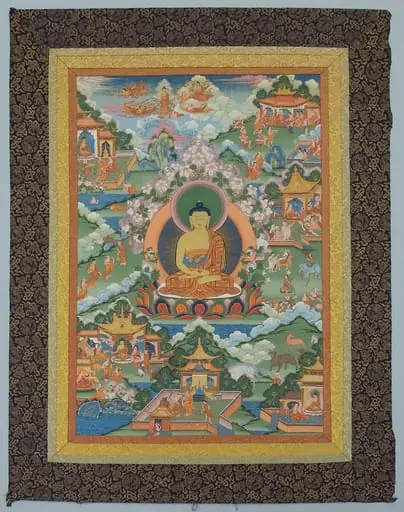
The Great Renunciation of Siddhartha
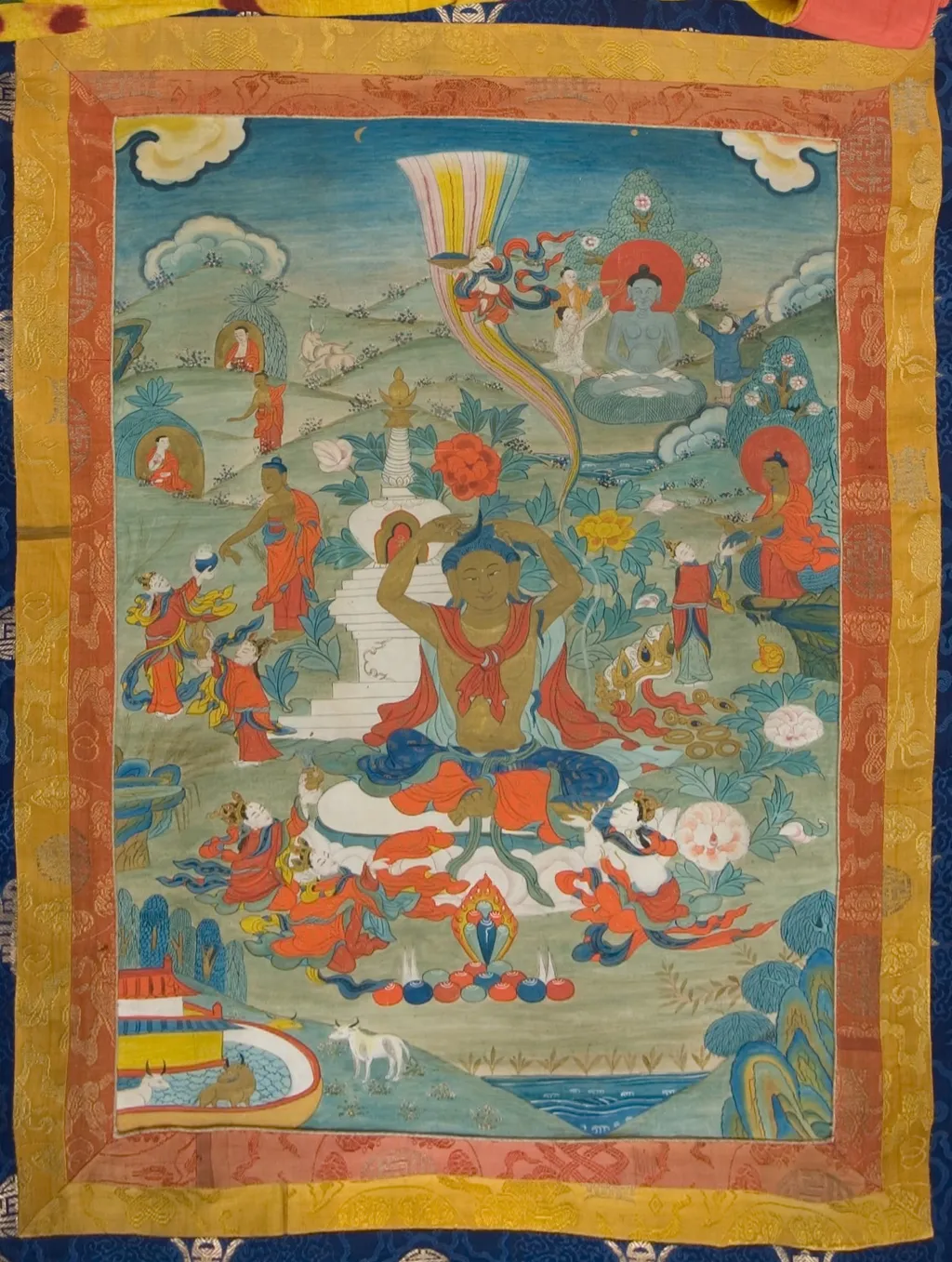
The Great Renunciation of Siddhartha is an unspecified painting. It dates from 1949 and is held in the collection of the Metropolitan Museum of Art.
About this work
Subject & Meaning
The main subject is identified as the Great Renunciation, with the composition incorporating a stupa, the Buddha, flowers, and animals.
The painting depicts the Great Renunciation, the pivotal moment when Siddhartha Gautama, the future Buddha, renounces his royal life to pursue spiritual enlightenment. The main subject is identified as the Great Renunciation, with the composition incorporating a stupa, the Buddha, flowers, and animals. The stupa serves as a key Buddhist architectural symbol, representing the Buddha's presence and the path to enlightenment.
Flowers and animals enrich the narrative setting, evoking the natural world that Siddhartha encounters upon leaving the palace. The work represents the foundational Buddhist theme of transcending worldly attachments, capturing the transformative decision that Buddhist tradition identifies as the beginning of the path to Buddhahood.
History & Provenance
The Great Renunciation of Siddhartha is held in the collection of the Metropolitan Museum of Art, accessioned in 1949. The painting measures 135.3 cm in height and 72.4 cm in width. As of the documented record, no exhibition history is listed for this work.
Overview
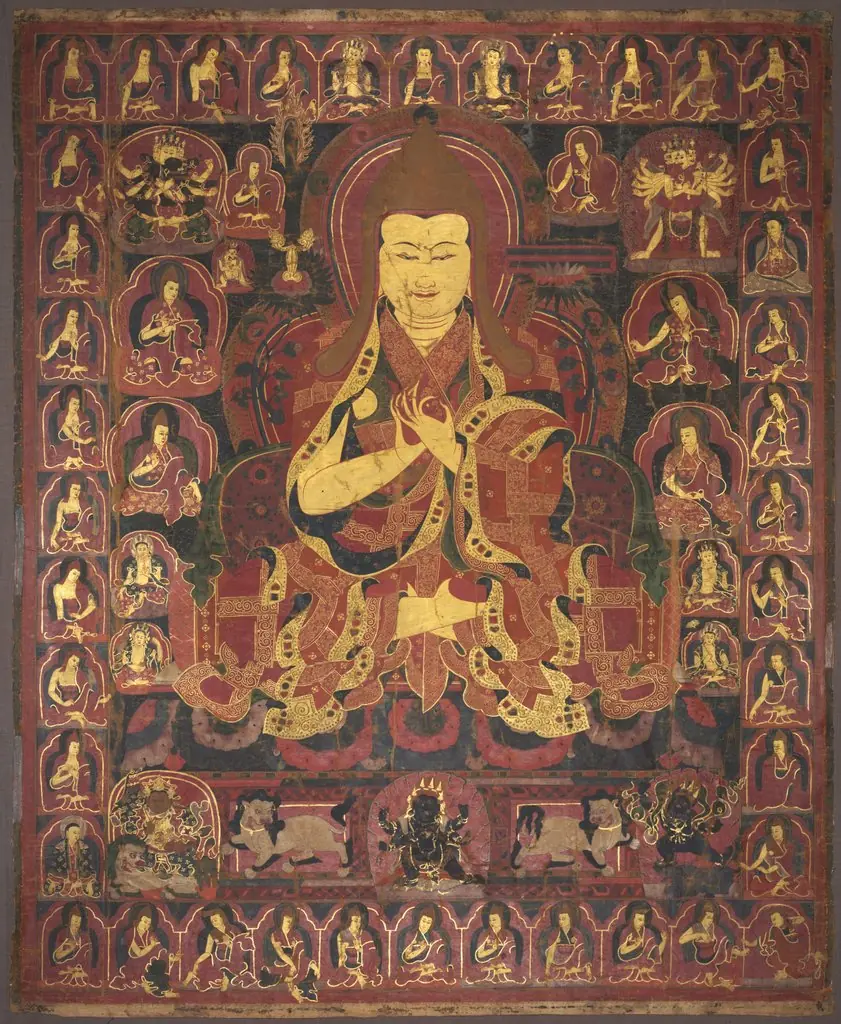
This painting, titled "The Great Renunciation of Siddhartha," presents a vibrant and intricate narrative. It features numerous figures, often depicted in red robes and golden halos, gathered around a central individual seated on a lotus. The composition is rich with detail, illustrating a pivotal moment in the life of Siddhartha Gautama, the future Buddha.
The scene is characterized by its bright colors and dynamic arrangement of elements, drawing the viewer into a significant spiritual event.
Technique & Style
The painting employs a bold and intricate visual style. A rich palette of reds, blues, and golds dominates the composition, contrasting with the green and blue hues of the sky and landscape. The scene is densely populated, featuring figures on clouds, by trees, and near a river, all contributing to a sense of bustling activity.
A prominent white stupa glows in the background, and a rainbow arches over another figure, further enhancing the symbolic and decorative elements.
Context
This painting illustrates a core narrative from Buddhist scripture, specifically the Great Renunciation (Mahabhinishkramana). This event marks Siddhartha Gautama's decision to abandon his royal life, family, and possessions to seek a path to end suffering. The visual elements, such as the lotus, halos, and stupa, are common iconographic symbols within Buddhist art, reinforcing the spiritual significance of the depicted moment and its importance in the Buddha's life story.
Artist & collection

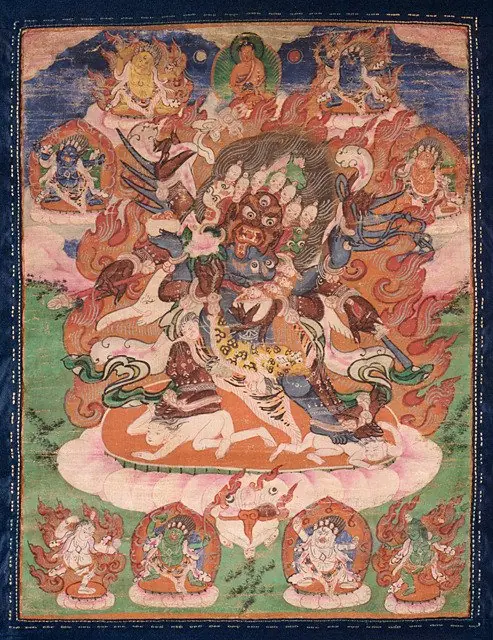
- Garuda-Feathered Hayagriva and Consort
 Untitled
 Untitled
 Untitled
 Painted Banner (Thangka) of Sage Guru Padmasambhava Seated Holding a Thunderbolt (Vajra) and Skull Cup (Kapala)
 Buddha Shakyamuni and the Eighteen Arhats
 Painted Banner (Thangka) with Guru Dragpur, a Wrathful Form of Padmasambhava
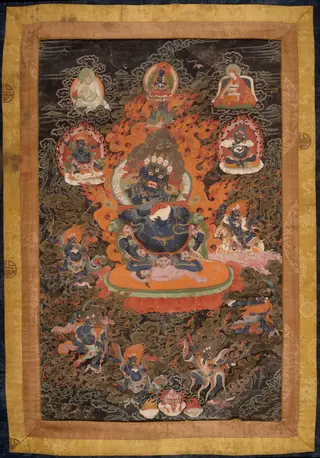 Mahakala and Companions
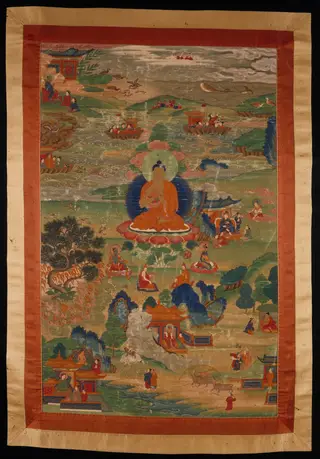 Previous Birth Stories of the Buddha
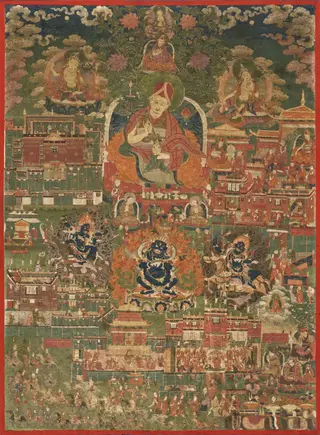 Kunga Tashi and Incidents from His Life (Abbot of Sakya Monastery, 1688-1711)
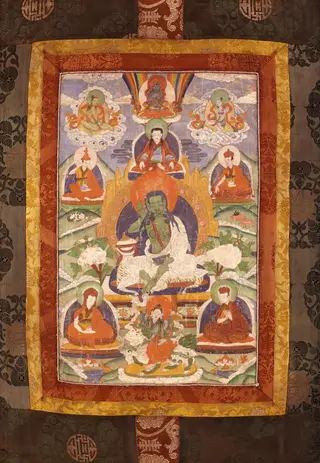 Milarepa (1040-1123)
 Tsong Khapa, Founder of the Geluk Order