Artwork
The heroine who waits anxiously for her absent lover (Utka Nayika)
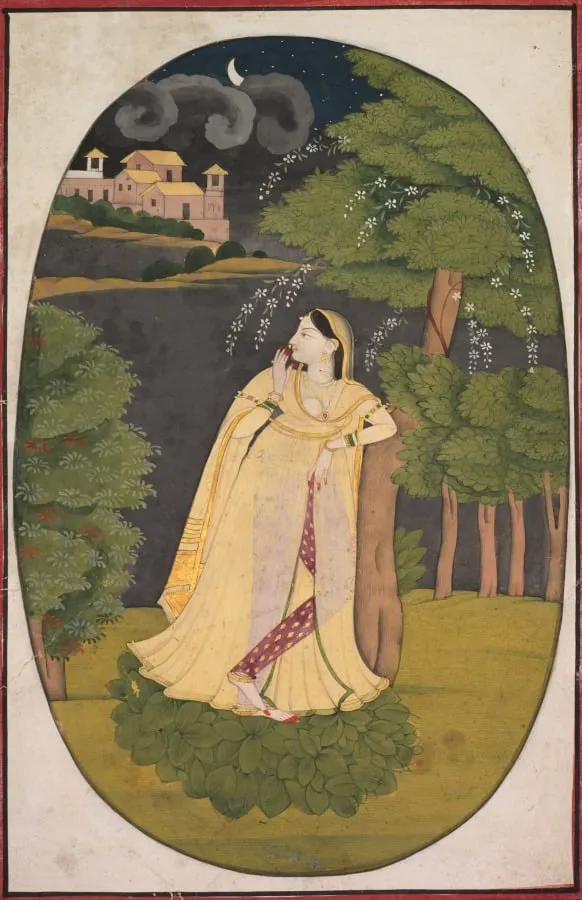
The heroine who waits anxiously for her absent lover (Utka Nayika) is an unspecified painting by the Pahari Painting artist Unknown. It dates from 1800 and is held in the collection of the Cleveland Museum of Art. The work depicts a solitary woman seated beneath a tree at night, her hands clasped in a gesture of anxious anticipation.
- Accession no.
- 1932.118
- Credit line
- Edward L. Whittemore Fund
About this work
Overview
The work depicts a solitary woman seated beneath a tree at night, her hands clasped in a gesture of anxious anticipation. Soft illumination from fireflies and jasmine blossoms contrasts with the encroaching darkness, while distant storm clouds loom on the horizon, suggesting an unsettled atmosphere. The composition balances a quiet, intimate moment with a broader sense of impending tension.
Subject & Meaning
Drawing on devotional verses that equate the yearning for divine blessing with a lover’s absence, the painting portrays a heroine awaiting her beloved. Her expression blends hope with uncertainty, reflecting both personal longing and a spiritual metaphor for the soul’s wait for grace. The approaching storm serves as a visual reminder of the fragility of that hope.
Technique & Style
Executed in the Pahari school’s delicate brushwork, the piece employs a muted palette punctuated by luminous highlights from fireflies and fragrant jasmine. Fine lines define the figure’s posture, while the atmospheric background uses layered washes to suggest depth and the gathering clouds. The overall effect combines lyrical detail with a subtle, almost poetic use of light and shadow.
Context
The nocturnal setting and natural motifs are characteristic of the region’s visual vocabulary during the 18th‑century flourishing of Pahari art.
Created in the hill kingdoms of northern India, the painting belongs to a tradition where artists illustrated lyrical poetry about yearning, whether earthly or divine. Such works often served both aesthetic and didactic purposes, reinforcing spiritual themes through familiar romantic narratives. The nocturnal setting and natural motifs are characteristic of the region’s visual vocabulary during the 18th‑century flourishing of Pahari art.
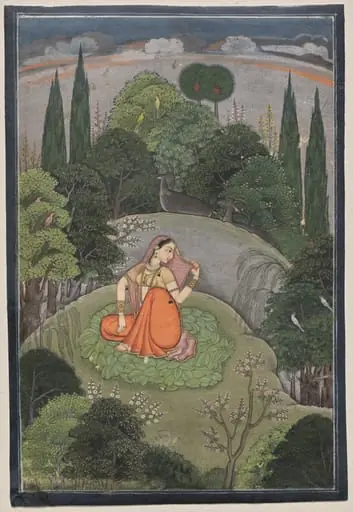
Artist & collection









- The Heroine Who Waits Anxiously for Her Absent Lover: Utka Nayika
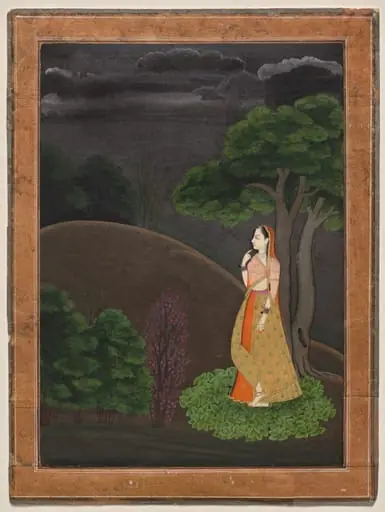 The Heroine Who Waits Anxiously for Her Absent Lover: Utka Nayika
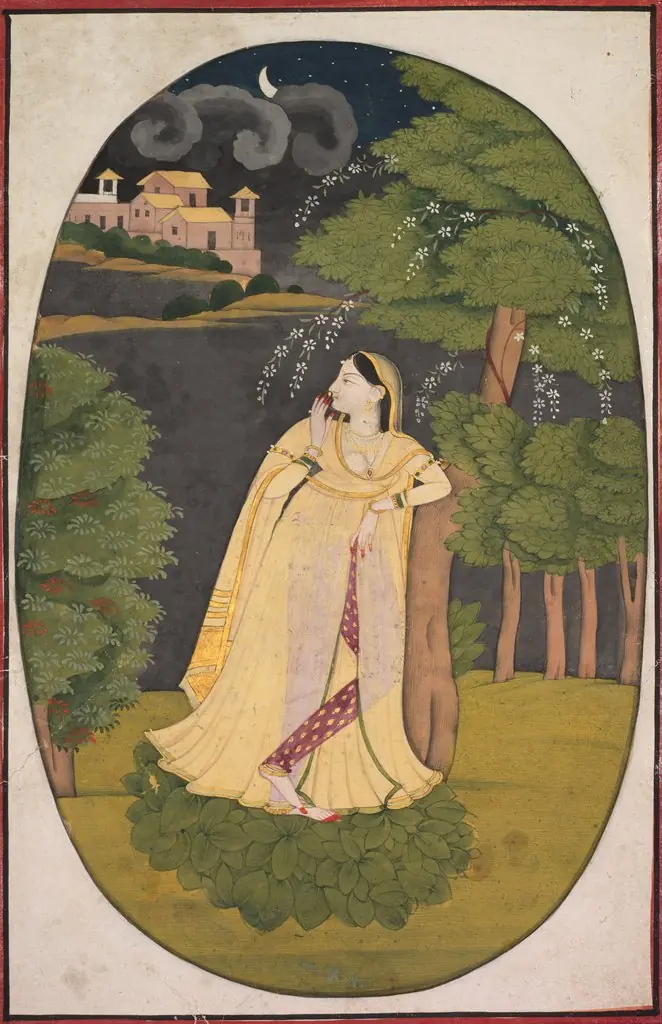 The Heroine Who Waits Anxiously for Her Absent Lover (Utka Nayika)
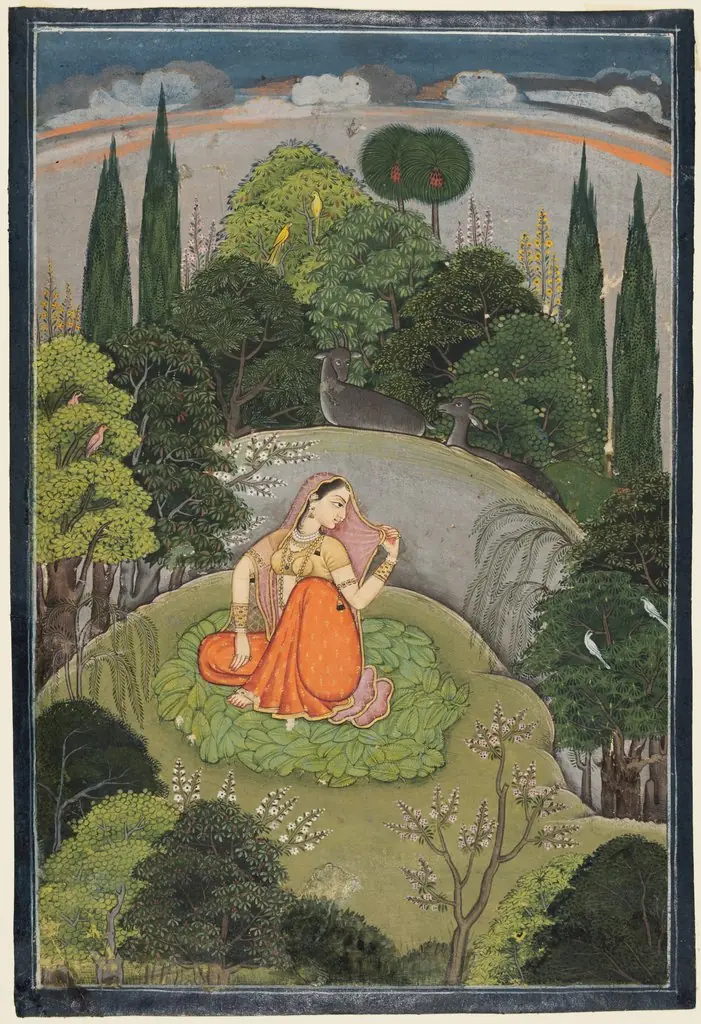 The Heroine Who Waits Anxiously for Her Absent Lover: Utka Nayika
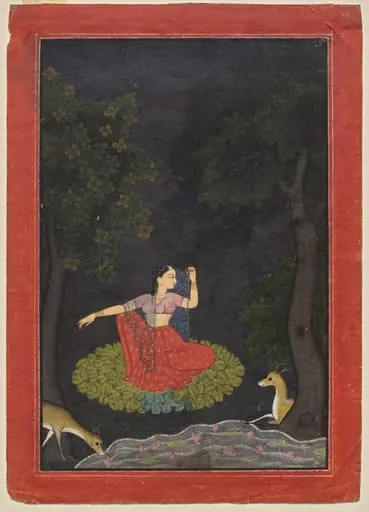 A heroine waiting for her lover: Vasakasajja Nayika, from the "Nurpur" Rasikapriya
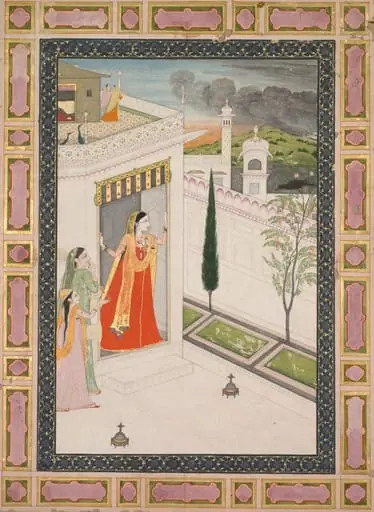 Augury of the crow (Vasakasajja Nayika)
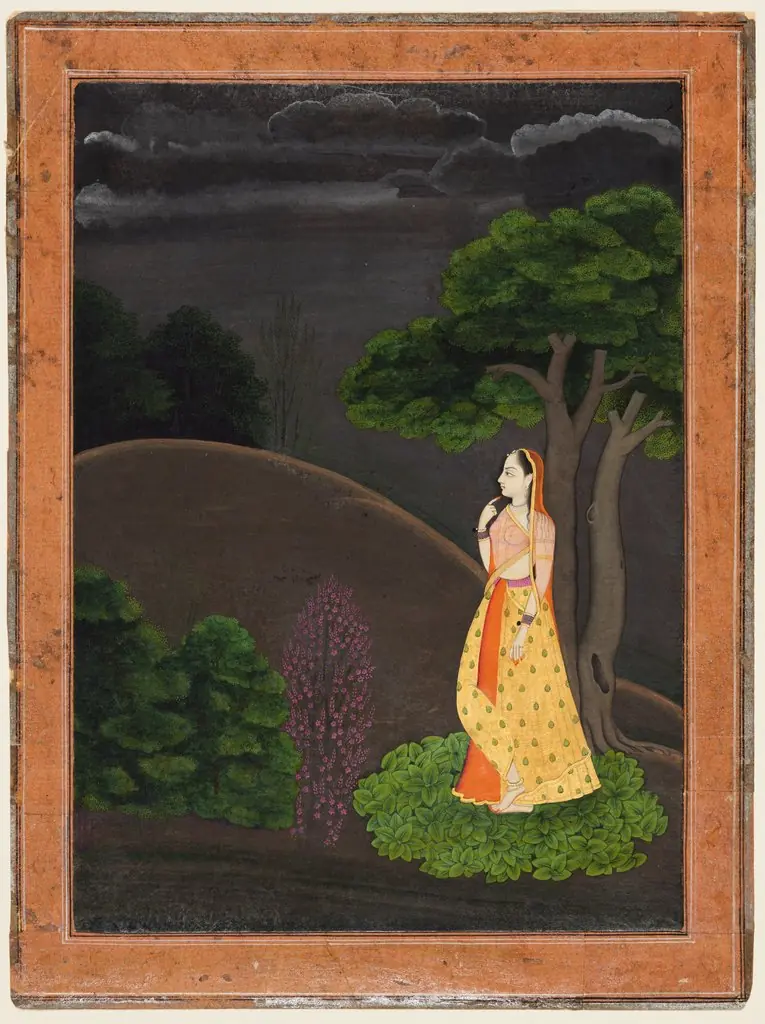 The Heroine Who Waits Anxiously for Her Absent Lover: Utka Nayika
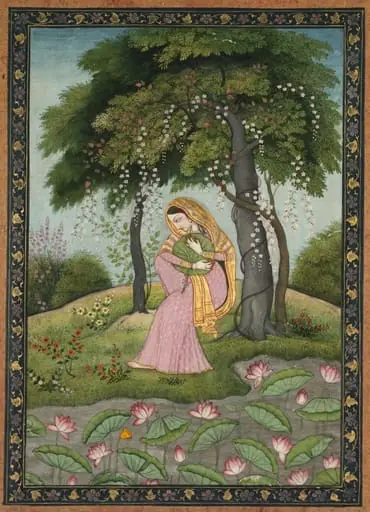 Virahini Nayika, Love-Torn Heroine
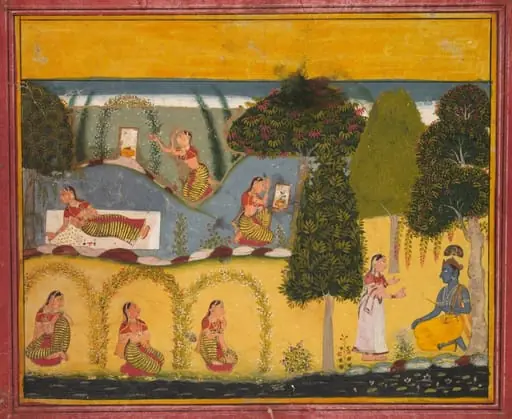 Radha Awaiting Reconciliation with Krishna, from a Gita Govinda of Jayadeva
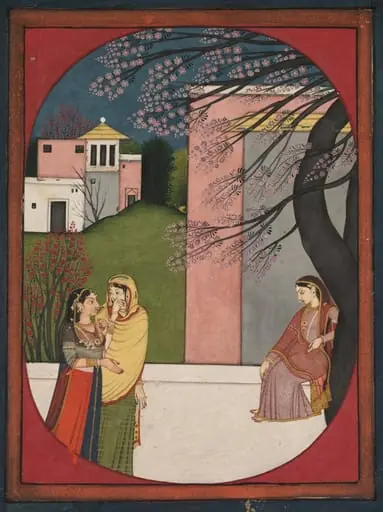 The lovelorn heroine, from a Sat Sai of Bihari
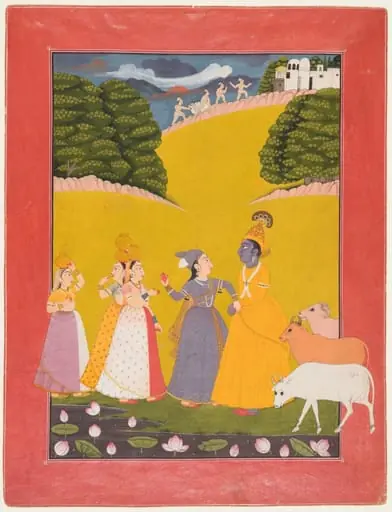 Taking of the toll, Dana-Lila