Artwork
The Heroine Who Waits Anxiously for Her Absent Lover: Utka Nayika
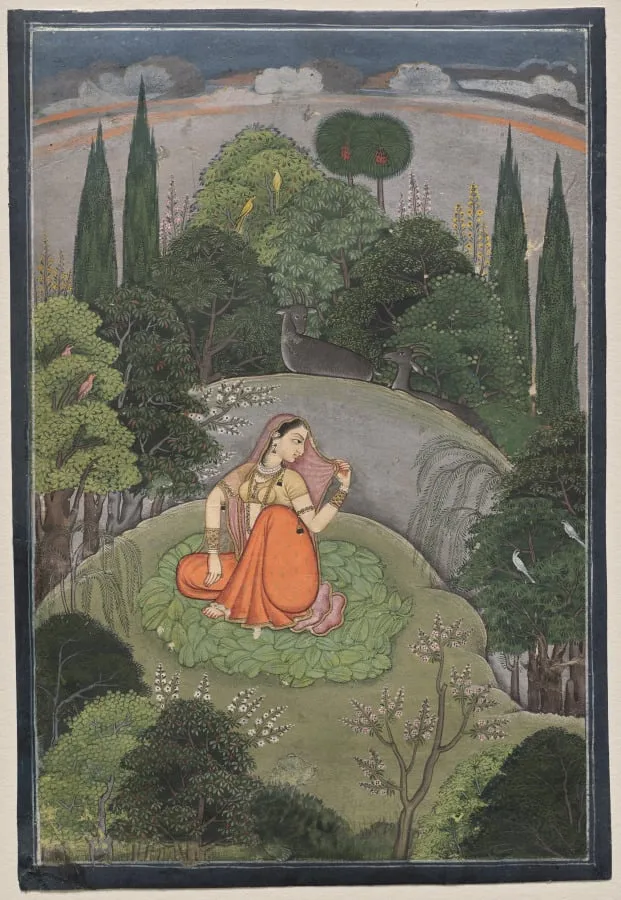
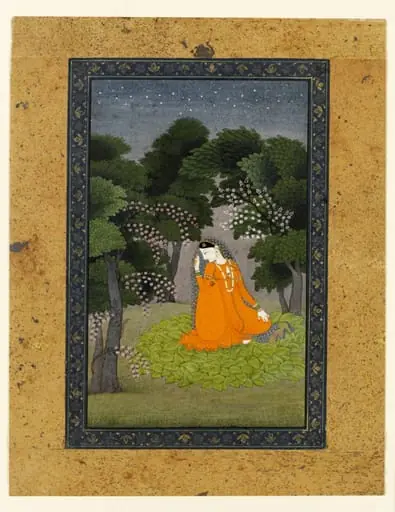
The Heroine Who Waits Anxiously for Her Absent Lover: Utka Nayika is an unspecified painting by the Pahari Painting artist Unknown. It dates from 1762 and is held in the collection of the Cleveland Museum of Art. The work depicts a solitary woman seated upon a carpet of foliage, her hands resting calmly in her lap.
- Accession no.
- 2018.114
- Credit line
- Purchase and partial gift from the Catherine and Ralph Benkaim Collection; Severance and Greta Millikin Purchase Fund
About this work
Overview
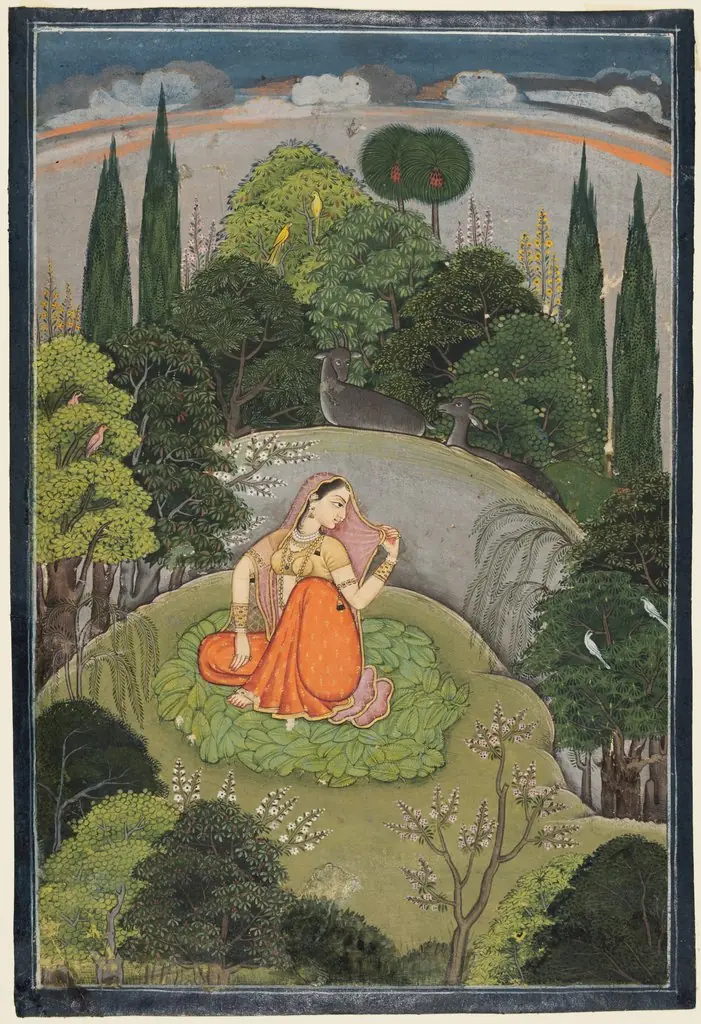
The work depicts a solitary woman seated upon a carpet of foliage, her hands resting calmly in her lap. Encircling her, birds, animals and even trees appear in mirrored pairs, emphasizing a rhythm in the surrounding landscape that contrasts with her isolation. The composition captures a moment of patient anticipation, as the figure awaits the arrival of a lover who remains absent.
Subject & Meaning
The central figure embodies the archetype of the longing heroine, poised in quiet expectation. Her solitude is heightened by the duplicated fauna and flora, suggesting a world in balance that excludes her. This visual tension alludes to the broader theme of yearning for an unseen presence, echoing devotional motifs where the devotee awaits divine grace without certainty of its timing.
Technique & Style
Executed in the Pahari tradition of northern India, the painting employs delicate brushwork and a muted palette to render the verdant hills and paired wildlife. Fine lines delineate the foliage and animal forms, while the figure’s smooth contours convey calmness. The symmetrical arrangement of natural elements reflects the regional aesthetic of harmony and intricate detail.
History & Provenance
Created within the small hill kingdoms of the Pahari region, the piece belongs to a corpus of courtly art that often explored romantic separation. Although the exact patron is unknown, such works were typically commissioned for private devotional or decorative purposes in aristocratic households, circulating among elite collections in the 18th‑century Himalayan courts.
Context
Pahari painters frequently used natural settings to amplify emotional narratives, especially the pain of lovers kept apart by duty or distance. By populating the scene with paired creatures, the artist underscores the heroine’s singularity amid a world of companionship, a visual strategy common in the region’s visual storytelling.
Artist & collection









- The Heroine Who Waits Anxiously for Her Absent Lover: Utka Nayika
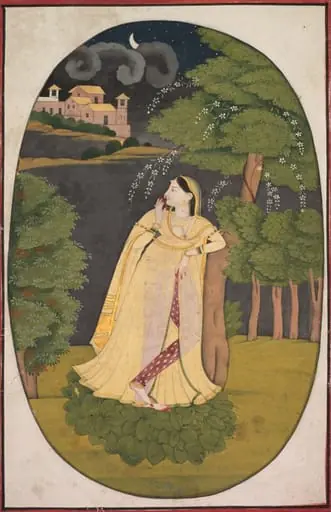 The heroine who waits anxiously for her absent lover (Utka Nayika)
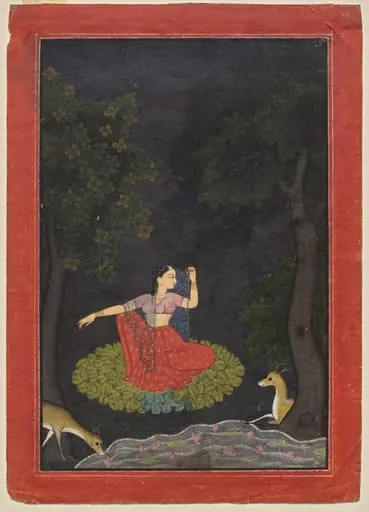 A heroine waiting for her lover: Vasakasajja Nayika, from the "Nurpur" Rasikapriya
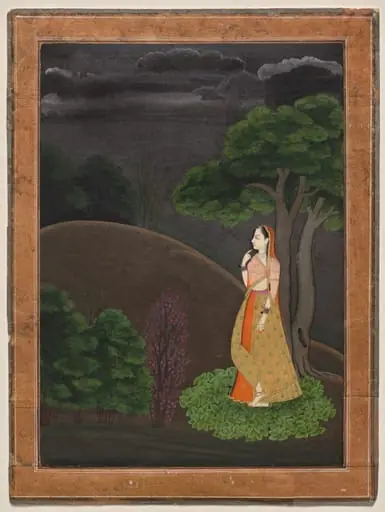 The Heroine Who Waits Anxiously for Her Absent Lover: Utka Nayika
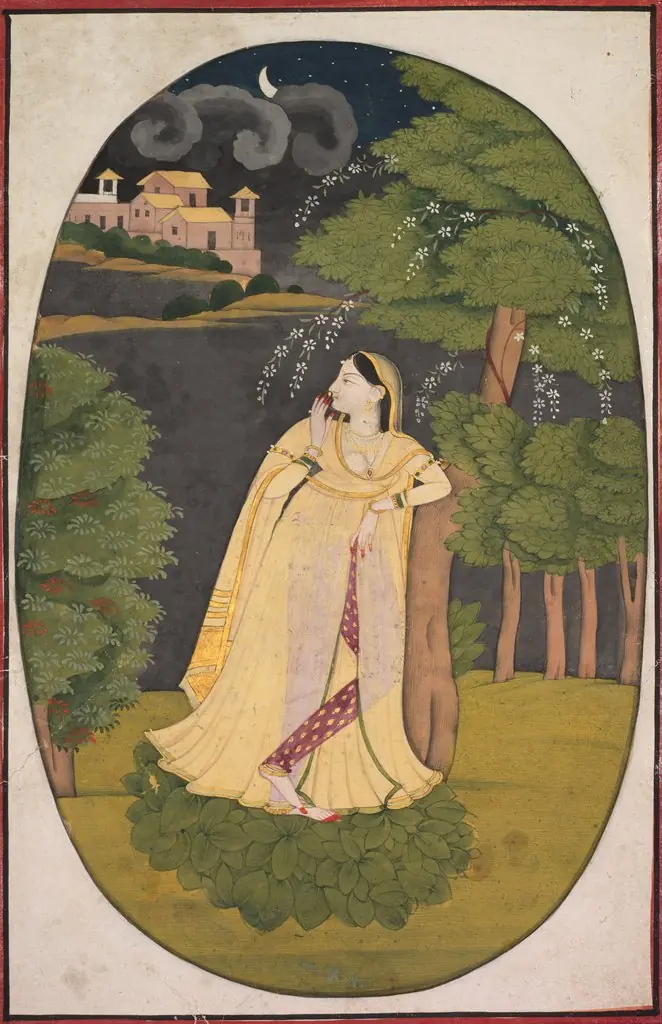 The Heroine Who Waits Anxiously for Her Absent Lover (Utka Nayika)
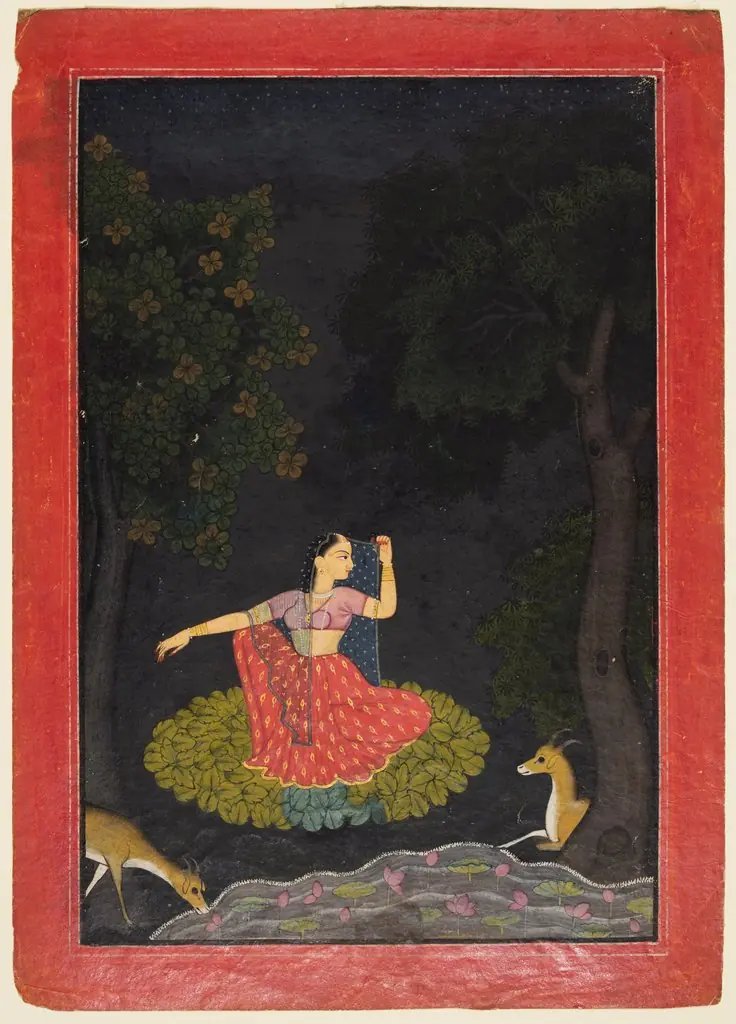 A Heroine Waiting for Her Paramour: Vasakasajja Nayika, from a Nurpur Rasikapriya
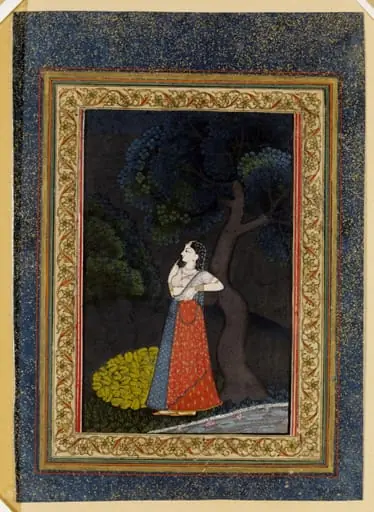 Utka Nayika
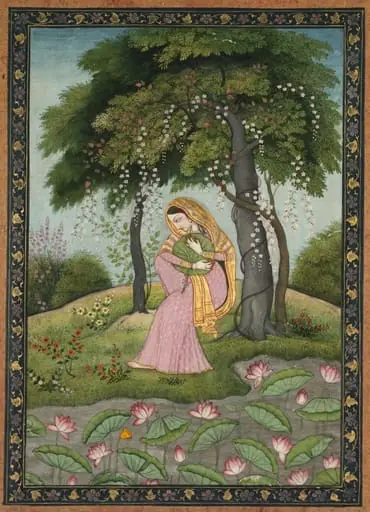 Virahini Nayika, Love-Torn Heroine
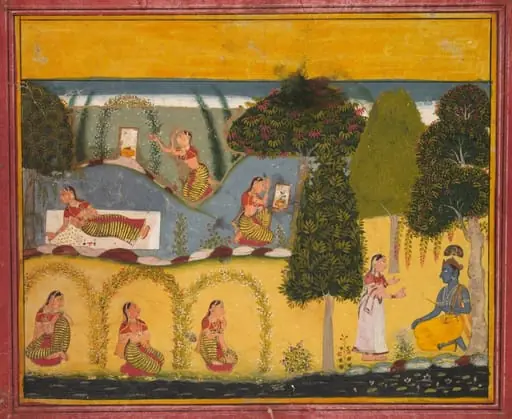 Radha Awaiting Reconciliation with Krishna, from a Gita Govinda of Jayadeva
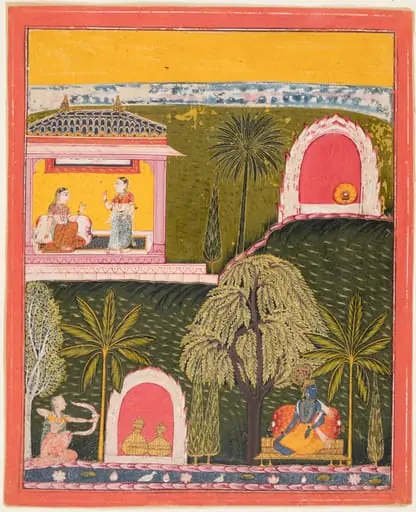 Rati, the Goddess of Erotic Love, Takes Aim at Krishna, from a Rasikapriya
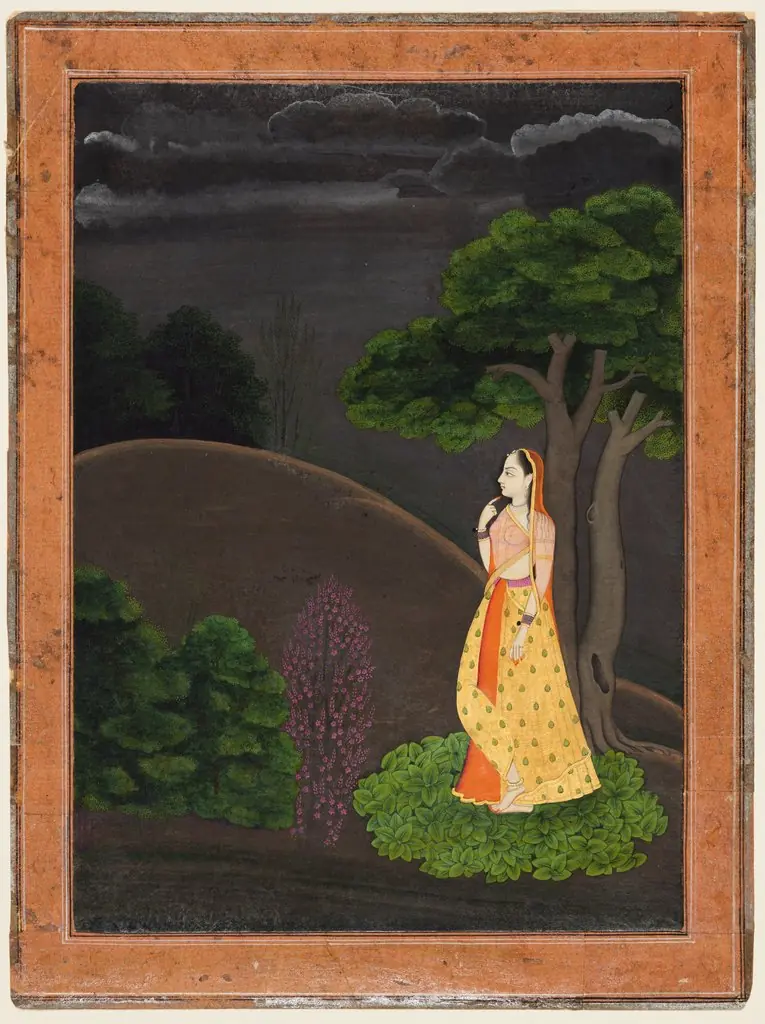 The Heroine Who Waits Anxiously for Her Absent Lover: Utka Nayika
 Utka Nayika