Artwork
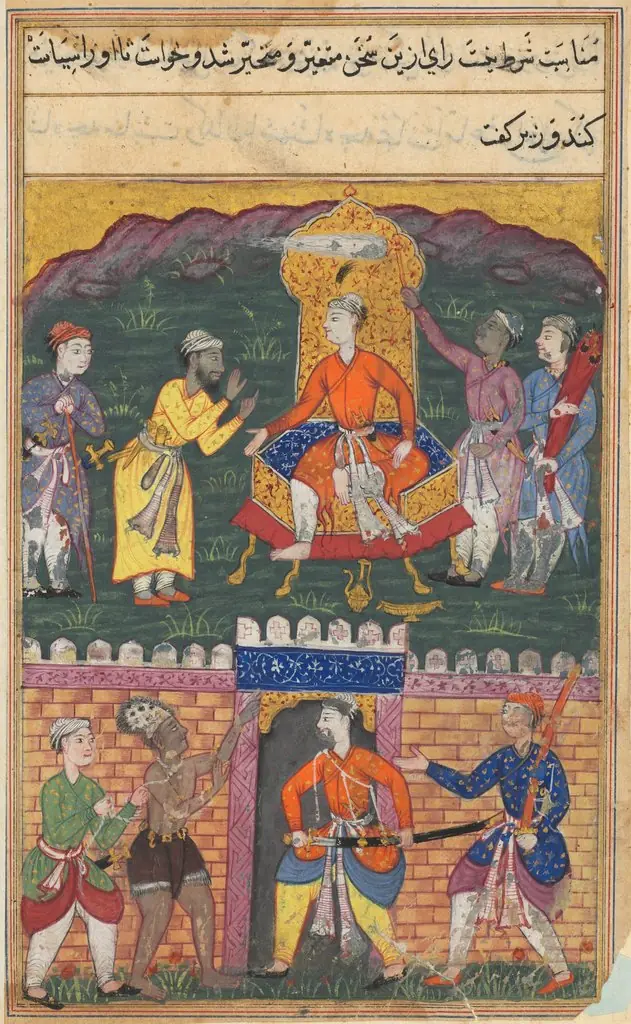
The magician disguised as a Brahman returns to claim his “daughter-in-law,” from a Tuti-nama (Tales of a Parrot): Thirty-fifth Night
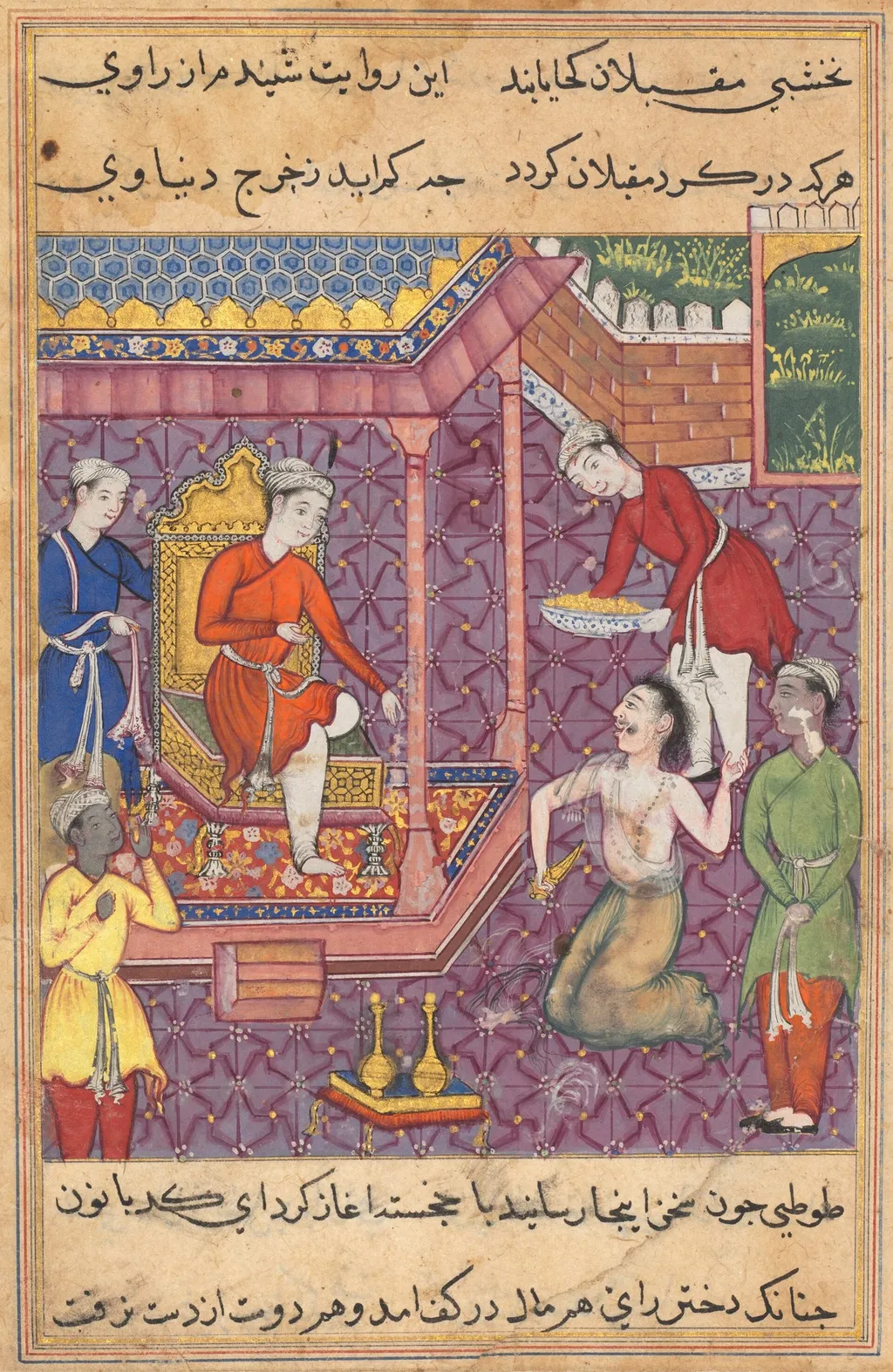
The magician disguised as a Brahman returns to claim his “daughter-in-law,” from a Tuti-nama (Tales of a Parrot): Thirty-fifth Night is an unspecified painting. It dates from 1560 and is held in the collection of the Cleveland Museum of Art. The work is a miniature illustration from a Tuti‑nama, a Persian manuscript of the “Tales of a Parrot.
About this work
Subject & Meaning
The painting portrays a magician who has assumed the guise of a Brahman priest as he returns to claim his daughter-in-law, a narrative taken from the thirty-fifth night of the Tuti-nama. The figure’s disguise functions as a visual metaphor for deception and social transgression, while the domestic scene underscores themes of familial obligation and magical intervention. Symbolic attributes such as the magician’s staff and the veil of the bride signal both authority and the concealed nature of his motives, together illustrating the tension between supernatural power and human relationships.
History & Provenance
The work is attributed to an unknown artist and is classified as a miniature painting within the Tuti-nama manuscript tradition.
The painting titled The magician disguised as a Brahman returns to claim his “daughter-in-law,” from a Tuti-nama (Tales of a Parrot): Thirty-fifth Night was created in 1560 in the Mughal Empire. It is housed in the Cleveland Museum of Art, where it is catalogued as 1962.279.236.a. The work is attributed to an unknown artist and is classified as a miniature painting within the Tuti-nama manuscript tradition.
Overview
The work is a miniature illustration from a Tuti‑nama, a Persian manuscript of the “Tales of a Parrot.” It portrays a narrative episode titled “The magician disguised as a Brahman returns to claim his ‘daughter‑in‑law.’” The composition is set on a deep purple ground with a repeating geometric motif, typical of courtly book art.
Technique & Style
Executed in fine ink and watercolor on paper, the illustration employs delicate line work and a limited palette of reds, blues, and gold highlights. The figures are rendered in profile with stylised gestures, and the background pattern creates a sense of spatial depth while maintaining the flat decorative quality characteristic of Persian miniature painting.
Context
Tuti‑namas were often produced for elite patrons, serving both as entertainment and as moral instruction. The narrative of a magician posing as a Brahman reflects the cultural exchange between Persian and Indian motifs, illustrating how storytellers blended local religious figures with universal themes of trickery and justice.
Artist & collection

- The magician disguised as a Brahman returns to claim his “daughter-in-law,” from a Tuti-nama (Tales of a Parrot): Thirty-fifth Night
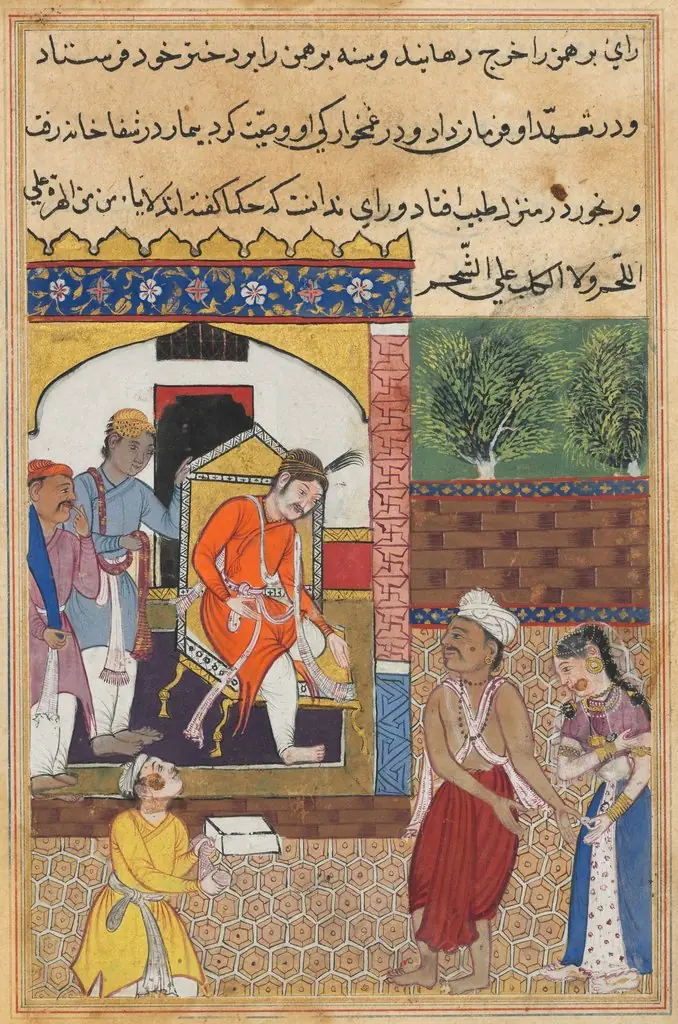 The magician, disguised as a Brahman, visits the king of Babylon, from a Tuti-nama (Tales of a Parrot): Thirty-fifth Night
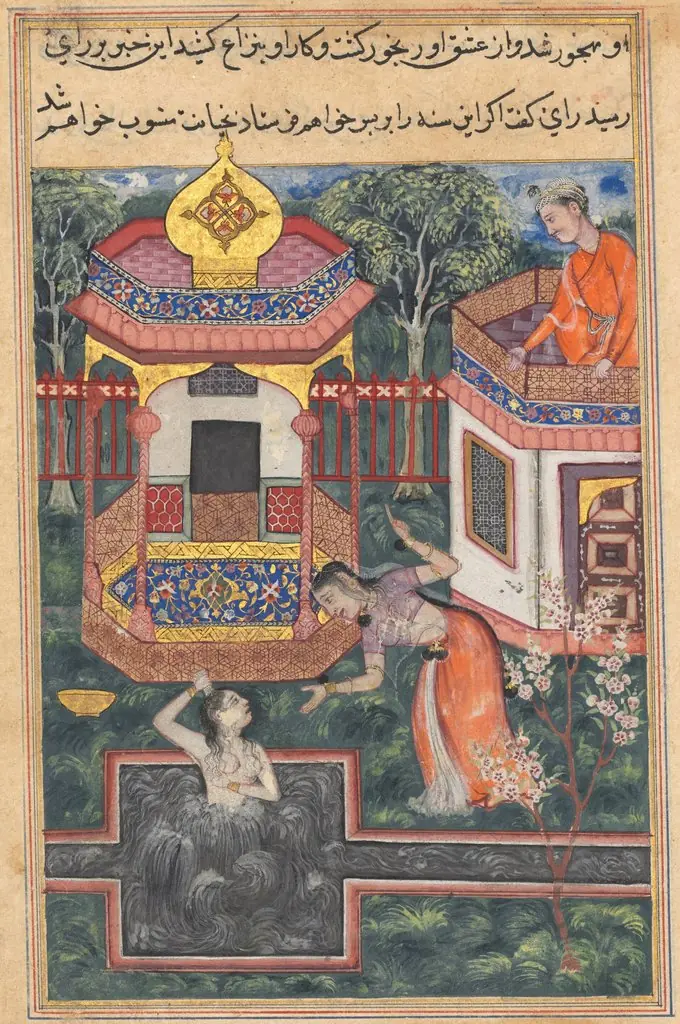 The son of the king of Babylon sees the Brahman transformed into a woman bathing and falls in love with her, from a Tuti-nama (Tales of a Parrot): Thirty-fifth Night
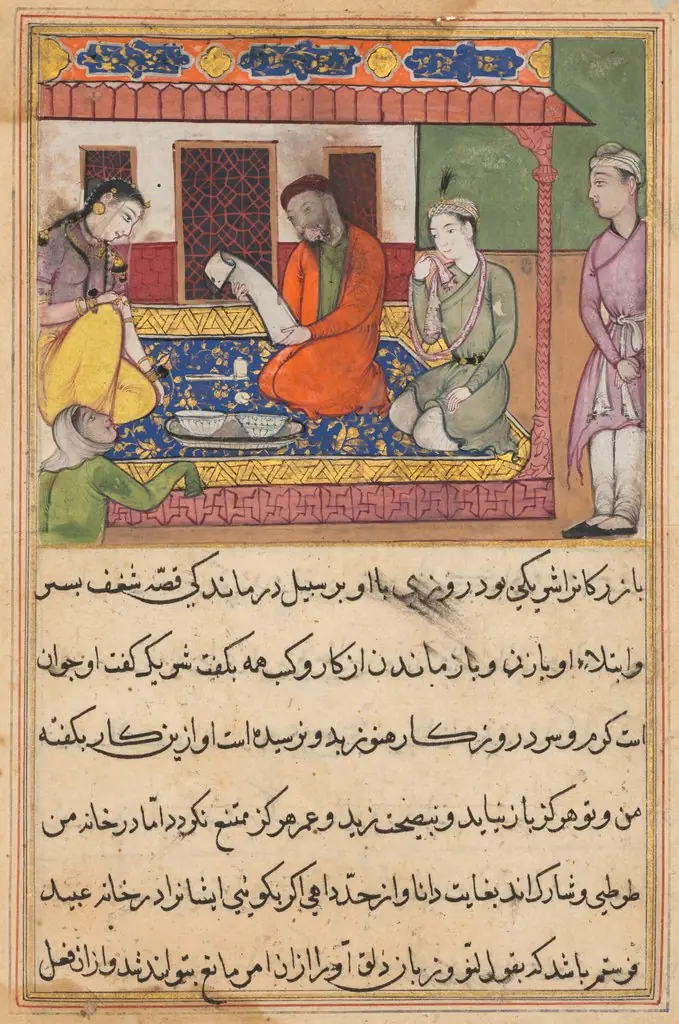 The marriage of ‘Ubaid, son of a merchant of Tirmiz, from a Tuti-nama (Tales of a Parrot): Forty-second Night
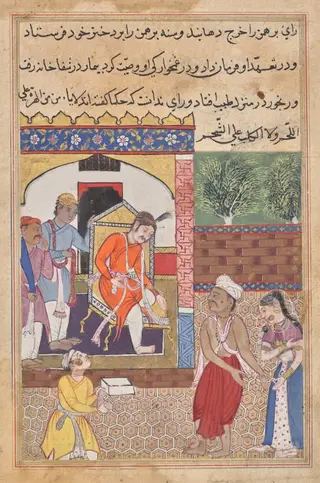 The magician, disguised as a Brahman, visits the king of Babylon, from a Tuti-nama (Tales of a Parrot): Thirty-fifth Night
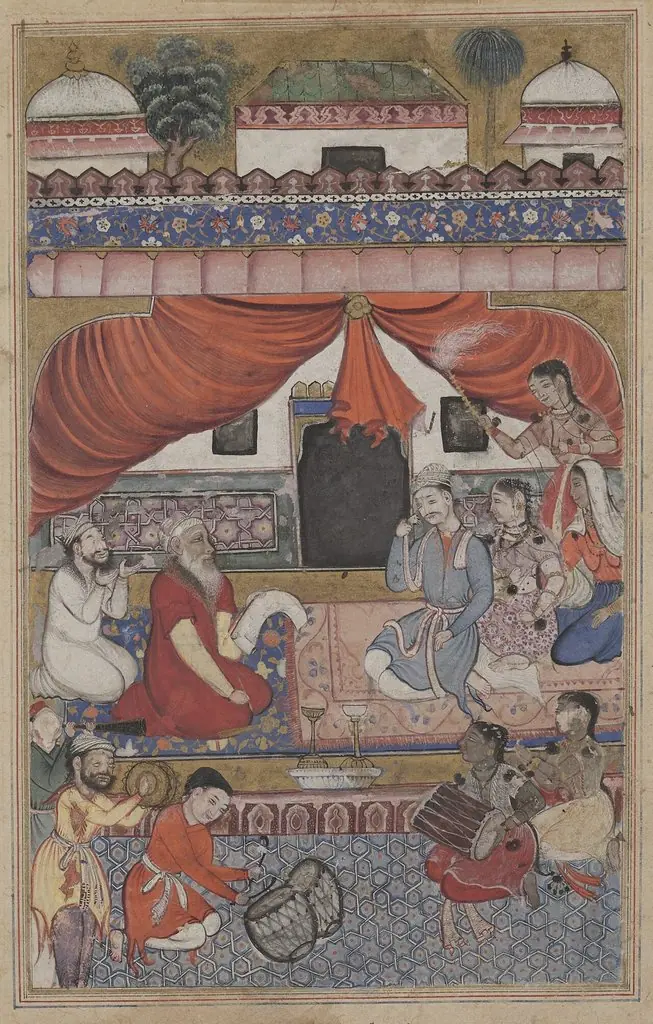 Preparation for the marriage of Mahmuda to the Young Vizier, from a Tuti-nama (Tales of a Parrot): Thirty-third Night
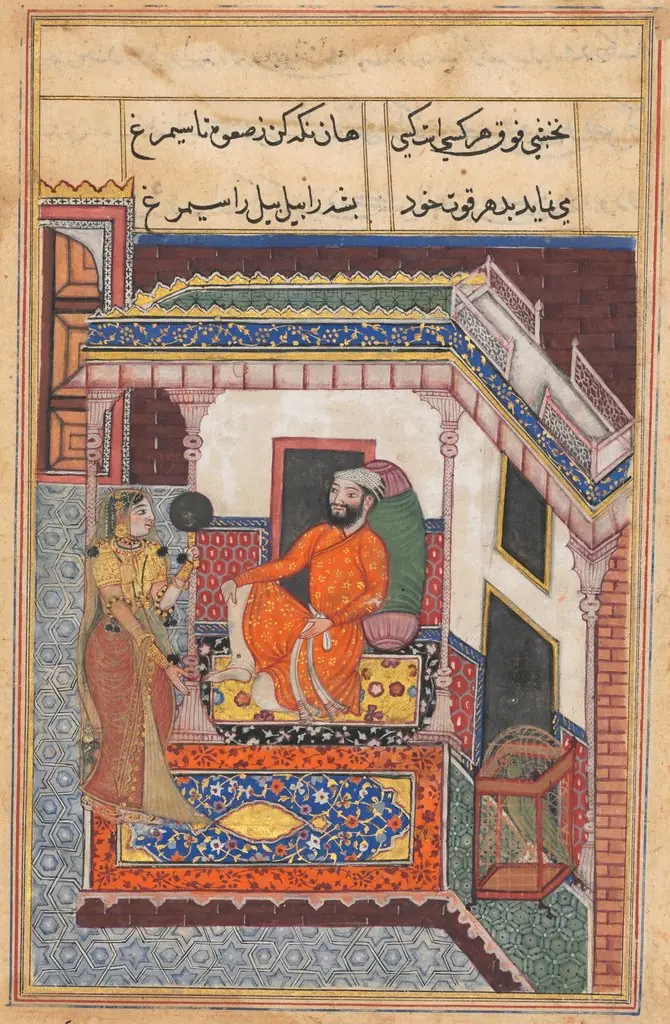 The parrot laughs on hearing the Raja of Ujjain’s wife admire her beauty in a mirror, from a Tuti-nama (Tales of a Parrot: Forty-sixth Night
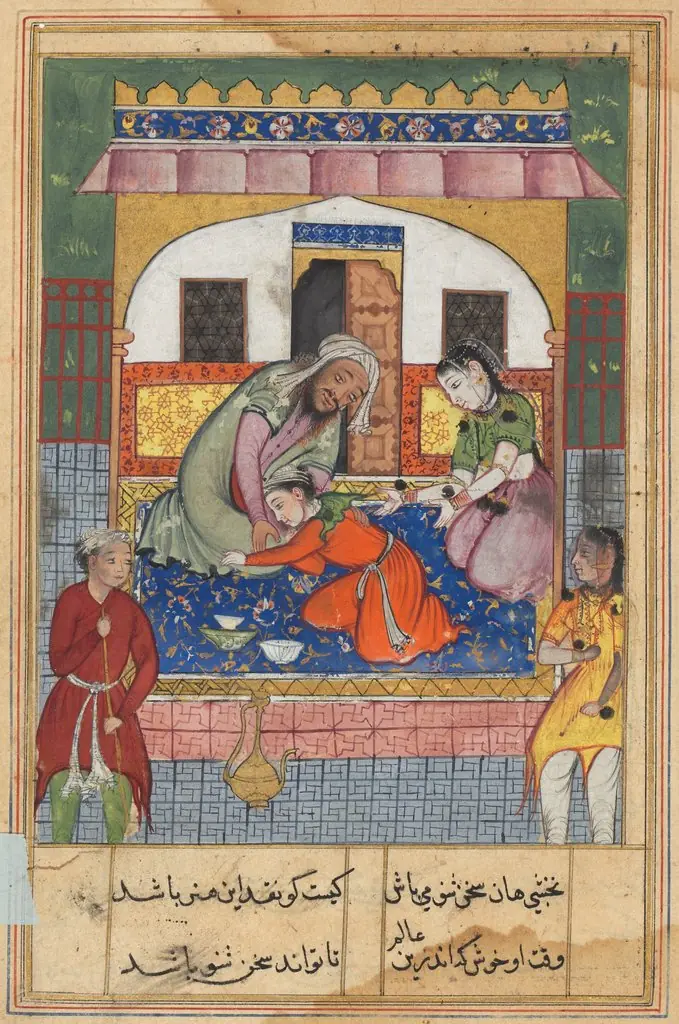 Repenting his conduct, ‘Ubaid falls at the feet of his parents, from a Tuti-nama (Tales of a Parrot): Forty-second Night
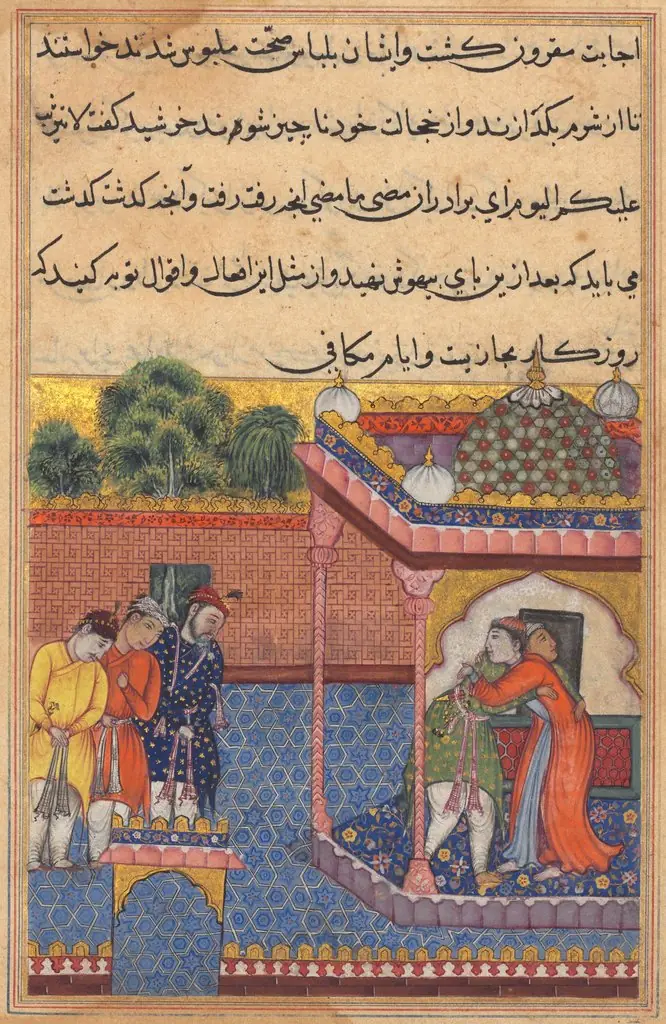 Khurshid reunited with her husband Utarid, from a Tuti-nama (Tales of a Parrot): Thirty-second Night
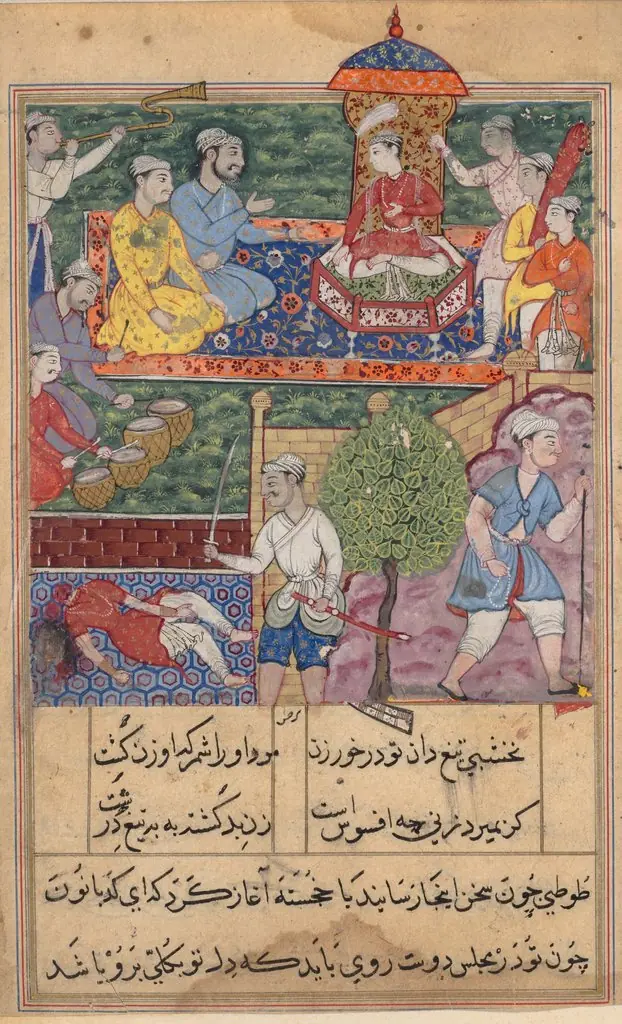 Page from Tales of a Parrot (Tuti-nama): text page
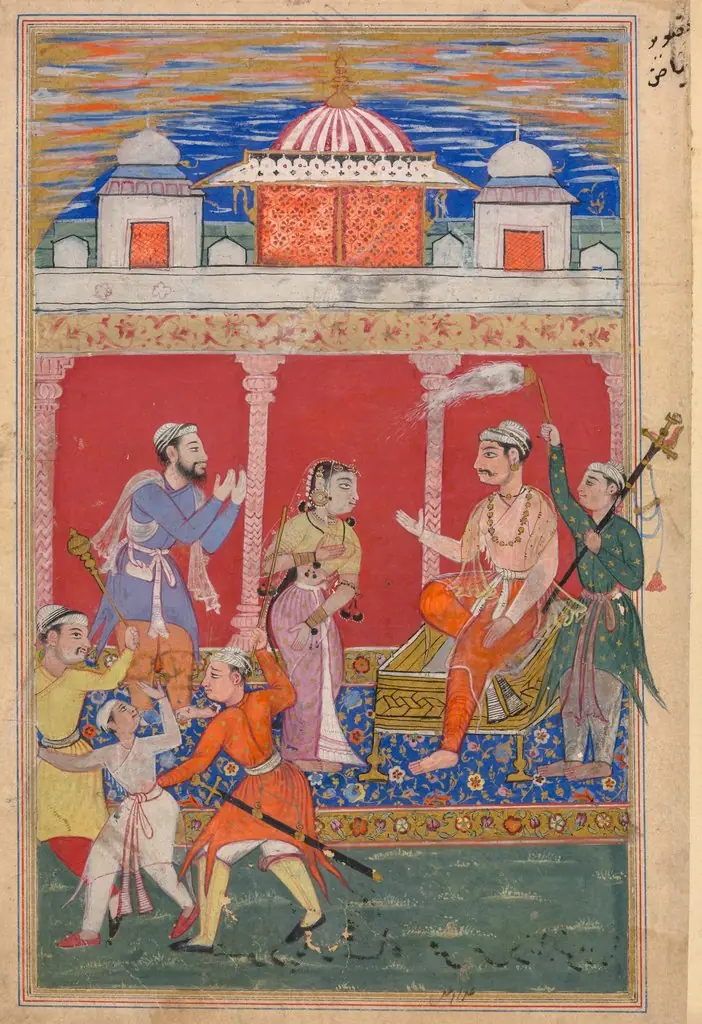 Page from Tales of a Parrot (Tuti-nama): text page
 The vizier dissuades the king of Bahilistan from executing the dervish who asks for his daughter’s hand in marriage, from a Tuti-nama (Tales of a Parrot): Seventh Night