Artwork
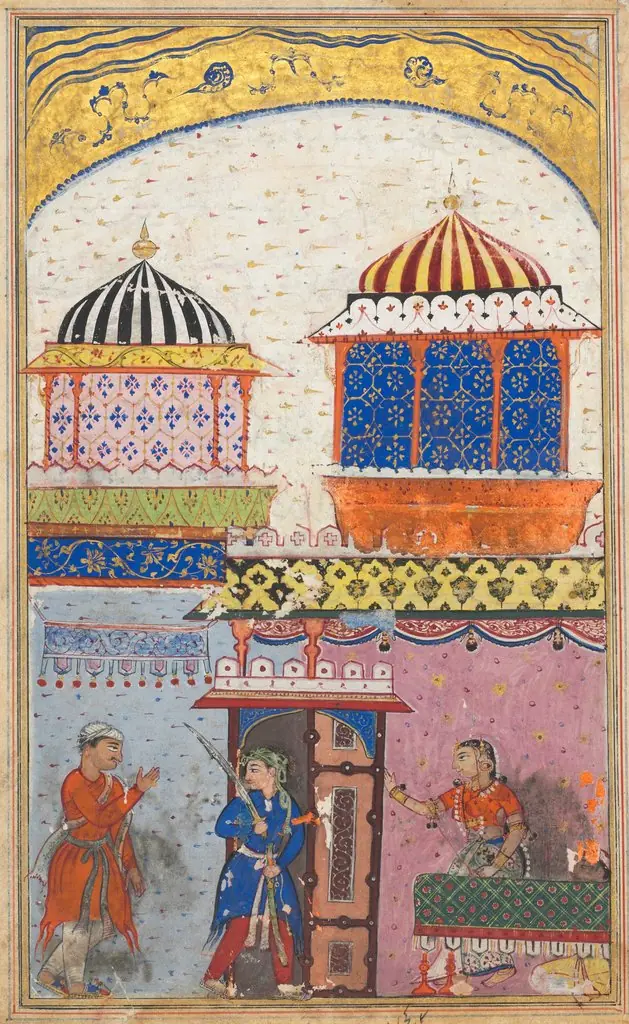
The vizier dissuades the king of Bahilistan from executing the dervish who asks for his daughter’s hand in marriage, from a Tuti-nama (Tales of a Parrot): Seventh Night
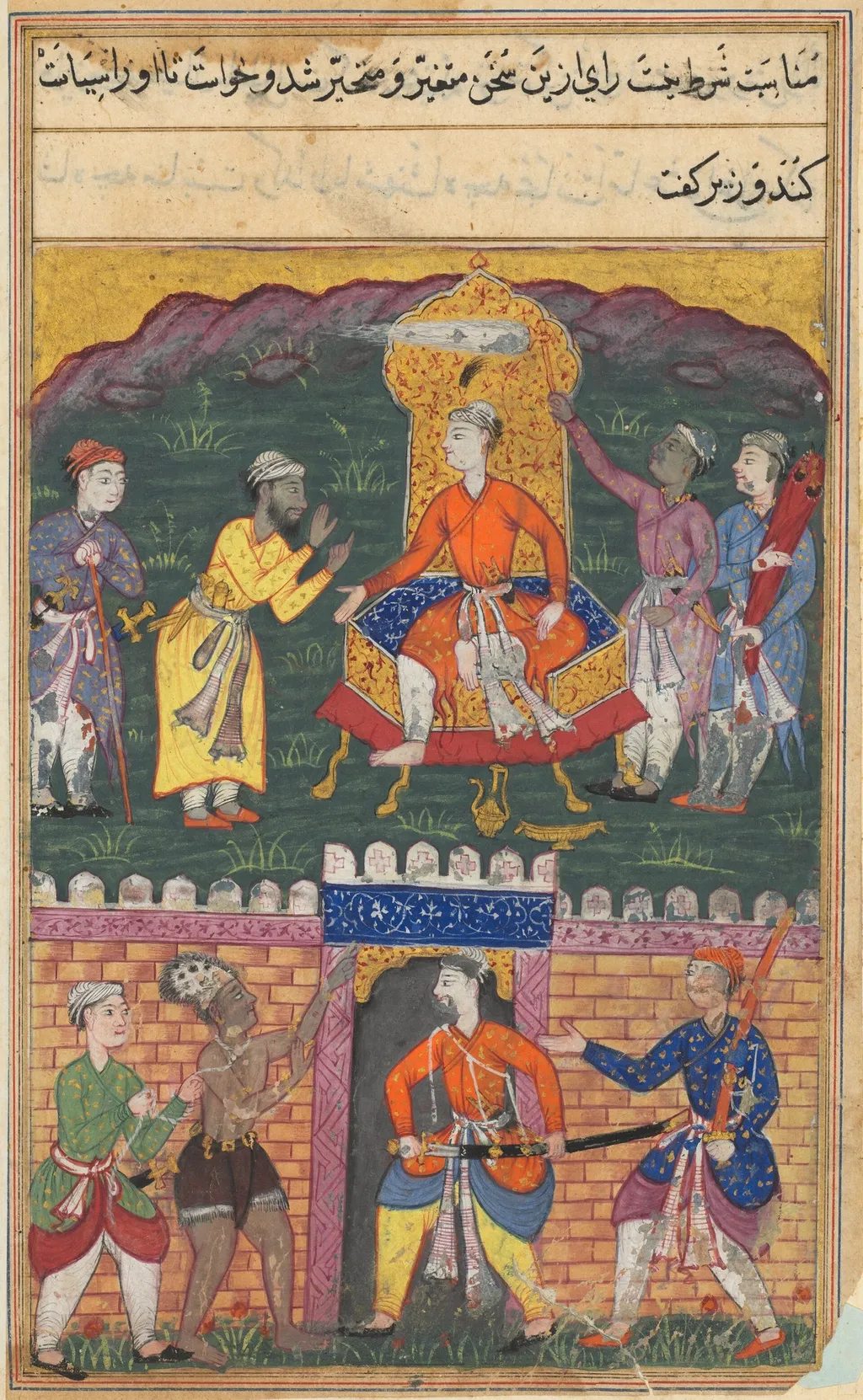
The vizier dissuades the king of Bahilistan from executing the dervish who asks for his daughter’s hand in marriage, from a Tuti-nama (Tales of a Parrot): Seventh Night is an unspecified painting. It dates from 1560 and is held in the collection of the Cleveland Museum of Art. The work illustrates a narrative episode from the seventh night of a Tuti‑nama, a Persian illustrated manuscript of fables.
About this work
Subject & Meaning
The composition therefore centers on the vizier, the king, and the dervish, with the daughter implied as the object of the suitor’s request.
The painting illustrates the Seventh Night episode of the Tuti-nama in which the vizier of Bahilistan intervenes to prevent the king from executing a dervish who seeks the king’s daughter’s hand in marriage. The composition therefore centers on the vizier, the king, and the dervish, with the daughter implied as the object of the suitor’s request. By showing the vizier’s counsel averting a rash act, the scene underscores themes of wise advice, mercy, and the dangers of impulsive justice, reflecting the moralistic tone of the Tuti-nama narratives and the Mughal court’s appreciation for illustrated didactic literature.
History & Provenance
The painting illustrating the vizier’s intervention on the seventh night of the Tuti‑nama is a Mughal Empire work dated to 1560, attributed to an unidentified artist. Classified as a painting, it forms part of the illustrated Tuti‑nama manuscript and bears the inception date 1560‑01‑01. The Cleveland Museum of Art acquired the piece in 1962, assigning it accession number 1962.279.44.b, and it has remained in the museum’s holdings since. No further details about its commission, earlier owners, or subsequent provenance are recorded in the sources.
Overview
The work illustrates a narrative episode from the seventh night of a Tuti‑nama, a Persian illustrated manuscript of fables. A vizier seated on an elevated dais in orange and gold presides over a bustling court scene, while a lower‑rank figure in orange confronts a guard who is pulling away a dark‑skinned dervish. The composition is framed by a cloudy sky and the walls of a fortified city, and the margins contain Persian text that identifies the story.
Technique & Style
Executed in vivid pigments, the artist employs bold, saturated hues, particularly oranges, golds, and deep blues, to differentiate the elite from the crowd. Intricate patterned robes and meticulous detailing of textiles convey status, while the crowded lower register is rendered with looser brushwork. The composition follows a linear narrative format, with text bands at the top and bottom integrating image and story in a classic Persian miniature fashion.
Context
Tuti‑nama manuscripts, also known as "Tales of the Parrot," were popular in the Safavid and later periods for their moral stories and elaborate illustrations. The scene reflects courtly culture in Bahilistan, a fictional realm used in Persian storytelling, and demonstrates how visual art served to accompany and enhance literary narratives in manuscript production.
Artist & collection

- The vizier dissuades the king of Bahilistan from executing the dervish who asks for his daughter’s hand in marriage, from a Tuti-nama (Tales of a Parrot): Seventh Night
 The rejuvenated old man and the daughter of the king of the jinns take leave of the King of Kings, from a Tuti-nama (Tales of a Parrot): Seventh Night
 The king of Bahilistan offers his daughter to the King of Kings, from a Tuti-nama (Tales of a Parrot): Seventh Night
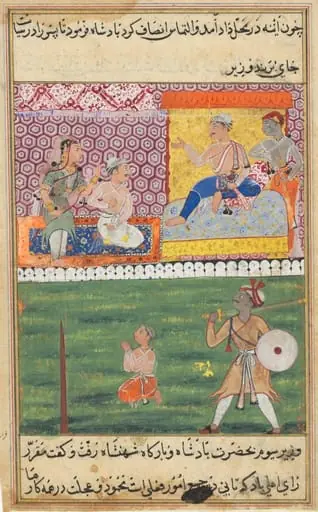 The handmaiden again appeals for justice and the prince is led to the place of execution for the third time, from a Tuti-nama (Tales of a Parrot): Eighth Night
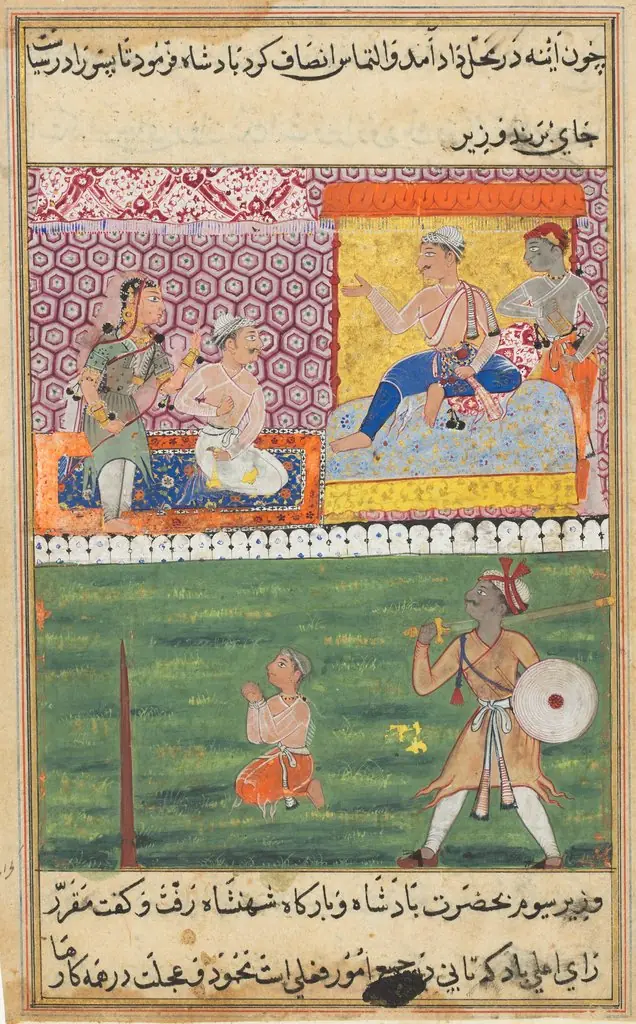 The handmaiden again appeals for justice and the prince is led to the place of execution for the third time, from a Tuti-nama (Tales of a Parrot): Eighth Night
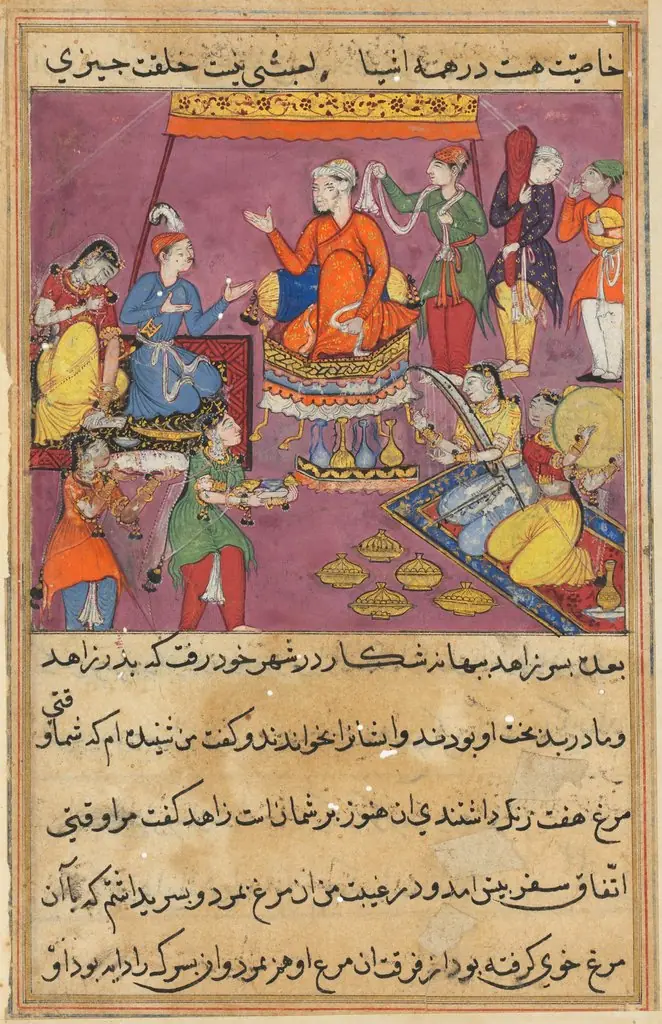 The king gives his daughter in marriage to the pious man’s son, from a Tuti-nama (Tales of a Parrot): Fifty-second Night
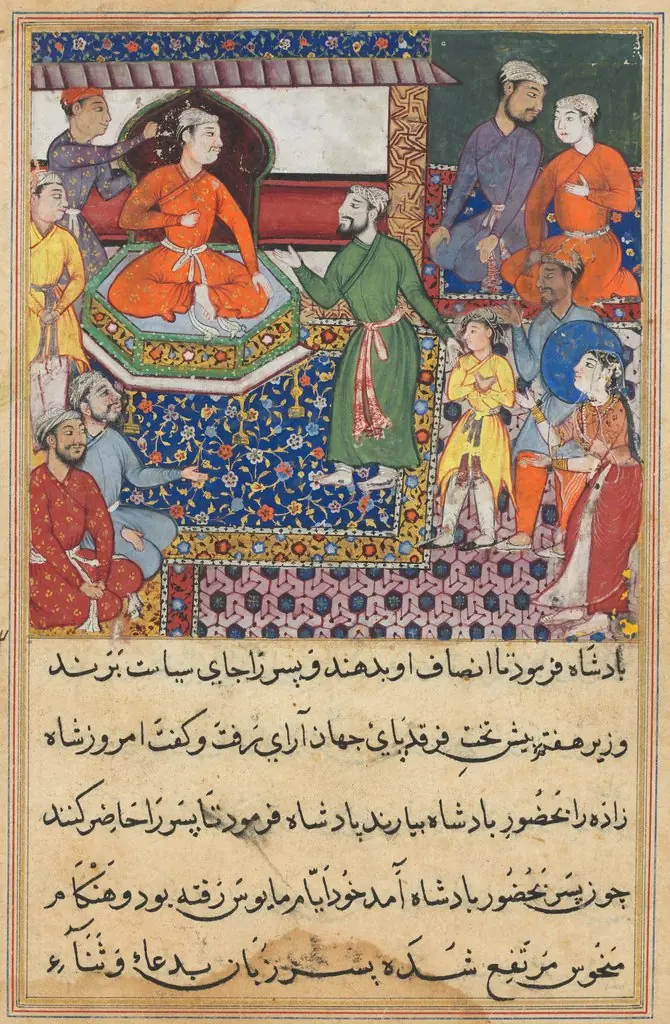 The handmaiden again pleads for the death of the prince, from a Tuti-nama (Tales of a Parrot): Eighth Night
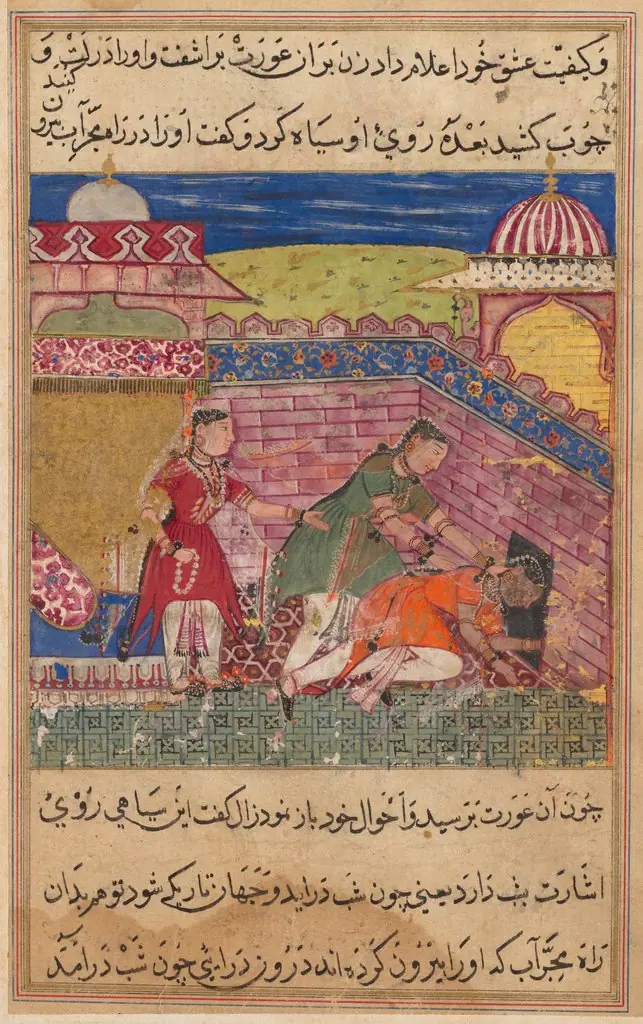 The deceitful wife ejects the procuress after blackening her face, from a Tuti-nama (Tales of a Parrot): Eighth Night
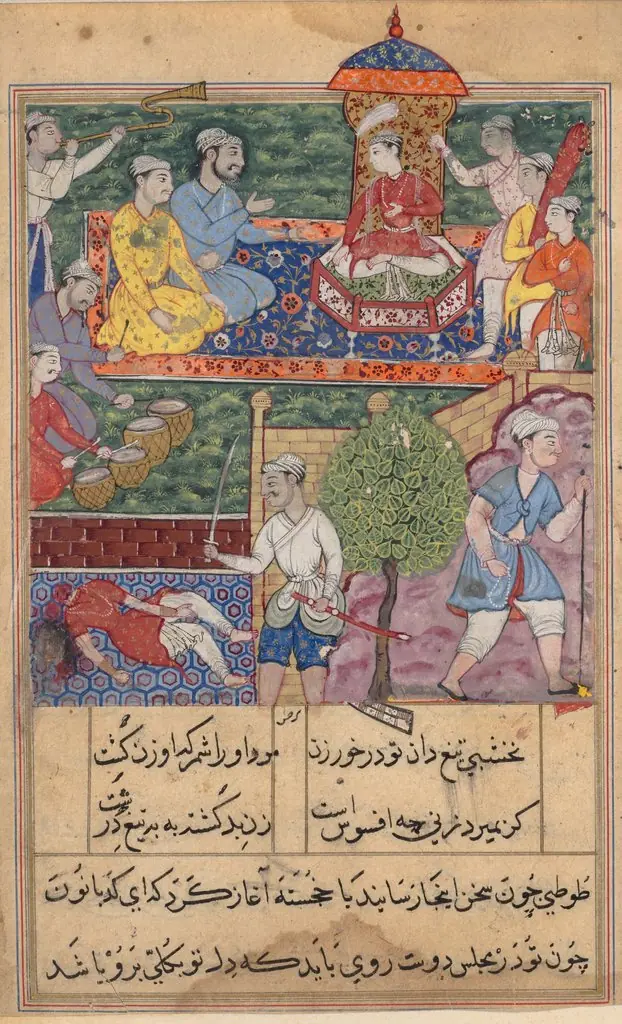 Page from Tales of a Parrot (Tuti-nama): text page
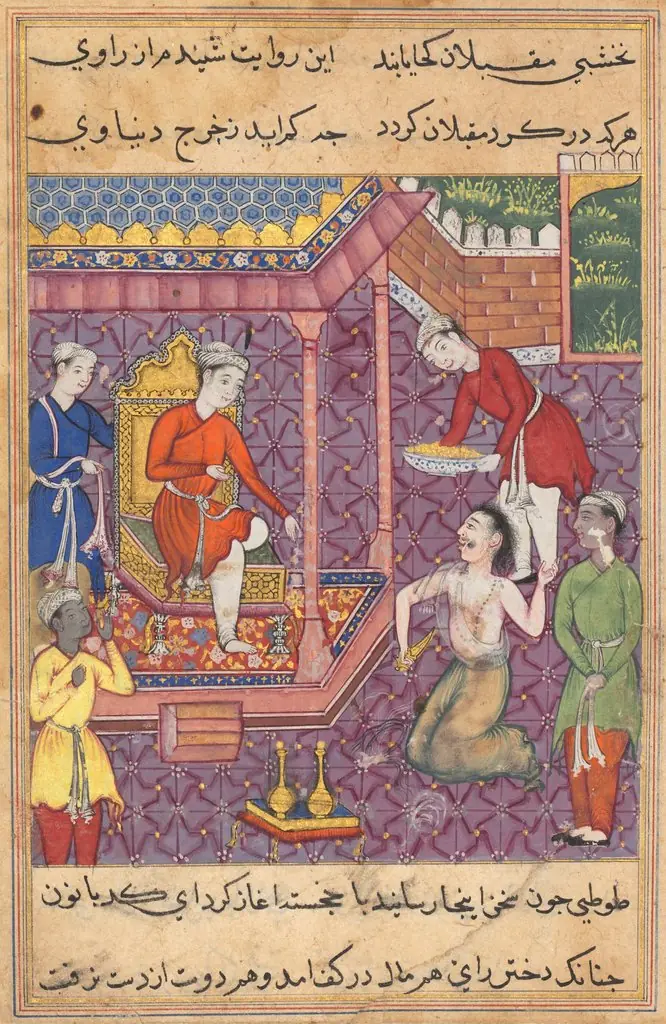 The magician disguised as a Brahman returns to claim his “daughter-in-law,” from a Tuti-nama (Tales of a Parrot): Thirty-fifth Night
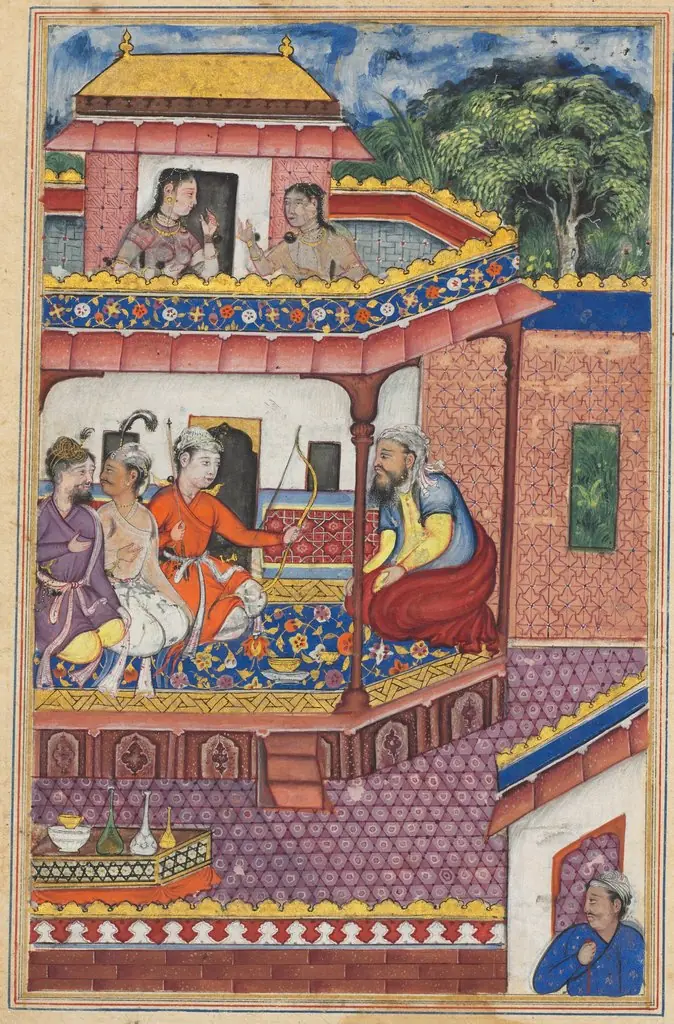 The three young men present themselves as suitors for the hand of Zuhra, the daughter of the merchant of Kabul, from a Tuti-nama (Tales of a Parrot): Thirty-fourth Night
 A woman asks her lover to leave her house, brandishing his sword and feigning rage in order to deceive her husband who has just arrived, from a Tuti-nama (Tales of a Parrot): Eighth Night