Artwork
The parrot laughs on hearing the Raja of Ujjain’s wife admire her beauty in a mirror, from a Tuti-nama (Tales of a Parrot: Forty-sixth Night
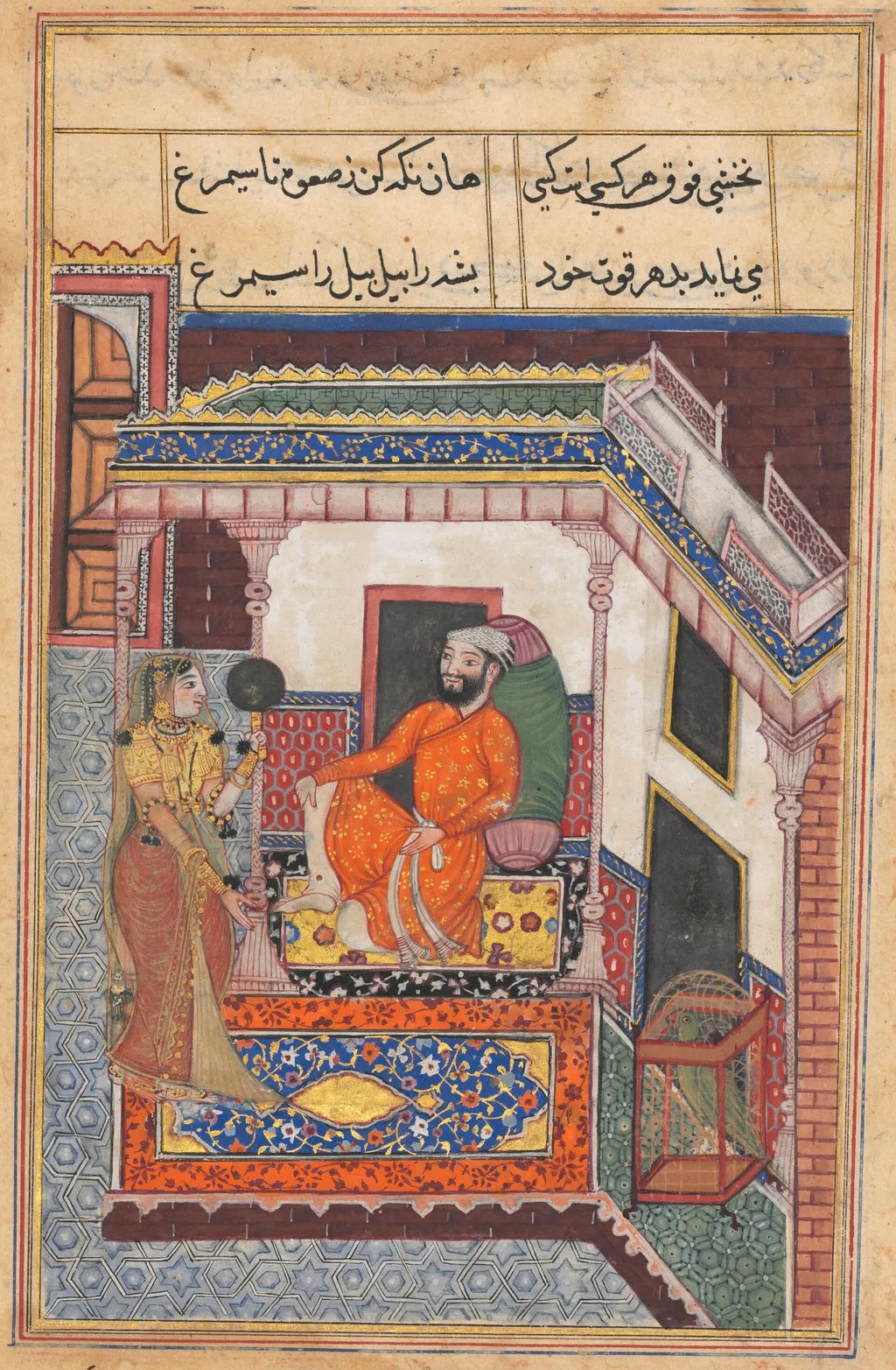
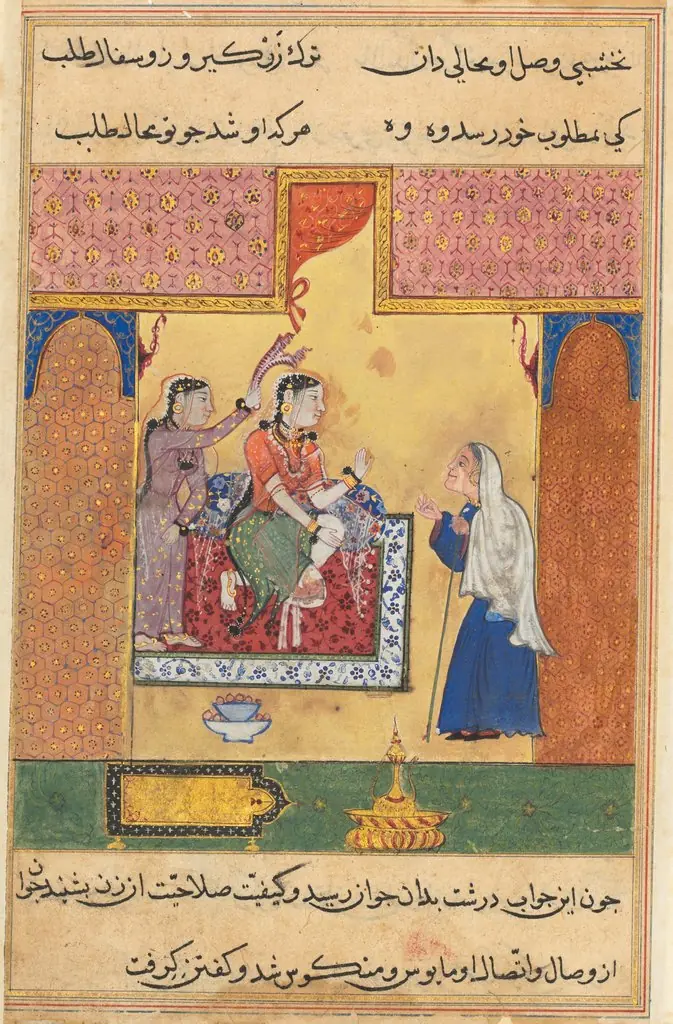
The parrot laughs on hearing the Raja of Ujjain’s wife admire her beauty in a mirror, from a Tuti-nama (Tales of a Parrot: Forty-sixth Night is an unspecified painting. It dates from 1560 and is held in the collection of the Cleveland Museum of Art. The work illustrates a narrative from the medieval Persian collection known as the Tuti‑nama, or "Tales of a Parrot.
About this work
Subject & Meaning
The painting shows a parrot reacting to the admiring words spoken by the Raja of Ujjain’s wife as she gazes at her own reflection in a mirror.
The painting shows a parrot reacting to the admiring words spoken by the Raja of Ujjain’s wife as she gazes at her own reflection in a mirror. The scene draws from a narrative episode in the Tuti-nama, a Persian collection of animal fables rendered in illustrated manuscript form. In the composition the bird’s vocal response underscores themes of vanity and the fleeting nature of beauty, while the mirror serves as a symbolic device that reflects both physical appearance and moral self‑examination.
The work originates from the Mughal artistic milieu of the mid‑sixteenth century, reflecting the cross‑cultural transmission of Persian literary motifs into Indian visual culture.
History & Provenance
The work is held in the collection of the Cleveland Museum of Art, where it is accessioned as 1962.279.292.b. It was created in 1560 within the Mughal Empire and has been exhibited at the museum as part of its South Asian art displays.
Overview
The work illustrates a narrative from the medieval Persian collection known as the Tuti‑nama, or "Tales of a Parrot." In the scene, a man in vivid orange robes sits on an elaborately carved platform, clutching a pink bowl, while a woman in a red garment stands beside him holding a child. A parrot, implied by the title, reacts to the woman’s admiration of her reflection in a mirror.
Technique & Style
Rendered in bold pigments, rich reds, deep blues, and gold accents, the painting employs a decorative, miniature‑like style typical of Persian manuscript illustration. Intricate patterns adorn the interior space, and a stylised balcony with a tower can be seen through an open doorway, emphasizing a luxurious, courtly atmosphere.
Context
The Tuti‑nama, a collection of moral anecdotes featuring a talking parrot, was widely copied across the Islamic world, influencing visual culture in Persia, India, and Ottoman territories. This illustration reflects the cross‑cultural exchange of literary motifs and artistic conventions during the medieval period.
Legacy
Images from the Tuti‑nama continue to inform scholars of medieval Persian narrative art, illustrating how storytelling, moral instruction, and decorative painting were intertwined. The work remains a valuable example of the genre’s visual vocabulary and its transmission across regions.
Artist & collection

- The parrot laughs on hearing the Raja of Ujjain’s wife admire her beauty in a mirror, from a Tuti-nama (Tales of a Parrot: Forty-sixth Night
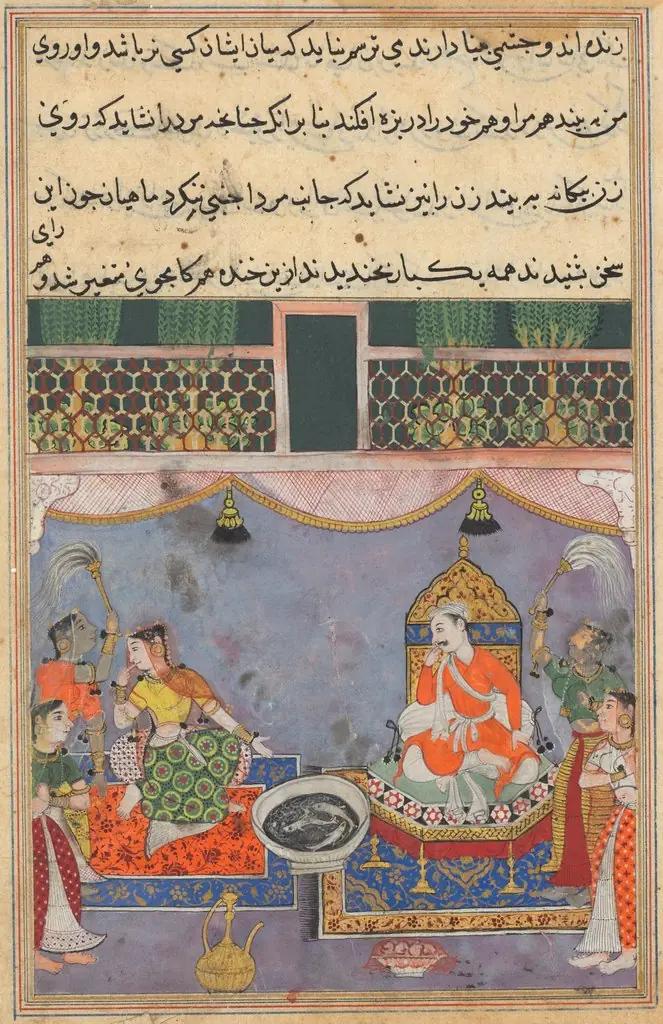 Kamjuy, the wife of the Raja, averts her face from the fishes, from a Tuti-nama (Tales of a Parrot): Twenty-third Night
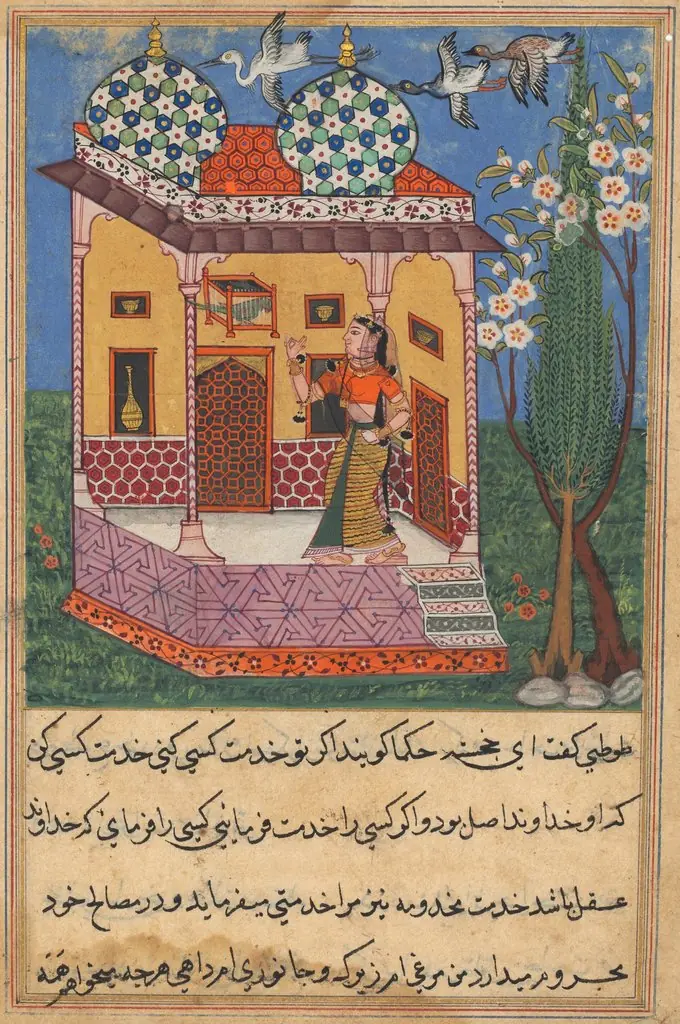 The Parrot Addresses Khujasta at the Beginning of the Twenty-sixth Night, from a Tuti-nama (Tales of a Parrot)
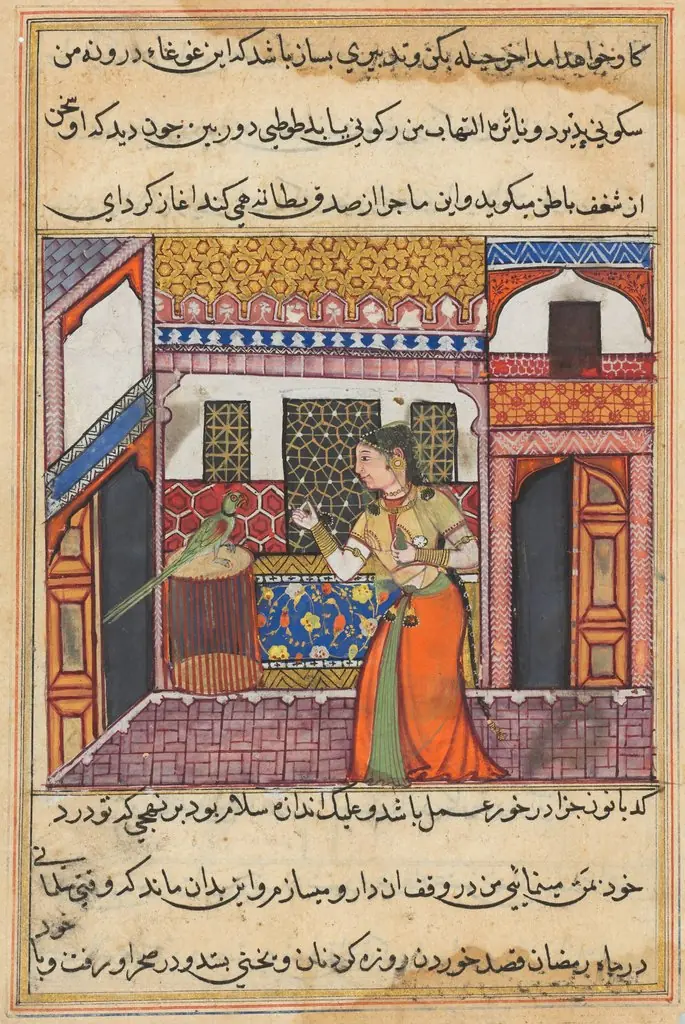 The parrot addresses Khujasta at the beginning of the forty-third night, from a Tuti-nama (Tales of a Parrot)
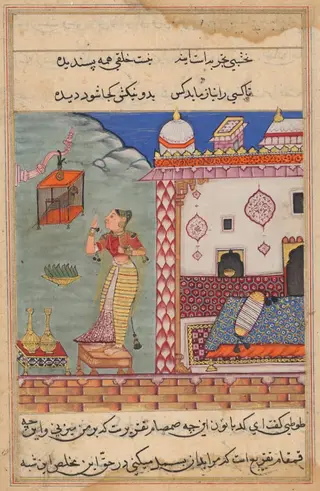 The Parrot Addresses Khujasta at the Beginning of the Twenty-seventh Night, form a Tuti-nama (Tales of a Parrot)
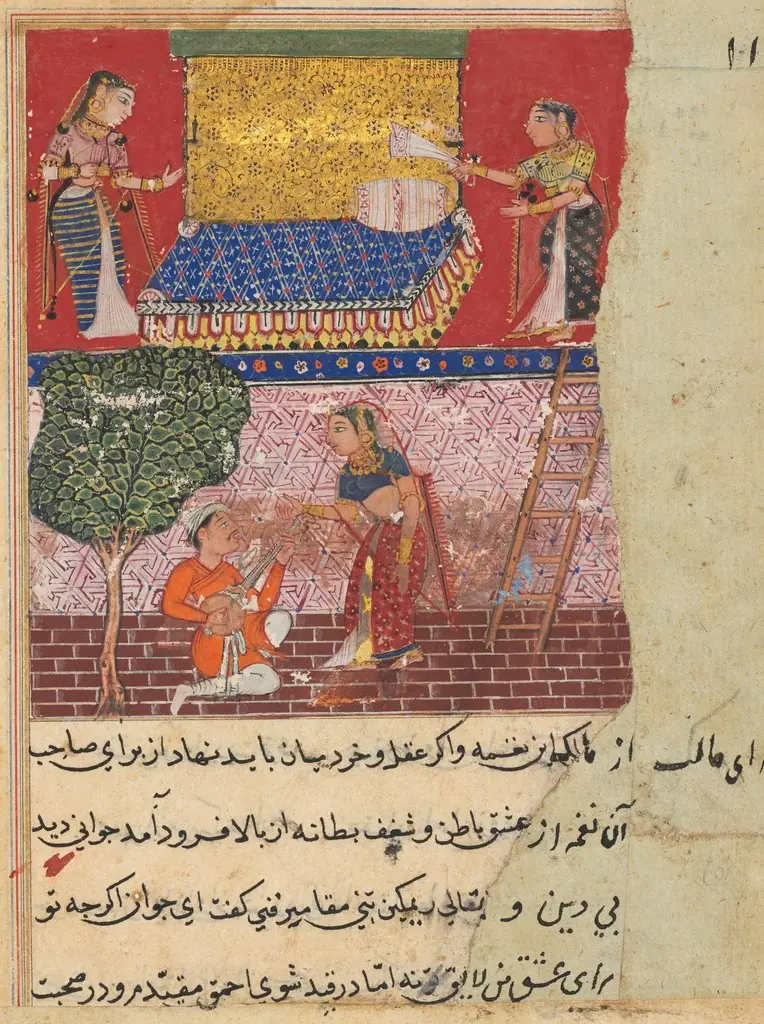 The daughter-in-law of the king of Banaras, charmed by the music of a vagabond, comes down to meet him, from a Tuti-nama (Tales of a Parrot): Sixteenth Night
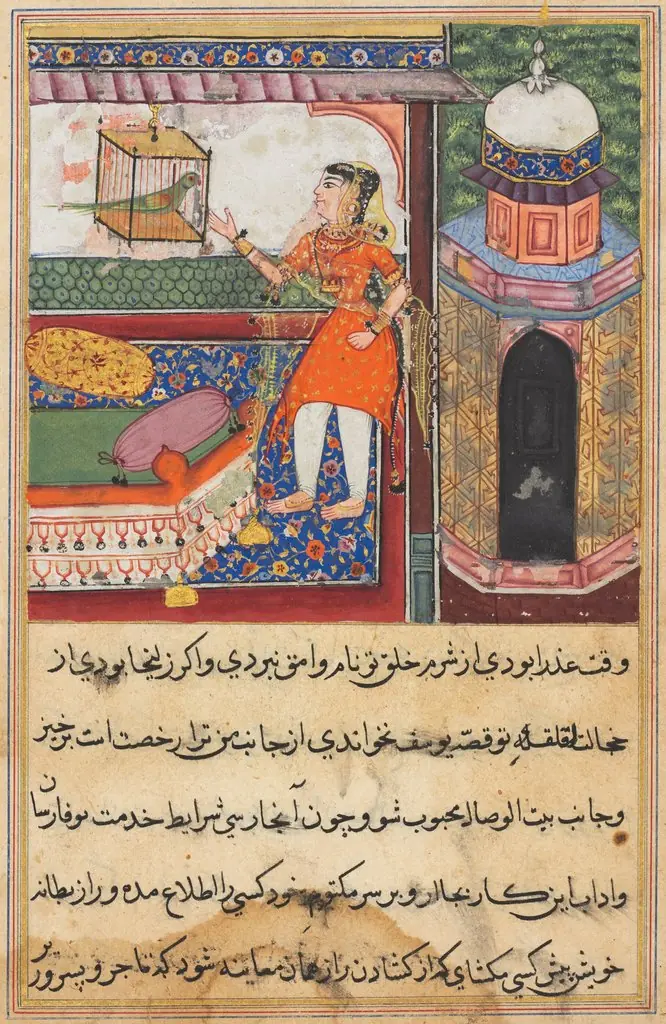 The Parrot Addresses Khujasta at the Beginning of the Tenth Night, from a Tuti-nama (Tales of a Parrot)
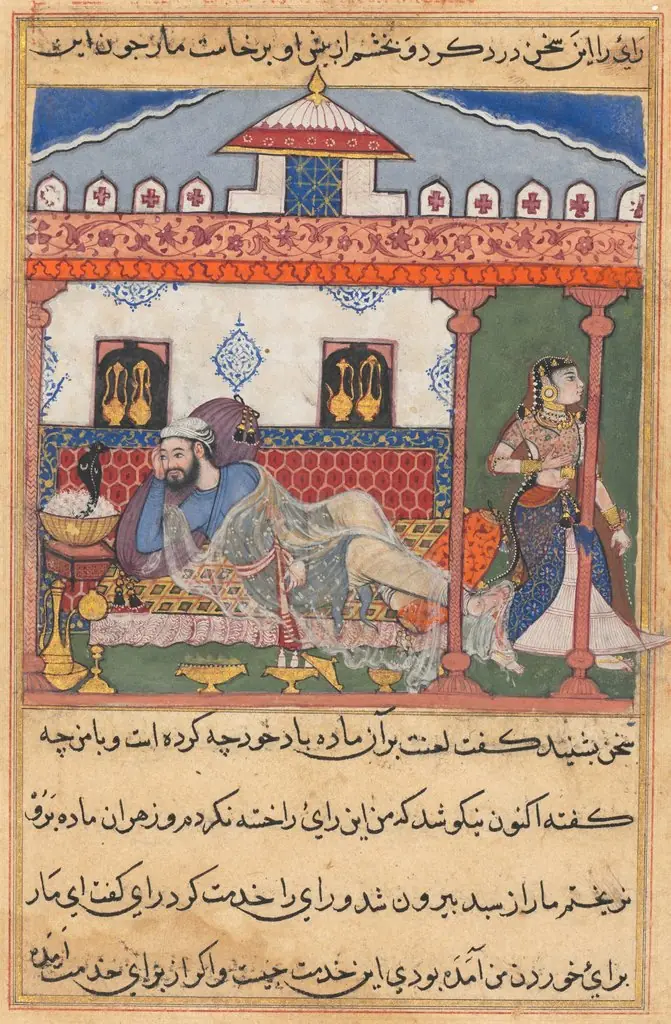 The snake, hidden in a basket of flowers, reveals himself to the Raja who has just sent away his wife, from a Tuti-nama (Tales of a Parrot): Forty-third Night
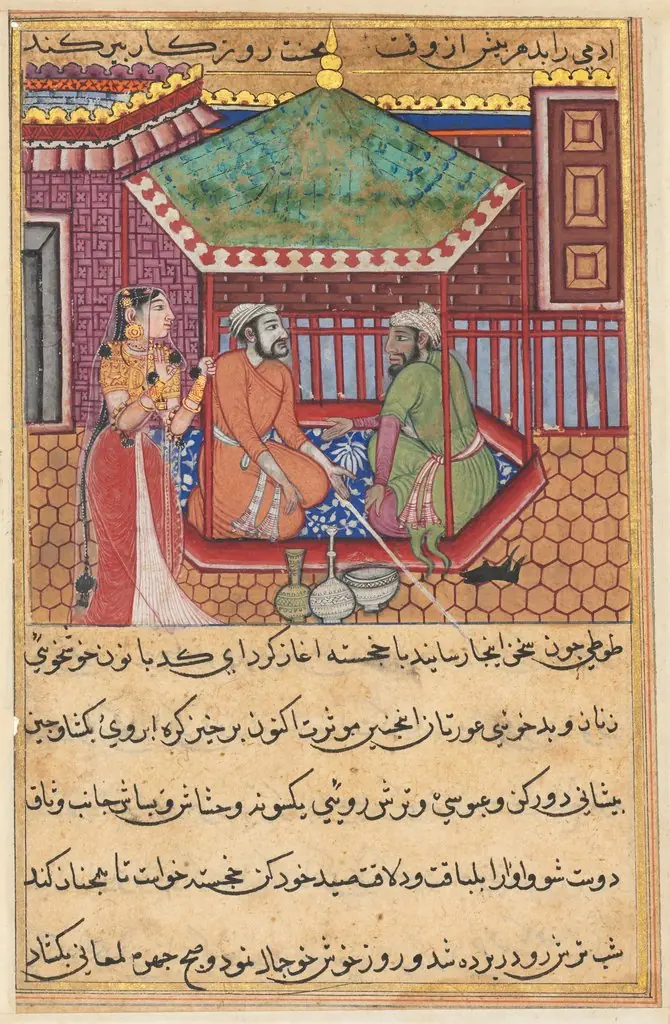 The eldest brother explains the reason for his youthful appearance, from a Tuti-nama (Tales of a Parrot): Forty-ninth Night
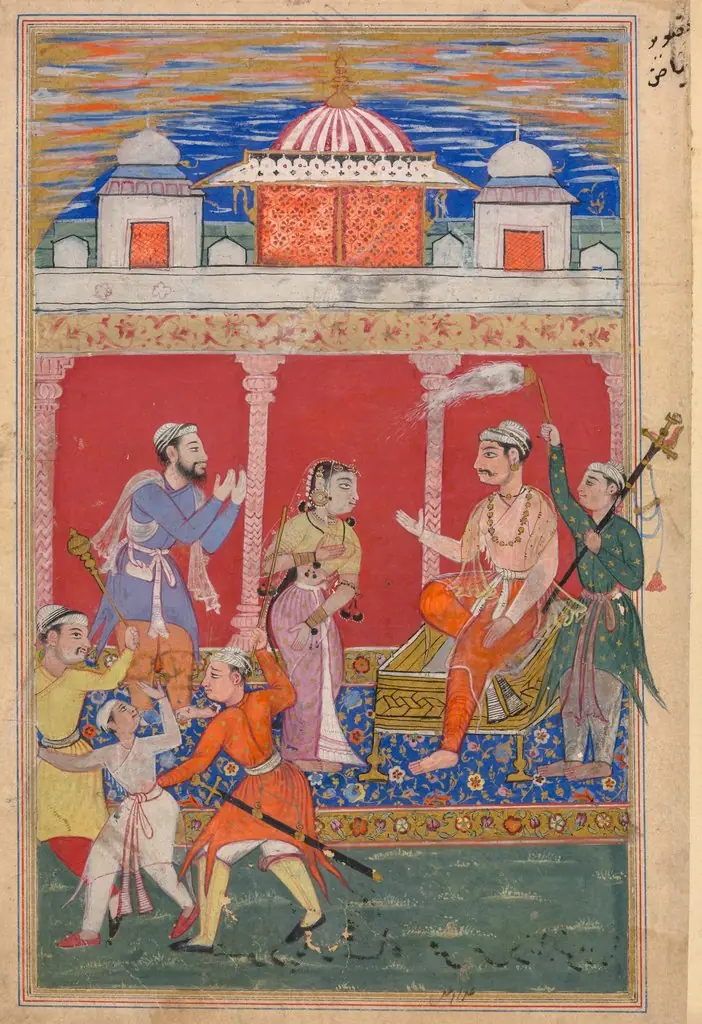 Page from Tales of a Parrot (Tuti-nama): text page
 The eldest brother explains the reason for his youthful appearance, from a Tuti-nama (Tales of a Parrot): Forty-ninth Night
 The old procuress conveys the young man’s message of love to Mansur’s wife, from a Tuti-nama (Tales of a Parrot: Seventeenth Night