Artwork
Page from Tales of a Parrot (Tuti-nama): text page
Page from Tales of a Parrot (Tuti-nama): text page is an unspecified painting. It dates from 1560 and is held in the collection of the Cleveland Museum of Art.
About this work
Subject & Meaning
The parrot's tales serve as allegories, blending entertainment with ethical lessons on fidelity, wisdom, and human conduct.
This folio from the Tuti-nama (Tales of a Parrot) is a text page rather than a narrative illustration, containing written verses that form part of the manuscript's literary content. The Tuti-nama is a 14th-century collection of moralistic and romantic stories narrated by a parrot to its owner, a woman named Khojasta, to prevent her from meeting her lover while her husband is away. The parrot's tales serve as allegories, blending entertainment with ethical lessons on fidelity, wisdom, and human conduct.
Though this page lacks visual iconography, its inclusion in the manuscript reinforces the work's overarching purpose: the parrot embodies eloquence and the power of storytelling as a tool for moral guidance. The text advances the framing narrative in which each tale contributes to the parrot's effort to delay Khojasta's infidelity, giving the written word a didactic and cautionary significance.
Technique & Style
Created around 1560 within the Mughal Empire, this work is a text page from the Tales of a Parrot (Tuti-nama), functioning as an illuminated manuscript leaf that integrates calligraphic text within the manuscript tradition. The specific physical support and detailed handling are not described in the available records, and the work is attributed to an unknown artist. It is held in the Cleveland Museum of Art, catalogued under accession number 1962.279.66.b.
History & Provenance
Created around 1560 within the Mughal Empire, this text page from the Tuti-nama (Tales of a Parrot) was produced by an artist whose identity is unrecorded. The work entered the collection of the Cleveland Museum of Art, where it is catalogued under accession number 1962.279.66.b. The exact circumstances of its original commission are not detailed in the available records; its dating to the mid-sixteenth century places it within the early period of Mughal manuscript production.
Overview
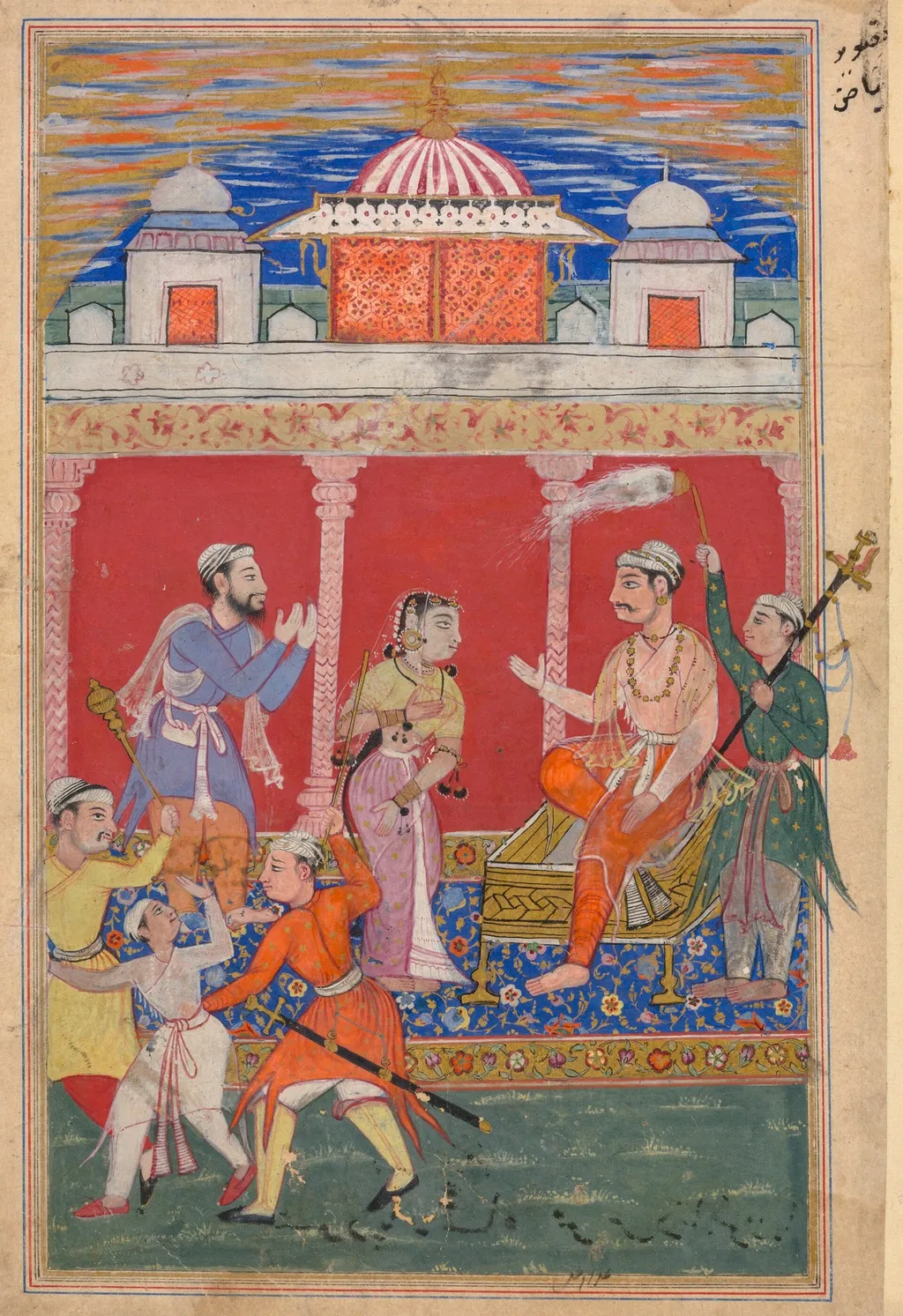
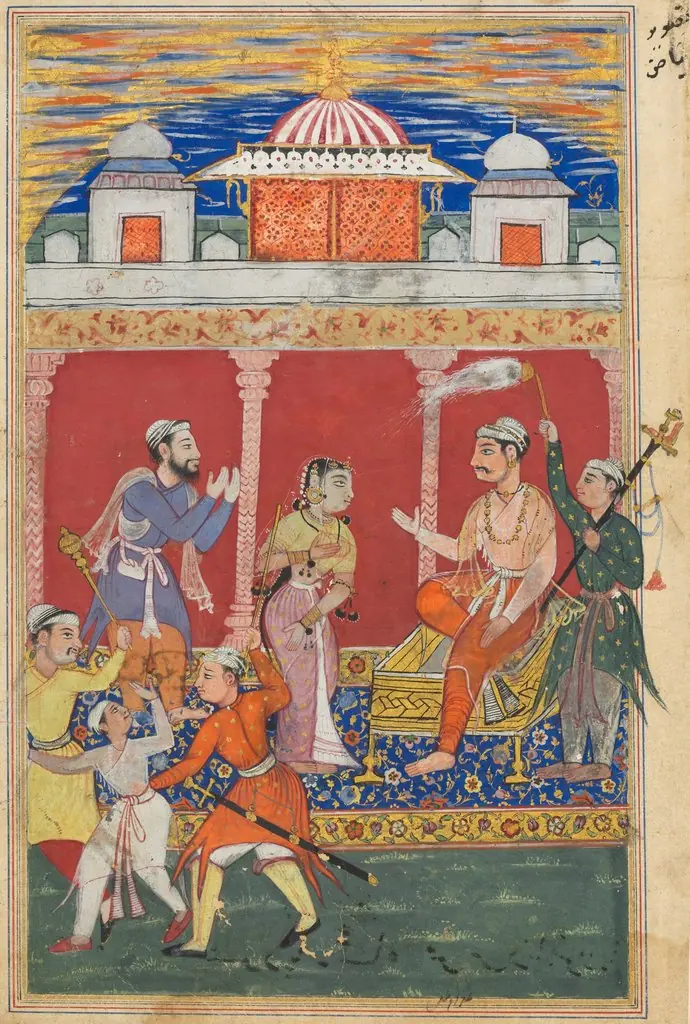
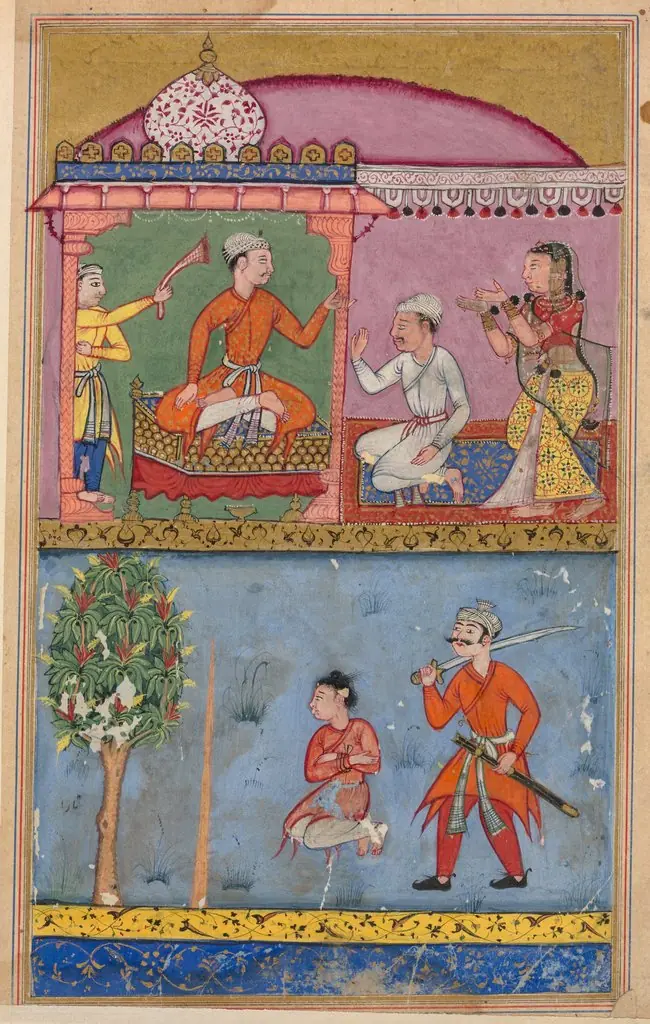
This illuminated page, taken from the Persian manuscript known as the Tales of a Parrot (Tuti‑nama), presents a lively courtyard scene rendered in vivid pigments. A man in orange attire occupies a raised platform, fanning himself, while a blue‑clad figure gestures nearby. A pink‑dressed woman stands between them, gazing downward, surrounded by dancers and onlookers amid richly adorned costumes.
Context
Tuti‑nama, a collection of moral tales featuring a parrot narrator, was popular across the Islamic world, inspiring lavishly illustrated copies. This page reflects the manuscript’s function as both a literary and visual object, integrating narrative scenes with decorative borders to engage readers and convey ethical themes through vivid imagery.
Artist & collection

- The prince’s ordeal continues, he is ordered away to be executed for the fifth time, from a Tuti-nama (Tales of a Parrot): Eighth Night
 The prince’s ordeal continues, he is ordered away to be executed for the fifth time, from a Tuti-nama (Tales of a Parrot): Eighth Night
 Page from Tales of a Parrot (Tuti-nama): text page
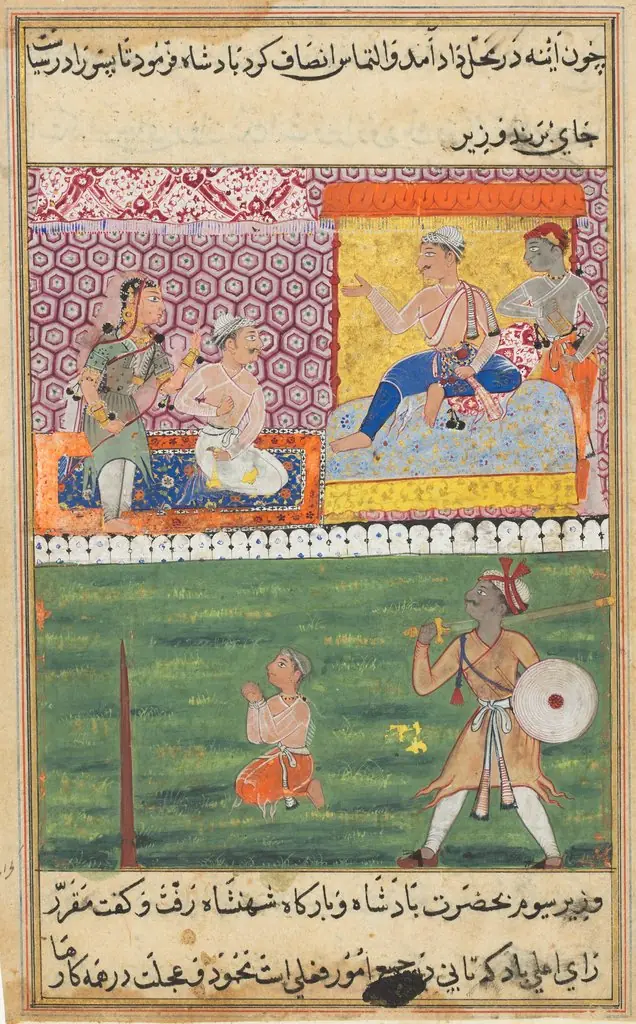 The handmaiden again appeals for justice and the prince is led to the place of execution for the third time, from a Tuti-nama (Tales of a Parrot): Eighth Night
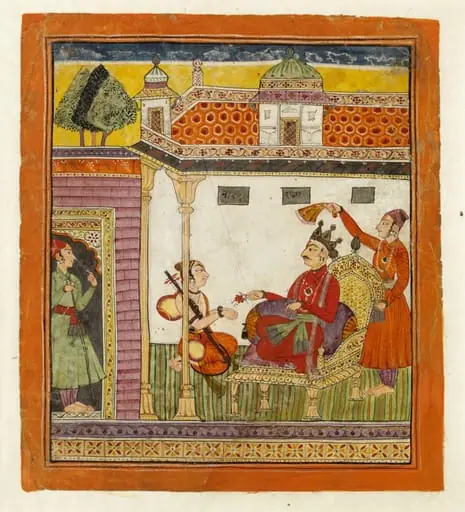 Mangala Raga
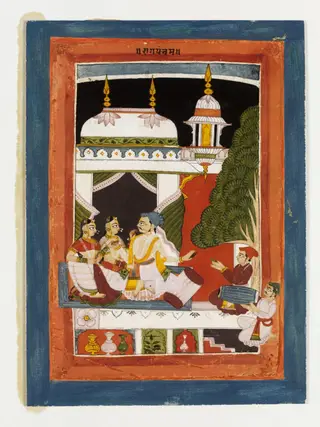 Pancham Raga
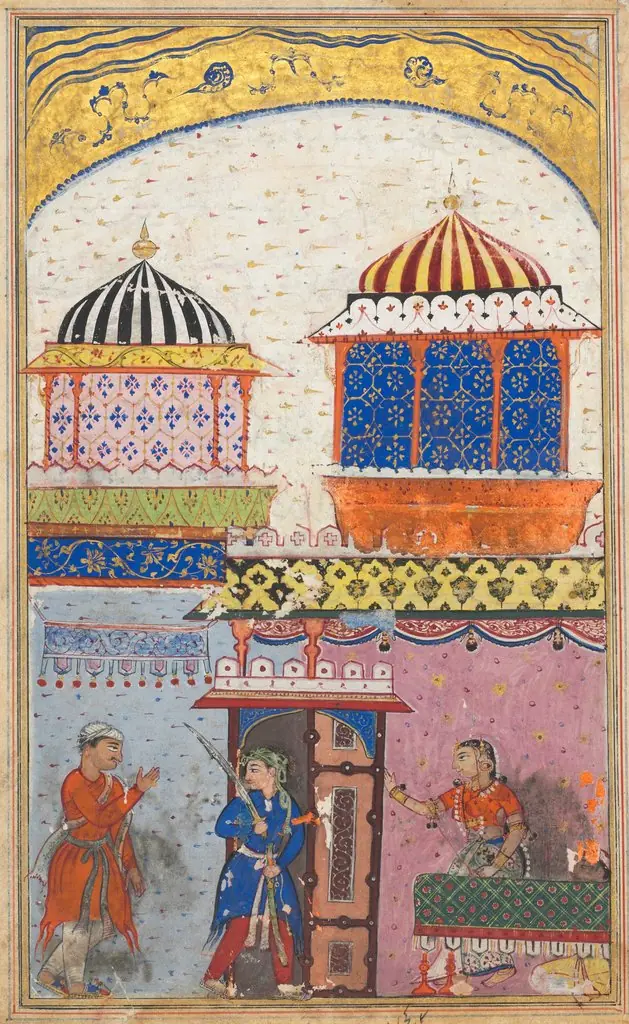 A woman asks her lover to leave her house, brandishing his sword and feigning rage in order to deceive her husband who has just arrived, from a Tuti-nama (Tales of a Parrot): Eighth Night
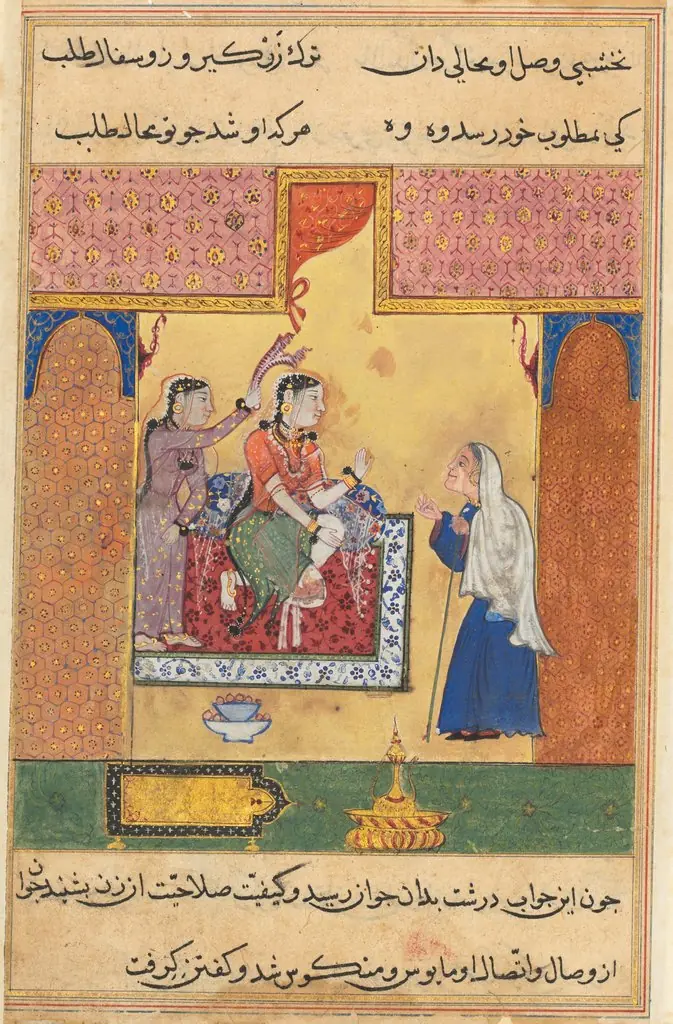 The old procuress conveys the young man’s message of love to Mansur’s wife, from a Tuti-nama (Tales of a Parrot: Seventeenth Night
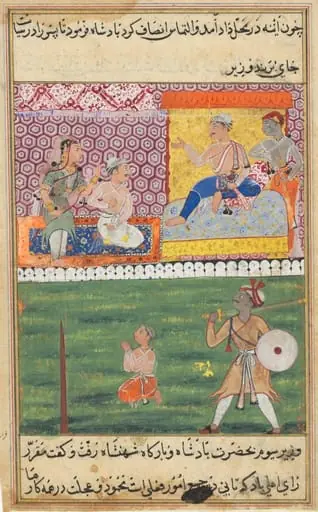 The handmaiden again appeals for justice and the prince is led to the place of execution for the third time, from a Tuti-nama (Tales of a Parrot): Eighth Night
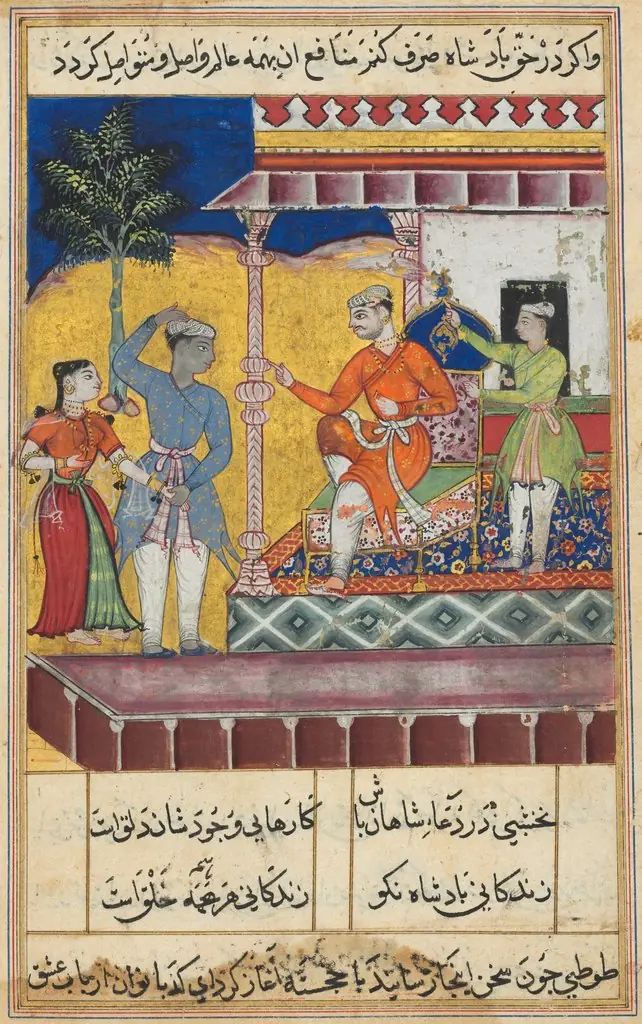 The rejuvenated old man and the daughter of the king of the jinns take leave of the King of Kings, from a Tuti-nama (Tales of a Parrot): Seventh Night
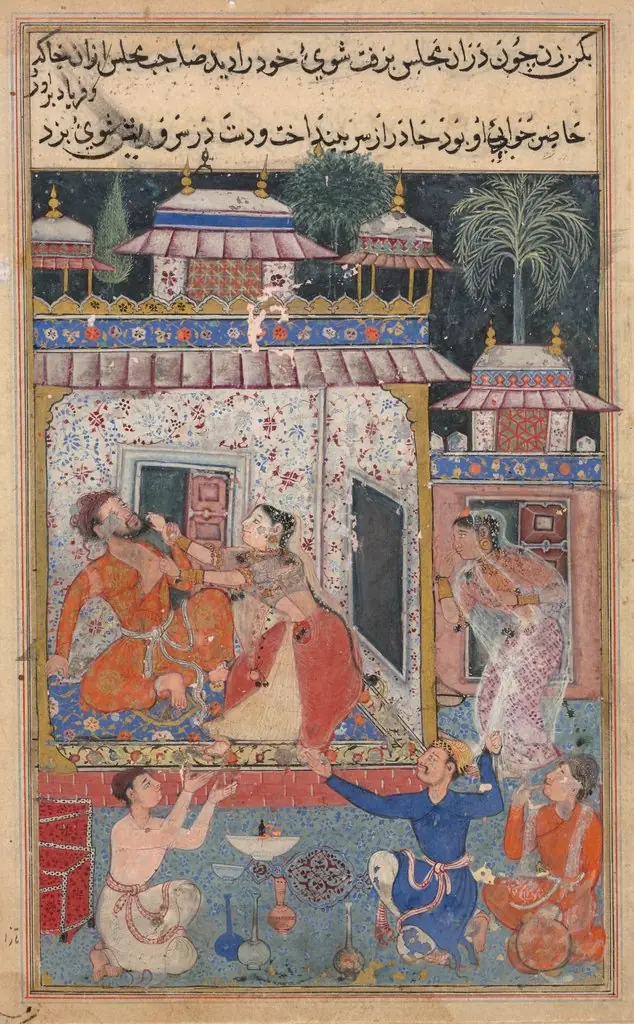
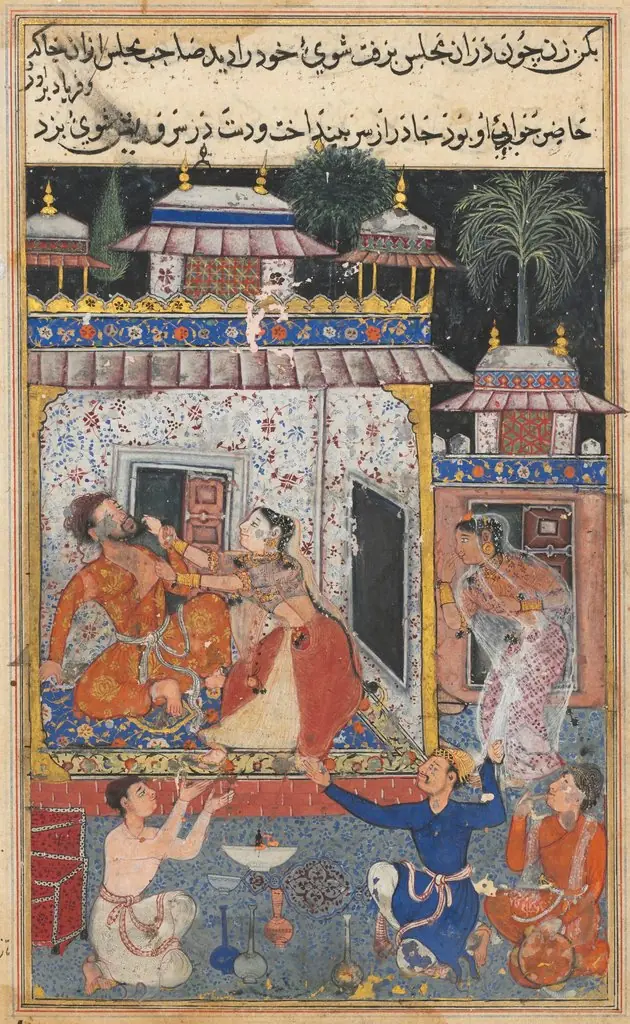 The deceitful wife assaults her erring husband, from a Tuti-nama (Tales of a Parrot): Eighth Night
 Page from Tales of a Parrot (Tuti-nama): text page