Artwork
Repenting his conduct, ‘Ubaid falls at the feet of his parents, from a Tuti-nama (Tales of a Parrot): Forty-second Night
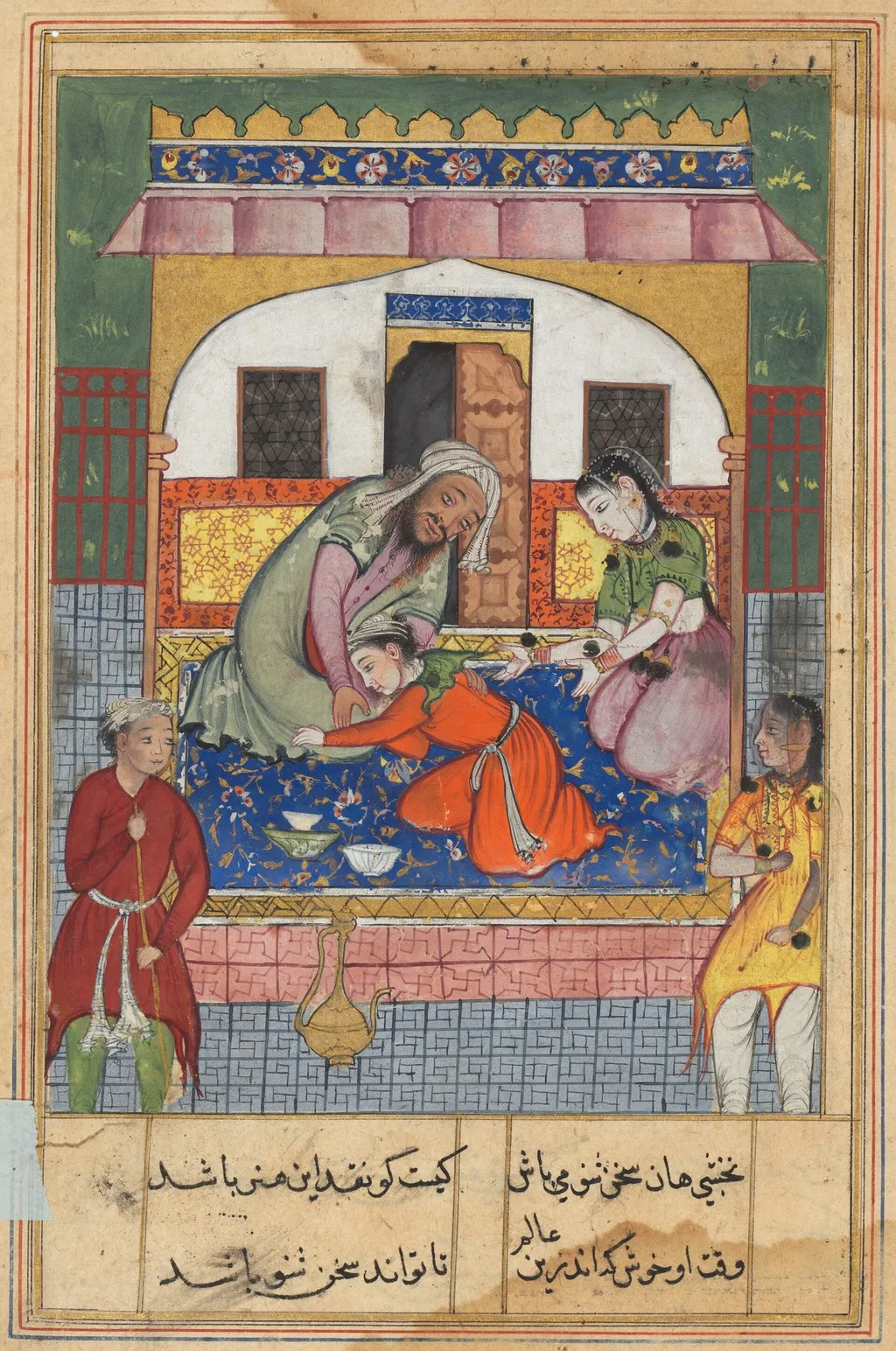
Repenting his conduct, ‘Ubaid falls at the feet of his parents, from a Tuti-nama (Tales of a Parrot): Forty-second Night is an unspecified painting. It dates from 1560 and is held in the collection of the Cleveland Museum of Art.
About this work
History & Provenance
The miniature originates from a 1560 manuscript of the Tuti-nama, commissioned within the Mughal imperial workshop and painted in the Mughal Empire.
The miniature originates from a 1560 manuscript of the Tuti-nama, commissioned within the Mughal imperial workshop and painted in the Mughal Empire. It entered the collection of the Cleveland Museum of Art, where it remains as part of their Indian miniature holdings.
The miniature depicting ‘Ubaid falling at his parents’ feet is listed under accession 1962.279.275.a. It was created in 1560 in the Mughal Empire and has not been recorded in any major exhibition history.
Overview
The work, titled Repenting his conduct, ‘Ubaid falls at the feet of his parents, illustrates a scene from the forty‑second night of the Persian narrative collection known as the Tuti‑nama, or Tales of a Parrot. Executed as a miniature painting, it depicts an intimate domestic interior rendered in vivid hues, with a central figure kneeling before his mother and child in an act of contrition.
Subject & Meaning
At the heart of the composition an older man, identified as ‘Ubaid, bows low before his mother and infant, his posture and outstretched hands signalling a plea for forgiveness after a moral lapse. The surrounding figures, a man in a red robe clutching a bundle, a woman in flowing attire, and a servant bearing a tray, reinforce the familial setting and underscore themes of repentance, filial duty, and the restoration of social harmony within the narrative.
Technique & Style
The painting employs the delicate brushwork and intricate detailing characteristic of Persian miniature tradition. Gold leaf accents highlight the scalloped ceiling and patterned tiles, while the saturated palette, reds, yellows, blues, and greens, creates a luminous interior space. Fine line work delineates the garments and architectural elements, and the composition’s shallow depth focuses attention on the central act of supplication.
Context
The Tuti‑nama, a moralistic collection of stories featuring a talking parrot, was popular in Persian literary culture as a vehicle for ethical instruction. This particular episode illustrates the didactic purpose of the text, using visual narrative to convey the consequences of misbehavior and the virtue of seeking redemption within the family unit.
Legacy
As an example of late Persian miniature painting, the work contributes to scholarly understanding of manuscript illustration practices and the transmission of moral literature in the Islamic world. Its preservation in a major American museum allows continued study of the artistic techniques and cultural values embedded in such narrative art.
Artist & collection

- Repenting his conduct, ‘Ubaid falls at the feet of his parents, from a Tuti-nama (Tales of a Parrot): Forty-second Night
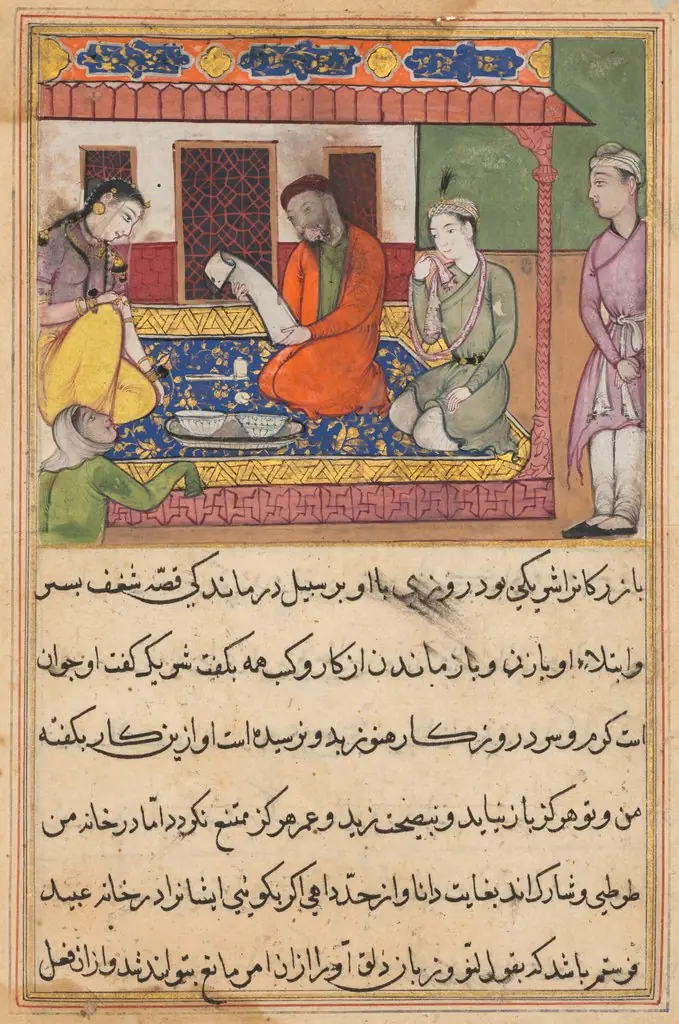 The marriage of ‘Ubaid, son of a merchant of Tirmiz, from a Tuti-nama (Tales of a Parrot): Forty-second Night
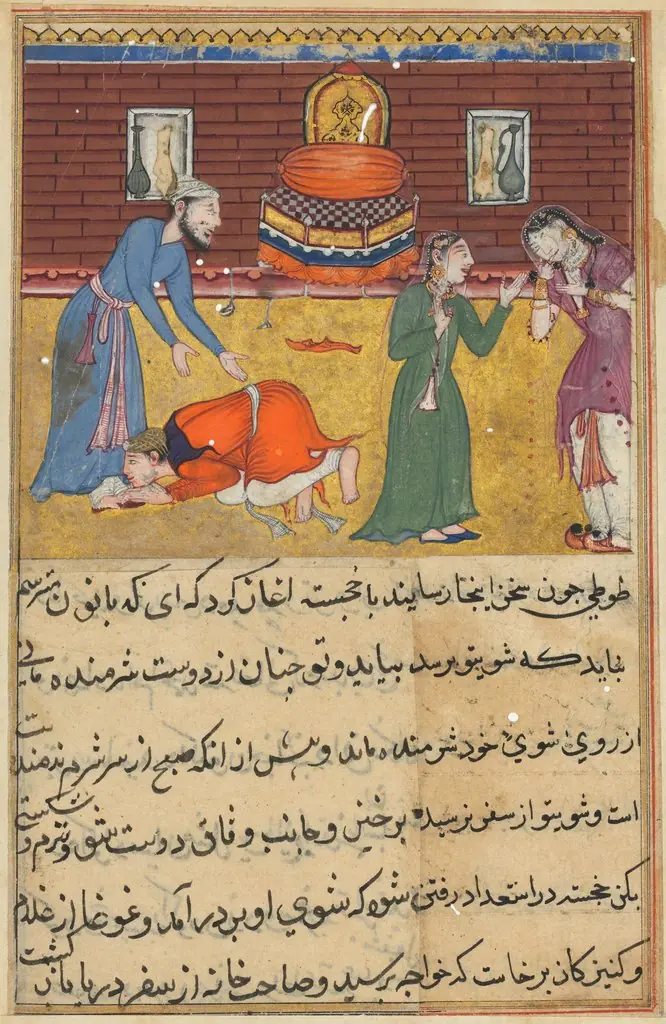 The pious man’s son, now a king, reveals himself to his father; his nurse upbraids his unfaithful mother, from a Tuti-nama (Tales of a Parrot): Fifty-second Night
 The eldest brother explains the reason for his youthful appearance, from a Tuti-nama (Tales of a Parrot): Forty-ninth Night
 The magician disguised as a Brahman returns to claim his “daughter-in-law,” from a Tuti-nama (Tales of a Parrot): Thirty-fifth Night
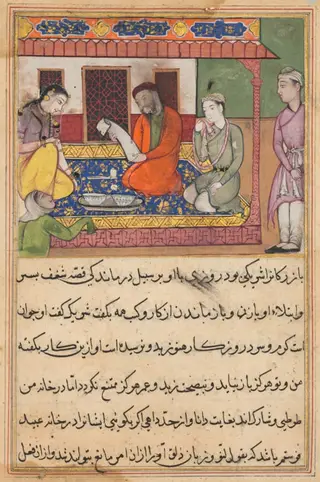 The marriage of ‘Ubaid, son of a merchant of Tirmiz, from a Tuti-nama (Tales of a Parrot): Forty-second Night
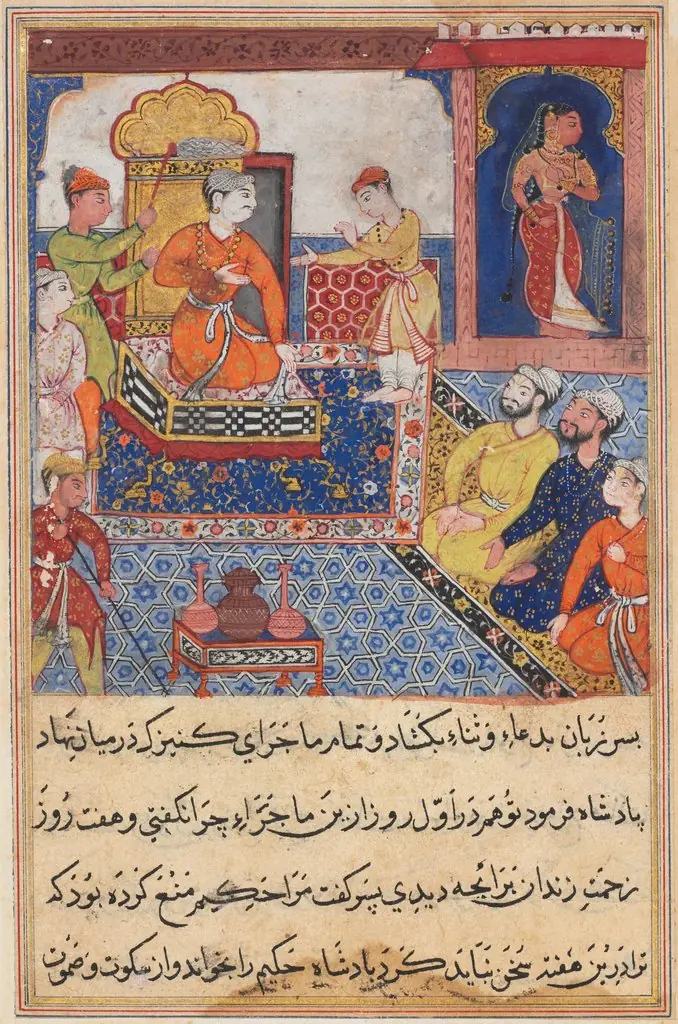 The young prince recounts his experiences to his father, the king, from a Tuti-nama (Tales of a Parrot): Eighth Night
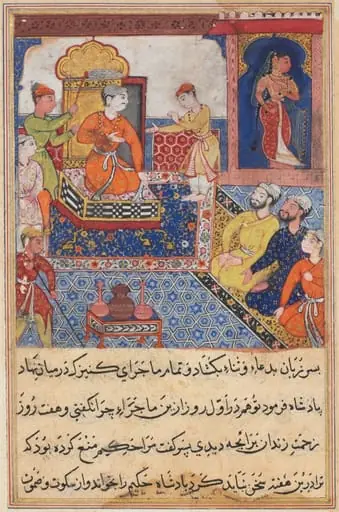 The young prince recounts his experiences to his father, the king, from a Tuti-nama (Tales of a Parrot): Eighth Night
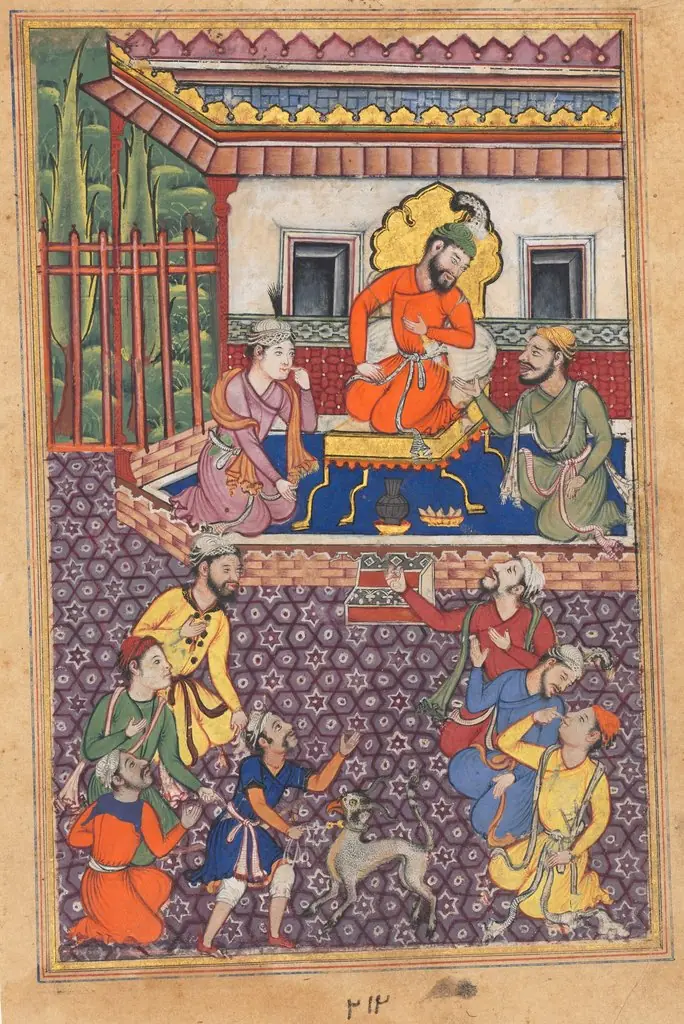 The court of the Raja of Ujjain, from a Tuti-nama (Tales of a Parrot): Forty-sixth Night
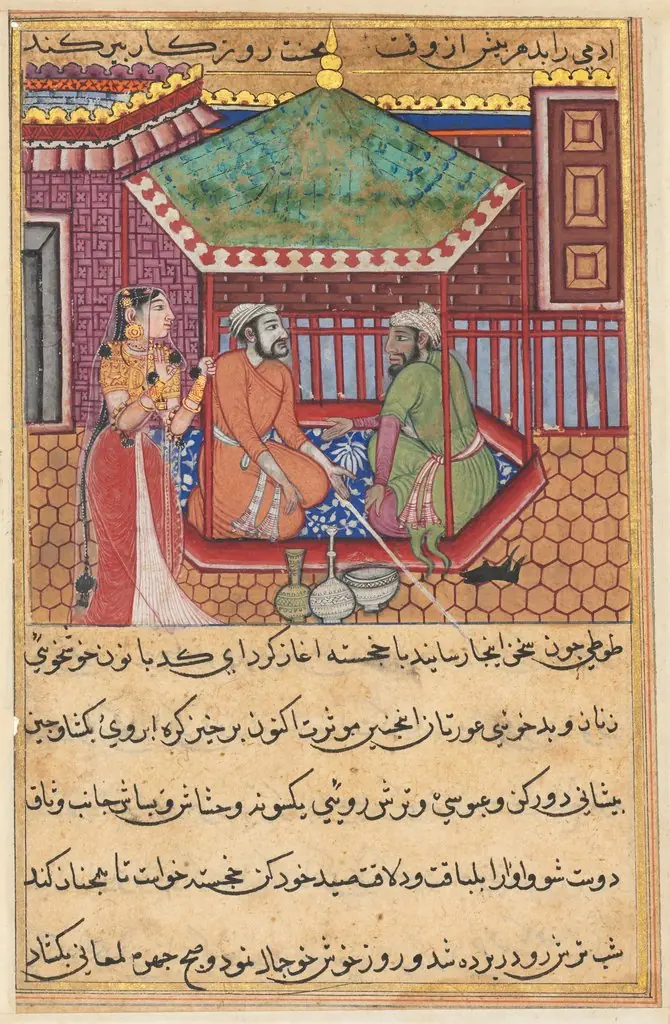
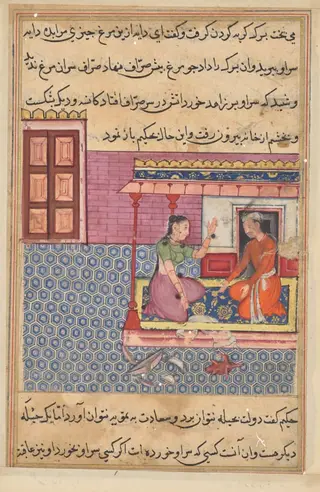 The pious man’s wife offers the seven-colored bird as food to her lover, but not finding its head, he breaks the pot and bowl in anger, from a Tuti-nama (Tales of a Parrot): Fifty-second Night
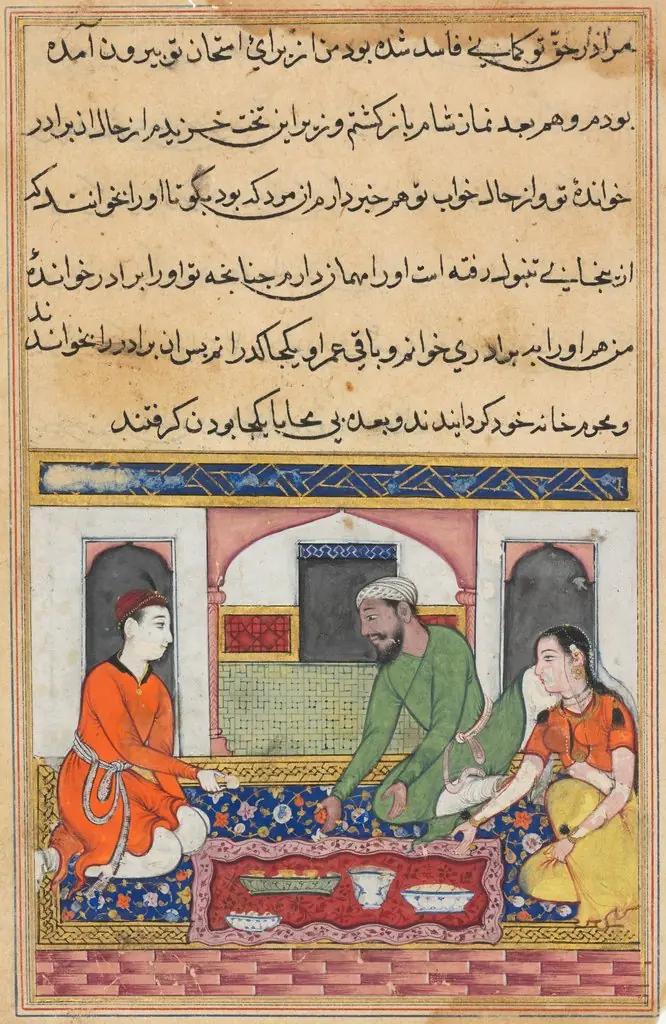 Shahr-Arai and her husband adopt her lover as a brother in the family, from a Tuti-nama (Tales of a Parrot): Fortieth Night
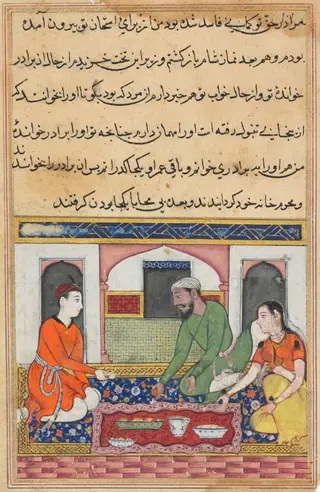 Shahr-Arai and her husband adopt her lover as a brother in the family, from a Tuti-nama (Tales of a Parrot): Fortieth Night
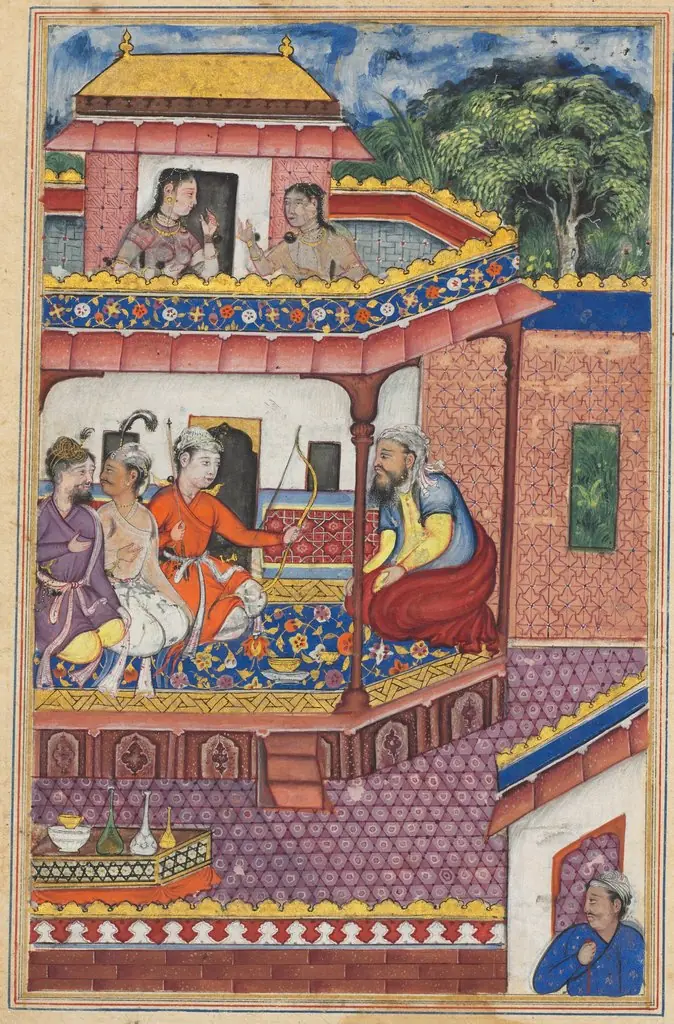 The three young men present themselves as suitors for the hand of Zuhra, the daughter of the merchant of Kabul, from a Tuti-nama (Tales of a Parrot): Thirty-fourth Night
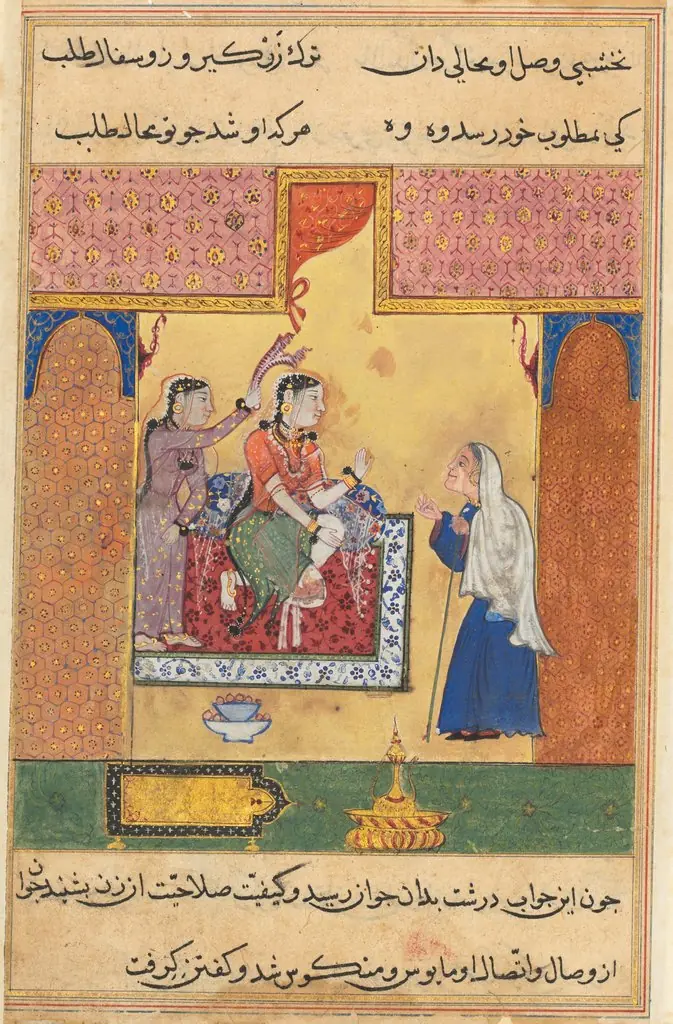 The old procuress conveys the young man’s message of love to Mansur’s wife, from a Tuti-nama (Tales of a Parrot: Seventeenth Night
 The three young men present themselves as suitors for the hand of Zuhra, the daughter of the merchant of Kabul, from a Tuti-nama (Tales of a Parrot): Thirty-fourth Night
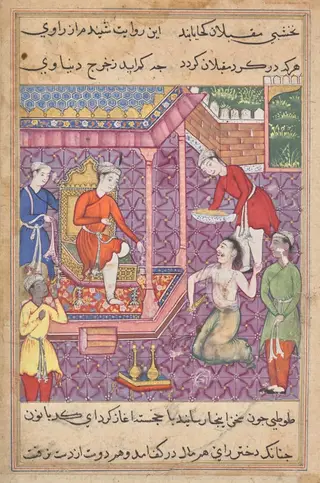 The magician disguised as a Brahman returns to claim his “daughter-in-law,” from a Tuti-nama (Tales of a Parrot): Thirty-fifth Night
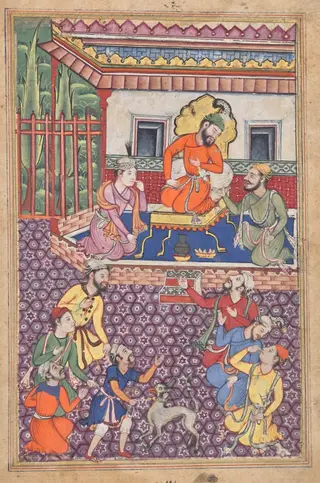 The court of the Raja of Ujjain, from a Tuti-nama (Tales of a Parrot): Forty-sixth Night
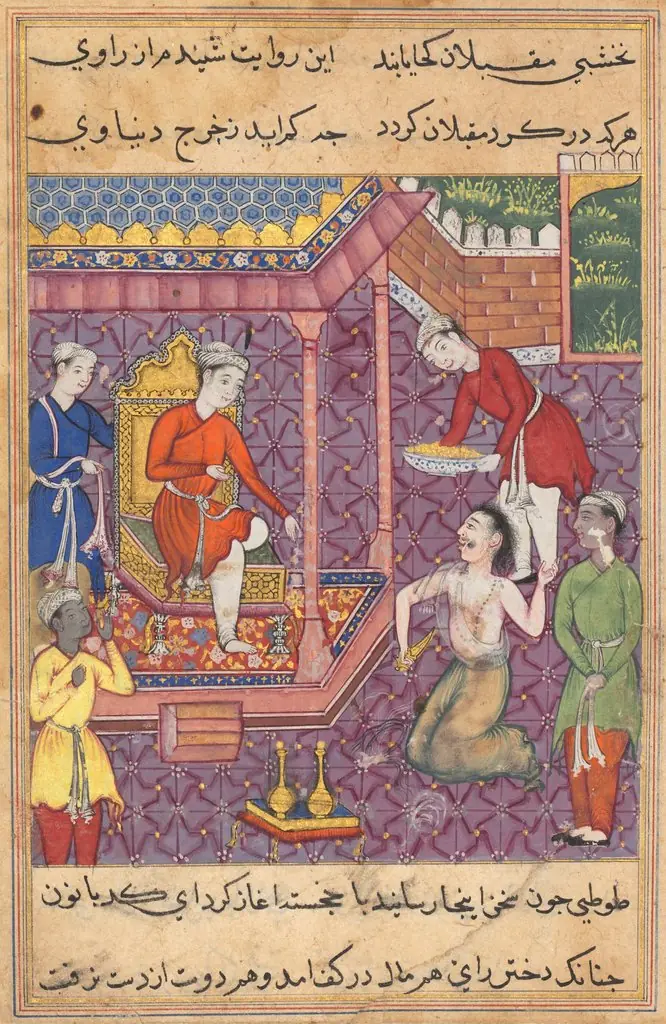
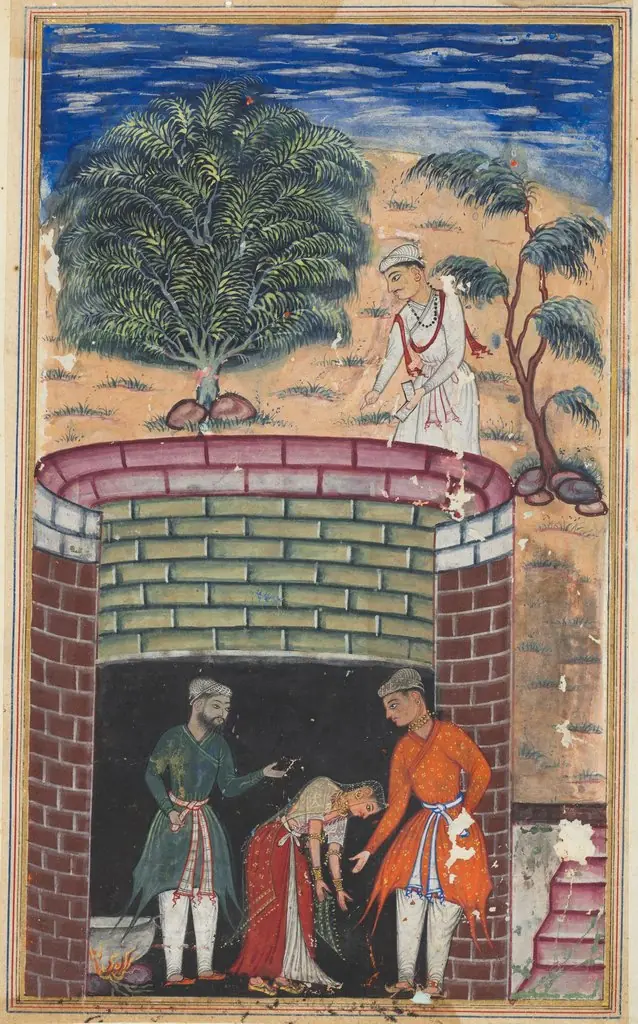 The daughter of the king of the jinns bows before the King of Kings who has just undergone the ordeal of passing through the boiling oil to emerge as a youth, from a Tuti-nama (Tales of a Parrot): Seventh Night
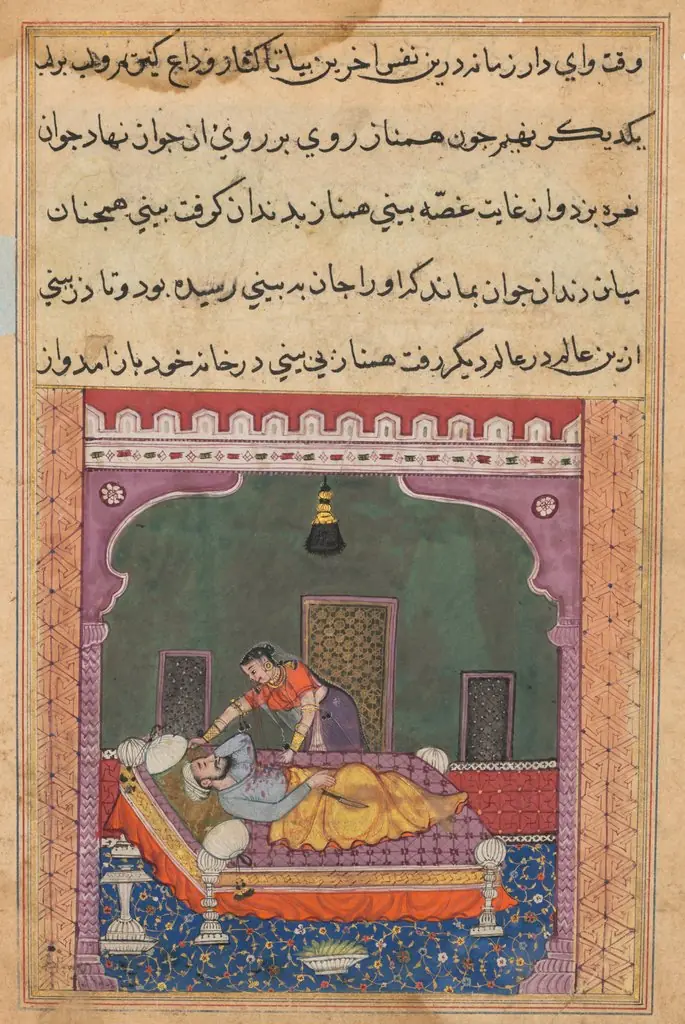 In order to falsely implicate her husband, Hamnaz places a knife by his side and lets the blood dripping from her nose stain his clothes, from a Tuti-nama (Tales of a Parrot): Twenty-fifth Night