Artwork
The Supper at Emmaus
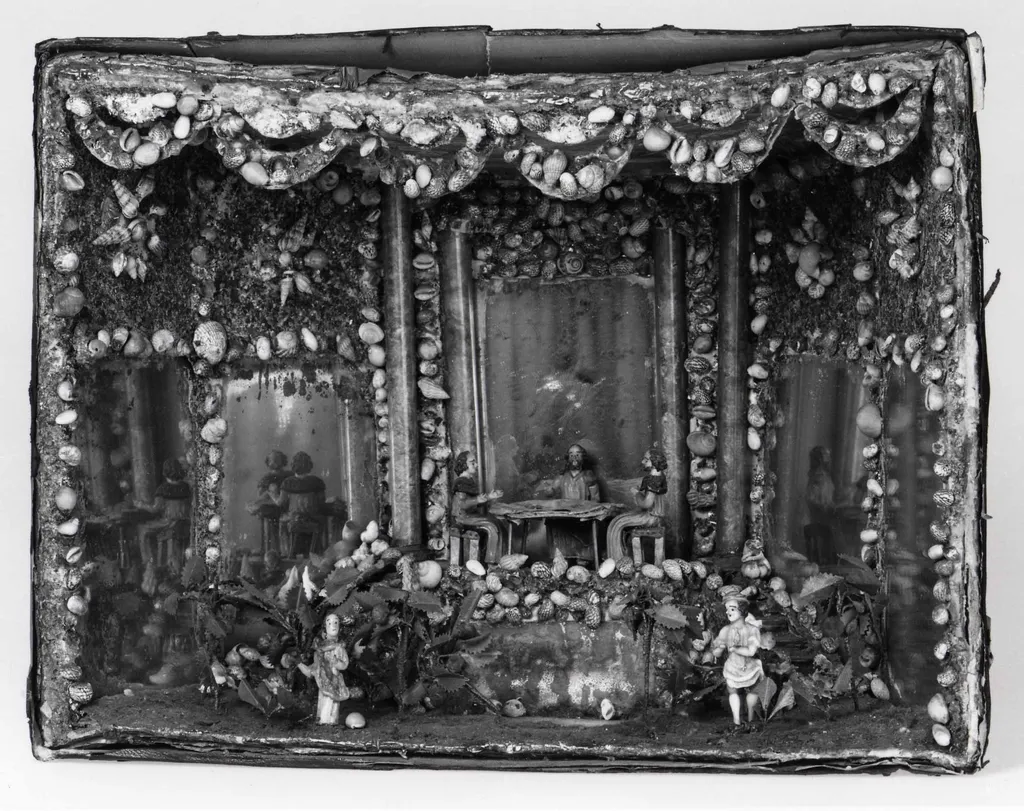
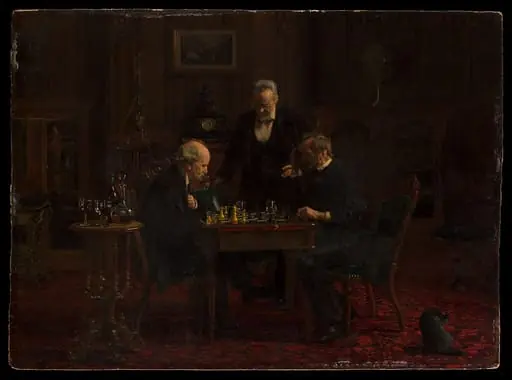
The Supper at Emmaus is an unspecified painting. It dates from 1750 and is held in the collection of the Metropolitan Museum of Art. This painting depicts a dimly lit interior where two figures are present: one seated at a table and another standing nearby.
About this work
History & Provenance
The work depicts the biblical scene of Christ appearing to two disciples during a meal, a subject central to its classification as religious art.
The Supper at Emmaus is an anonymous religious painting created in 1750. The work depicts the biblical scene of Christ appearing to two disciples during a meal, a subject central to its classification as religious art. Originally in the private collection of Robert Lehman, the painting was later acquired by the Metropolitan Museum of Art, New York, where it remains part of the holdings.
The specific artist remains unidentified, and the work dates to the mid-eighteenth century. No accession number is listed in the documentation, and the sources do not record any exhibition history for the artwork.
Legacy
The painting, dated 1750 and categorized as a religious work, entered the collection of Robert Lehman before being acquired by the Metropolitan Museum of Art. Its presence in a prominent public museum has positioned the work as a reference point for scholars studying 18th‑century religious imagery, and its depiction of Christ at a biblical meal continues to inform discussions of artistic representations of the Supper at Emmaus and its compositional treatment of light and gesture.
Overview
This painting depicts a dimly lit interior where two figures are present: one seated at a table and another standing nearby. The room's walls are distinguished by their covering of seashells and an uneven, dark texture, contributing to an aged atmosphere. Through a window, a small, elaborately dressed figure can be seen waving, adding an enigmatic element to the scene. The overall impression is one of dramatic contrasts and a sense of antiquity.
Technique & Style
The artist employs a dramatic lighting scheme, characterized by deep shadows and intense highlights, a technique known as chiaroscuro. This approach creates a strong visual impact and enhances the scene's somber mood. The textured surfaces, particularly the seashell-adorned walls and rough edges throughout the composition, contribute to a sense of age and wear. These stylistic choices collectively imbue the painting with a distinct, evocative character.
Subject & Meaning
Titled "The Supper at Emmaus," the painting presents an interior scene with two central figures, though their specific narrative roles are not detailed in the visual description. The choice of a worn, textured environment, combined with the dramatic lighting, suggests a contemplation of time and perhaps spiritual introspection. The small, waving figure observed through the window introduces an external element, creating a subtle tension between the enclosed, ancient interior and the world beyond.
Artist & collection

- Flower thread
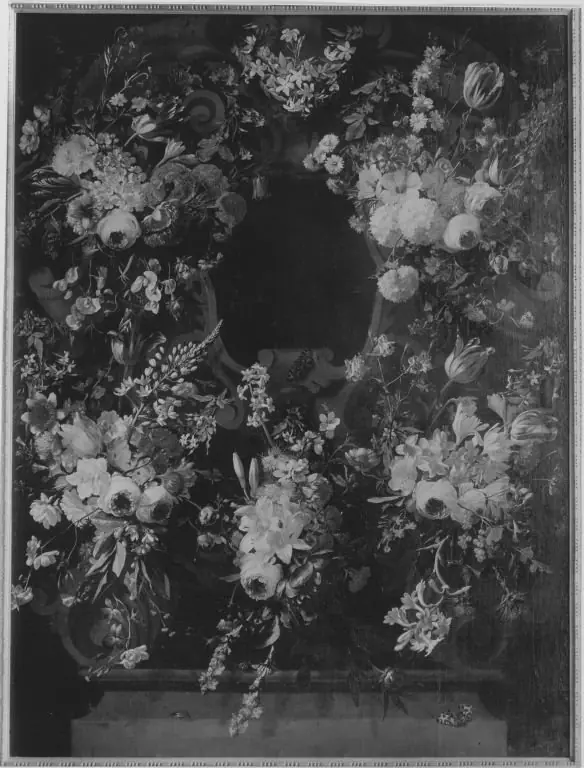 Flower Garland
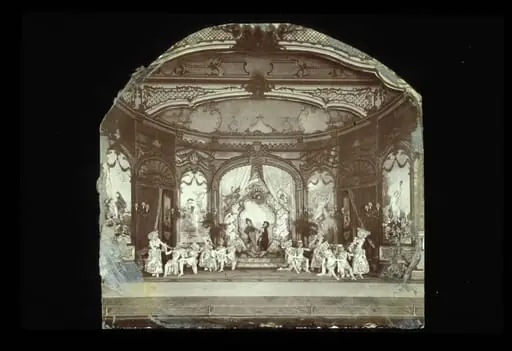 All the Year Round
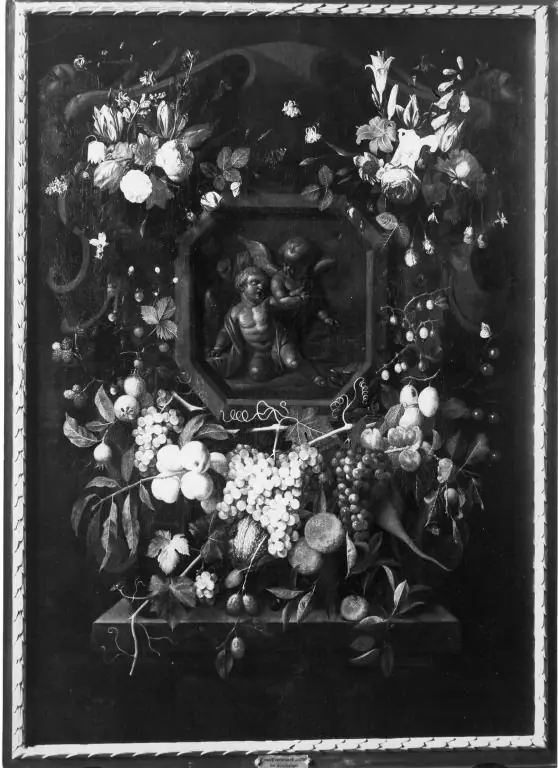 Früchtekranz mit Relief
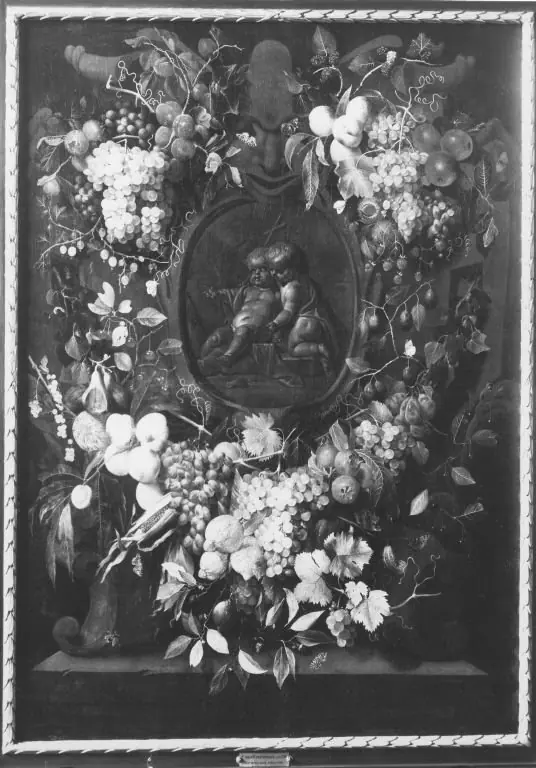 Früchtekranz mit dem Jesus- und Johannesknaben
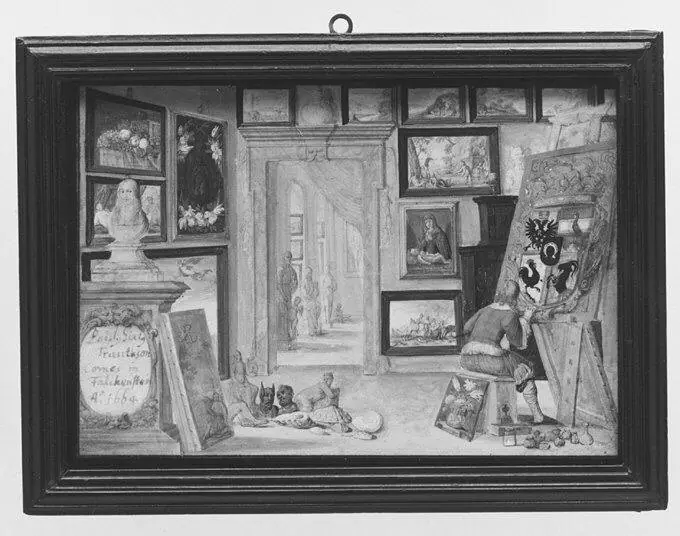 An Artist Painting a Heraldic Shield in a Cabinet of Curiosities
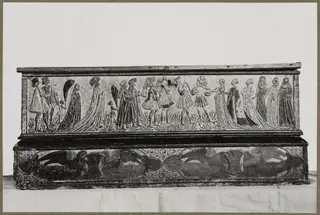 Excavations, 1869, Plan and View of a part of the Circus Maximus of the time of the Trajan, on the curve
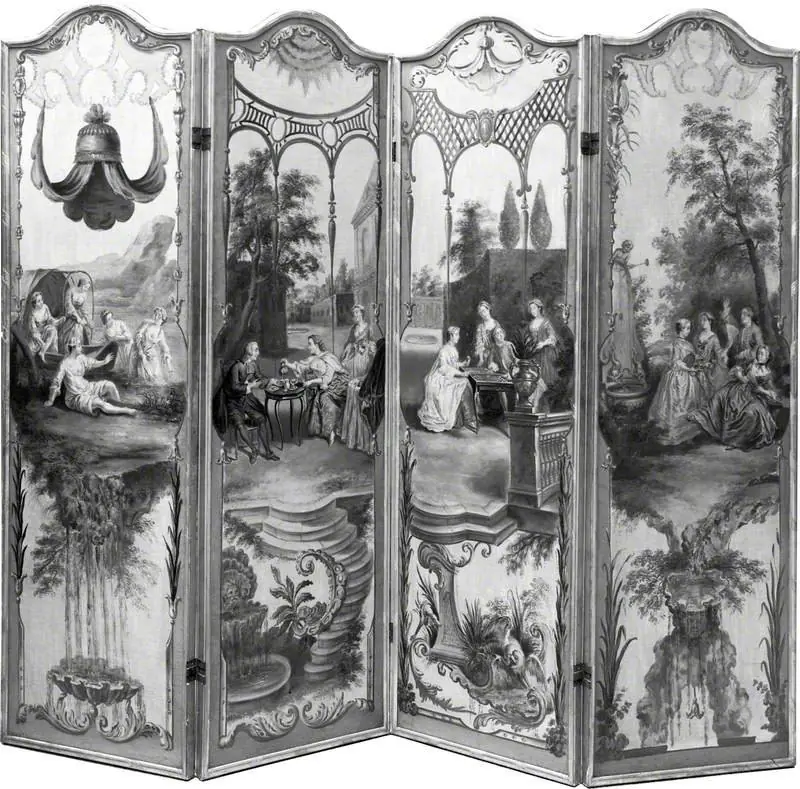 'Les quatre heures de jour' (folding screen)
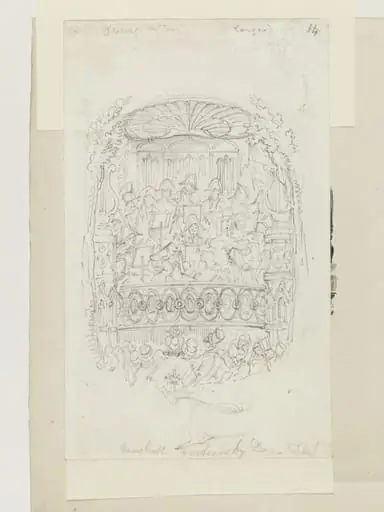 Vauxhall Gardens by Day
 Blumenstück
 Cartoon for the Back of a Tapestry Settee
 Screen