Artwork
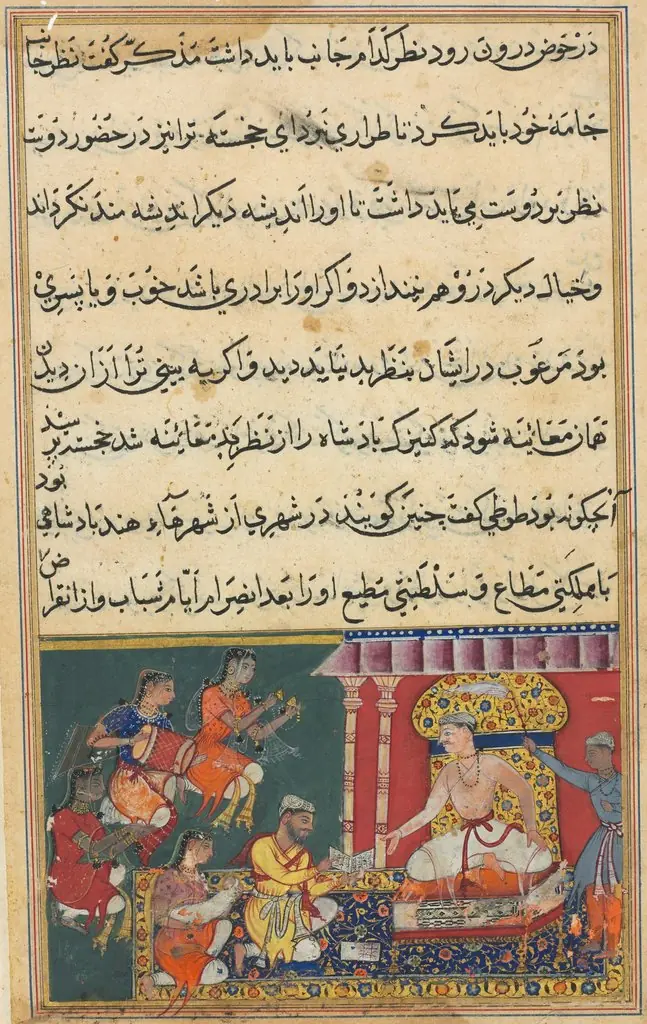
The two erring cooks, dressed as maidservants, fall at the prince’s feet and beg forgiveness, from a Tuti-nama (Tales of the Parrot): Fourth Night
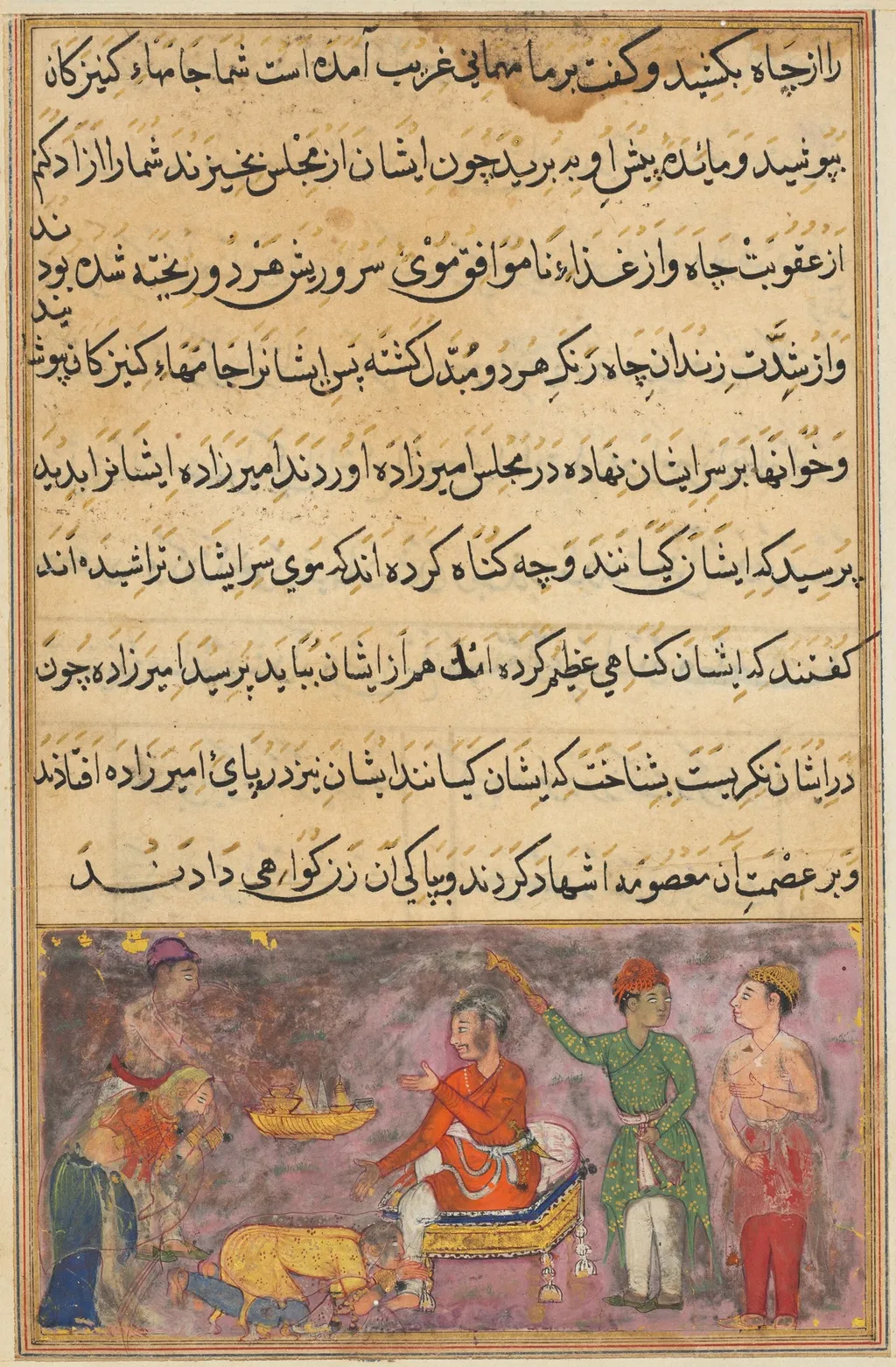
The two erring cooks, dressed as maidservants, fall at the prince’s feet and beg forgiveness, from a Tuti-nama (Tales of the Parrot): Fourth Night is an unspecified painting. It dates from 1560 and is held in the collection of the Cleveland Museum of Art. The work depicts a princely figure seated on an elevated chair, his attire dominated by vivid reds and whites.
About this work
History & Provenance
Created in 1560 within the Mughal Empire, this painting illustrates a scene from the fourth night of the Tuti-nama (Tales of the Parrot).
Created in 1560 within the Mughal Empire, this painting illustrates a scene from the fourth night of the Tuti-nama (Tales of the Parrot). The work was produced by an artist whose specific identity remains unrecorded in available documentation. Currently, the artwork is held in the collection of the Cleveland Museum of Art, where it is cataloged under the accession number 1962.279.30.a. The museum serves as both the current owner and the location where the piece is preserved.
Context
The miniature depicting the two erring cooks falling at a prince's feet in supplication is part of a 16th-century Persian manuscript tradition, specifically attributed to the Mughal imperial workshop and dated to 1560. It forms part of the fourth night illustration in the Tuti-nama, a work that synthesizes Persian narrative painting with Mughal patronage, reflecting the courtly aesthetic of the era. The piece is housed in the Cleveland Museum of Art, where it is catalogued under the accession number 1962.279.30.a and recognized as an example of Mughal miniature painting within the broader context of Indo-Persian artistic production.
Overview
The work depicts a princely figure seated on an elevated chair, his attire dominated by vivid reds and whites. In front of him, two men in striking green‑gold and red garments kneel, extending their hands in a gesture of supplication. Additional figures are positioned behind them, some standing, others crouching, while a small boat drifts in the distant water, situating the scene outdoors.
Subject & Meaning
The composition illustrates a moment of pleading, where the two kneeling individuals, identified as errant cooks disguised as maidservants, prostrate themselves before the prince, seeking pardon. The relaxed posture of the ruler contrasted with the desperate gestures of the supplicants conveys a narrative of mercy and forgiveness drawn from the fourth night of the Tuti‑nama, a collection of moral tales.
Technique & Style
Executed in a palette of warm hues, the painting employs rich reds, greens, and golds to emphasize the opulence of courtly dress and the emotional intensity of the scene. The figures are rendered with a linear clarity that highlights gestures, while the background water and boat are suggested with softer brushwork, creating a balanced spatial depth.
Artist & collection

- The two erring cooks, dressed as maidservants, fall at the prince’s feet and beg forgiveness, from a Tuti-nama (Tales of the Parrot): Fourth Night
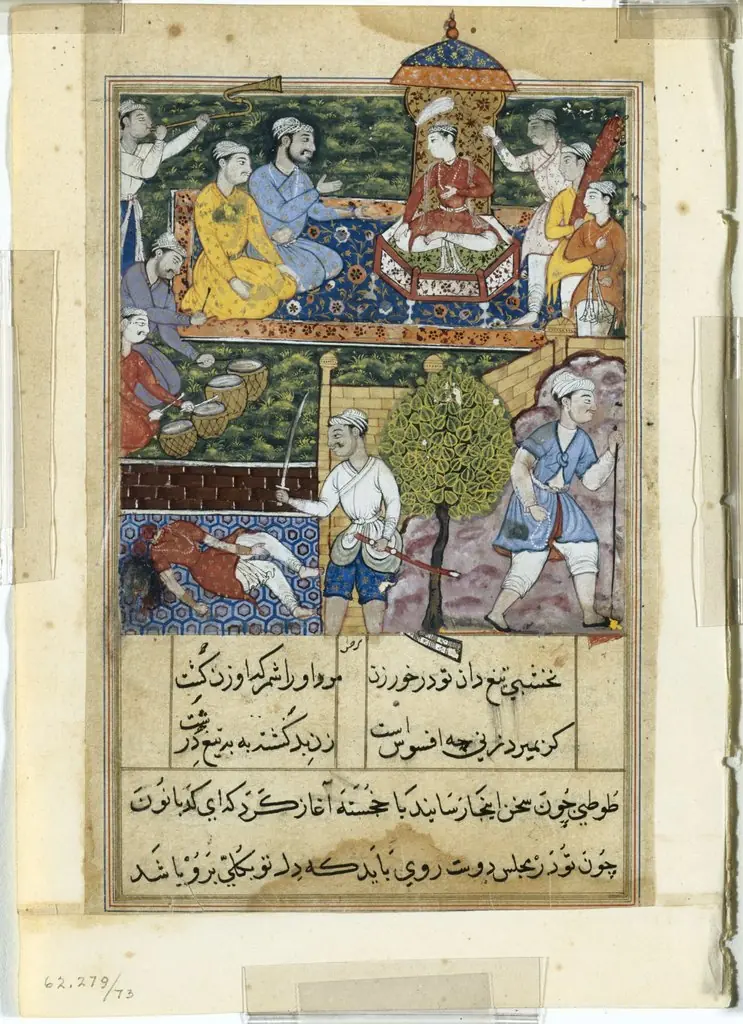 The young prince is crowned and the wicked handmaiden is executed, from a Tuti-nama (Tales of a Parrot): Eighth Night
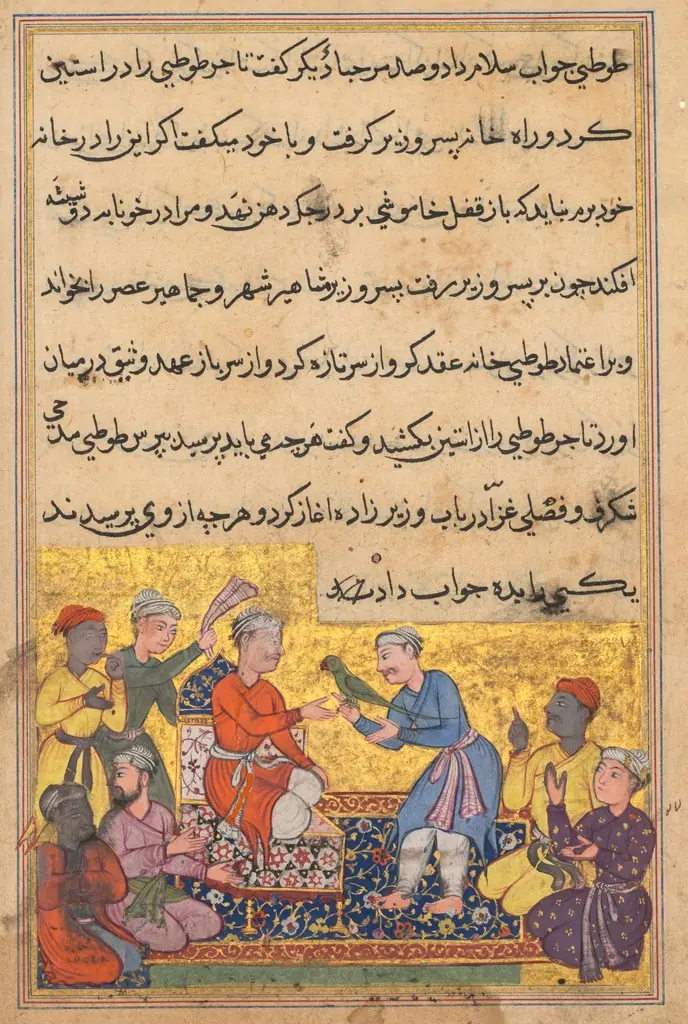 The magic parrot of the merchant talks to the vizier’s son, from a Tuti-nama (Tales of a Parrot): Tenth Night
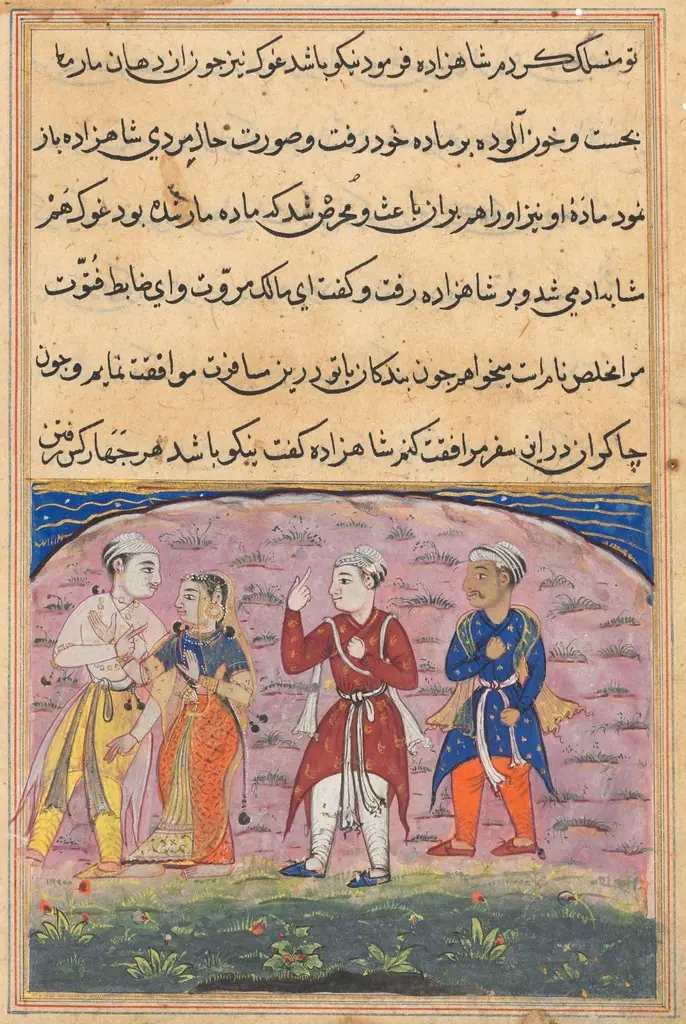 The prince and Nikfal are joined by Khalis and the Mukhlis who are the grateful snake and frog in human form, from a Tuti-nama (Tales of a Parrot): Eighteenth Night
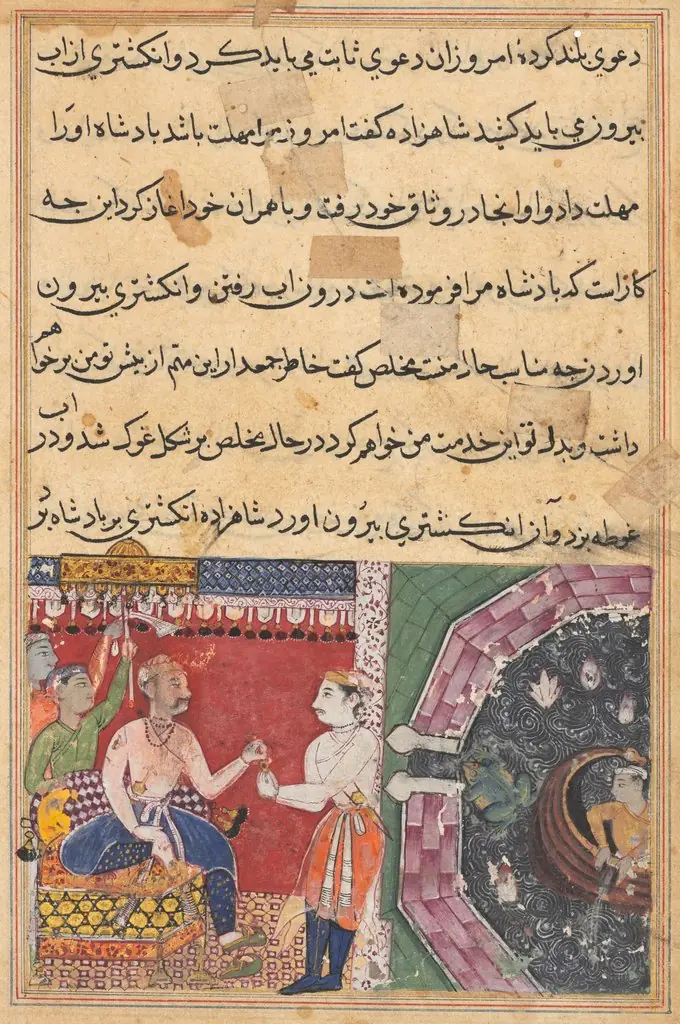 The prince, with the help of Mukhlis who changes into a frog, recovers the ring lost in the sea, and returns it to the king, from a Tuti-nama (Tales of a Parrot): Eighteenth Night
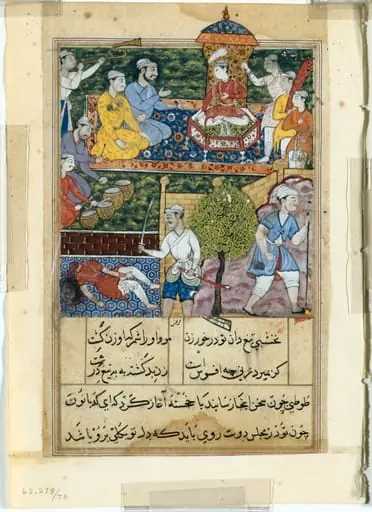 The young prince is crowned and the wicked handmaiden is executed, from a Tuti-nama (Tales of a Parrot): Eighth Night
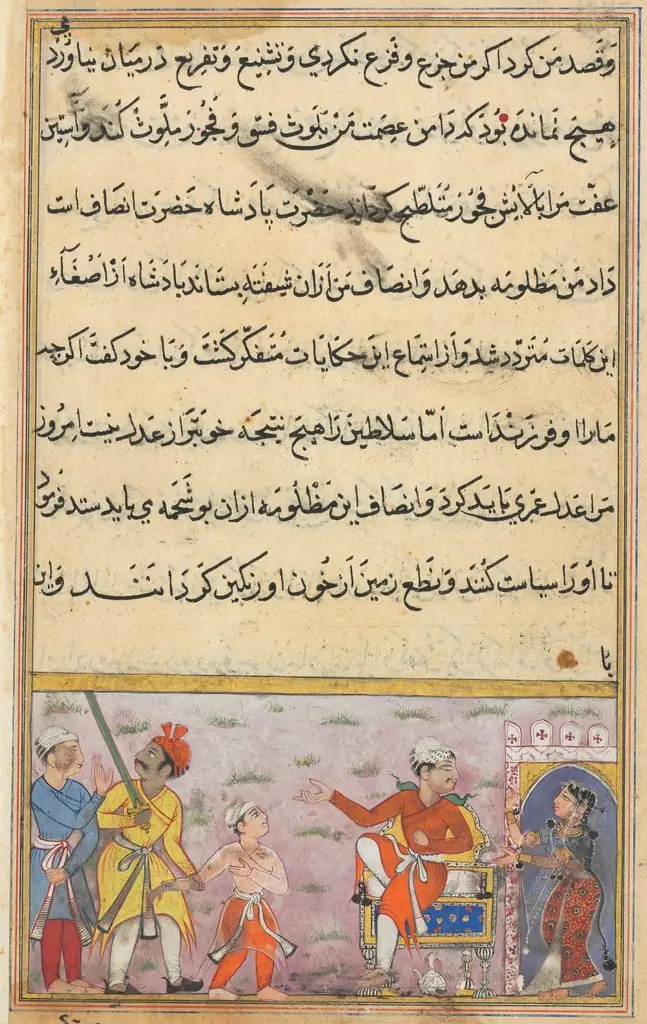 The prince being taken away for execution on the false complaint of the handmaiden, from a Tuti-nama (Tales of a Parrot): Eighth Night
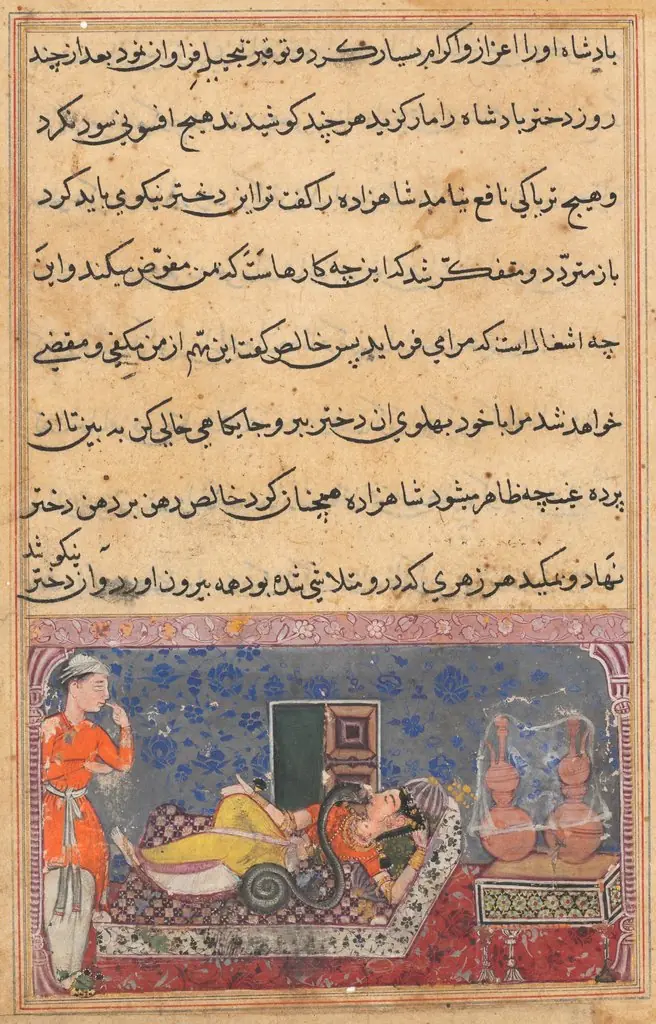 Khalis repays the prince for his kindness by changing into a snake and sucking the poison from the king’s daughter, from a Tuti-nama (Tales of a Parrot): Eighteenth Night
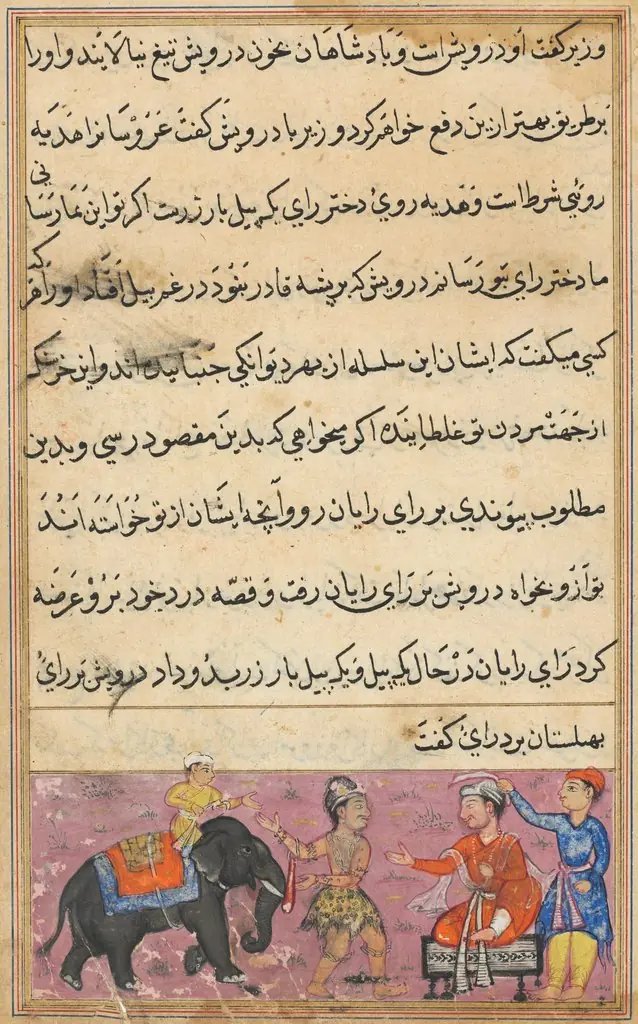 The dervish brings in as dowry an elephant laden with gold, from a Tuti-nama (Tales of a Parrot): Seventh Night
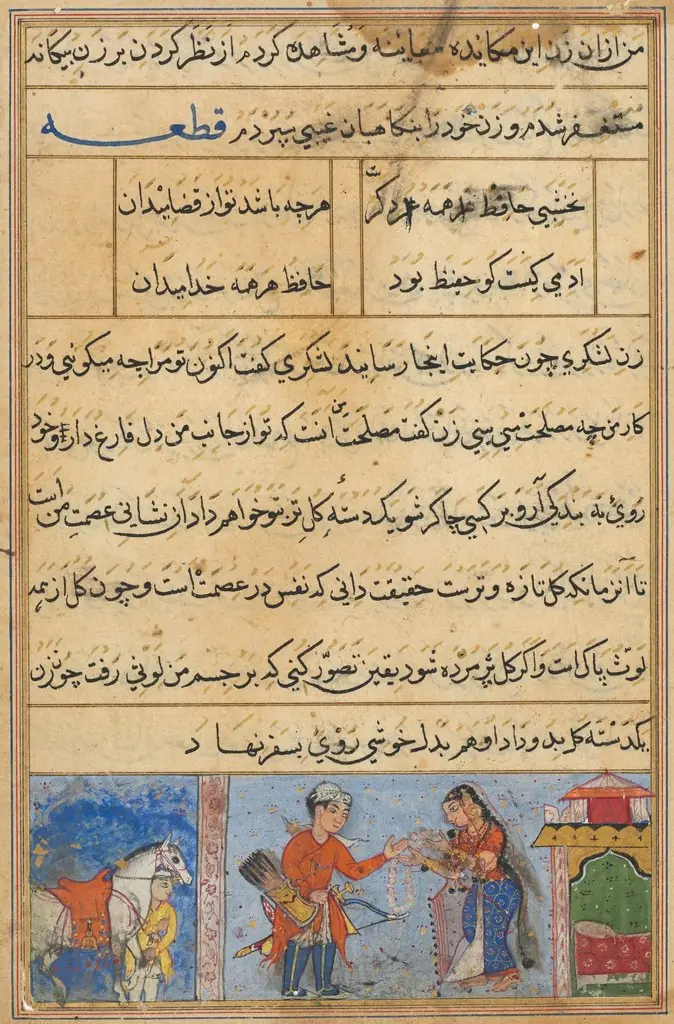 The soldier receives a garland of roses from his wife which will remain fresh as long as she is faithful, from a Tuti-nama (Tales of a Parrot): Fourth Night
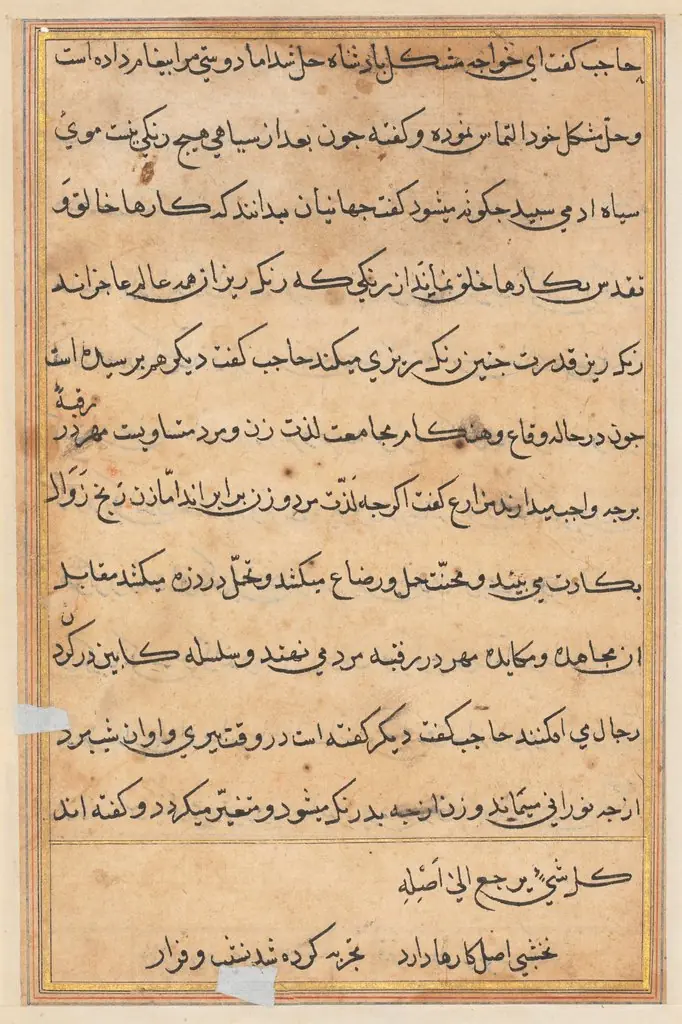 Page from Tales of a Parrot (Tuti-nama): text page
 The astrologer predicts a calamity for the newly born prince in his thirteenth year, but one which he would be able to overcome, from a Tuti-nama (Tales of a Parrot): Eighth Night