Artwork
The two erring cooks, dressed as maidservants, fall at the prince’s feet and beg forgiveness, from a Tuti-nama (Tales of the Parrot): Fourth Night
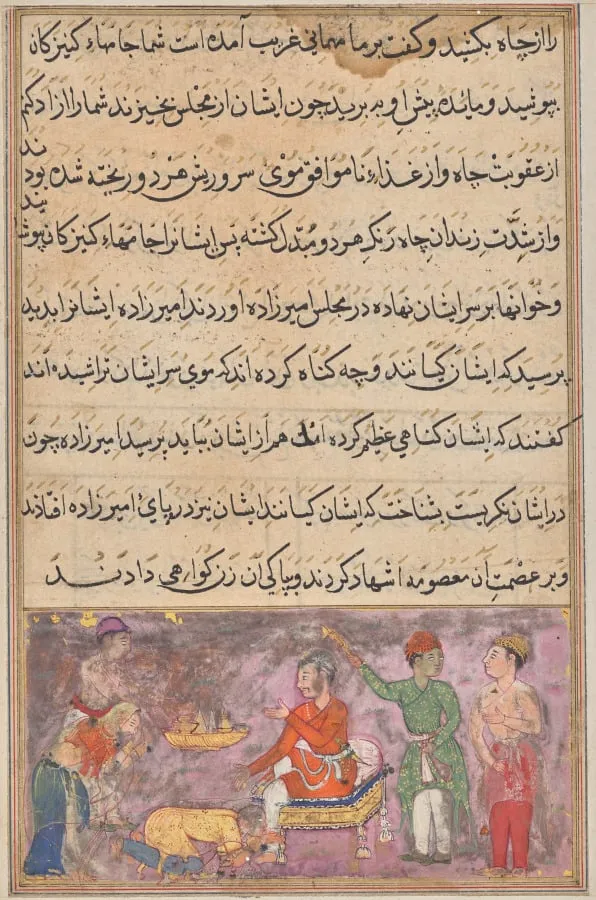
The two erring cooks, dressed as maidservants, fall at the prince’s feet and beg forgiveness, from a Tuti-nama (Tales of the Parrot): Fourth Night is an unspecified painting by the Mughal Painting artist Unknown. It dates from 1560 and is held in the collection of the Cleveland Museum of Art. This painting illustrates a scene from the Tuti-nama, a collection of tales told by a parrot, created for the Mughal emperor Akbar.
- Accession no.
- 1962.279.30.a
- Credit line
- Gift of Mrs. A. Dean Perry
About this work
The king’s cooks were sent to test a soldier’s wife, but she outsmarted them, shaved their heads, and made them dress as maids.
You see two men in women’s clothes kneeling before a king on a golden stool.
The painting is from a book of parrot tales told to Emperor Akbar. The king’s cooks were sent to test a soldier’s wife, but she outsmarted them, shaved their heads, and made them dress as maids. The bright yellow background was added later, so the colors look uneven now.
To see more stories like this, look up mughal india, court of akbar (reigned 1556–1605).
Overview
This painting illustrates a scene from the Tuti-nama, a collection of tales told by a parrot, created for the Mughal emperor Akbar. It depicts two cooks, disguised as maidservants, kneeling before a prince.
Subject & Meaning
The scene shows the cooks, having failed to seduce a soldier's wife, being humiliated and brought before the prince. The wife had outwitted them, shaving their heads and dressing them in women's attire as punishment.
Technique & Style
The painting features a prince seated on a stool, with the two cooks kneeling before him. The original yellow background was later altered to lavender, resulting in uneven coloration. The composition reflects the blending of artistic styles from various regions of India, brought together by Akbar's patronage.
History & Provenance
The Tuti-nama manuscript was produced in Akbar's court, where artists from different parts of India worked together. The Cleveland Museum of Art holds the majority of the manuscript's folios, making it a crucial resource for understanding the development of Mughal painting.
Artist & collection









 The two erring cooks, dressed as maidservants, fall at the prince’s feet and beg forgiveness, from a Tuti-nama (Tales of the Parrot): Fourth Night
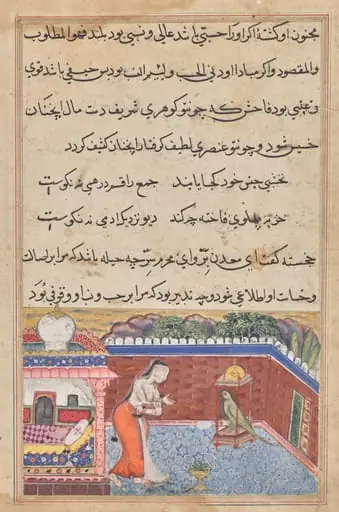 The parrot addresses Khujasta at the beginning of the thirty-first night, from a Tuti-nama (Tales of a Parrot)
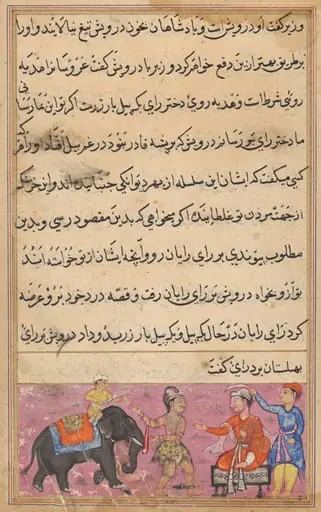 The dervish brings in as dowry an elephant laden with gold, from a Tuti-nama (Tales of a Parrot): Seventh Night
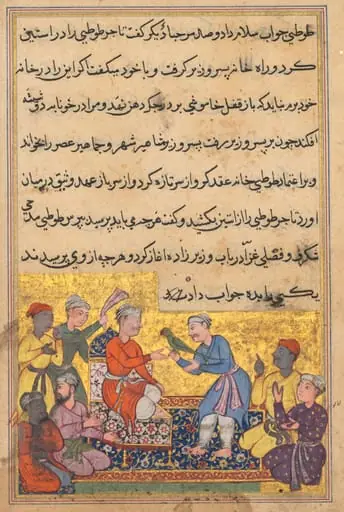 The magic parrot of the merchant talks to the vizier’s son, from a Tuti-nama (Tales of a Parrot): Tenth Night
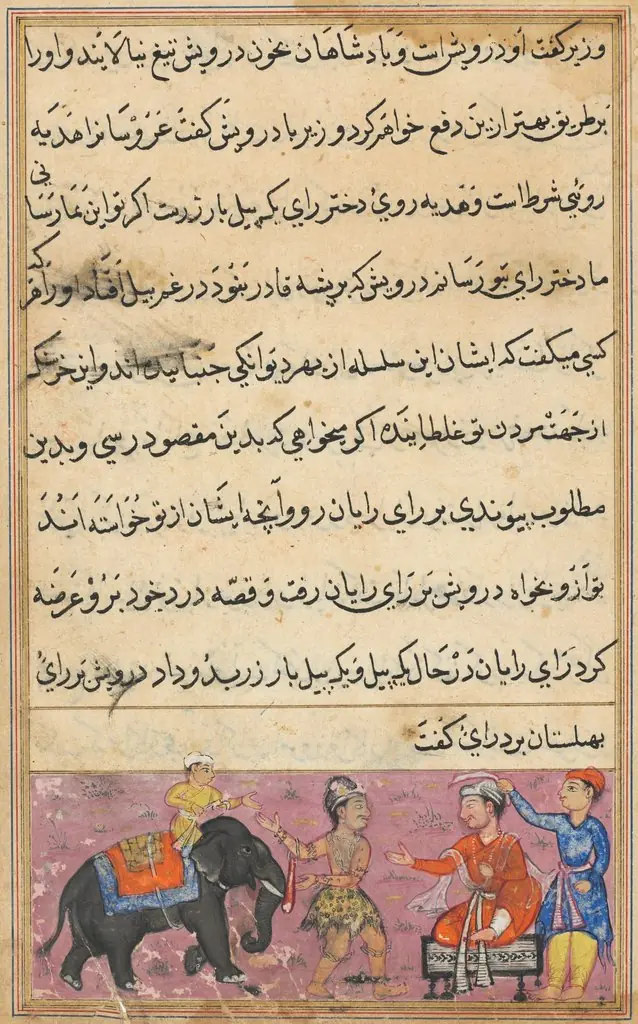 The dervish brings in as dowry an elephant laden with gold, from a Tuti-nama (Tales of a Parrot): Seventh Night
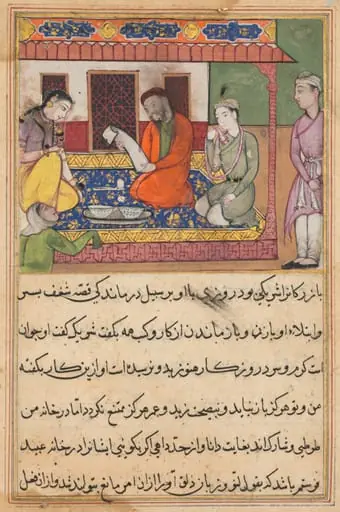 The marriage of ‘Ubaid, son of a merchant of Tirmiz, from a Tuti-nama (Tales of a Parrot): Forty-second Night
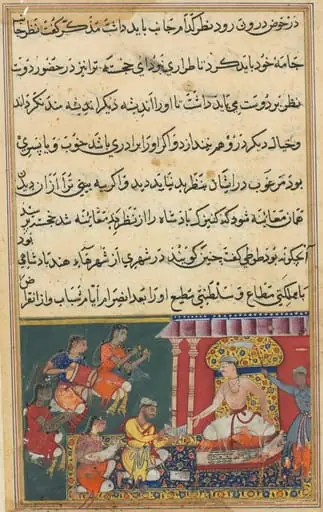 The astrologer predicts a calamity for the newly born prince in his thirteenth year, but one which he would be able to overcome, from a Tuti-nama (Tales of a Parrot): Eighth Night
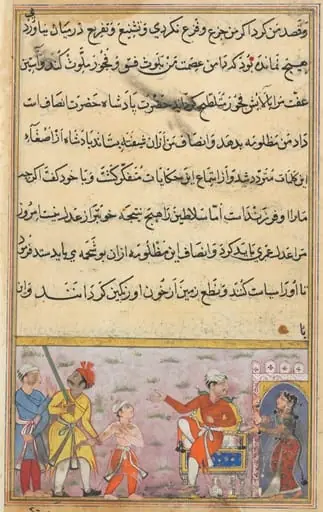 The prince being taken away for execution on the false complaint of the handmaiden, from a Tuti-nama (Tales of a Parrot): Eighth Night