Artwork
The astrologer predicts a calamity for the newly born prince in his thirteenth year, but one which he would be able to overcome, from a Tuti-nama (Tales of a Parrot): Eighth Night
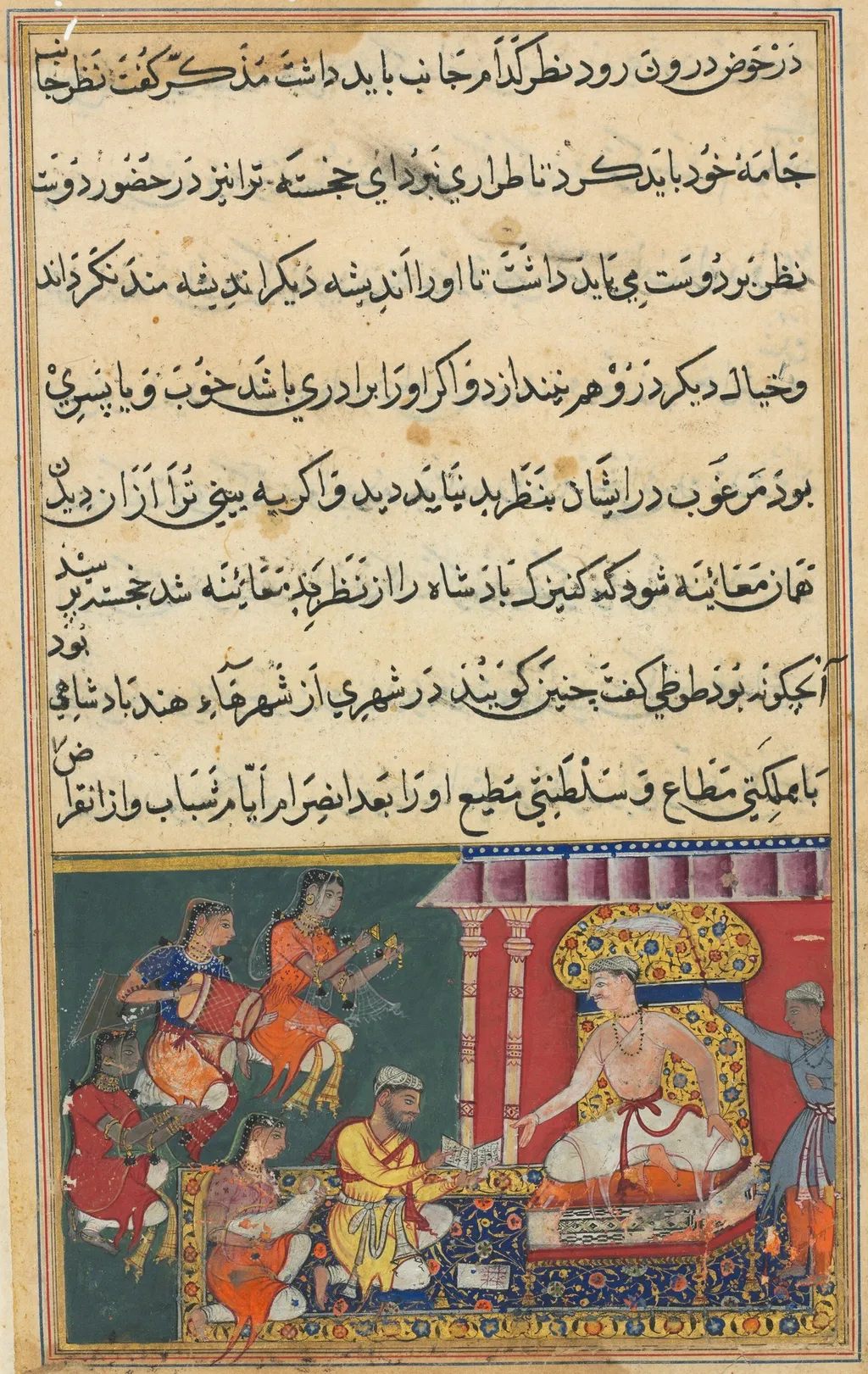
The astrologer predicts a calamity for the newly born prince in his thirteenth year, but one which he would be able to overcome, from a Tuti-nama (Tales of a Parrot): Eighth Night is an unspecified painting. It dates from 1560 and is held in the collection of the Cleveland Museum of Art. The painting illustrates a festive court scene taken from the eighth night of the Tuti‑nama (Tales of a Parrot).
About this work
Subject & Meaning
The subject centers on the interaction between the seer and the infant, highlighting a narrative of foretold hardship coupled with eventual triumph.
The painting illustrates a scene from the Tuti-nama in which an astrologer foretells a calamity that will befall a newborn prince in his thirteenth year, yet assures that the prince will overcome this adversity. The subject centers on the interaction between the seer and the infant, highlighting a narrative of foretold hardship coupled with eventual triumph. Symbolically, the prophecy conveys themes of fate and destiny, while the assurance of overcoming the calamity suggests resilience and the human capacity to confront and surmount predetermined challenges.
Technique & Style
The miniature is executed in paint on paper, forming the visual narrative of the eighth night of the Tuti-nama. The work belongs to the Mughal painting tradition of the mid-sixteenth century, as indicated by its classification and dated creation in 1560. The composition demonstrates a refined handling of line and subtle gradations of colour, typical of courtly manuscript illumination from that period.
History & Provenance
The painting was created in 1560 as part of the Tuti-nama (Tales of a Parrot) manuscript, a Persian literary work adapted into a visual narrative. Its creation is attributed to an unidentified artist active during the Mughal period in South Asia.
The work has been part of the Cleveland Museum of Art’s collection since at least 1962, where it is cataloged under accession number 1962.279.52.b. No earlier ownership history or commissioning details are documented in available sources.
The work is part of the Cleveland Museum of Art's collection, cataloged under accession number 1962.279.52.b. It was created in 1560 and has been exhibited at the museum as part of its South Asian art holdings, though specific exhibition records are not detailed in the source.
Overview
The painting illustrates a festive court scene taken from the eighth night of the Tuti‑nama (Tales of a Parrot). A king seated on a gilded throne, scantily clad and holding a serving tray, is surrounded by musicians, dancers and onlookers in vivid garments. A scholar in yellow reads aloud, while a woman in orange spins, all set against a deep red curtain and a decorative striped border.
Context
Courtly manuscripts such as this served both educational and decorative purposes, reinforcing dynastic legitimacy by linking rulers to prophetic wisdom. The scene reflects a cultural milieu in which astrology, literature and performance converged to articulate royal authority and communal resilience.
Artist & collection

- The astrologer predicts a calamity for the newly born prince in his thirteenth year, but one which he would be able to overcome, from a Tuti-nama (Tales of a Parrot): Eighth Night
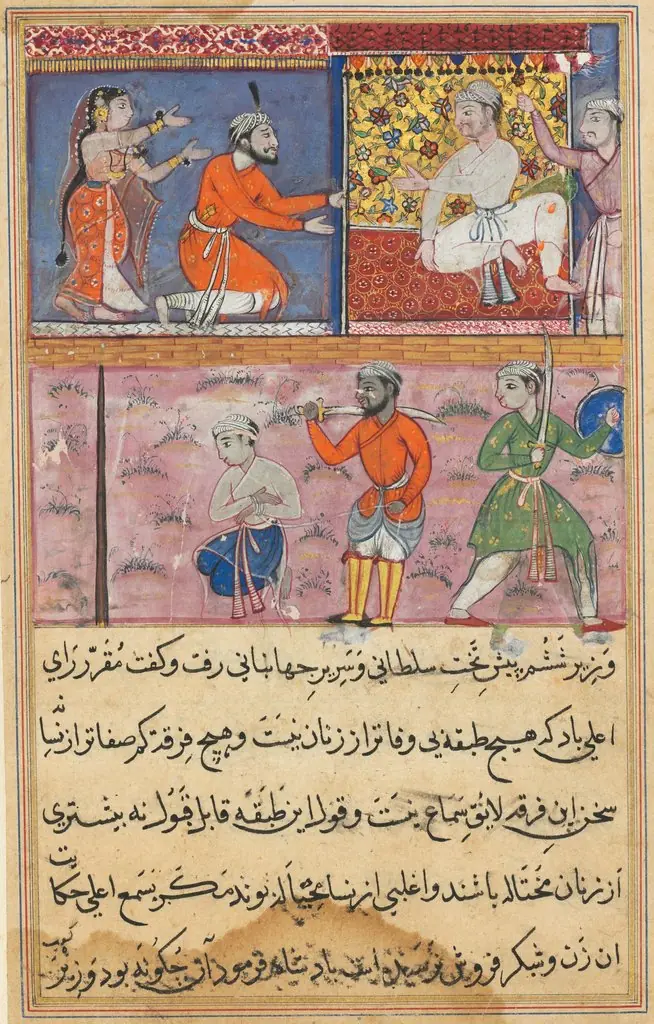 The prince sent back to the place of execution for the sixth time, from a Tuti-nama (Tales of a Parrot): Eighth Night
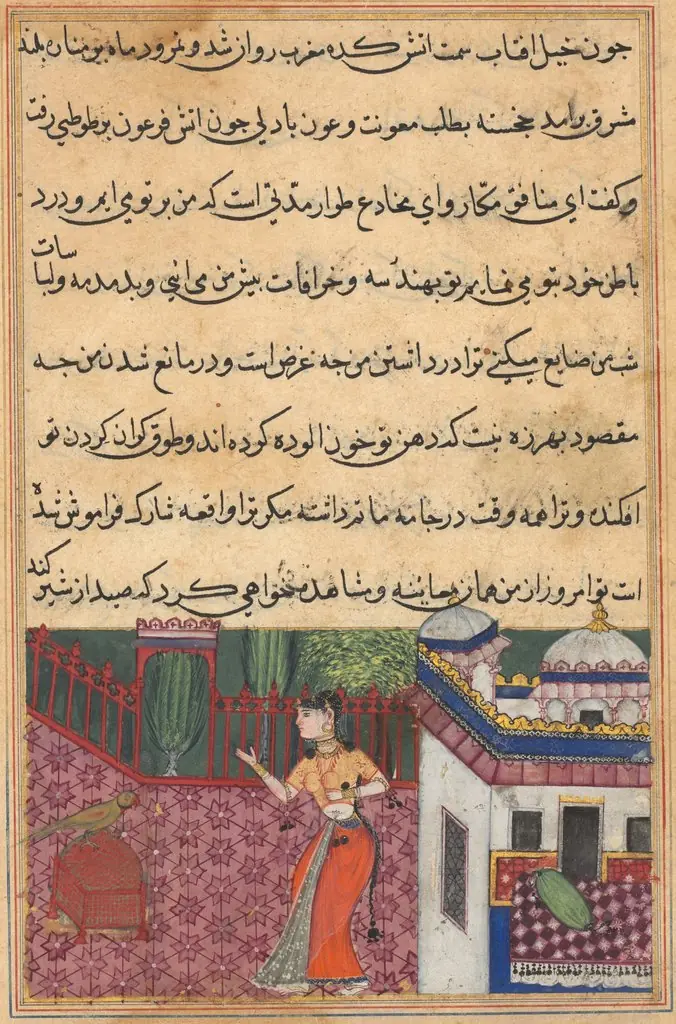 The parrot addresses Khujasta at the beginning of the thirty-third night, from a Tuti-nama (Tales of a Parrot)
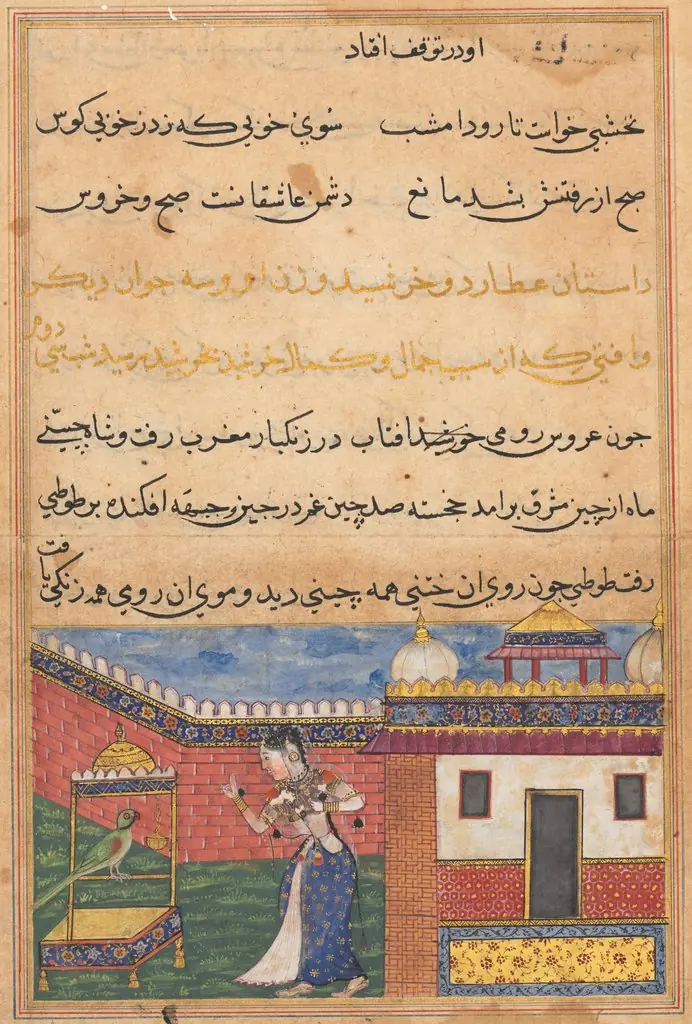 The parrot addresses Khujasta at the beginning of the thirty-second night, from a Tuti-nama (Tales of a Parrot)
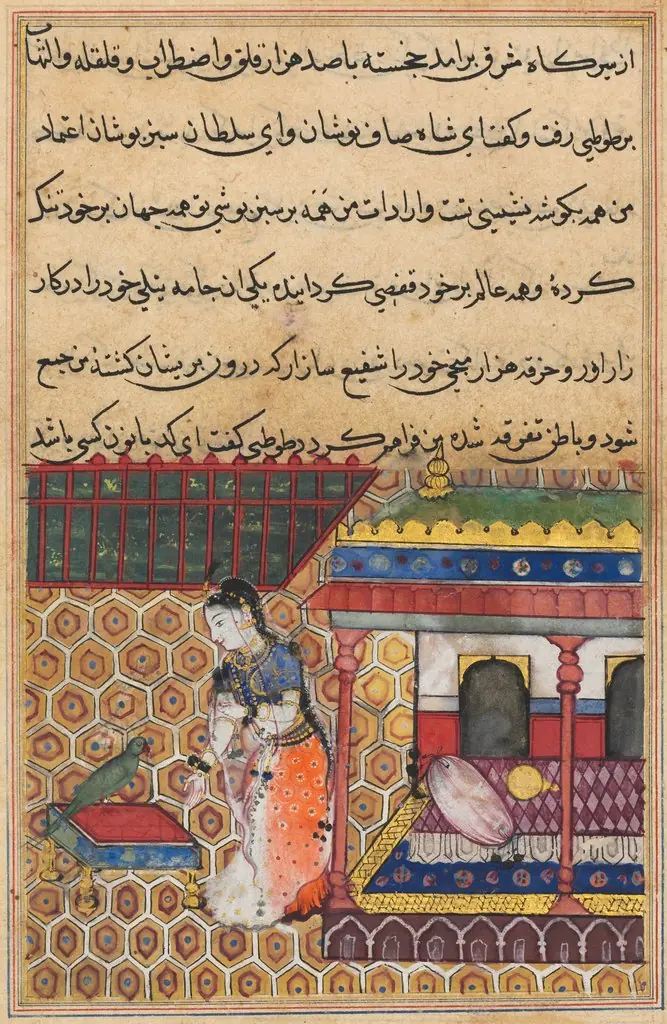 The parrot addresses Khujasta at the beginning of the thirty-eighth night, from a Tuti-nama (Tales of a Parrot)
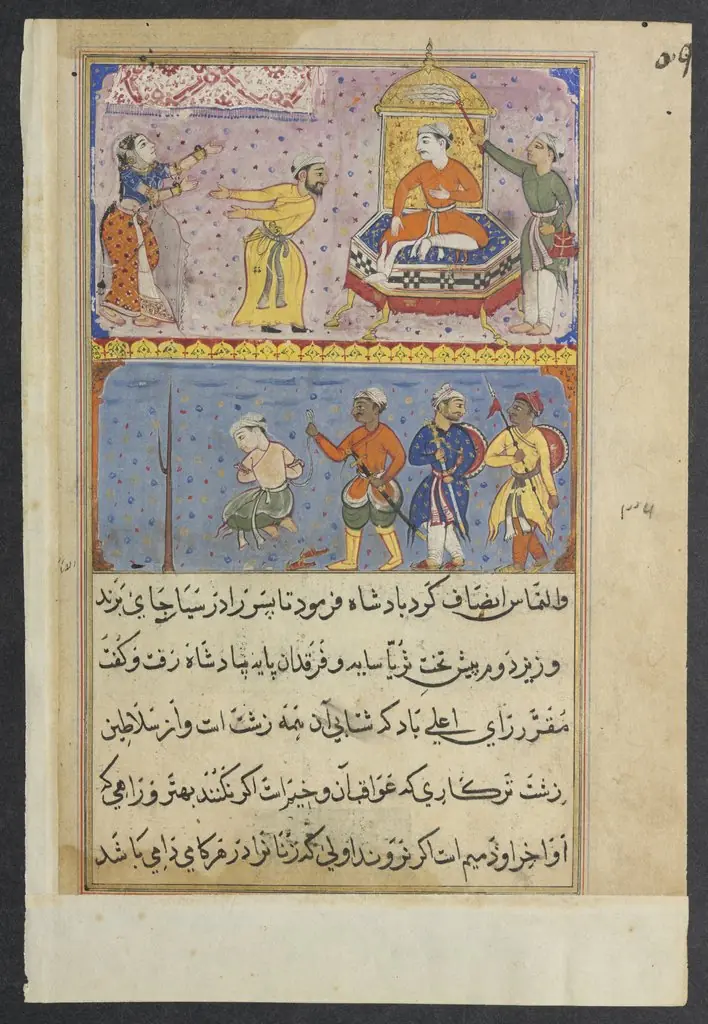 The prince, once reprieved, is returned to the palace of execution a second time on the plea of the king’s handmaiden, from a Tuti-nama (Tales of a Parrot): Eighth Night
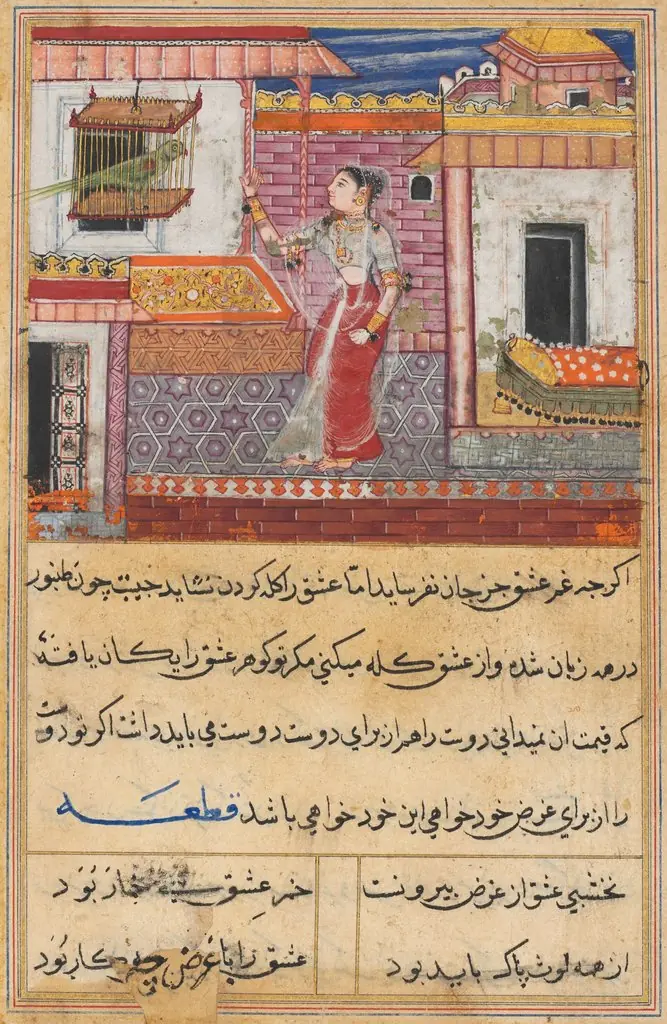 The Parrot Addresses Khujasta at the Beginning of the Thirteenth Night, from a Tuti-nama (Tales of a Parrot)
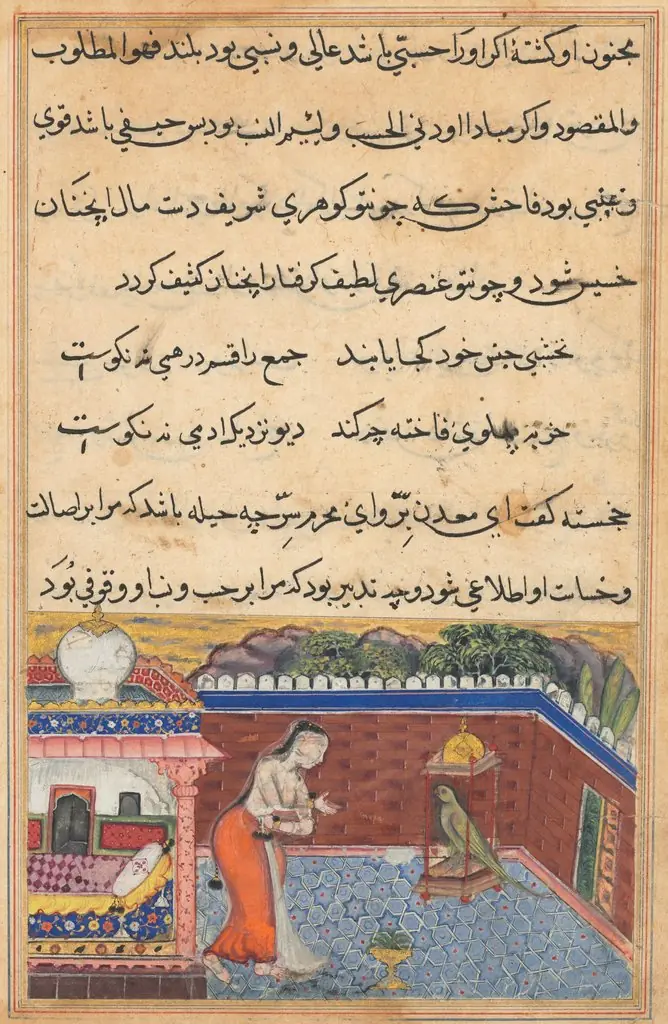 The parrot addresses Khujasta at the beginning of the thirty-first night, from a Tuti-nama (Tales of a Parrot)
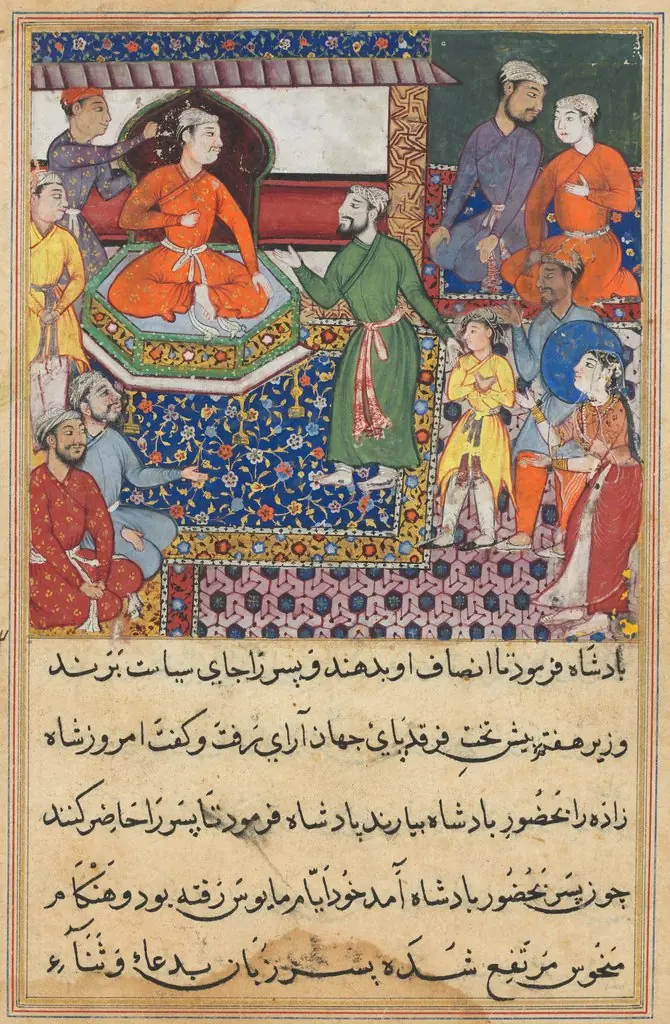 The handmaiden again pleads for the death of the prince, from a Tuti-nama (Tales of a Parrot): Eighth Night
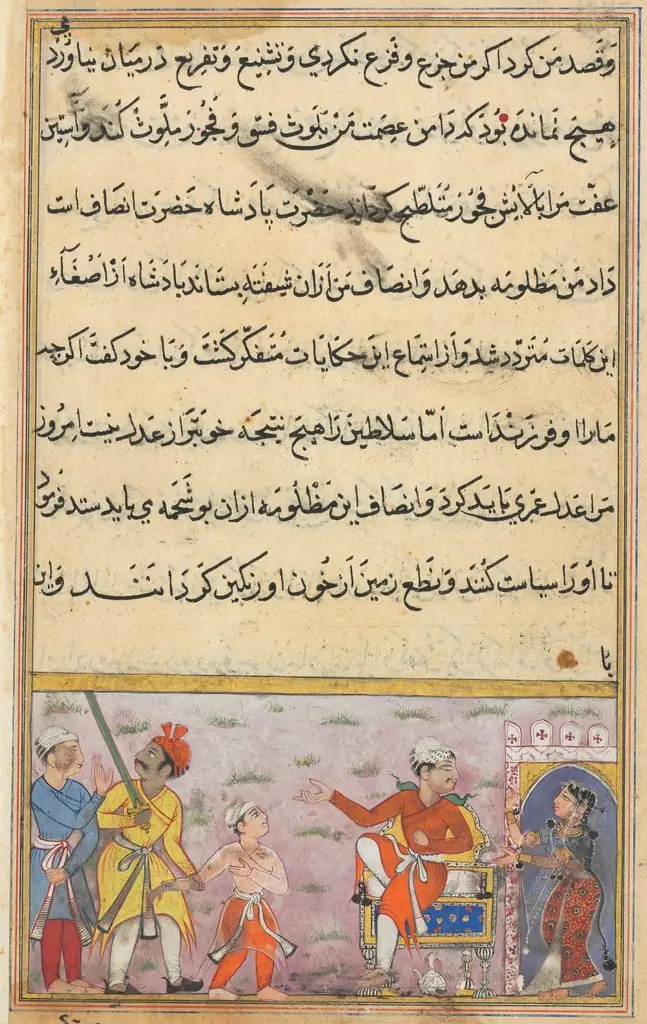 The prince being taken away for execution on the false complaint of the handmaiden, from a Tuti-nama (Tales of a Parrot): Eighth Night
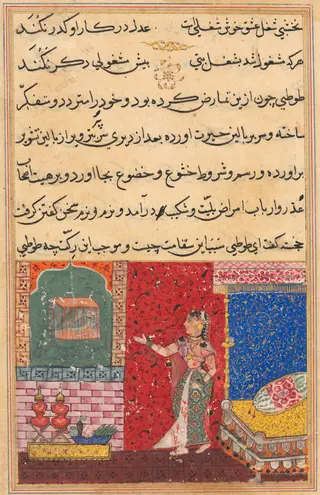 The Parrot Addresses Khujasta at the Beginning of the Fifteenth Night, from a Tuti-nama (Tales of a Parrot)
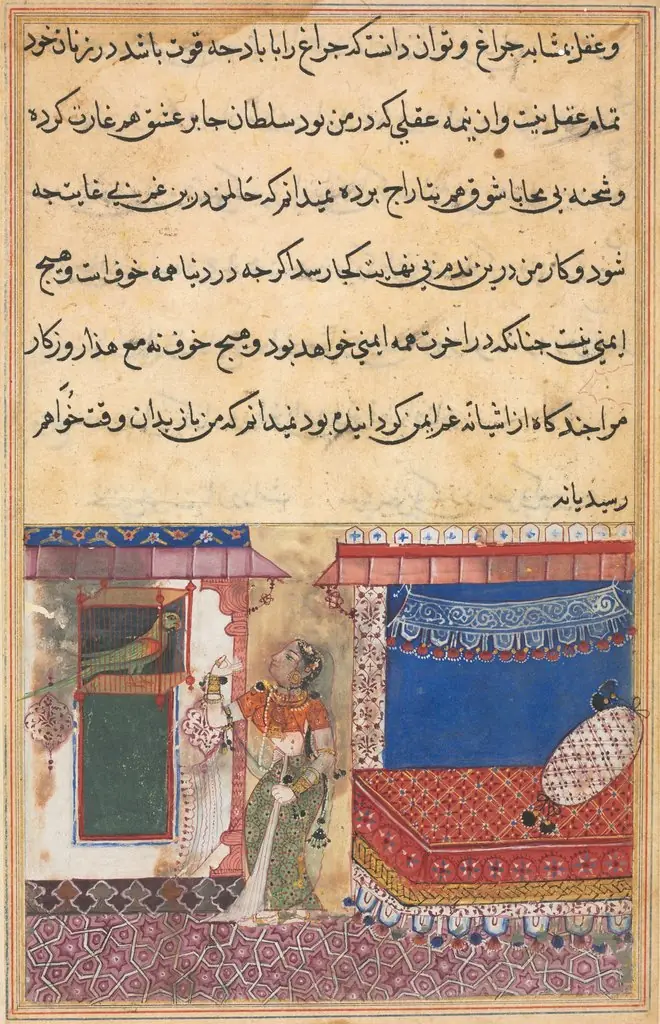 The Parrot Addresses Khujasta at the Beginning of the Eighteenth Night, from a Tuti-nama (Tales of a Parrot)
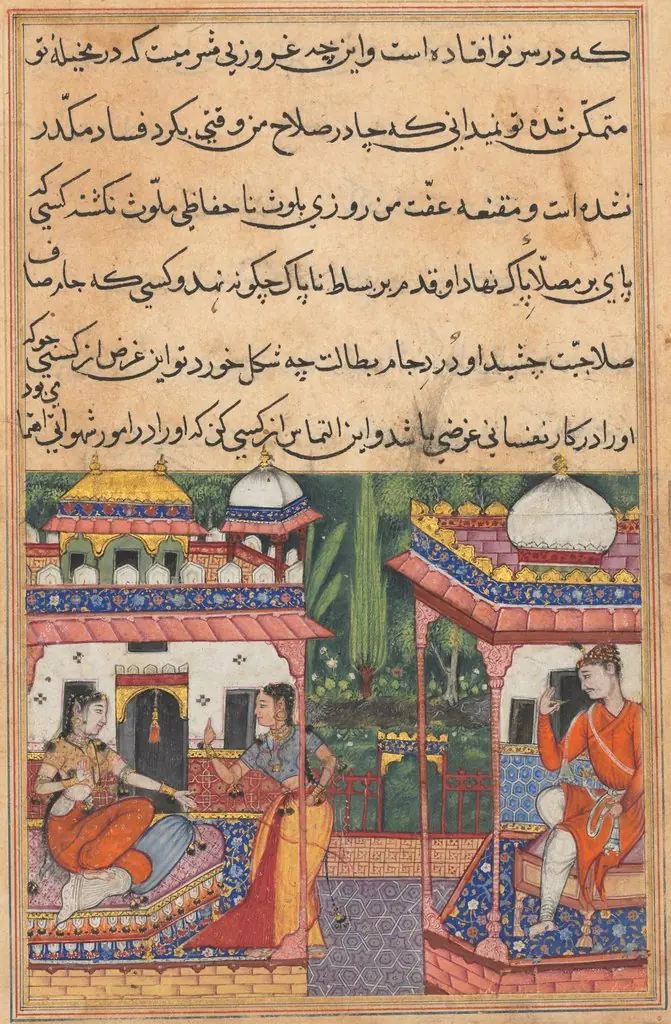 Kaiwan sends a message of love to Khurshid, wife of his brother Utarid who is away on a journey, from a Tuti-nama (Tales of a Parrot): Thirty-second Night
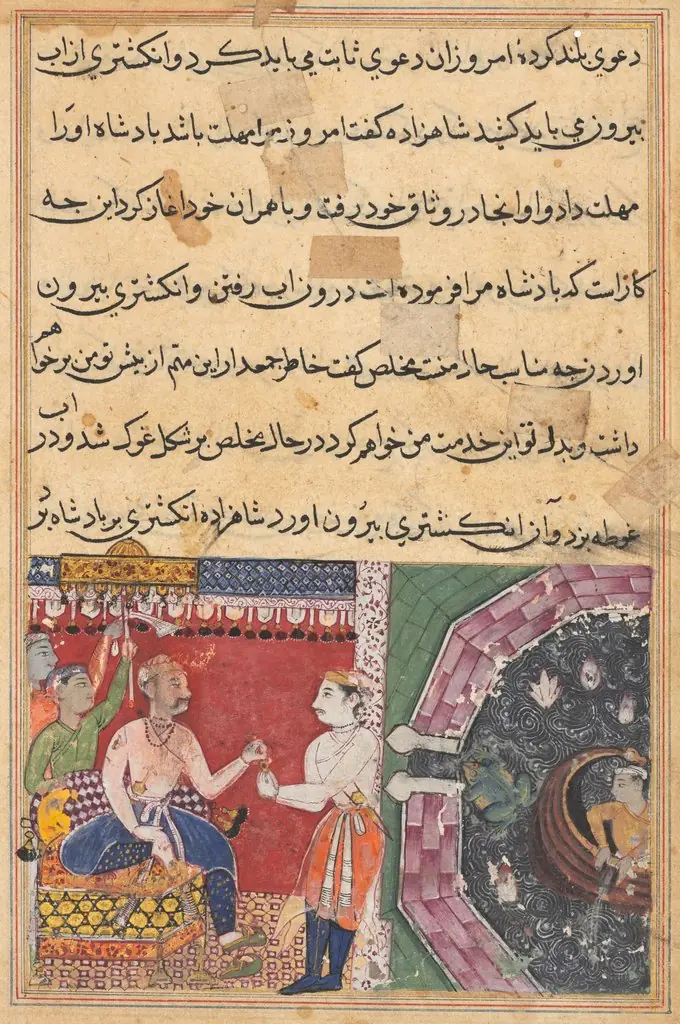 The prince, with the help of Mukhlis who changes into a frog, recovers the ring lost in the sea, and returns it to the king, from a Tuti-nama (Tales of a Parrot): Eighteenth Night
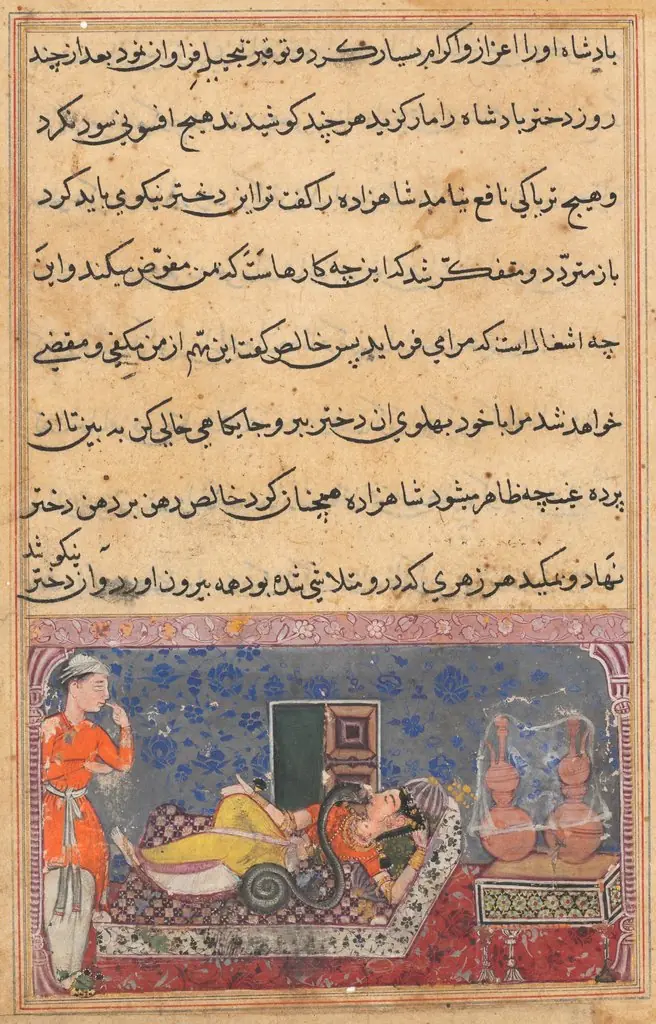 Khalis repays the prince for his kindness by changing into a snake and sucking the poison from the king’s daughter, from a Tuti-nama (Tales of a Parrot): Eighteenth Night
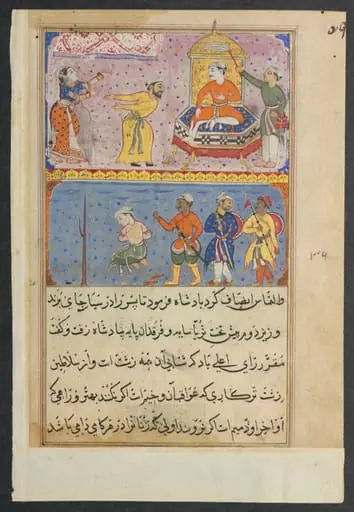 The prince, once reprieved, is returned to the palace of execution a second time on the plea of the king’s handmaiden, from a Tuti-nama (Tales of a Parrot): Eighth Night
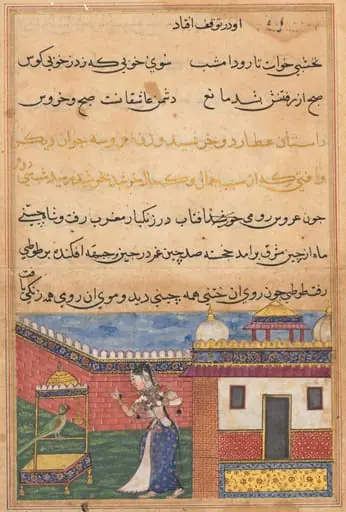 The parrot addresses Khujasta at the beginning of the thirty-second night, from a Tuti-nama (Tales of a Parrot)
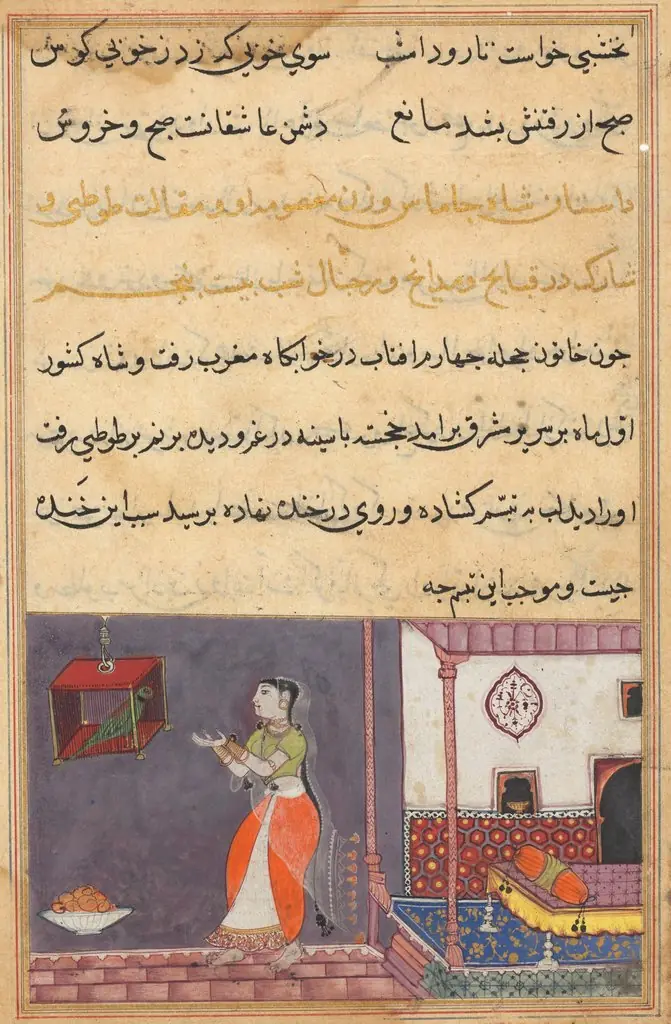 The Parrot Addresses Khujasta at the Beginning of the Twenty-fifth Night, from a Tuti-nama (Tales of a Parrot)
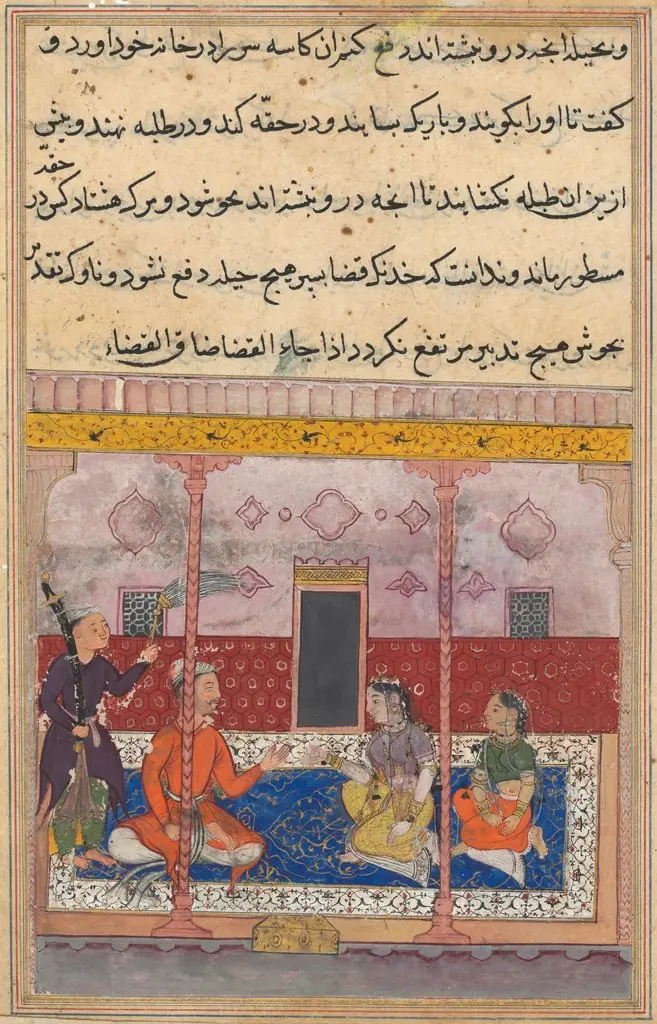 The merchant has the hateful skull ground and put into a box, from a Tuti-nama (Tales of a Parrot): Twenty-third Night