Artwork
Triptych with Christ, the Virgin, and St. John the Evangelist
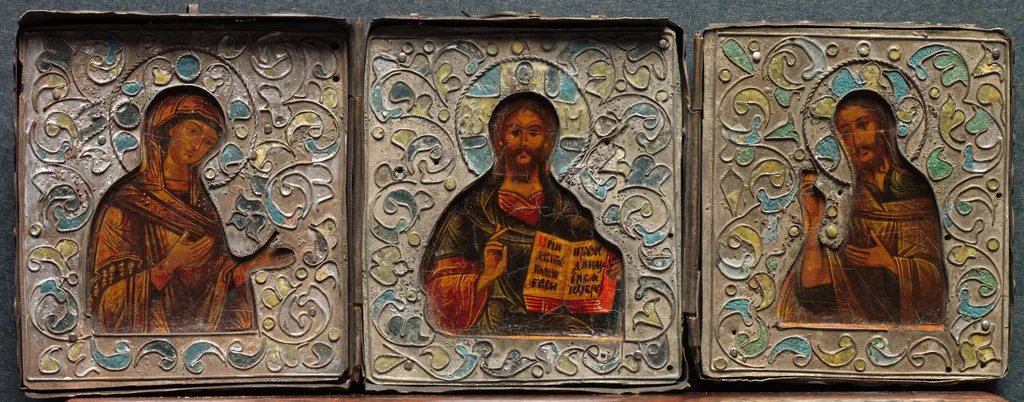
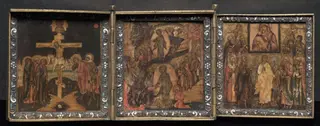
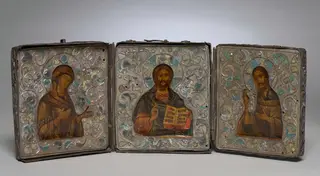
Triptych with Christ, the Virgin, and St. John the Evangelist is an unspecified painting. It dates from 1849 and is held in the collection of the Cleveland Museum of Art. The work is a painted triptych set within a three‑section metal case.
About this work
History & Provenance
This number indicates that the object entered the museum’s collection in 1918 and has remained part of its permanent holdings since then.
The triptych depicting Christ, the Virgin, and St. John the Evangelist was created in 1849. The work is attributed to an unknown artist. It entered the collection of the Cleveland Museum of Art, where it is held under the accession number 1918.404, indicating its acquisition by the institution in 1918.
No further details regarding its specific commission, earlier ownership history, or the circumstances of its creation prior to entering the museum's collection are provided in the available records.
The triptych is housed in the Cleveland Museum of Art in Cleveland, Ohio, where it bears the accession number 1918.404. This number indicates that the object entered the museum’s collection in 1918 and has remained part of its permanent holdings since then. The available sources do not record any temporary exhibitions, loans, or public displays of the work outside the museum, so no exhibition history is documented for this piece.
Legacy
The work remained in the artist’s estate until 1918, when it entered the collection of the Cleveland Museum of Art, where it is cataloged as 1918.404. Its religious subject matter reflects 19th‑century devotional painting traditions, and scholars have cited it as an example of late‑Romantic iconography in American museum holdings.
The triptych’s provenance and acquisition contributed to the museum’s early modern religious art acquisitions, influencing subsequent interpretations of 19th‑century devotional works in the United States.
Overview
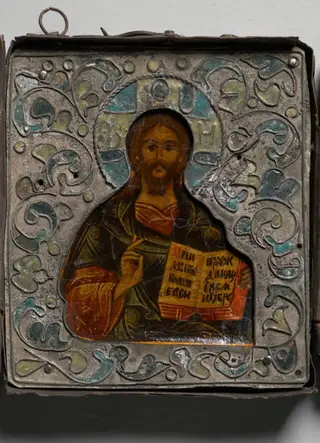
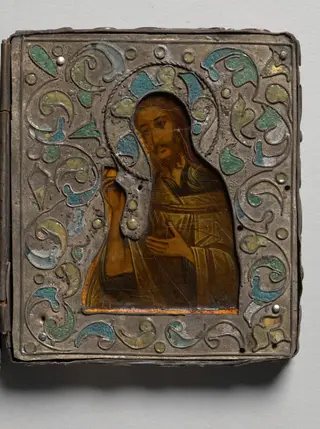
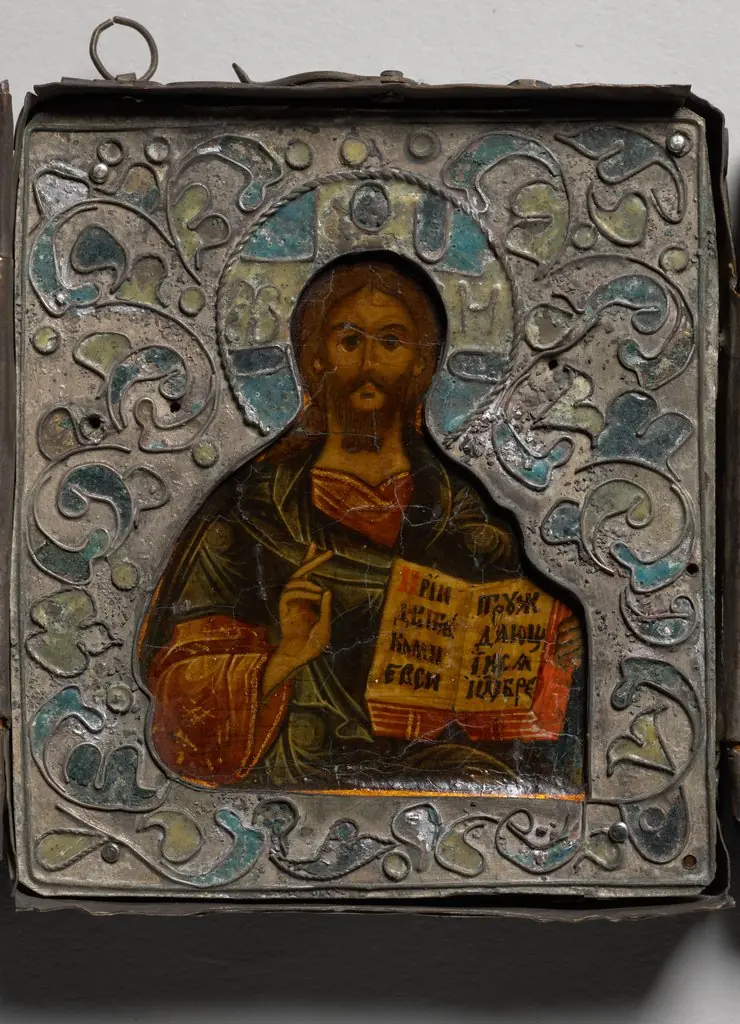
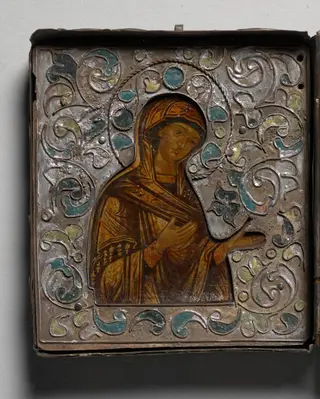
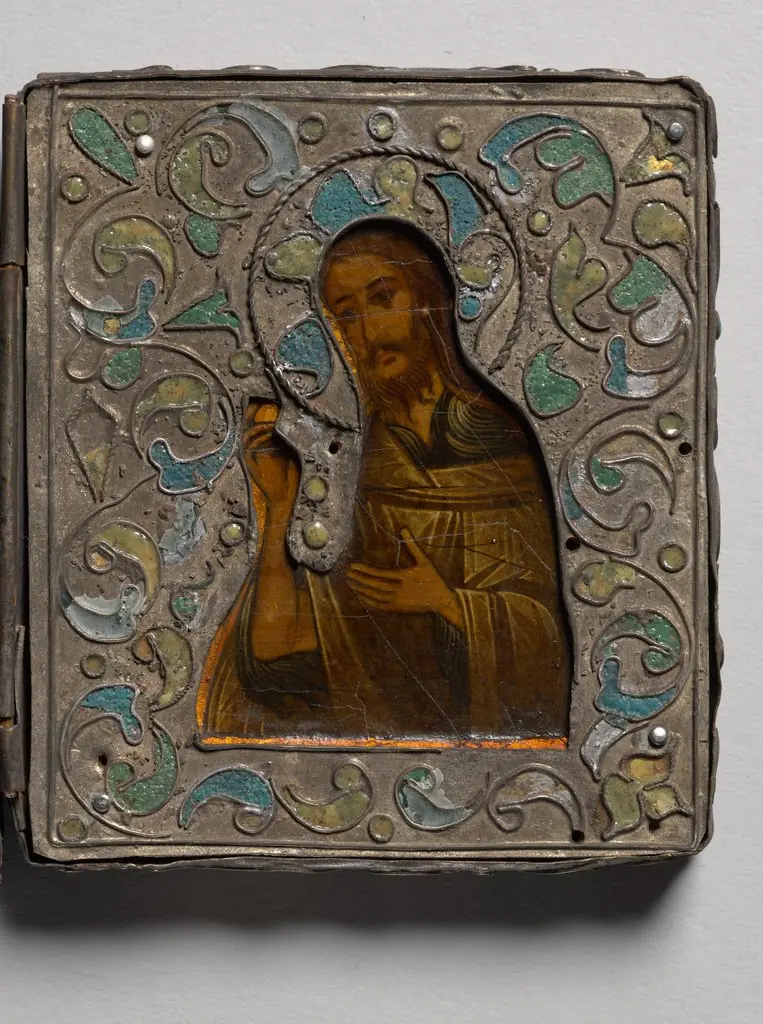
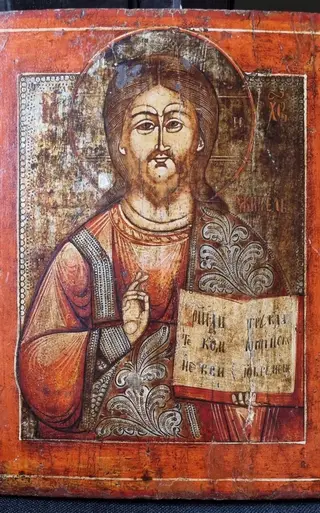
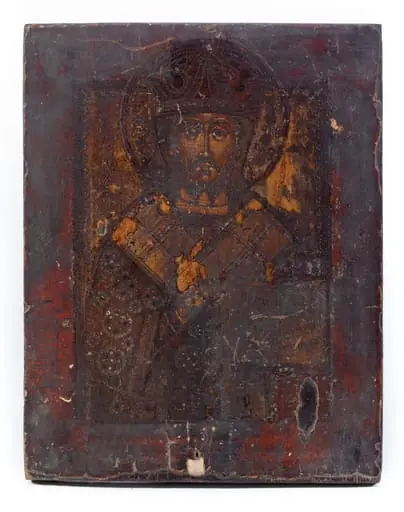
The work is a painted triptych set within a three‑section metal case. Each compartment contains a figure rendered against a dark, patterned backdrop, with vivid accents of red and blue in the garments and books. The metal framework shows signs of age, including wear and faded pigments, indicating a long history of display.
Subject & Meaning
The left panel presents a woman in a blue robe cradling an infant, identifiable as the Virgin Mary with the Christ Child. The central image depicts a bearded man holding an illuminated manuscript, representing Saint John the Evangelist. The right panel features a long‑haired man also clutching a book, likely another depiction of Saint John or a related saint, emphasizing the importance of the Gospel texts.
Technique & Style
The paintings employ tempera or oil on a metal substrate, a method common in devotional objects of the medieval period. The figures are outlined with precise brushwork, while the background is filled with swirling ornamental motifs that create a sense of depth despite the flat surface. Bright reds and blues contrast sharply with the dark ground, highlighting the sacred attire.
Context
Triptychs of this sort were often used for private devotion or as portable altarpieces, allowing worshippers to contemplate central Christian figures in a compact format. The inclusion of both the Virgin and the Evangelist underscores the theological focus on incarnation and the dissemination of the Gospel.
Artist & collection