Artwork
St. John the Evangelist
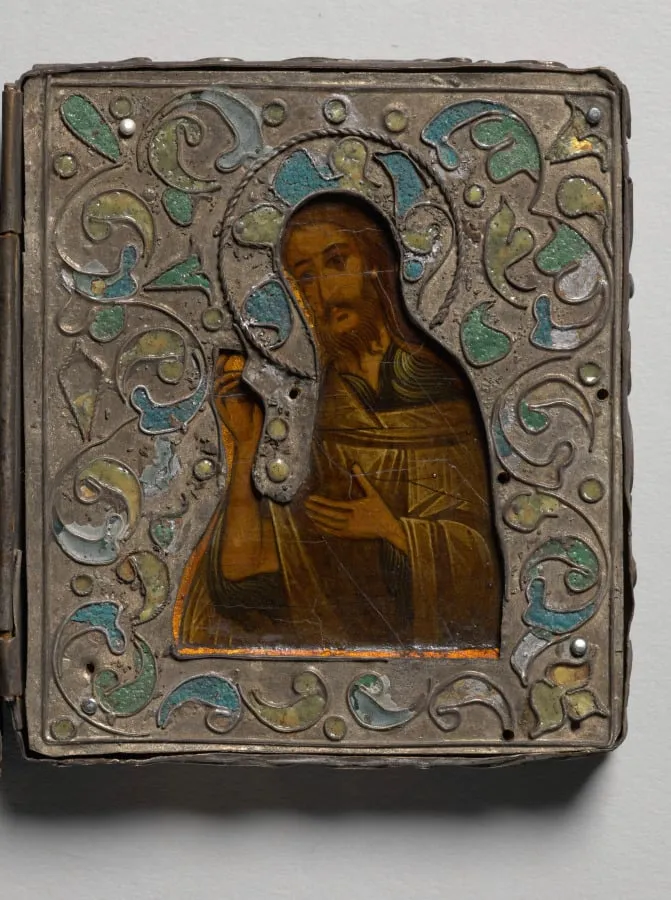
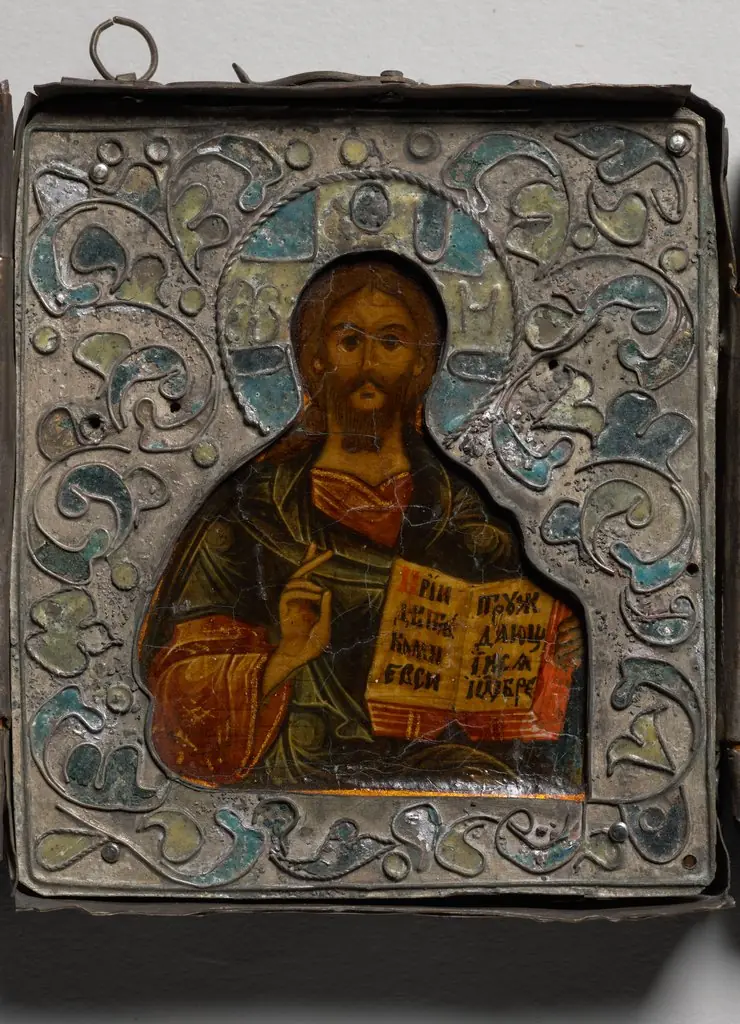
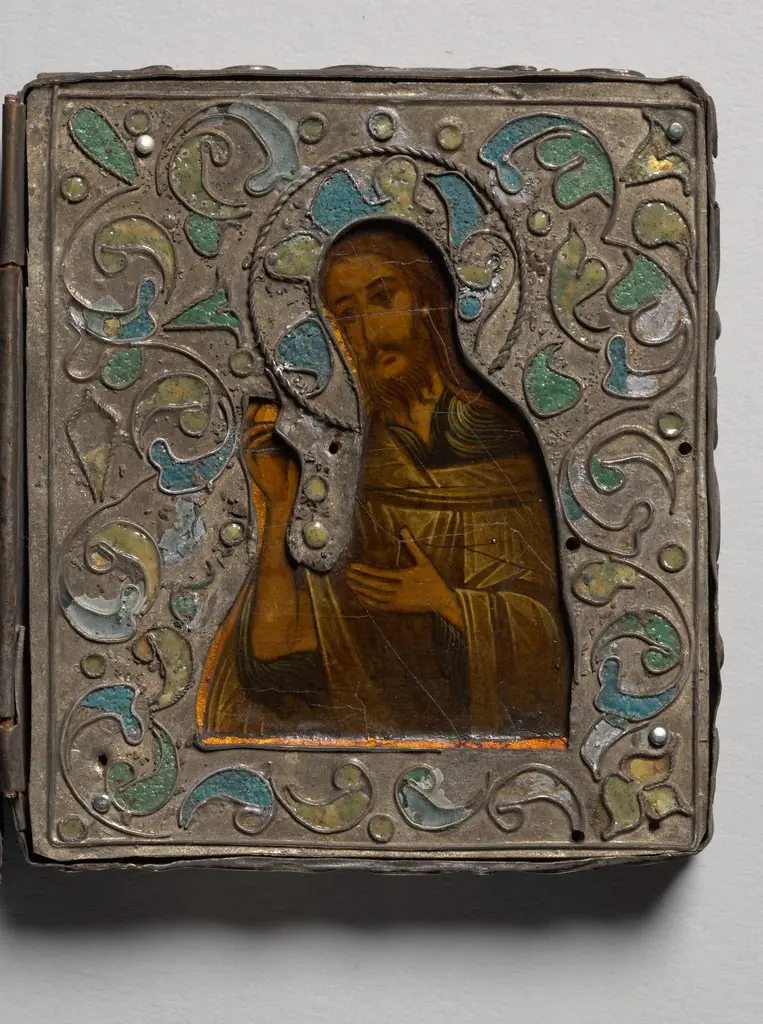
St. John the Evangelist is an unspecified painting by the Realist artist Unknown. It dates from 1804 and is held in the collection of the Cleveland Museum of Art. A small, portable panel painting depicts St.
- Accession no.
- 1918.404.c
- Credit line
- Gift of Mrs. Henry A. Stephens
About this work
Overview
A golden halo encircles his head, signaling sanctity, while the dark background isolates him in solemn focus.
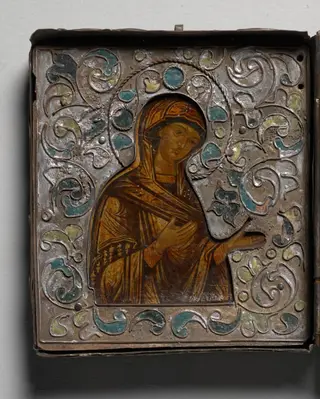
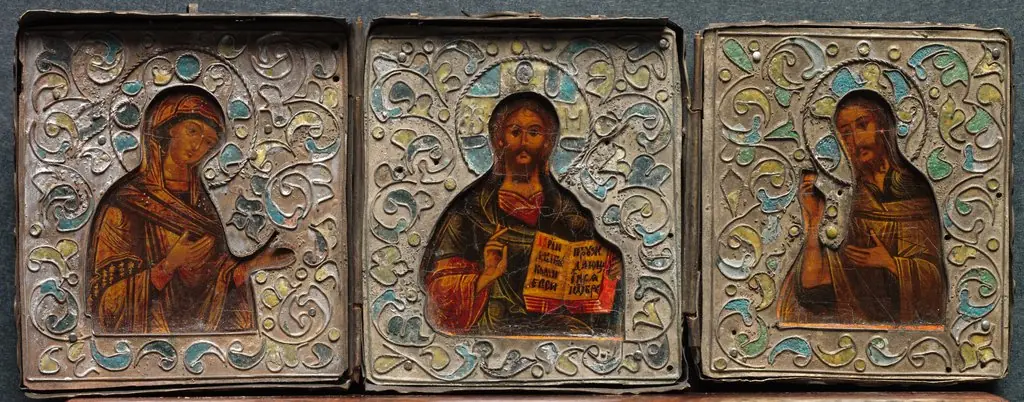
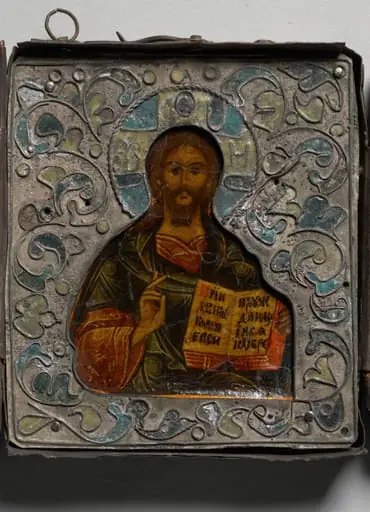
A small, portable panel painting depicts St. John the Evangelist in quiet contemplation. The figure, bearded and robed, holds a book and quill, symbols of his role as author of the Gospel. A golden halo encircles his head, signaling sanctity, while the dark background isolates him in solemn focus.
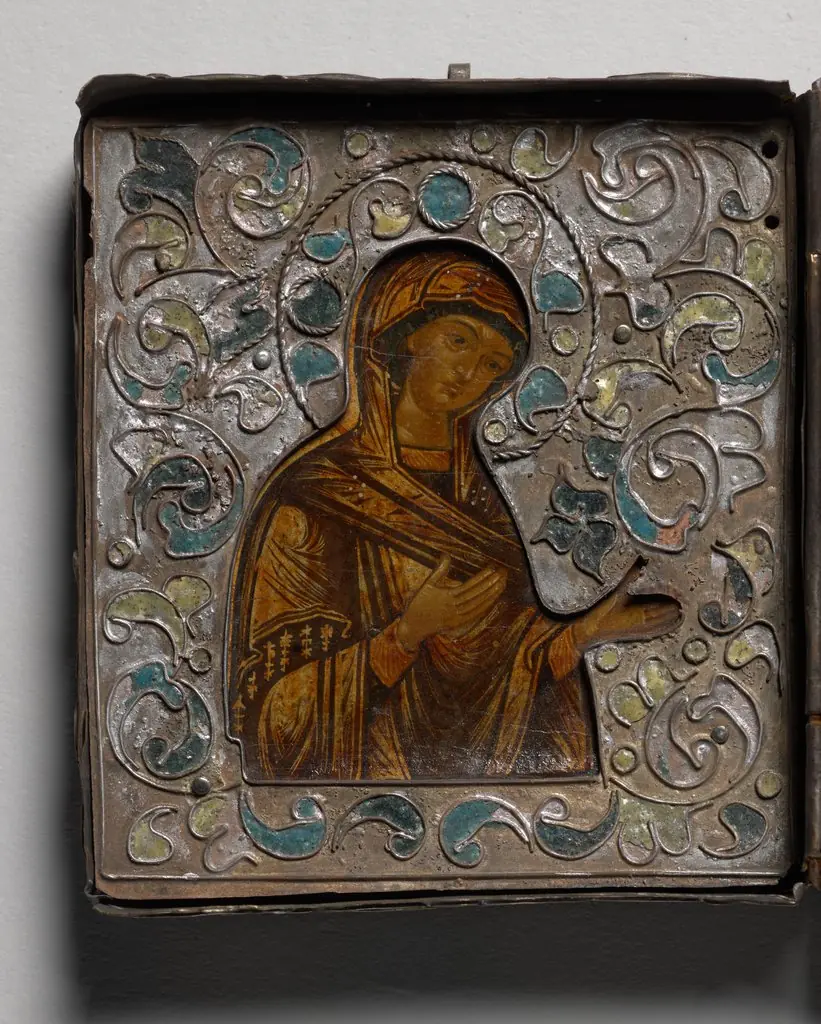
Faded decorative borders of leafy motifs frame the composition, and the surface shows signs of age, suggesting frequent handling or devotional use over centuries.
Subject & Meaning
St. John the Evangelist is portrayed not in action but in reflection, emphasizing his identity as a writer of sacred text. The book and quill signify his authorship of the Fourth Gospel, while his thoughtful gaze conveys divine inspiration rather than earthly activity. The halo, rendered in gold leaf, affirms his spiritual status.
The intimate scale and worn condition imply this was used for personal prayer or carried during travel, reinforcing its role as a devotional object.
Technique & Style
The artist employed tempera or oil on wood, applying thin layers to achieve subtle modeling of the face and hands. Strong chiaroscuro defines the figure’s form against the dark ground, lending volume and gravity. Gold leaf was used sparingly but effectively for the halo, contrasting with the muted tones of the robe.
The decorative border, once vivid in blues and greens, has faded, revealing the fragility of medieval pigments and the passage of time.
History & Provenance
The painting’s small size, worn surface, and metal frame suggest it was once part of a portable devotional object, possibly carried by a pilgrim or kept in a private chapel. Its condition indicates prolonged exposure to light, moisture, and handling. While its exact origin is unrecorded, stylistic elements align with late medieval European panel painting traditions, likely from the 14th or 15th century.
Context
In the late Middle Ages, images of evangelists were common in private worship, serving as aids to meditation and reminders of scriptural authority. This panel reflects a broader trend of devotional art designed for intimate use rather than public display. The emphasis on quiet contemplation, rather than dramatic narrative, mirrors the spiritual priorities of lay piety during a time when literacy was limited and visual symbols carried deep theological weight.
Legacy
Though modest in scale and condition, the painting preserves a quiet, enduring tradition of sacred portraiture. Its survival offers insight into how ordinary believers engaged with religious imagery beyond grand altarpieces. The use of light, symbolic objects, and portable form influenced later devotional works, and its preservation allows modern viewers to encounter the tactile, personal nature of medieval spirituality.
Artist & collection