Artwork
Page from Tales of a Parrot (Tuti-nama): text page
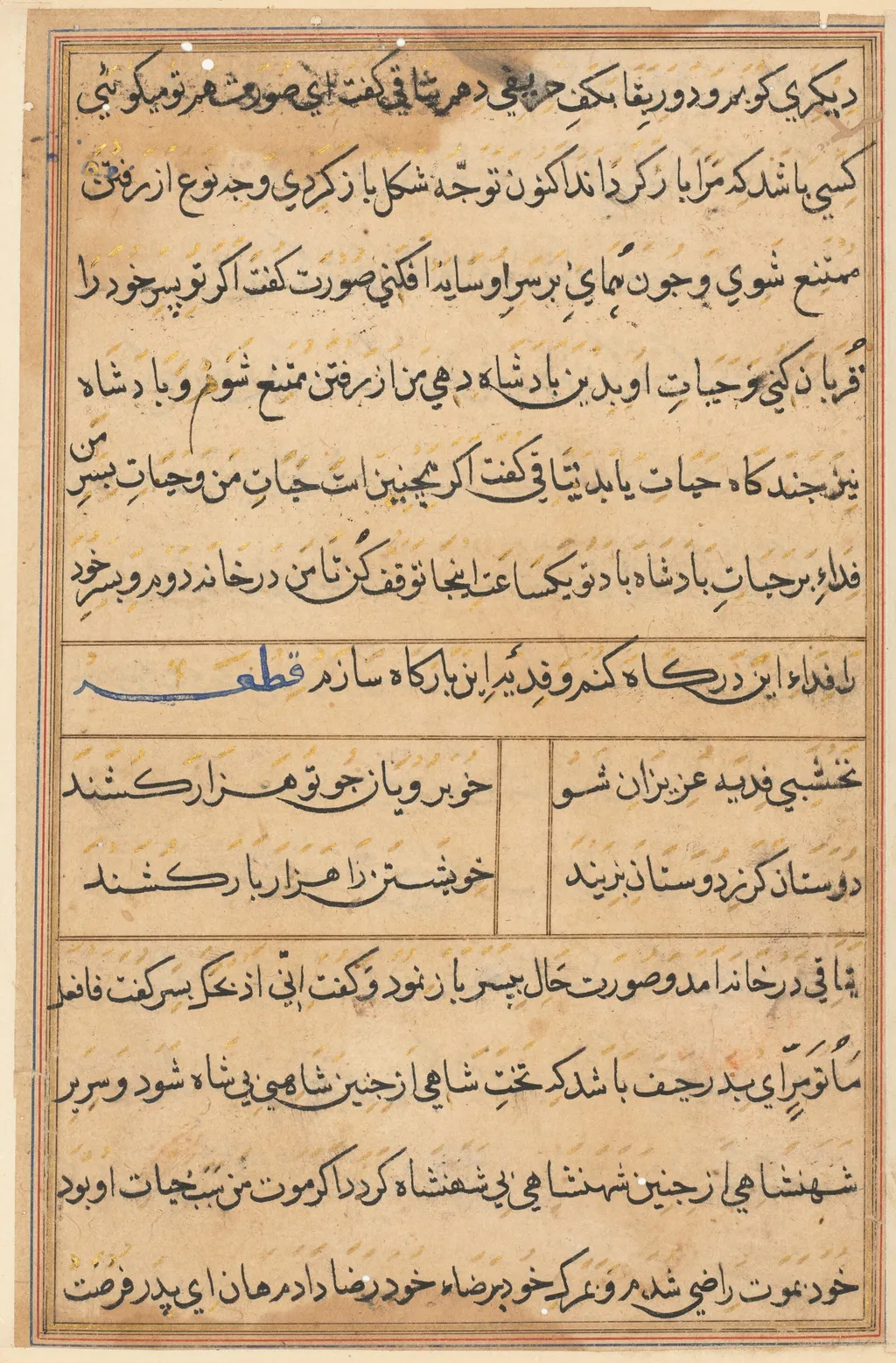
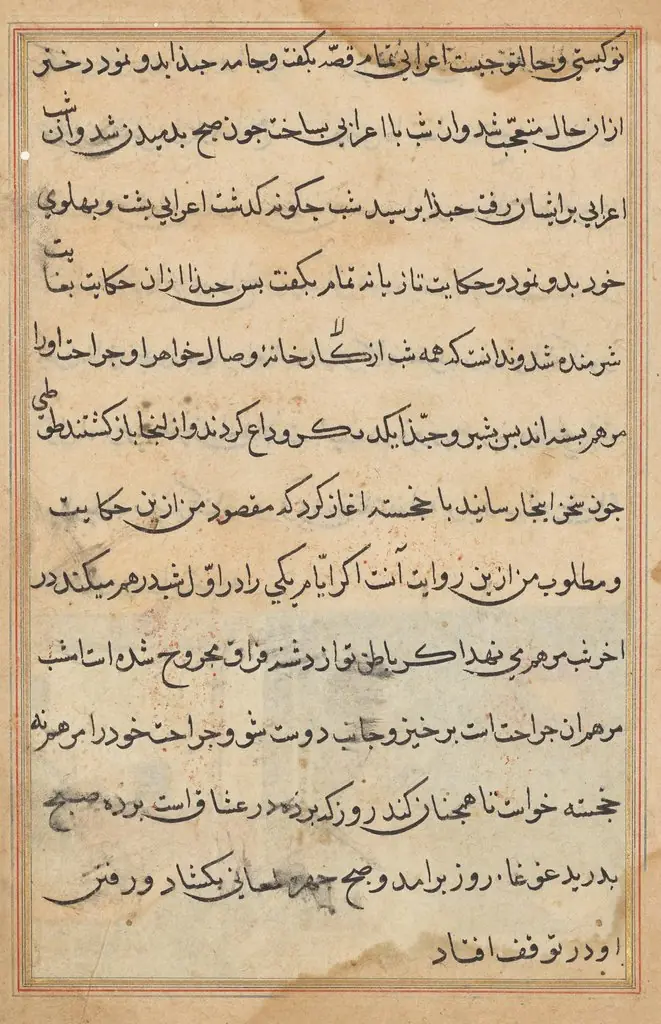
Page from Tales of a Parrot (Tuti-nama): text page is an unspecified painting. It dates from 1560 and is held in the collection of the Cleveland Museum of Art. This object is a painted page from the Persian manuscript known as the Tales of a Parrot, or Tuti‑nama.
About this work
Technique & Style
The painting is executed in tempera and ink on paper, forming a single text page from the Persian narrative Tuti-nama.
The painting is executed in tempera and ink on paper, forming a single text page from the Persian narrative Tuti-nama. It originates from the Mughal Empire and is currently held at the Cleveland Museum of Art. The work measures 35.6 cm in height and 24.8 cm in width.
Its formal qualities include delicate line work, restrained color washes, and a composition that balances textual elements with minimal figurative illustration, reflecting the manuscript tradition of the period.
Legacy
The miniature from a 1560 manuscript of the Tuti-nama demonstrates how Persian narrative painting was adapted within Mughal artistic circles, influencing later Indian book arts through its compositional clarity and storytelling focus. Its presence in the Cleveland Museum of Art collection underscores its role as a reference point for scholars examining cross-cultural manuscript transmission across early modern Eurasia.
The work's legacy is primarily studied through archival citations that trace its impact on later illustrated Persian and Indo-Persian manuscripts, particularly in how narrative scenes were framed to convey moral lessons. Its stylistic elements have been noted in comparative analyses of manuscript illumination, though its direct lineage to later artists remains inferred rather than documented in contemporaneous records.
Overview
This object is a painted page from the Persian manuscript known as the Tales of a Parrot, or Tuti‑nama. Executed as a miniature illustration, the sheet measures roughly the size of a standard folio and functions as a textual page rather than a full‑page illustration. It is part of the Cleveland Museum of Art’s collection of Persian book art.
Subject & Meaning
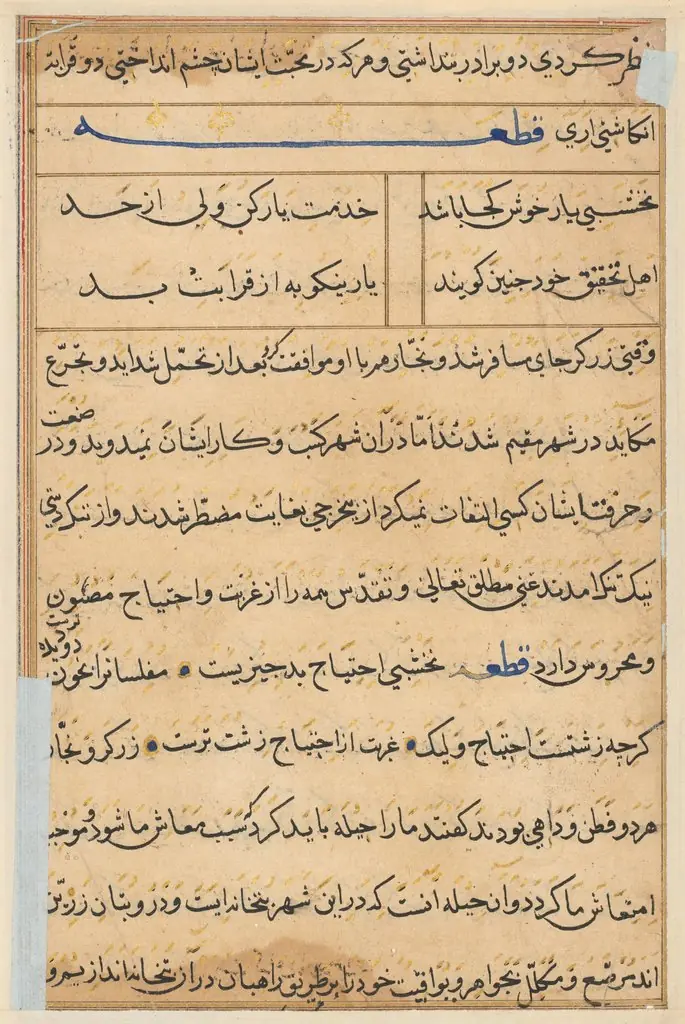
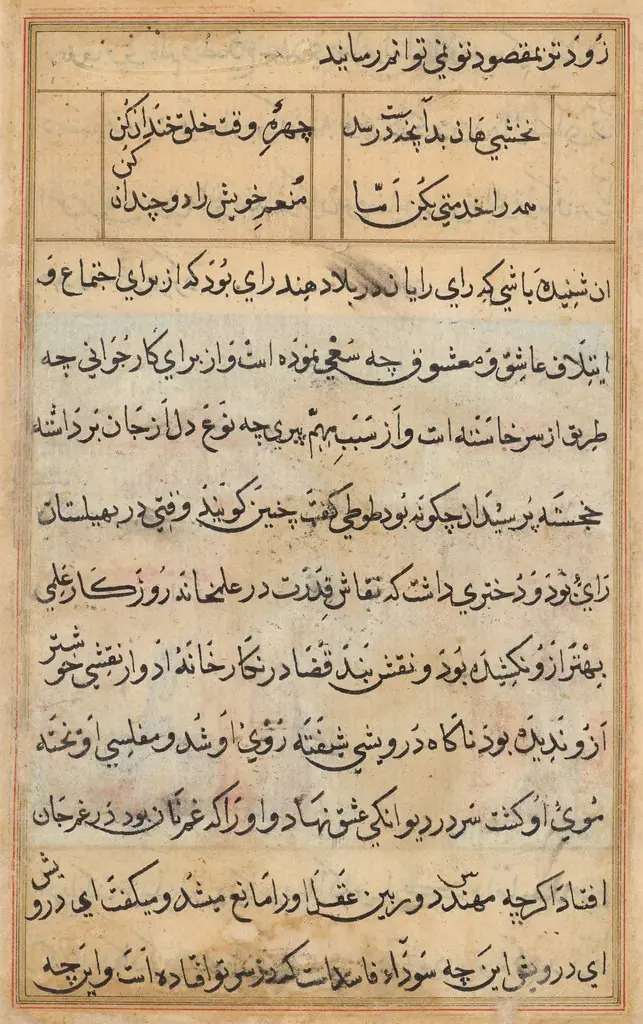
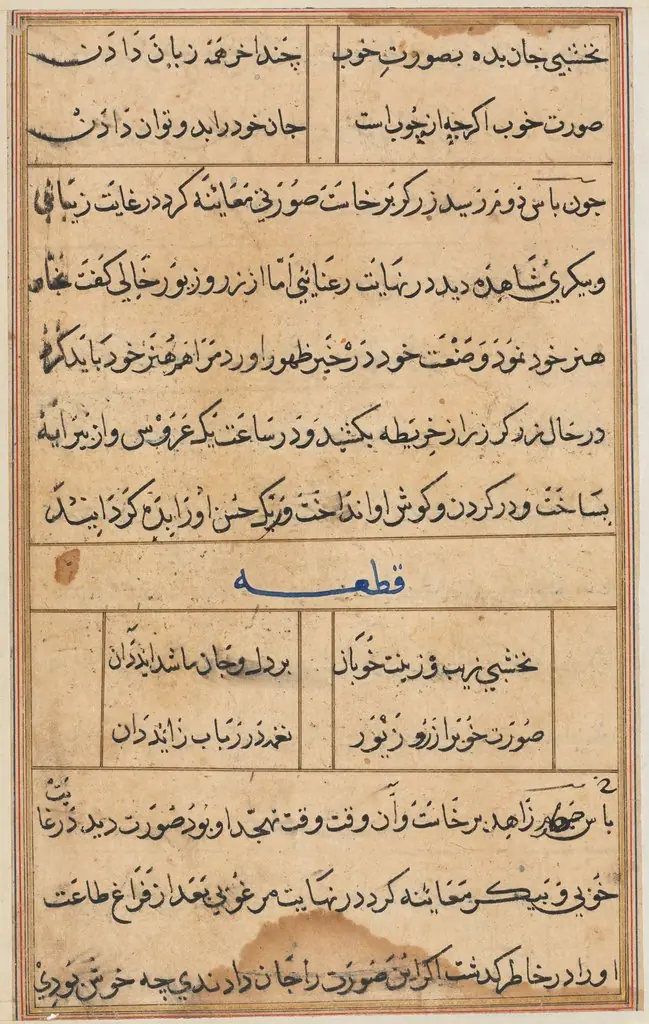
The page contains a continuous block of black calligraphic script set against a light, slightly yellowed ground. The text presents a narrative episode from the Tuti‑nama, a moral tale traditionally conveyed through a dialogue between a parrot and a human interlocutor. The content is organized into sections marked by thin blue lines, guiding the reader through the story’s progression.
History & Provenance
The page originates from a Persian illustrated codex produced in the early modern period, likely between the 16th and 18th centuries. It entered the Cleveland Museum of Art through acquisition in the mid‑20th century, joining a larger group of related folios that together illustrate the manuscript’s original format and narrative sequence.
Context
The Tuti‑nama belongs to a tradition of didactic literature in Persian culture, where animal protagonists convey ethical lessons. Such manuscripts were often commissioned by elite patrons for private study or display, and their production involved specialized calligraphers, painters, and goldsmiths working within courtly workshops.
Artist & collection

- Page from Tales of a Parrot (Tuti-nama): text page
 Page from Tales of a Parrot (Tuti-nama): text page
 Page from Tales of a Parrot (Tuti-nama): text page
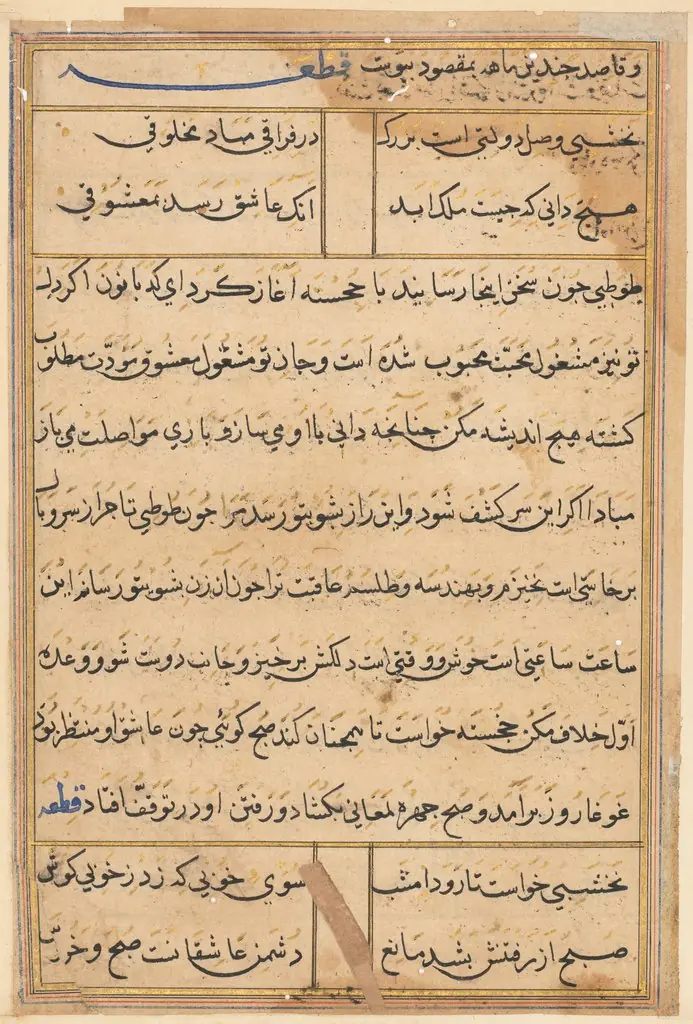 Page from Tales of a Parrot (Tuti-nama): text page
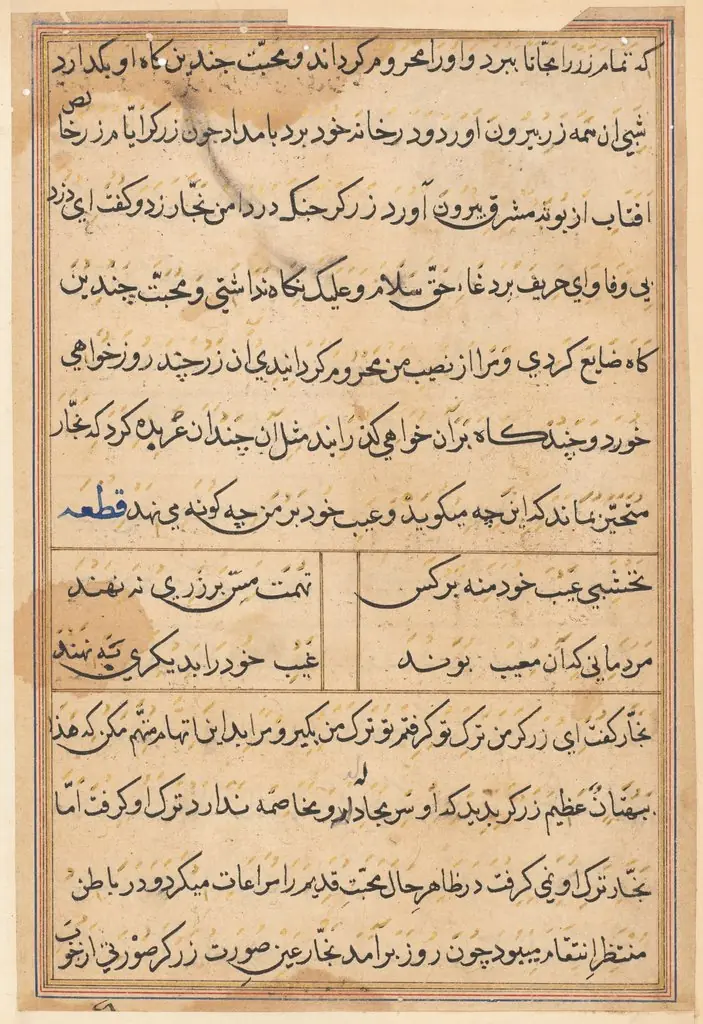 Page from Tales of a Parrot (Tuti-nama): text page
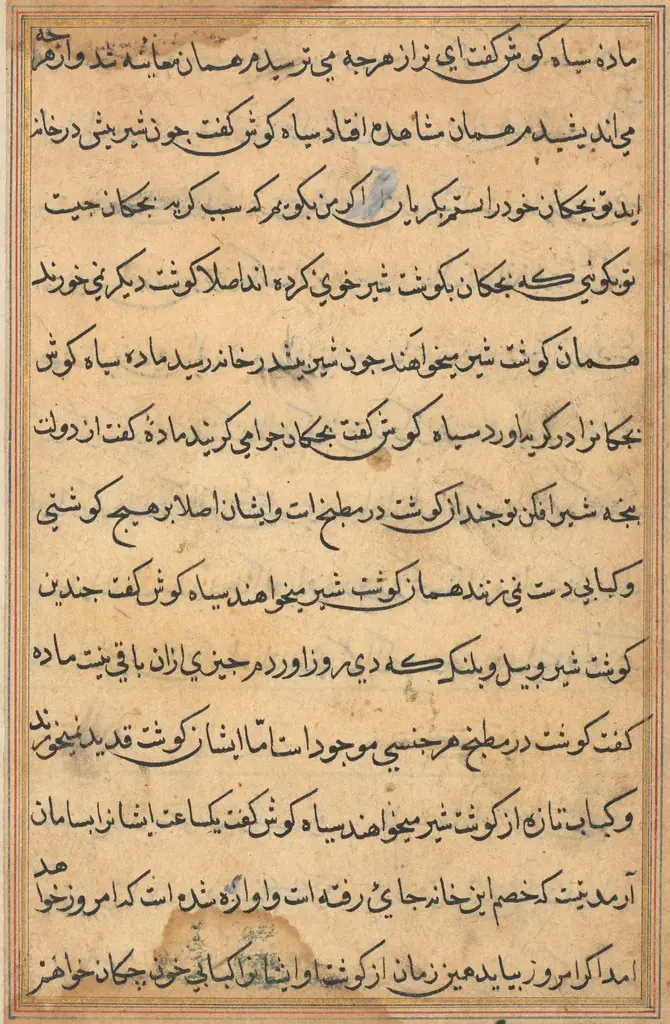 Page from Tales of a Parrot (Tuti-nama): text page
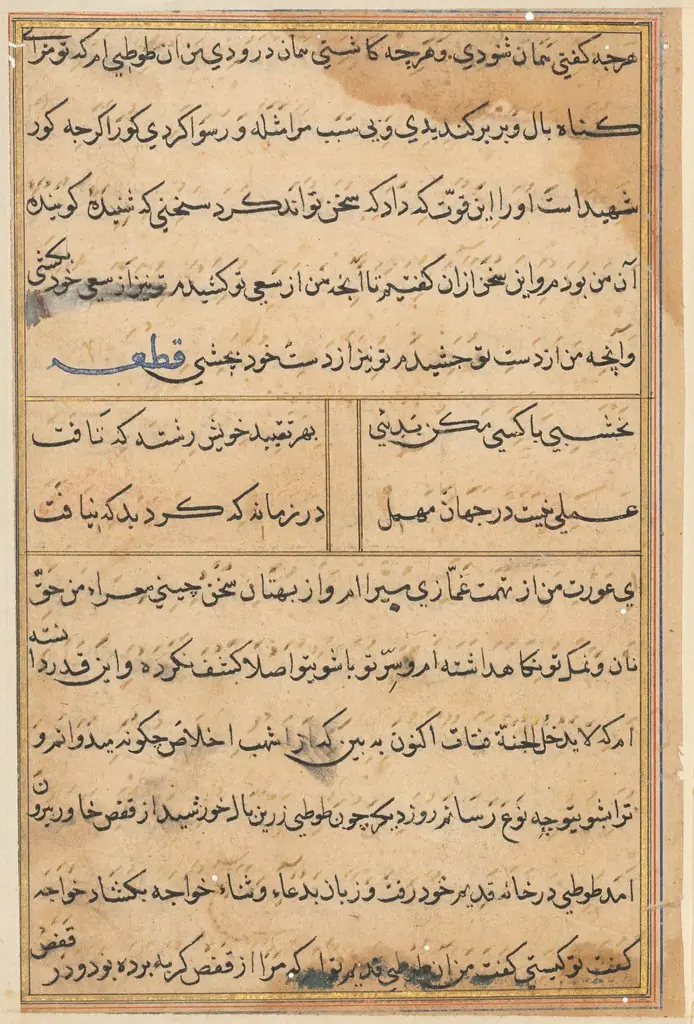 Page from Tales of a Parrot (Tuti-nama): text page
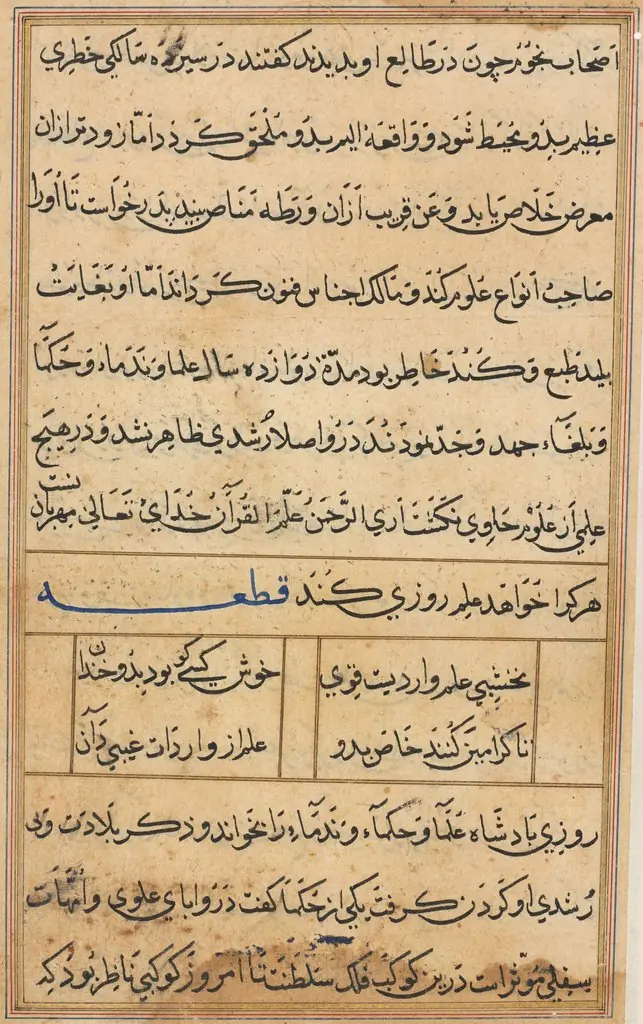 Page from Tales of a Parrot (Tuti-nama): text page
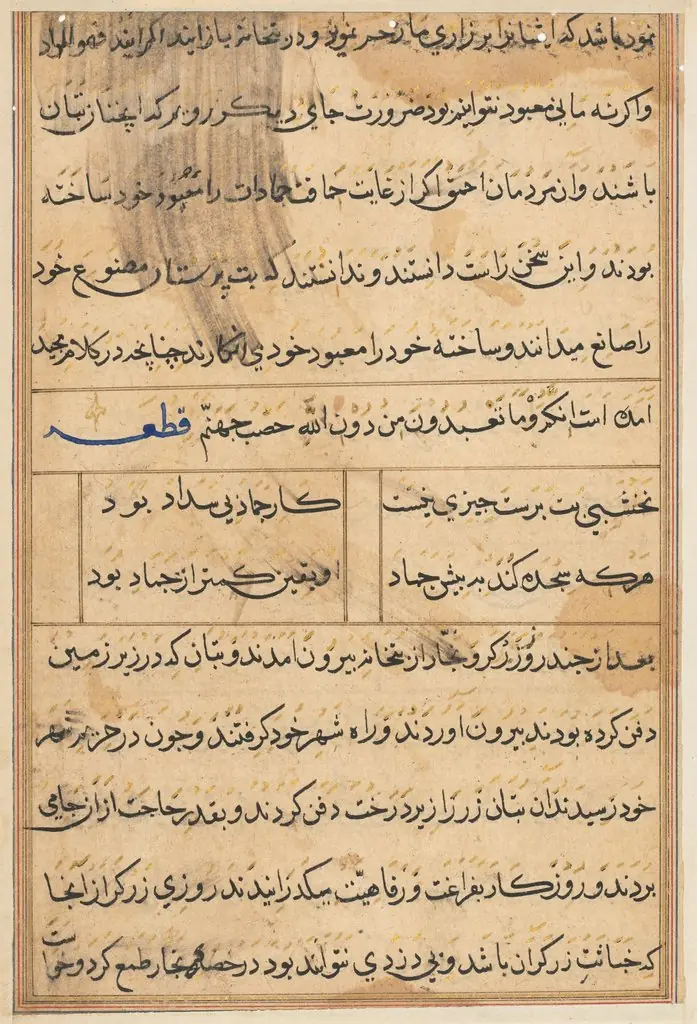 Page from Tales of a Parrot (Tuti-nama): text page
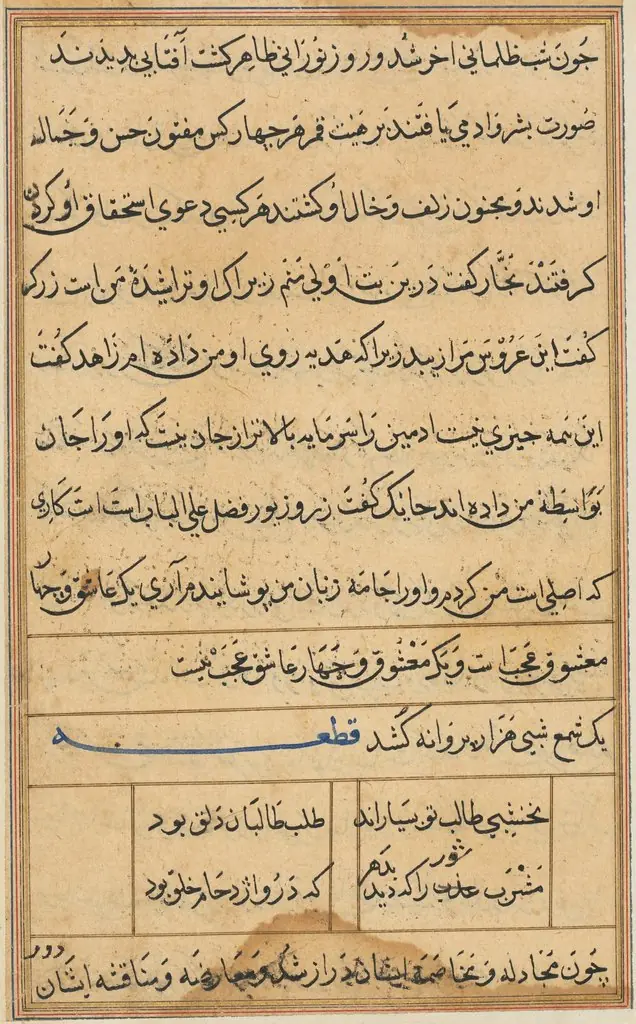 Page from Tales of a Parrot (Tuti-nama): text page
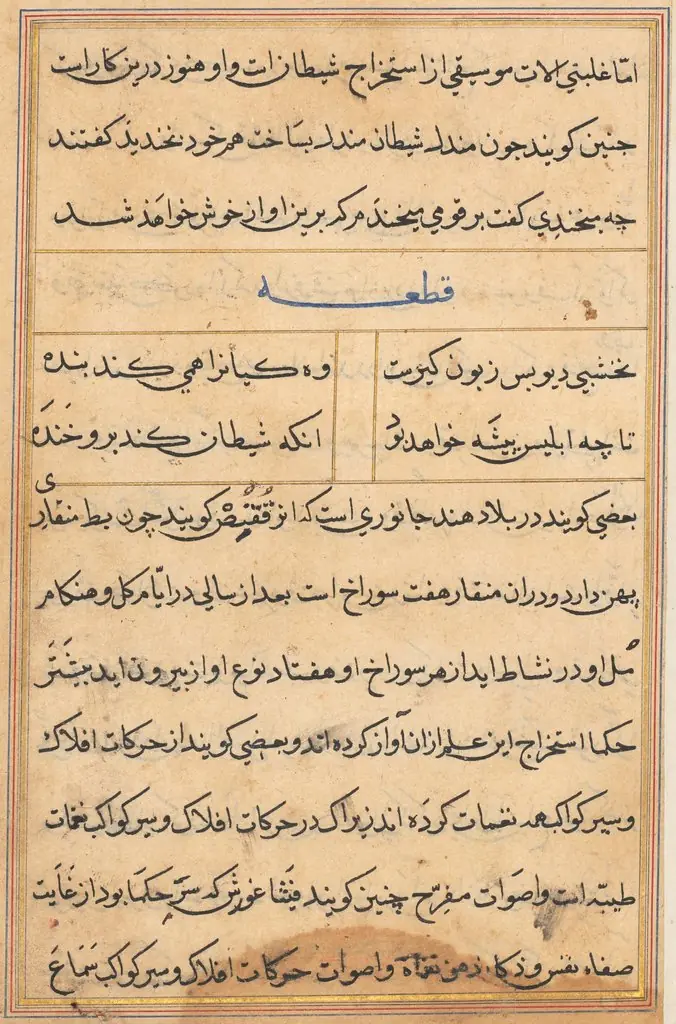 Page from Tales of a Parrot (Tuti-nama): text page
 Page from Tales of a Parrot (Tuti-nama): text page