Artwork
十一面観音影向図|Eleven-Headed Kannon on Mount Fudaraku
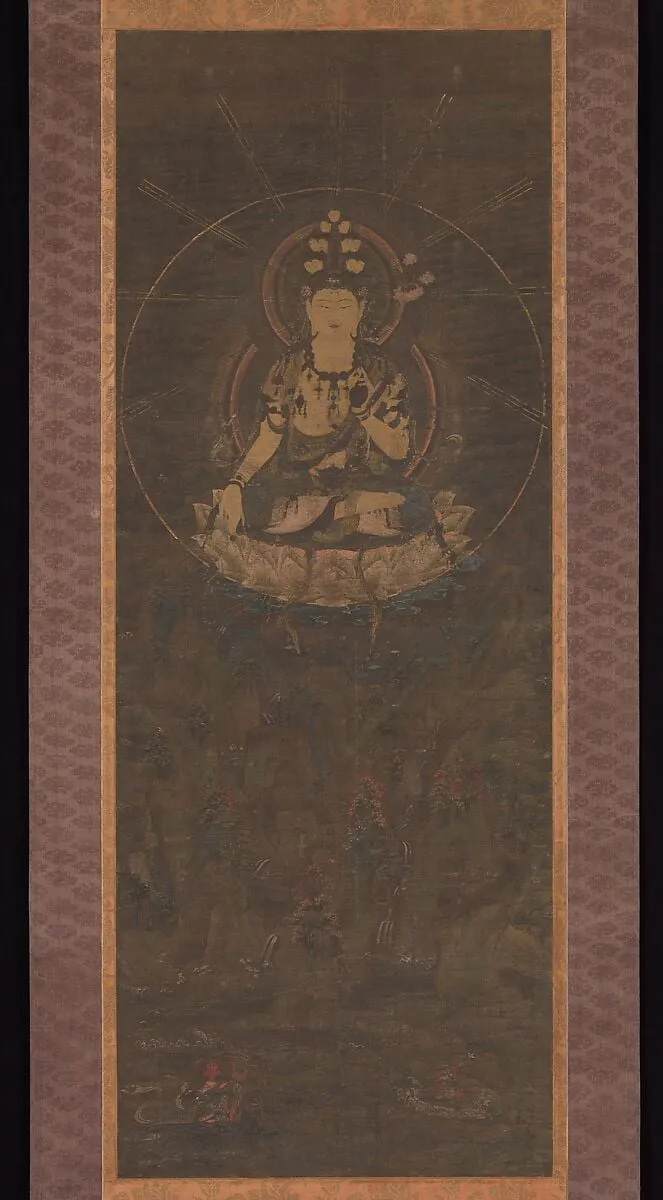
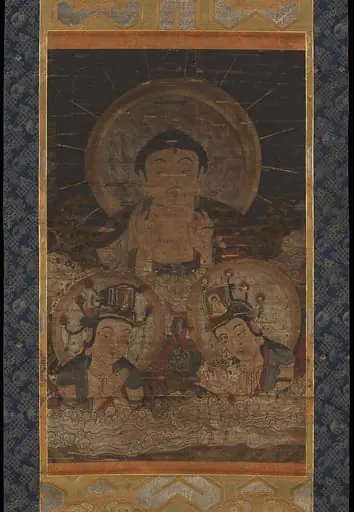
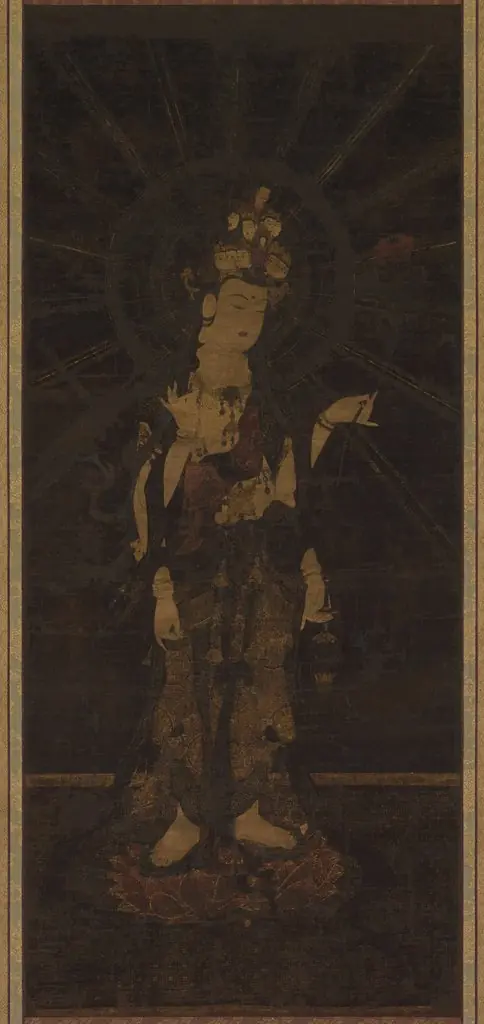
十一面観音影向図|Eleven-Headed Kannon on Mount Fudaraku is an ink painting. It dates from 1249 and is held in the collection of the Metropolitan Museum of Art. This hanging scroll, titled Eleven-Headed Kannon on Mount Fudaraku, depicts the bodhisattva Kannon.
- Accession no.
- 1975.268.20
- Credit line
- The Harry G. C. Packard Collection of Asian Art, Gift of Harry G. C. Packard, and Purchase, Fletcher, Rogers, Harris Brisbane Dick, and Louis V. Bell Funds, Joseph Pulitzer Bequest, and The Annenberg Fund Inc. Gift, 1975
About this work
Subject & Meaning
As a religious painting from Japan, the piece serves as a visual representation of Buddhist devotion and the mythical manifestation of the deity to believers.
The work depicts the Eleven-Headed Kannon, a significant Bodhisattva in Buddhism, appearing on Mount Fudaraku. Created in 1249, this hanging scroll illustrates the deity in a religious context, emphasizing the figure's role within Buddhist tradition. The iconography centers on the Bodhisattva, representing compassion and the spiritual aspiration associated with the sacred mountain.
As a religious painting from Japan, the piece serves as a visual representation of Buddhist devotion and the mythical manifestation of the deity to believers. The imagery captures the essence of the Bodhisattva's presence, embodying the spiritual significance of the Eleven-Headed form within the faith.
Technique & Style
Executed as a hanging scroll on silk, the painting uses ink, mineral pigments, and gold leaf to depict the Eleven‑Headed Kannon, a Bodhisattva central to Buddhist devotion. The work follows established iconographic conventions, showing the deity with multiple heads and elaborate adornments rendered in careful detail. The hanging‑scroll format allows the composition to be viewed vertically, with the gold accents highlighting sacred elements.
History & Provenance
The work titled 十一面観音影向図 (Eleven‑Headed Kannon on Mount Fudaraku) was created in Japan in 1249 by an anonymous painter as a religious hanging scroll in ink, color, and gold on silk. Its iconography shows the Bodhisattva Kannon amidst Buddhist symbolism. The piece is presently housed in the collection of the Metropolitan Museum of Art in New York.
No records of a specific commission survive, and the work is attributed to an anonymous master within the Japanese Buddhist artistic tradition. No accession number or exhibition history is specified in available documentation.
Overview
This hanging scroll, titled Eleven-Headed Kannon on Mount Fudaraku, depicts the bodhisattva Kannon. Rendered in ink, color, and gold on silk, the artwork presents a towering, radiant figure with a distinctive stack of eleven heads, appearing to float above a turbulent sea. Soft clouds encircle the deity, who holds a small jar, accompanied by diminutive attendants. The composition emphasizes Kannon's divine presence and benevolent gaze.
Context
This artwork belongs to a tradition of sacred scrolls featuring bodhisattvas, enlightened beings who postpone their own nirvana to assist others. Such paintings served as focal points for meditation and worship, guiding adherents in their spiritual journeys. The depiction of Kannon, a central figure in East Asian Buddhism, reflects a broader artistic and religious practice of visualizing deities to foster devotion and understanding of Buddhist principles.
Artist & collection