Artwork
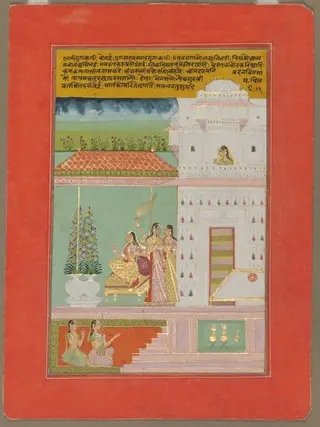
Two Women Pluck Flowers on a Terrace: Gunakali Ragini, from a Ragamala
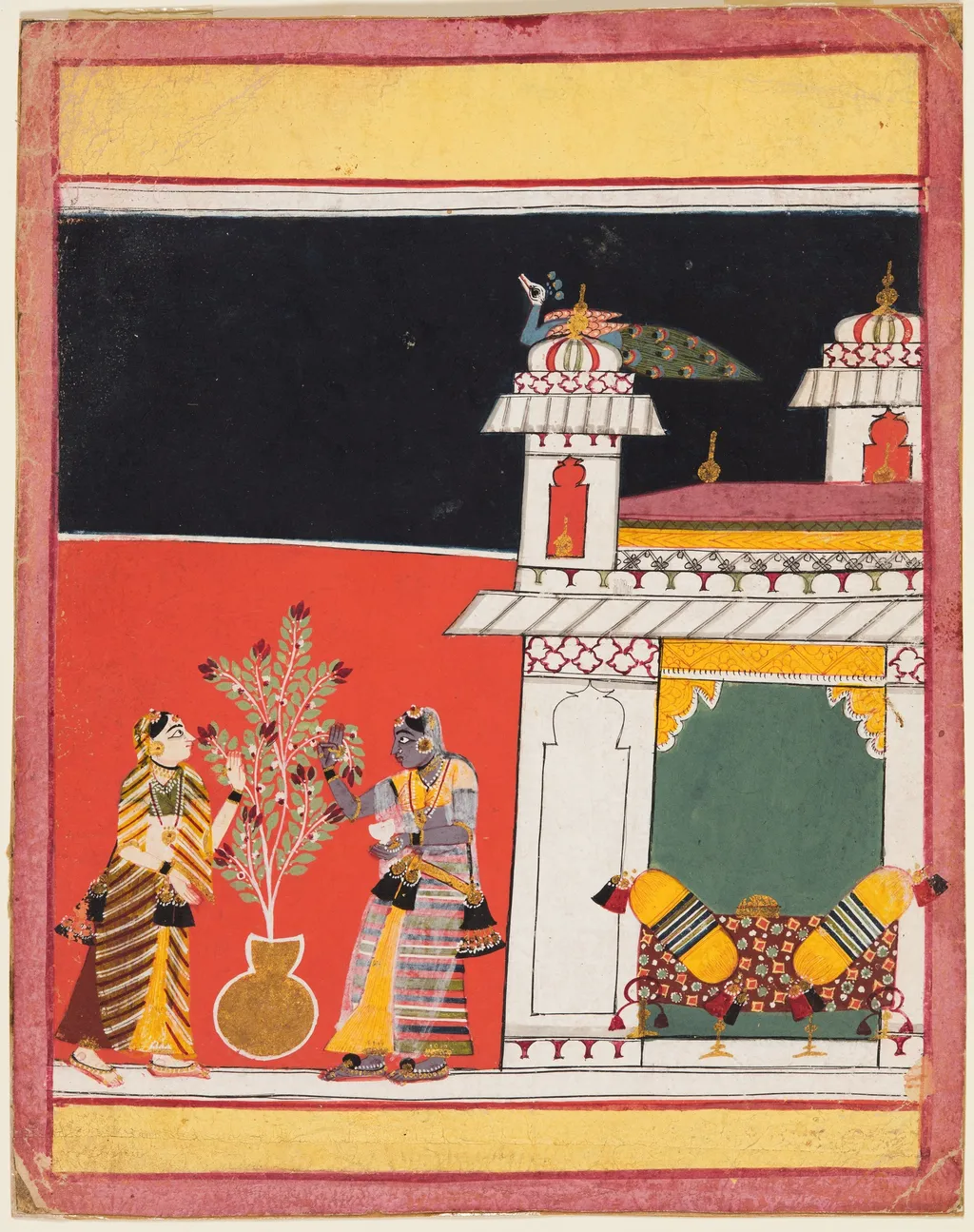
Two Women Pluck Flowers on a Terrace: Gunakali Ragini, from a Ragamala is an unspecified painting. It dates from 1650 and is held in the collection of the Cleveland Museum of Art. The work depicts two women positioned on a vivid red terrace.
About this work
History & Provenance
The painting Two Women Pluck Flowers on a Terrace: Gunakali Ragini, from a Ragamala is dated to 1650 and attributed to the Malwa region in central India.
The painting Two Women Pluck Flowers on a Terrace: Gunakali Ragini, from a Ragamala is dated to 1650 and attributed to the Malwa region in central India. It entered the collection of the Cleveland Museum of Art in 2018 as accession number 2018.130. The work’s provenance prior to its acquisition by the museum is not documented in the available sources.
The painting is held by the Cleveland Museum of Art, where it carries the accession number 2018.130. The work entered the museum’s collection in 2018, having been created in the Malwa region during the mid-seventeenth century.
It has not been recorded in any documented exhibition history within the provided sources.
Context
Created in 1650 in the Malwa region, Two Women Pluck Flowers on a Terrace: Gunakali Ragini is a painting by an unknown artist currently held by the Cleveland Museum of Art. As part of a Ragamala series, the work visualizes the Gunakali musical mode through a scene of two women gathering flowers on a terrace. The painting's attribution to Malwa situates it within the distinct artistic traditions of central India during the mid-seventeenth century, a period known for its unique synthesis of indigenous styles and Mughal influences.
While the specific identity of the painter remains unrecorded, the work serves as a significant example of regional courtly painting from this era.
Overview
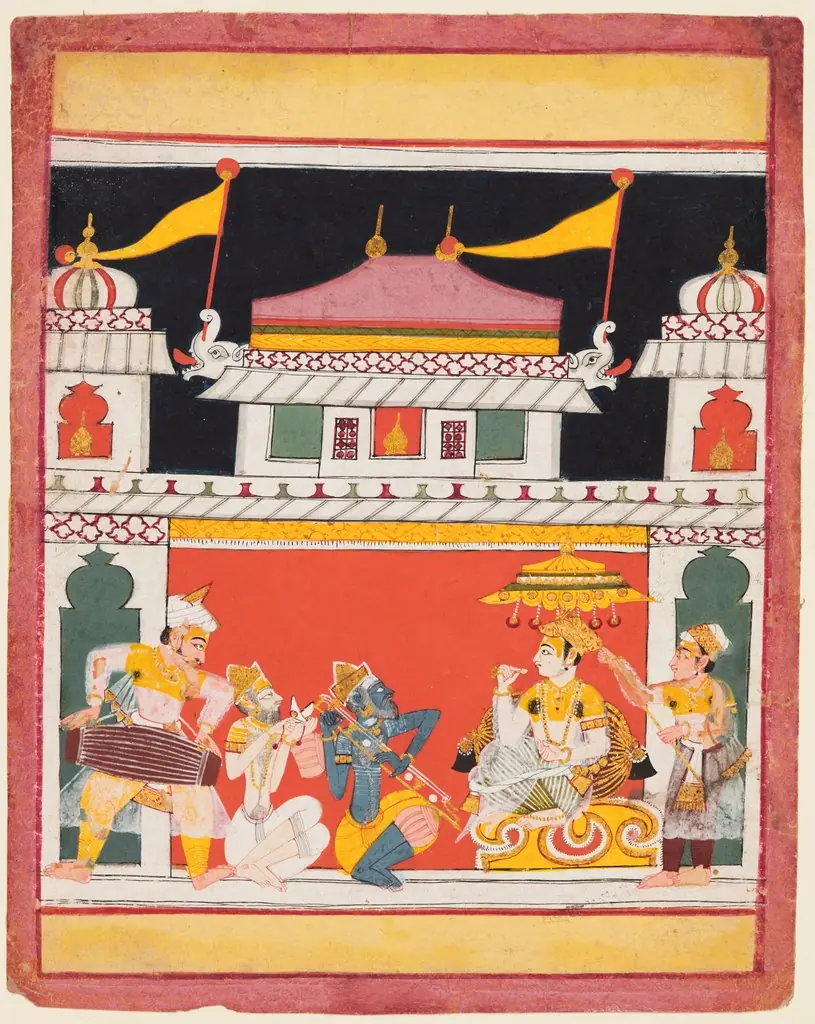
The work depicts two women positioned on a vivid red terrace. One figure clutches a branch laden with red blossoms, while the other extends a hand toward the flowers. Behind them rises a white structure with a green wall, embellished by an ornamental elephant motif, set against a dark night sky. Their attire is richly patterned and accented with gold jewelry, contributing to a lively composition.
Subject & Meaning
The scene presents a moment of interaction between the two women, centered on the act of plucking flowers, a motif often associated with courtly leisure or ritualized performance. The inclusion of an elephant decoration and the architectural backdrop suggest a setting linked to aristocratic or ceremonial contexts, possibly alluding to themes of music or seasonal celebration.
Technique & Style
The artist employs bold, defined outlines and flat expanses of saturated color, creating a stylized, two‑dimensional effect. Patterns on the garments are rendered with meticulous detail, and the contrast between the bright terrace and the dark sky enhances visual clarity. This approach aligns with a decorative aesthetic typical of certain Indian painting traditions.
Artist & collection

- Two Women Pluck Flowers on a Terrace: Gunakali Ragini, from a Ragamala
 Lovers on a Terrace: Ramakali Ragini of Hindol, from a Bundi Ragamala
 Woman Addressing a Peacock: Gujari Ragini of Megh, from a Ragamala
 A Heroine and Her Paramour: Malavi Ragini, from a Ragamala
 Ragini Gunakali, Page from a Jaipur Ragamala Set
 Gunakali Ragini