Artwork
Ragini Gunakali, Page from a Jaipur Ragamala Set
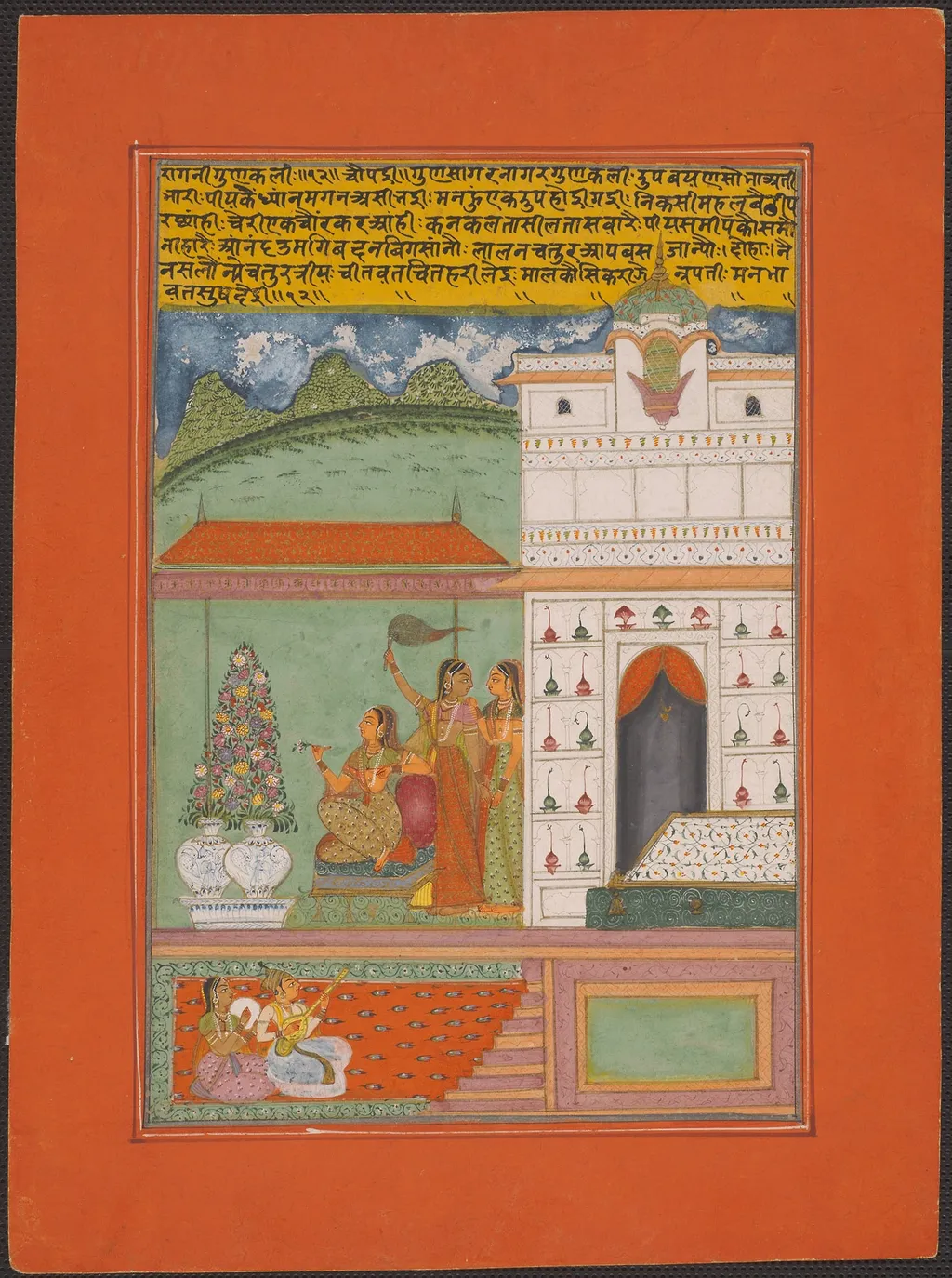
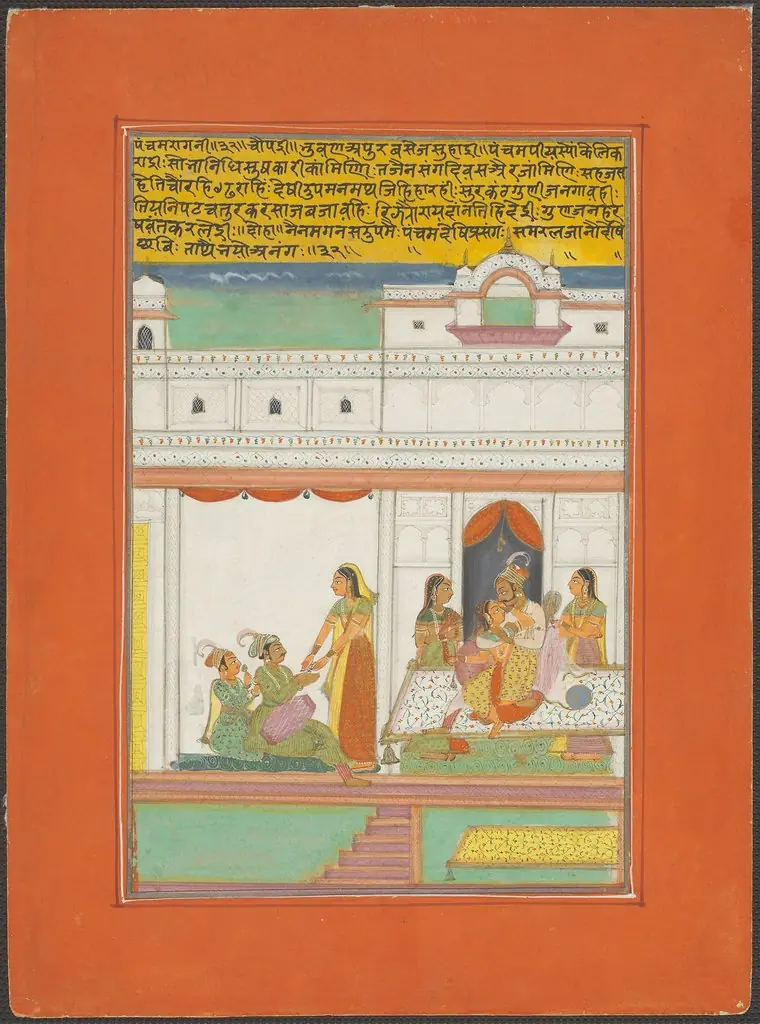
Ragini Gunakali, Page from a Jaipur Ragamala Set is an unspecified painting by the Rajput painting artist Unknown. It dates from 1757 and is held in the collection of the Art Institute of Chicago.
About this work
Overview
This painting is a folio from a Jaipur Ragamala series, a set of illustrated manuscripts that visually interpret musical modes known as ragas.
This painting is a folio from a Jaipur Ragamala series, a set of illustrated manuscripts that visually interpret musical modes known as ragas. It portrays a scene associated with Ragini Gunakali, a feminine counterpart to a raga, through an intimate domestic moment. The composition centers on four figures engaged in music, framed by architectural elements and a lush garden, reflecting the fusion of Rajput and Persian artistic traditions characteristic of 17th-century Jaipur court painting.
Subject & Meaning
The figures represent the emotional and spiritual essence of the raga through their actions: a man plays a stringed instrument while two women respond with a fan and another instrument, suggesting musical dialogue. The third woman, motionless, may embody contemplation. The setting, courtyard, doorway, blooming flora, evokes a private, serene space where music becomes a ritual, aligning the raga’s mood with the quiet intimacy of daily life in a royal household.
Technique & Style
The painting employs fine brushwork and mineral pigments to achieve vivid, saturated hues, particularly in textiles and foliage. Patterns on garments and architecture are rendered with meticulous detail, echoing Persian miniature conventions. Spatial depth is suggested through layered architecture and flattened perspective, typical of Rajput painting. The balance between decorative richness and restrained composition reflects a refined courtly aesthetic.
History & Provenance
Created in the Jaipur royal atelier during the late 17th century, this folio belonged to a commissioned Ragamala series intended for royal contemplation and performance. Such sets were often kept in private libraries or used during musical gatherings. The painting’s survival suggests it was preserved within the Kachhwaha dynasty’s collection, later entering institutional or private hands through colonial-era acquisitions.
Context
Ragamala paintings emerged as a distinct genre in North Indian courts, linking devotional music with visual art. Jaipur artists adapted Persian techniques learned through Mughal influence but infused them with local themes and color sensibilities. These works served both aesthetic and pedagogical purposes, helping patrons internalize the emotional character of ragas through imagery tied to time, season, and mood.
Legacy
The Ragini Gunakali folio exemplifies how regional courts cultivated unique visual languages within broader Indo-Persian traditions. Its preservation in museum collections today allows continued study of how music, gender, and space were encoded in Indian painting. While no longer performed in original contexts, such works remain vital references for understanding the interdisciplinary arts of early modern India.
Artist & collection









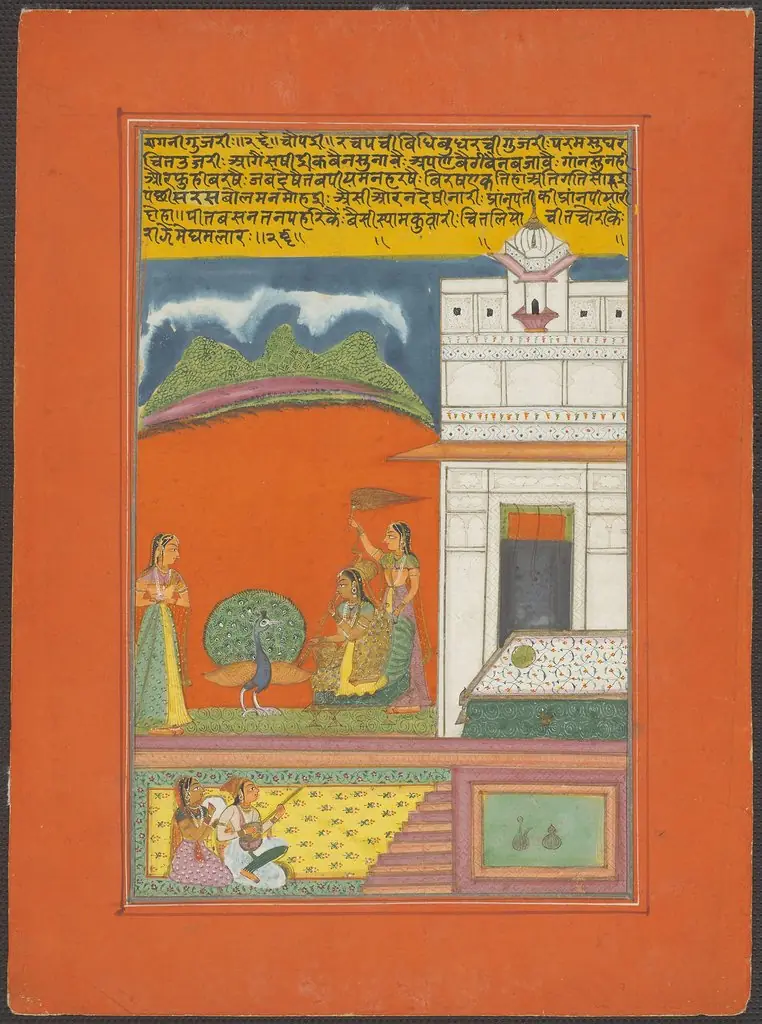
- Ragini Gujari, Page from a Jaipur Ragamala Set
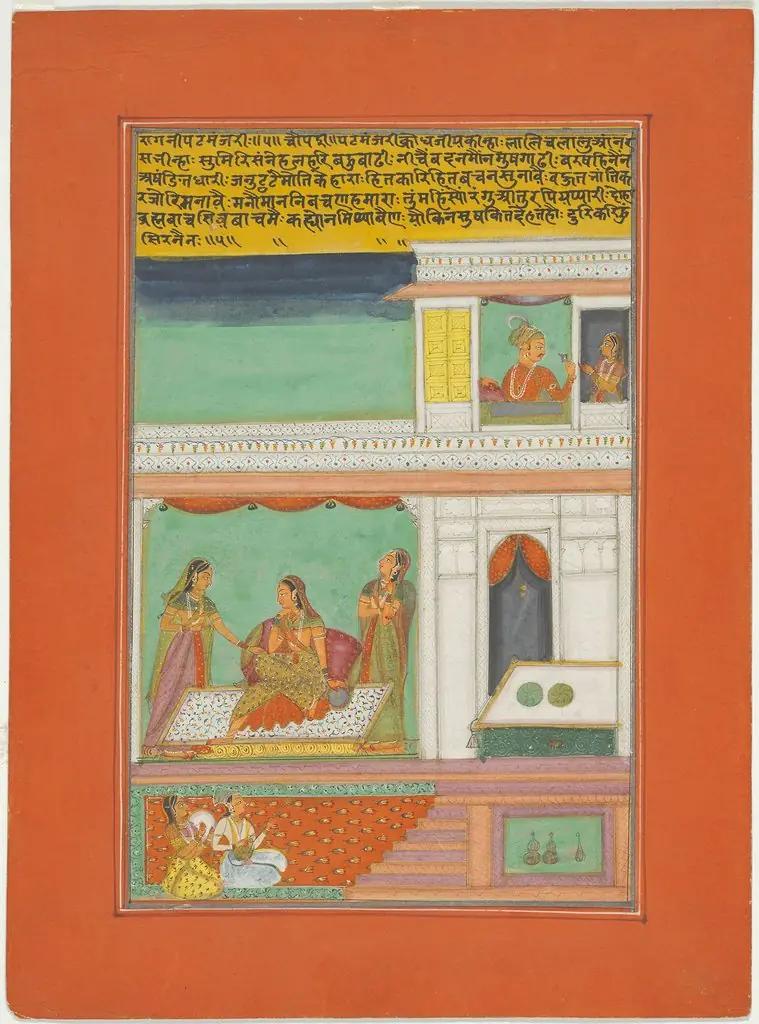 Ragini Patmanjari, Page from a Jaipur Ragamala Set
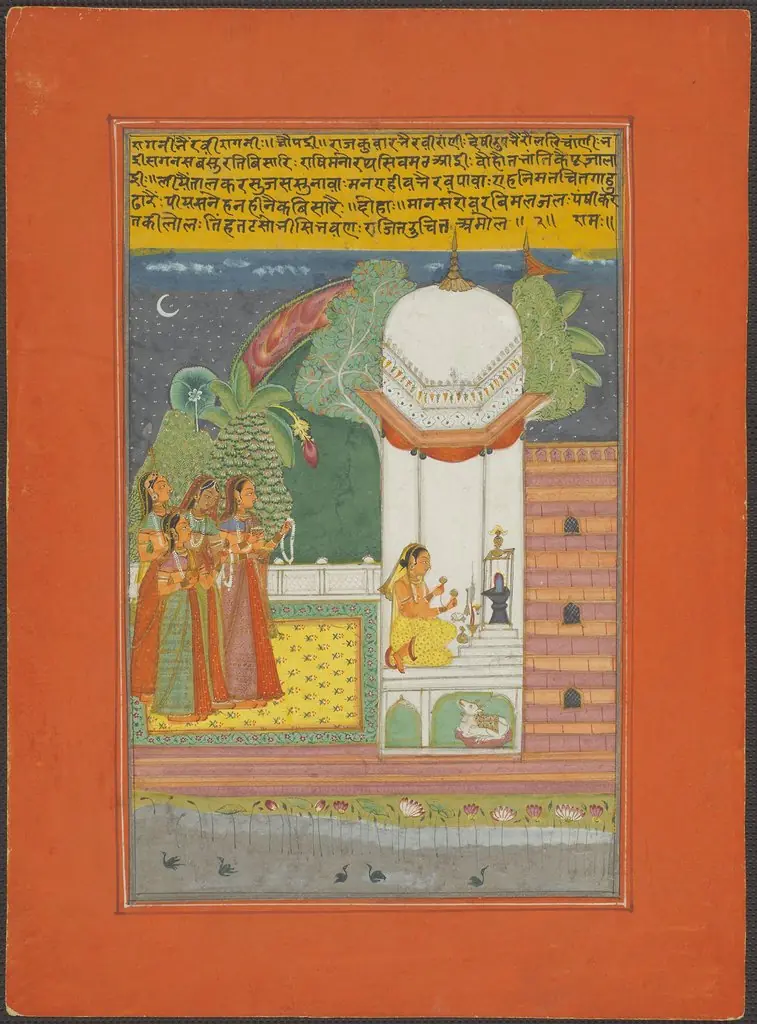 Ragini Bhairavi, Page from a Jaipur Ragamala Set
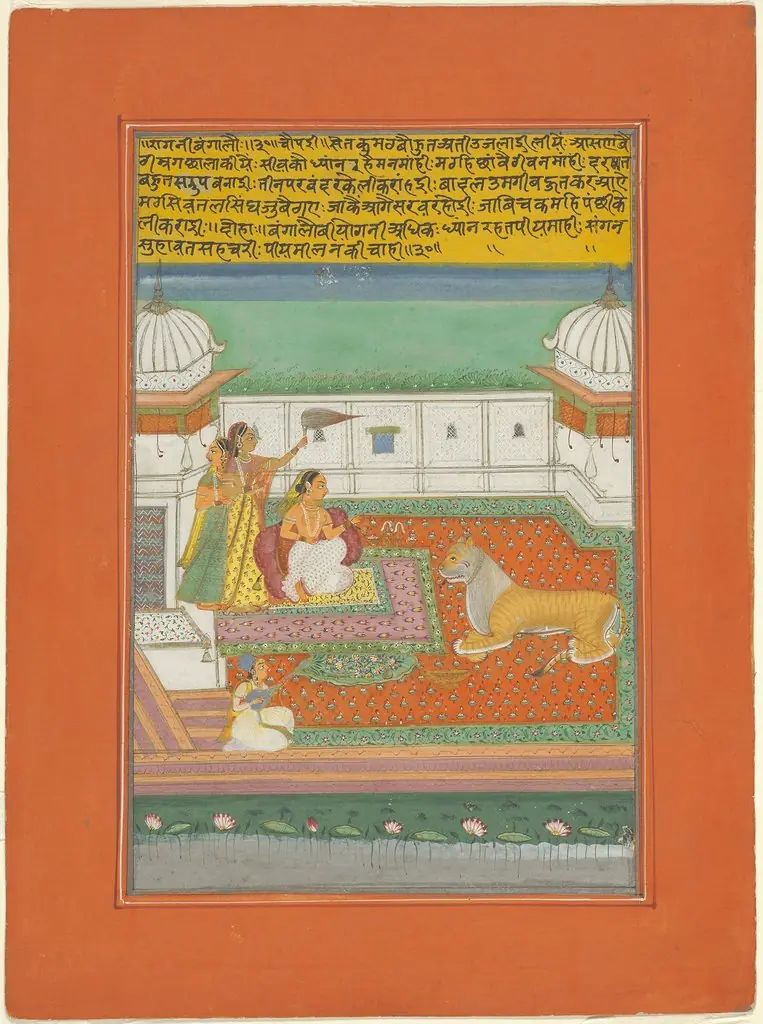 Ragini Bangali, Page from a Jaipur Ragamala Set
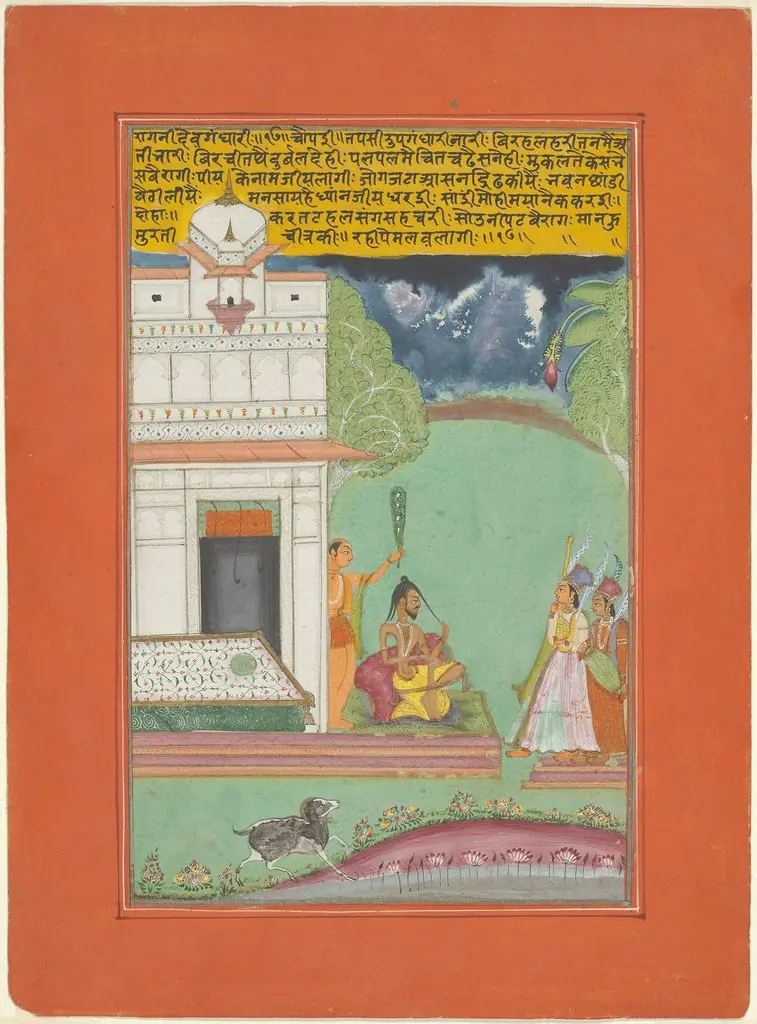 Ragini Devagandhari, Page from a Jaipur Ragamala Set
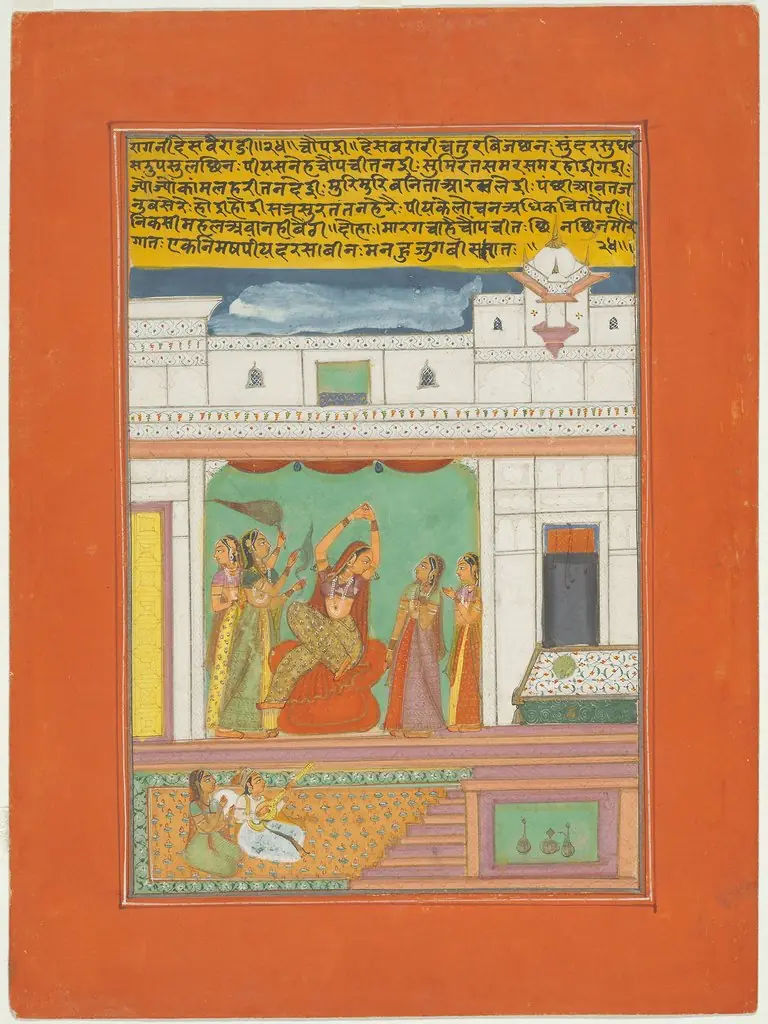 Ragini Desavaradi, Page from a Jaipur Ragamala Set
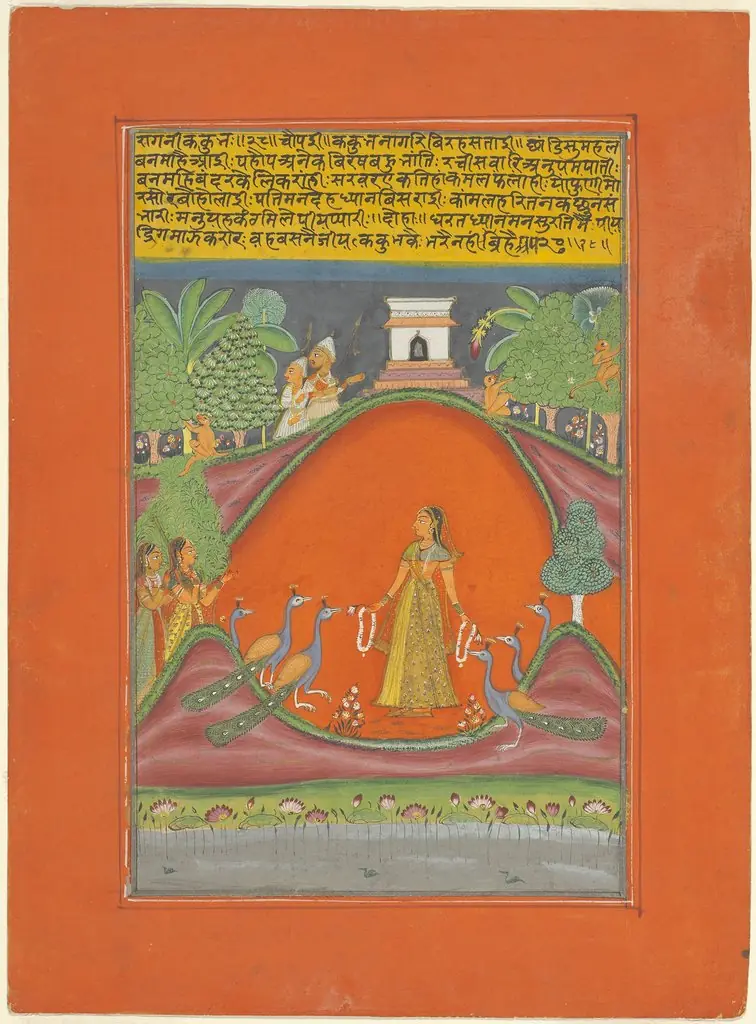 Ragini Kakubha, Page from a Jaipur Ragamala Set
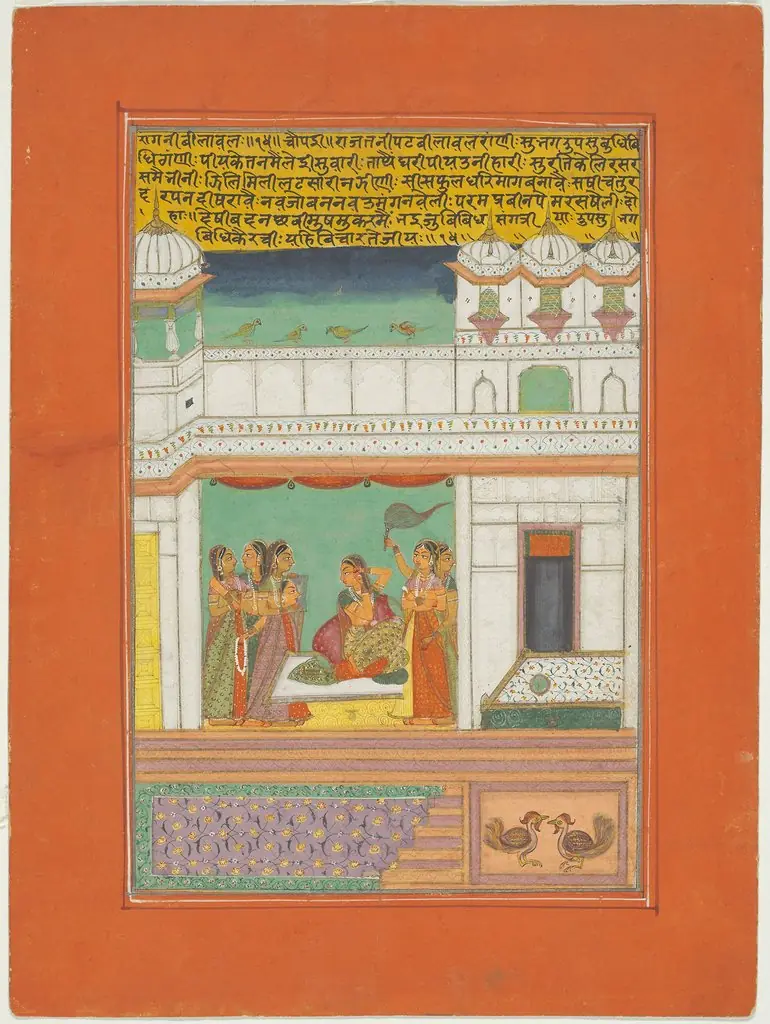 Ragini Bilaval, Page from a Jaipur Ragamala Set
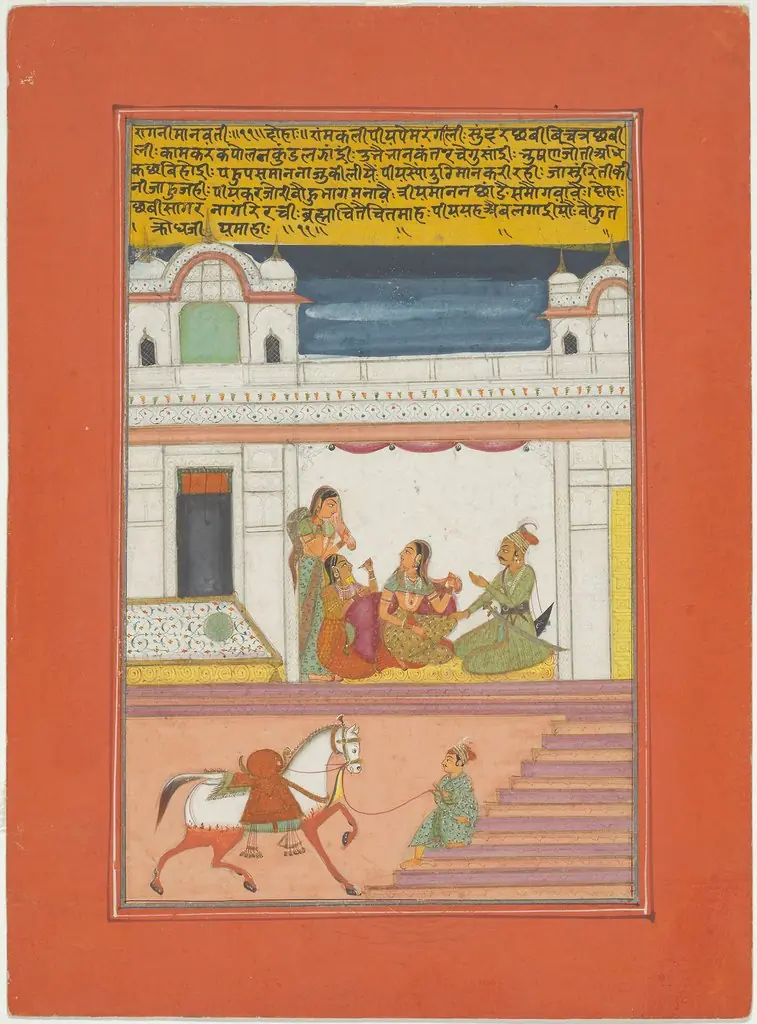 Ragini Manavati, Page from a Jaipur Ragamala Set
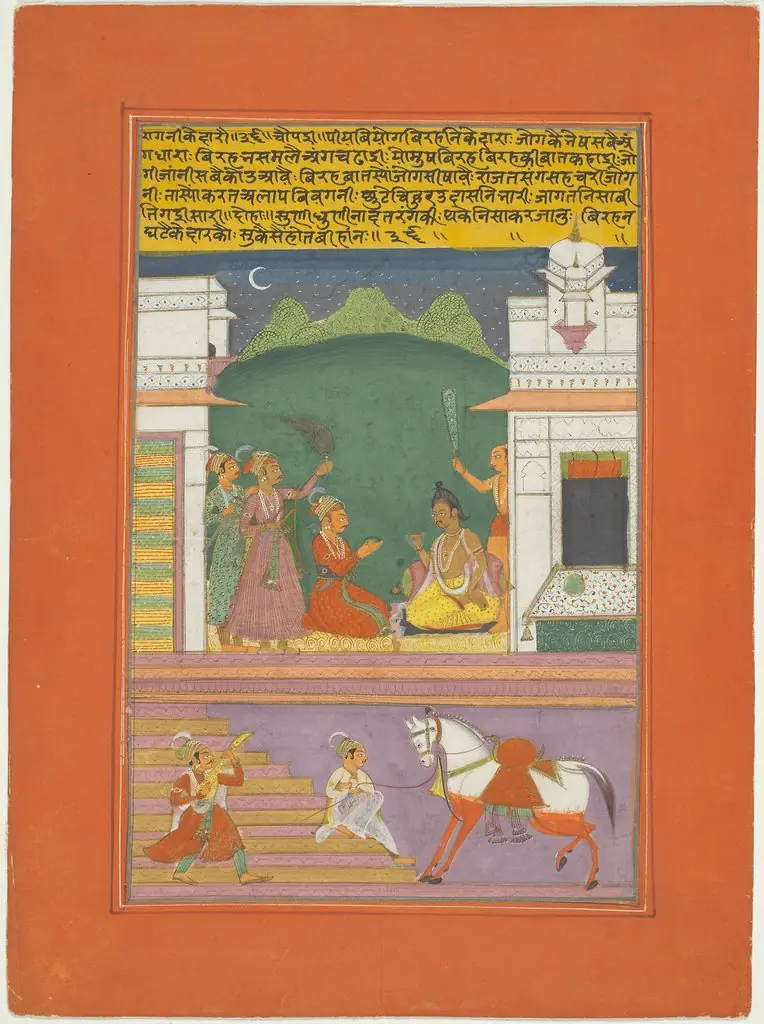 Ragini Kedara, Page from a Jaipur Ragamala Set
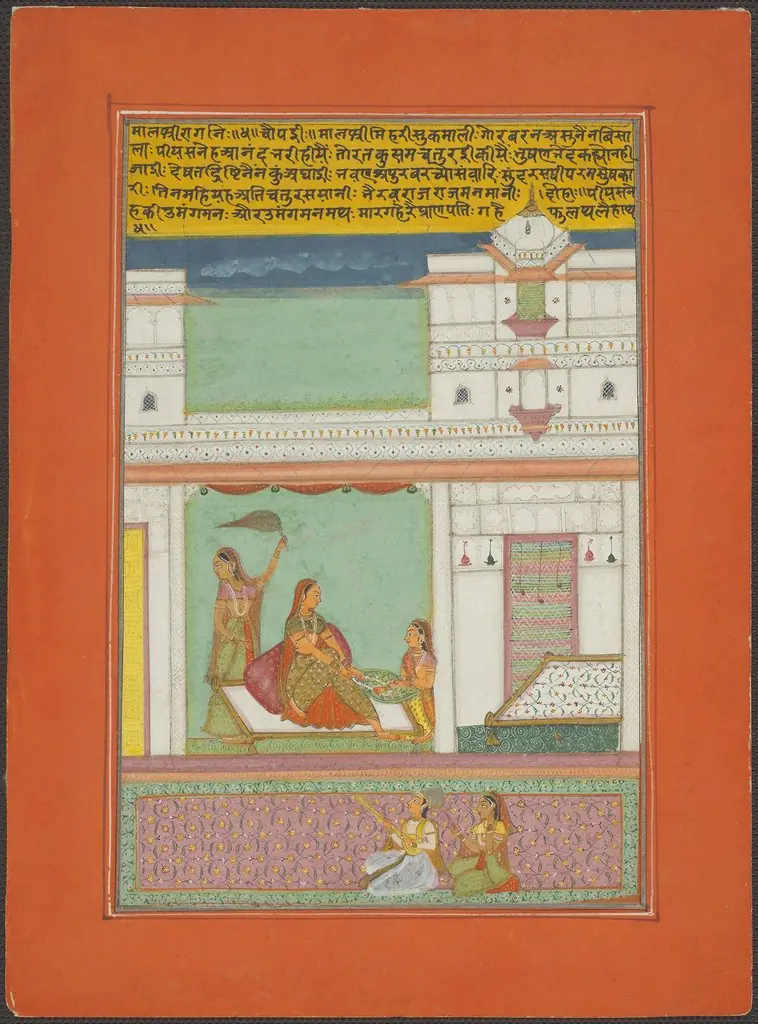 Malashri Ragini, Page from a Jaipur Ragamala Set
 Panchama Ragini, Page from a Jaipur Ragamala Set