Artwork
Woman Addressing a Peacock: Gujari Ragini of Megh, from a Ragamala
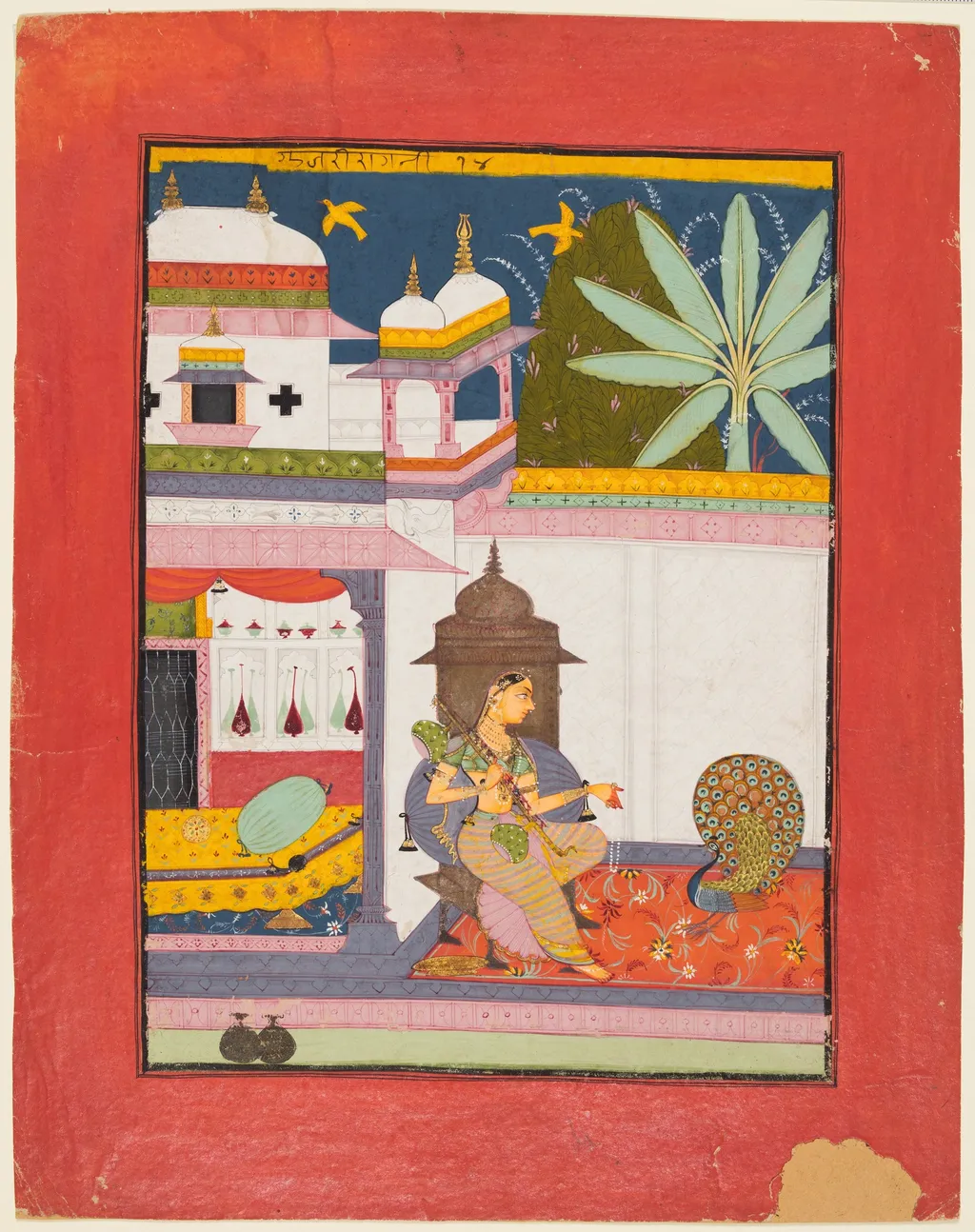
Woman Addressing a Peacock: Gujari Ragini of Megh, from a Ragamala is an unspecified painting. It dates from 1690 and is held in the collection of the Cleveland Museum of Art.
About this work
History & Provenance
The painting Woman Addressing a Peacock: Gujari Ragini of Megh, from a Ragamala is held in the collection of the Cleveland Museum of Art.
The painting is dated to 1690. It is held in the collection of the Cleveland Museum of Art, where it is identified by the accession number 2018.159. The work was created by an unknown artist. No further details regarding its commission, prior ownership, or provenance chain are provided in the available sources.
The painting Woman Addressing a Peacock: Gujari Ragini of Megh, from a Ragamala is held in the collection of the Cleveland Museum of Art. The institution assigns the work the accession number 2018.159. Created in 1690, the piece is attributed to an unknown artist within the museum's records.
Overview
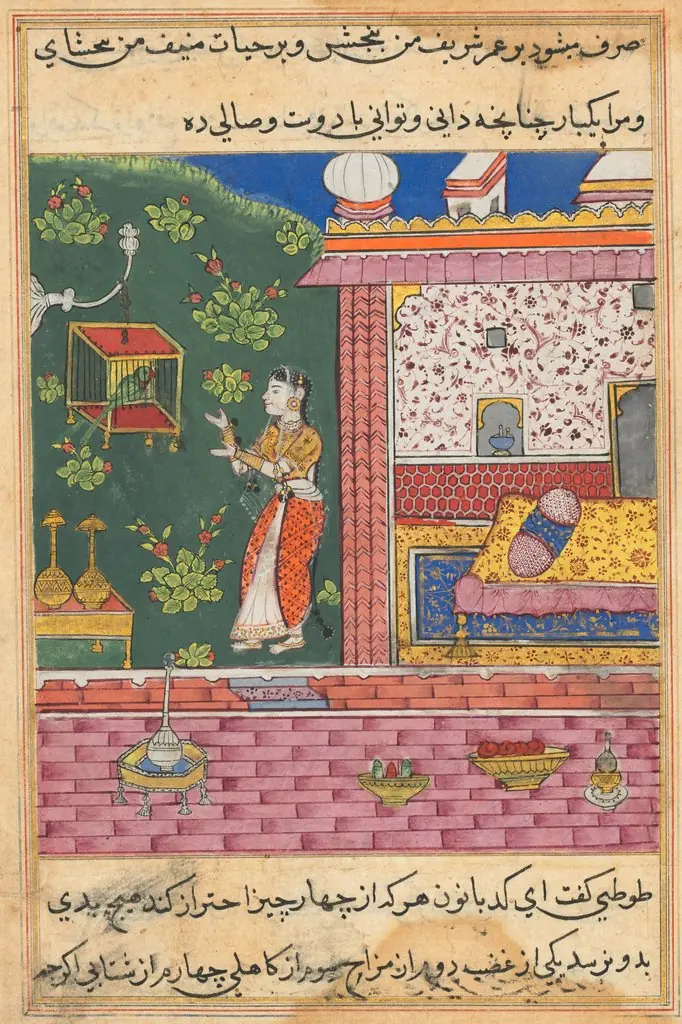
The work titled Woman Addressing a Peacock: Gujari Ragini of Megh, from a Ragamala is a painted composition that depicts a seated female figure on a balcony, gesturing toward a peacock with its plumage fully displayed. The scene is framed by architectural elements with domed roofs, a red awning, and a prominent green plant, all rendered in vivid, flat colors.
Subject & Meaning
The female figure, dressed in a blue‑pink costume and holding a fan, appears to be addressing the peacock, an animal traditionally linked to the raga Megh in Indian classical music. In ragamala iconography, such pairings symbolize the emotional tone of a musical mode, with the peacock’s flamboyant display reflecting the mood of the Gujari ragini.
Technique & Style
Executed in a decorative, two‑dimensional manner, the painting employs bold yellows, reds, and blues that emphasize surface pattern over illusionistic depth. The flat rendering of architecture and foliage, together with the stylized depiction of the peacock on a stand, aligns the work with the illustrative conventions of ragamala manuscripts, where narrative and symbolic content outweigh naturalistic representation.
Context
Ragamala paintings originated as visual guides to Indian musical modes, each sheet pairing a raga with a poetic scene. This piece belongs to the Gujari ragini series, associated with the Megh raga, and reflects the broader 16th‑ to 18th‑century tradition of integrating music, poetry, and visual art in courtly culture.
Artist & collection

- Woman Addressing a Peacock: Gujari Ragini of Megh, from a Ragamala
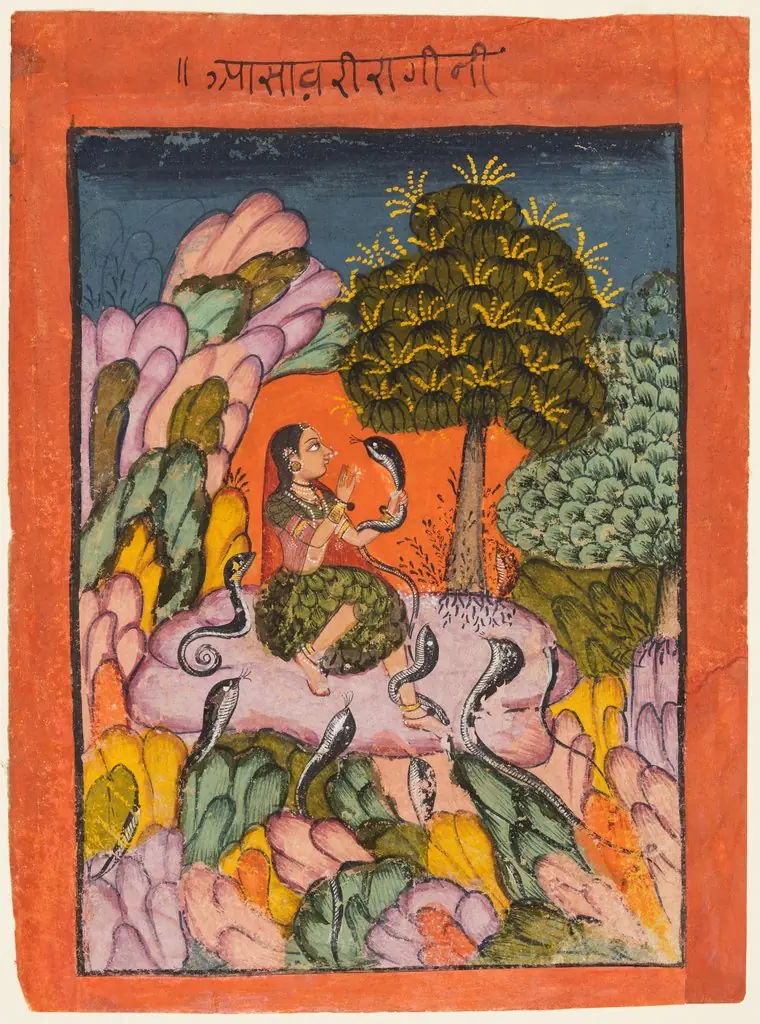 A Woman Charms Snakes in the Wilderness: Asavari Ragini, from a Ragamala
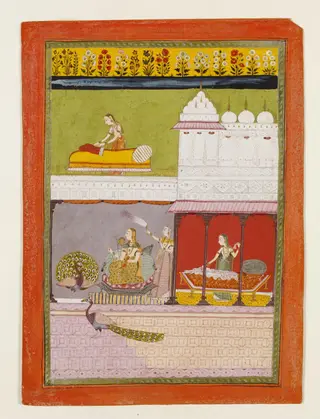 Gujari ragini
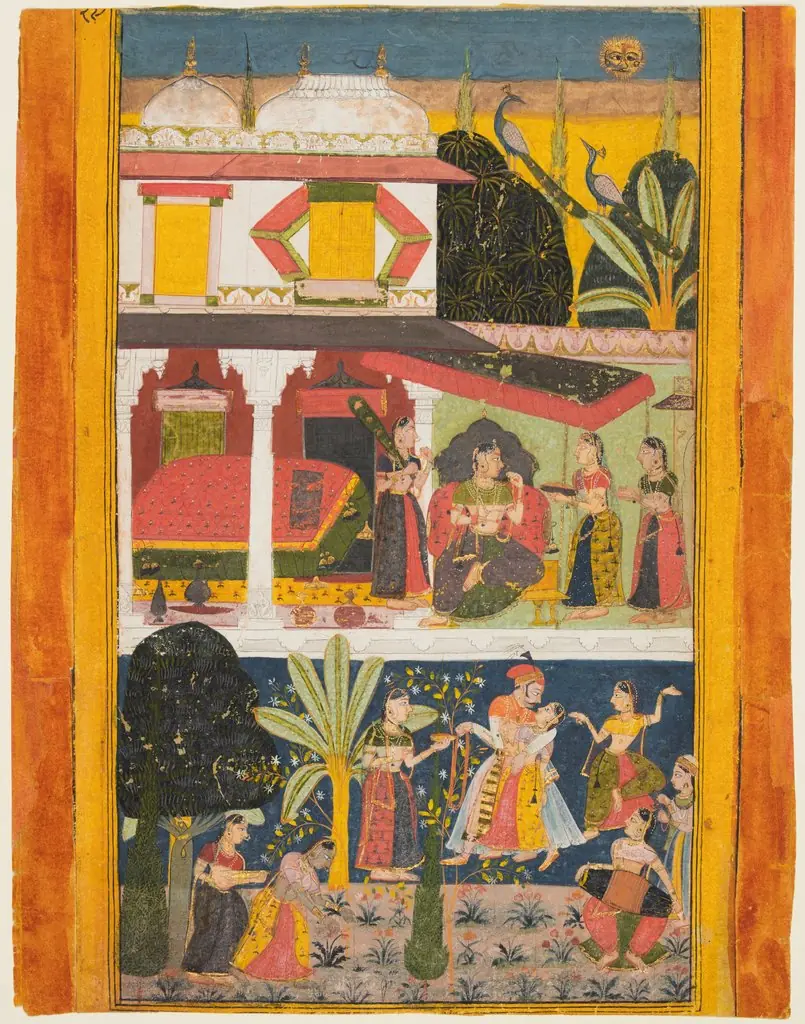 A Heroine and Her Paramour: Malavi Ragini, from a Ragamala
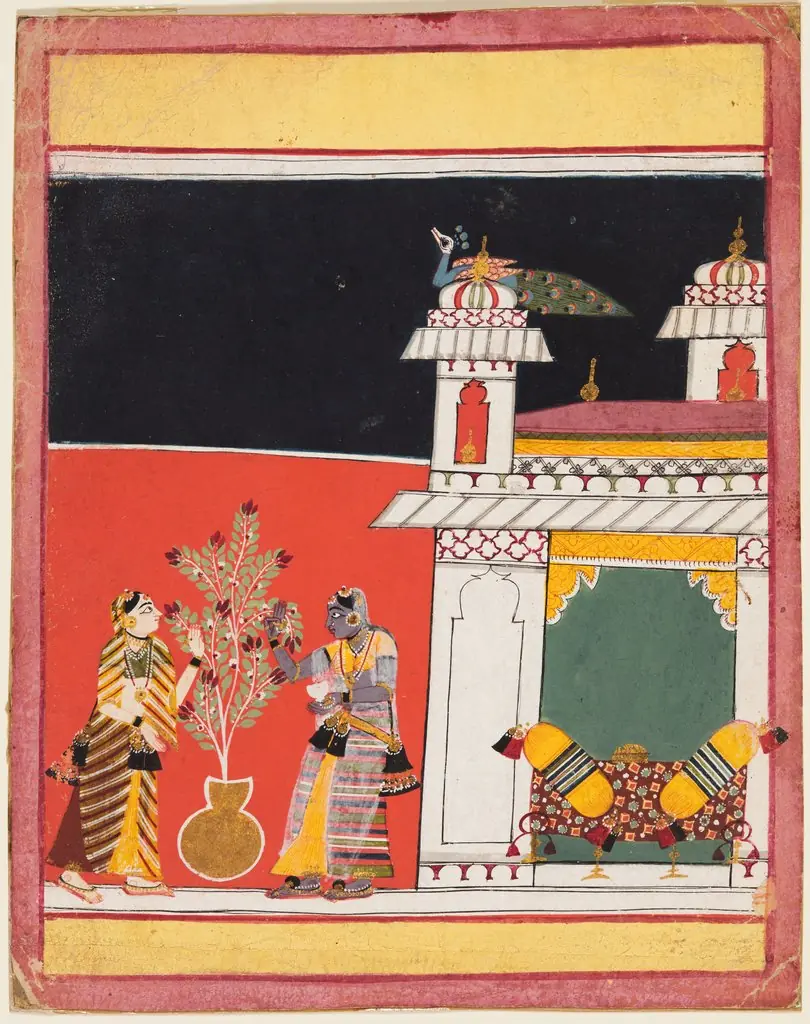 Two Women Pluck Flowers on a Terrace: Gunakali Ragini, from a Ragamala
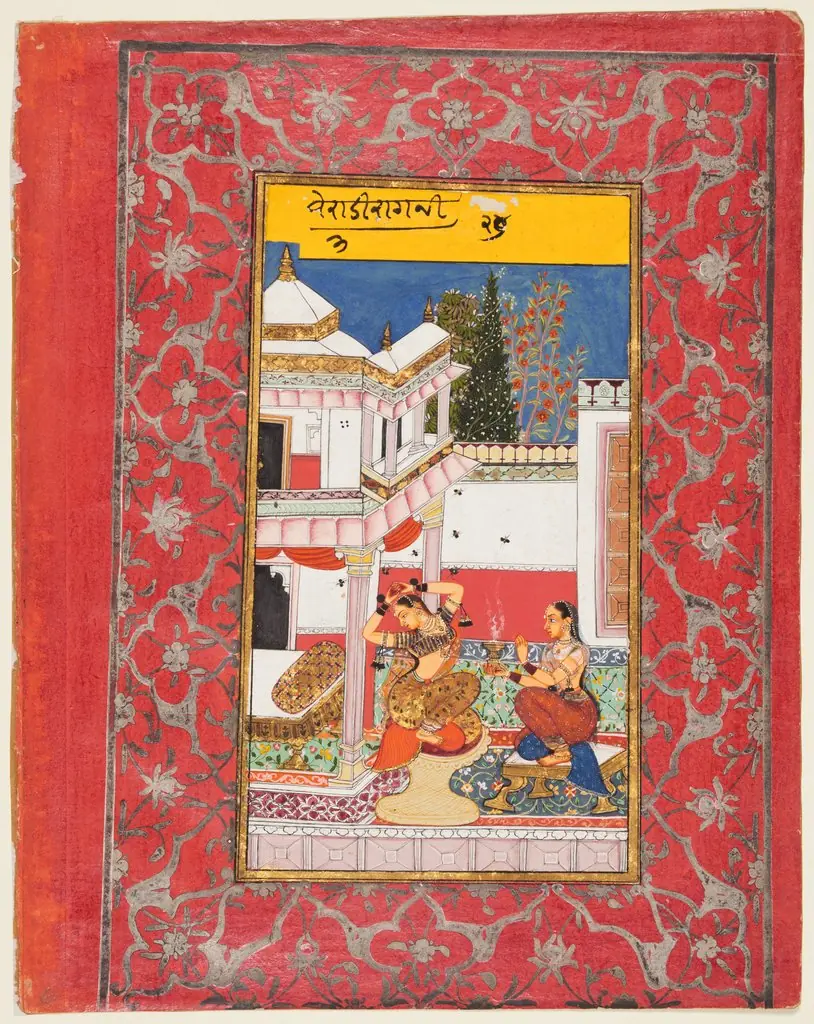 Woman Longing for Her Lover: Verati Ragini of Dipak, from a Ragamala
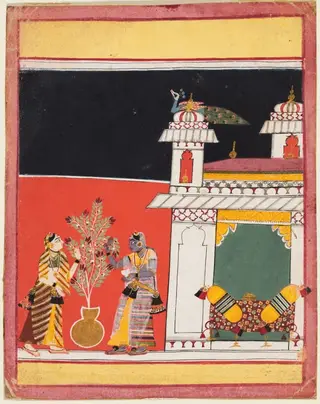 Two Women Pluck Flowers on a Terrace: Gunakali Ragini, from a Ragamala
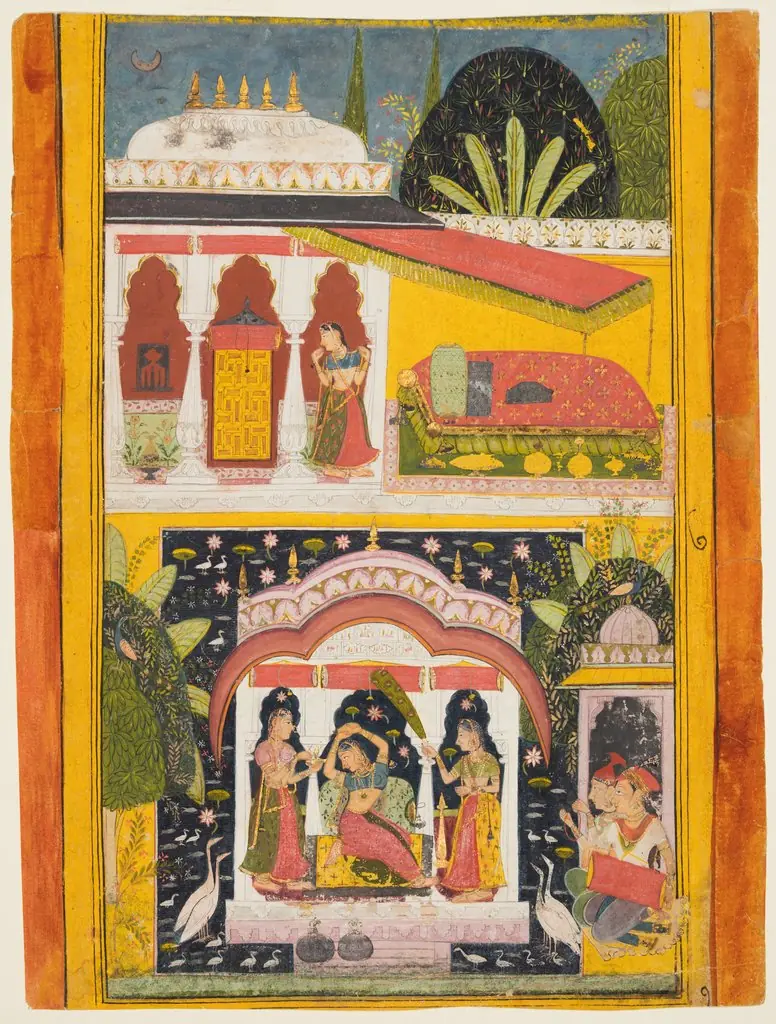 A Royal Woman in a Pavilion: Desavarari Ragini of Dipak, from a Ragamala
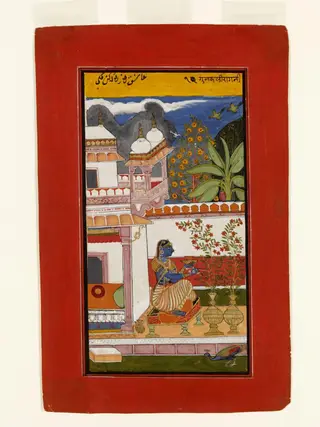 Gunakali ragini
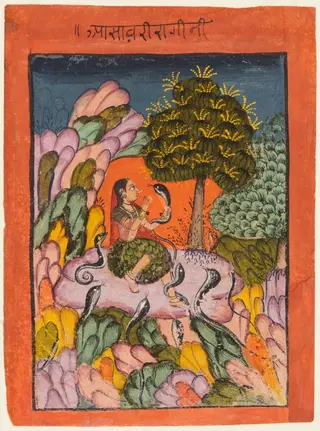 A Woman Charms Snakes in the Wilderness: Asavari Ragini, from a Ragamala
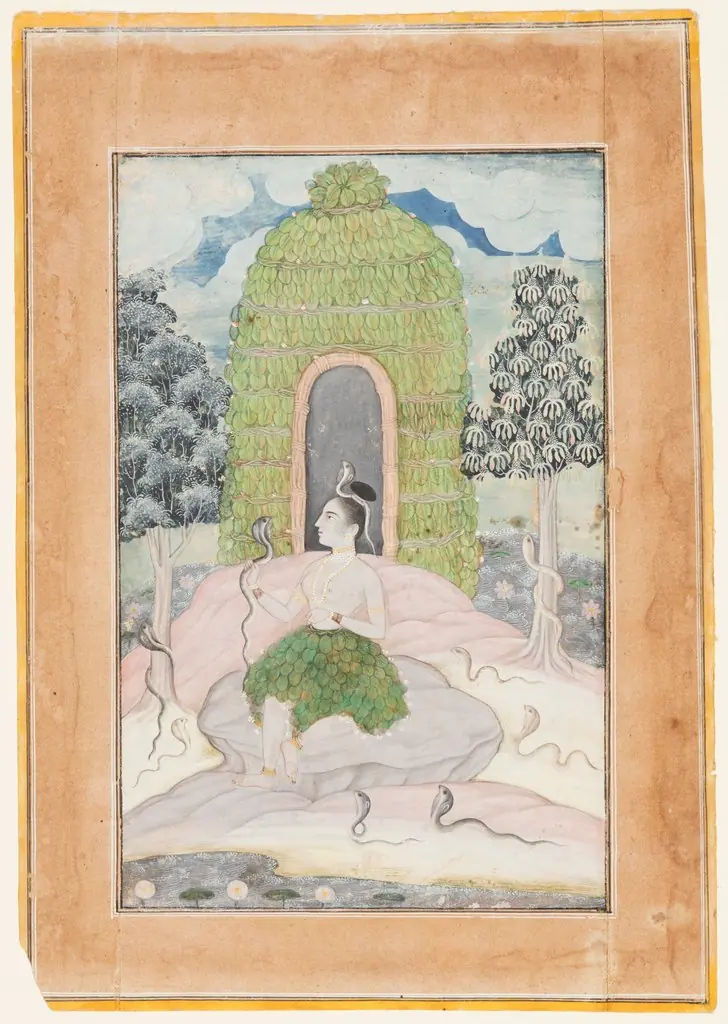 Ascetic Princess with Snakes in a Wilderness: Asavari Ragini, from a Ragamala
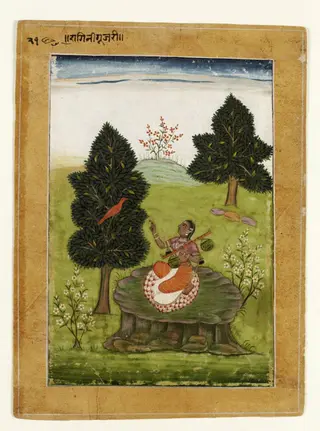 Gujari Ragini