Artwork
Untitled
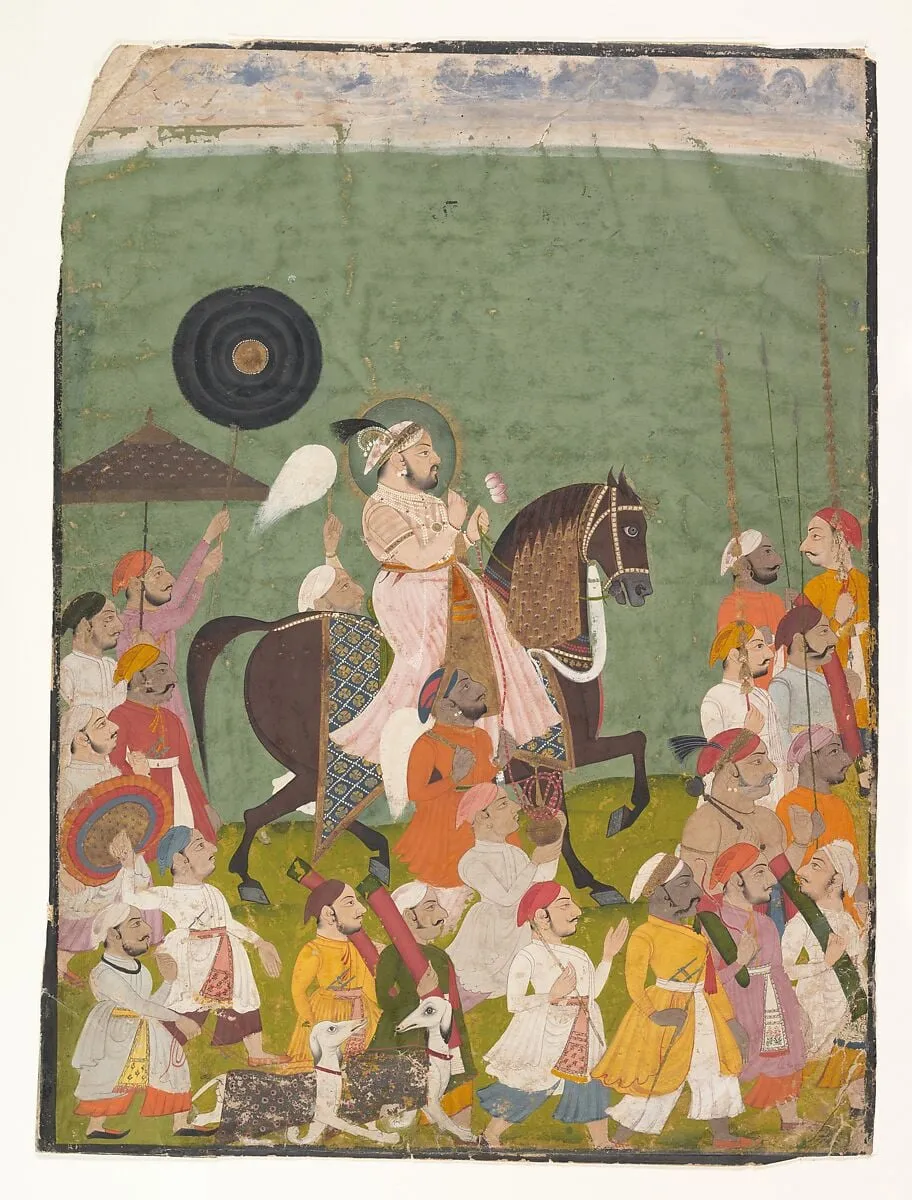
Untitled is a watercolor painting. It dates from 1745 and is held in the collection of the Metropolitan Museum of Art.
- Accession no.
- 1984.23
- Credit line
- Gift of Charles A. Hamilton, 1984
About this work
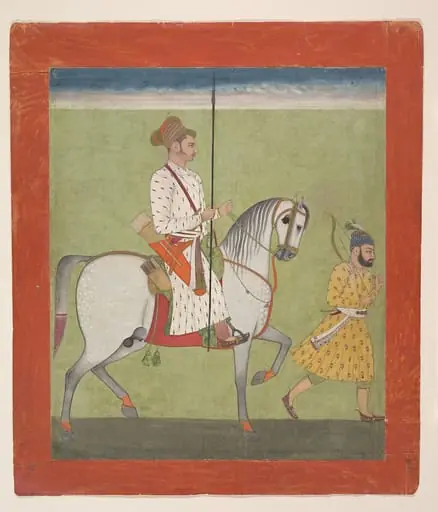
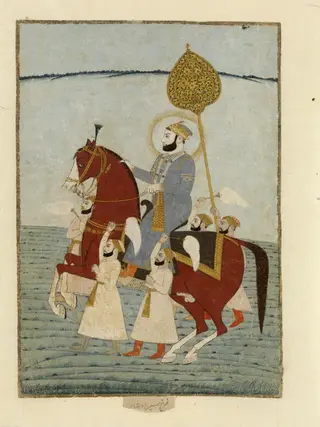
A line of men on horseback moves across a flat, pale landscape, dogs trotting alongside. Painted in Rajasthan around 1745 in ink and watercolor, the layered color giving the horses' coats a glow. The faces are simple, but the muscled horses and the dogs' energy feel alive.
Subject & Meaning
The composition depicts an outdoor processional parade in which a man rides a horse, accompanied by a dog.
The composition depicts an outdoor processional parade in which a man rides a horse, accompanied by a dog. The combination of equestrianism, a processional parade, and an accompanying dog identifies the work as a genre scene rather than a devotional or portrait subject. Equestestrian processions of this type were a common visual subject in eighteenth-century Indian painting, often serving as records of courtly or civic ceremonial life rather than carrying overt symbolic or allegorical meaning.
The presence of the dog alongside the rider suggests an everyday, observational quality, situating the image within the tradition of documentary genre painting produced in India in 1745.
Technique & Style
The work is executed in ink and opaque watercolor on paper, a medium typical of Indian miniature practice. The support is a sheet of paper measuring approximately 39.2 cm high by 29.2 cm wide. As a genre scene, it depicts a processional parade featuring a dog, a horse, a man and equestrian elements, rendered with fine linear detail and flat areas of color characteristic of mid‑18th‑century Indian painting.
The technique combines precise ink drawing with layered opaque washes to define figures and space, while the overall composition emphasizes narrative clarity and decorative balance.
History & Provenance
The work titled Untitled is an ink and opaque watercolor on paper painting dated 1745, created in India by an anonymous artist. It portrays a dog, horse, man and a processional parade with equestrian themes. The painting is classified as a genre scene and is part of the Metropolitan Museum of Art’s collection, though detailed acquisition records are not publicly available.
No commissioning patron has been identified, and the artist remains unidentified. The documented provenance consists solely of its current ownership by the Met, with no earlier ownership chain recorded.
Overview
This untitled painting, rendered in ink and opaque watercolor on paper, depicts a procession of men on horseback accompanied by dogs. The figures traverse a subdued, flat landscape, creating a sense of movement across the composition. Such works were commonly produced in Rajasthan, India, often commissioned by local rulers to document or celebrate various activities like hunts or ceremonial parades. The piece exemplifies the regional artistic tradition of depicting dynamic scenes with vibrant detail.
Context
Originating from Rajasthan, India, this painting belongs to a tradition where local rulers frequently commissioned artworks on paper. These commissions often depicted scenes of courtly life, including hunting expeditions or ceremonial processions, serving both as records and as expressions of royal power and leisure. The practice was widespread, reflecting the cultural importance of visual storytelling and the patronage of the arts within the region.
Artist & collection

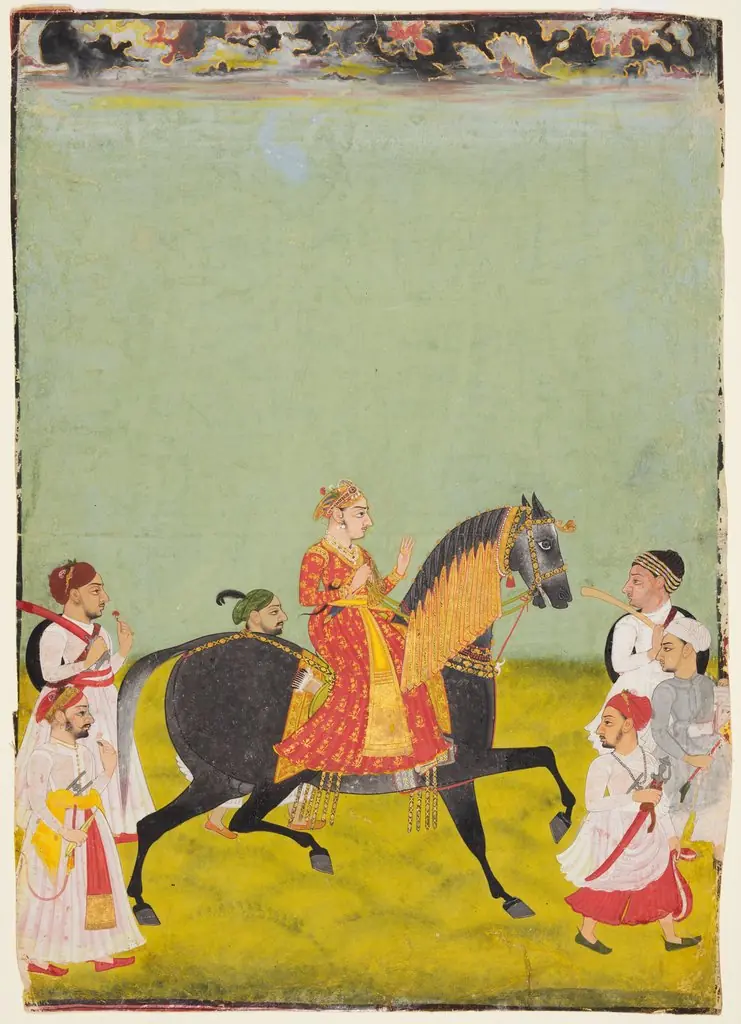
- Equestrian Portrait of Maharana Raj Singh II of Mewar (r. 1755–62)
 Shah Jahan and three sons
 Maharaja Ram Singh
 Untitled
 Portrait of Jiva Raja
 Sikh Gentleman Riding with Retainers
 Thakur Kusal Singhji Champawat
 Amir Khan
 Maharaja Sawai Jai Singh
 Untitled
 Equestrian Portrait of Maharana Raj Singh II of Mewar (r. 1755–62)
 Emperor Farrukhsiyar