Artwork
Untitled
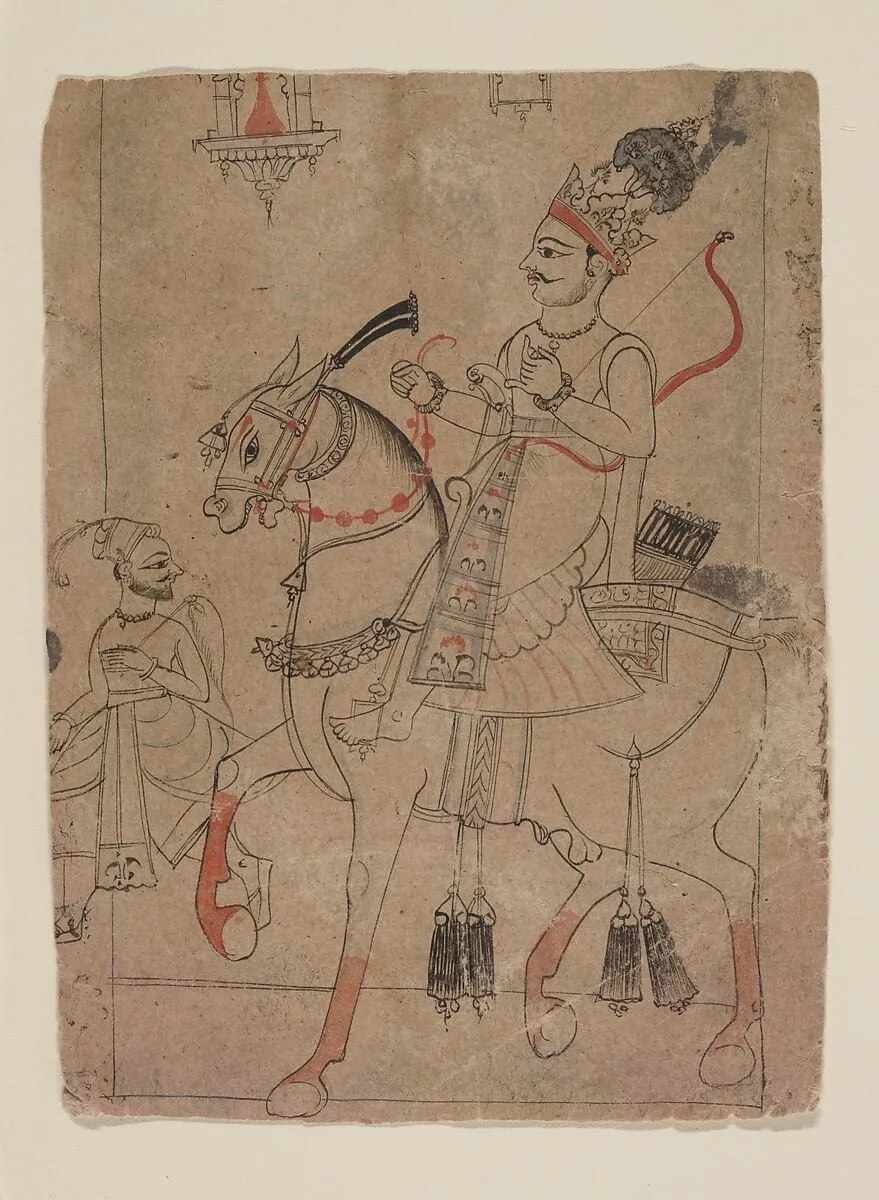
Untitled is a watercolor painting. It dates from 1753 and is held in the collection of the Metropolitan Museum of Art.
About this work
Subject & Meaning
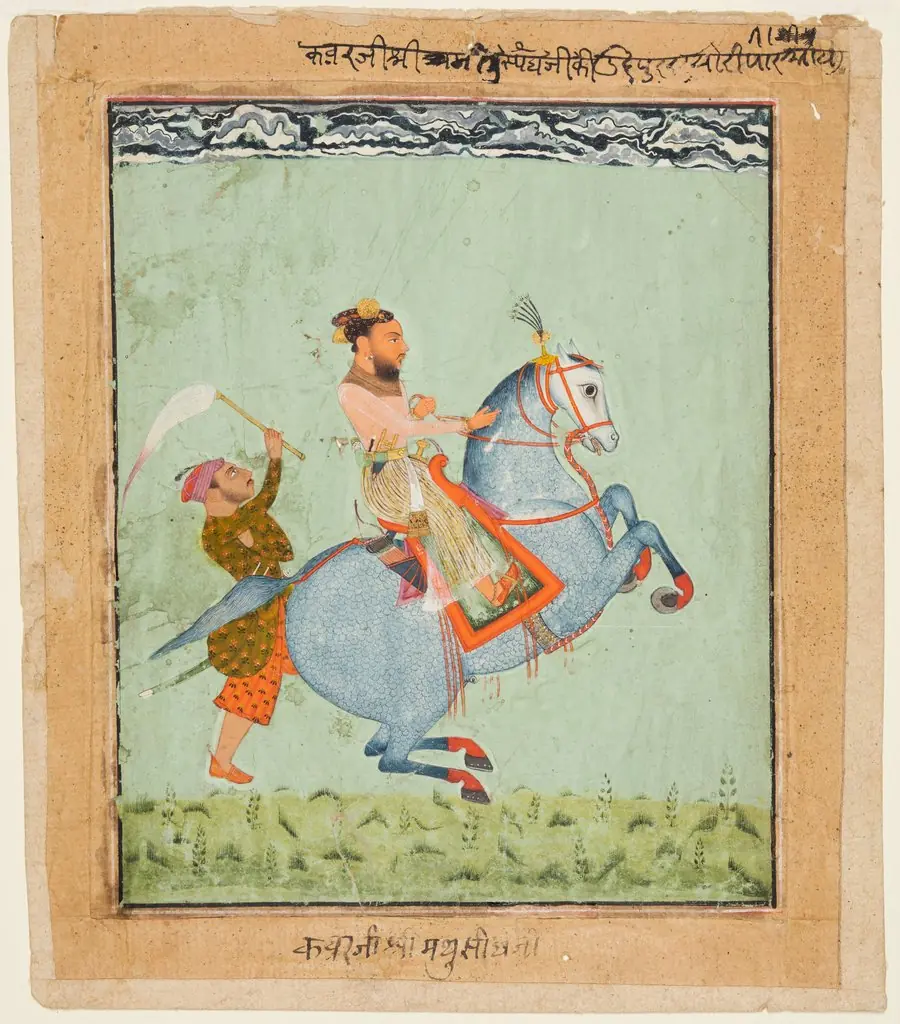
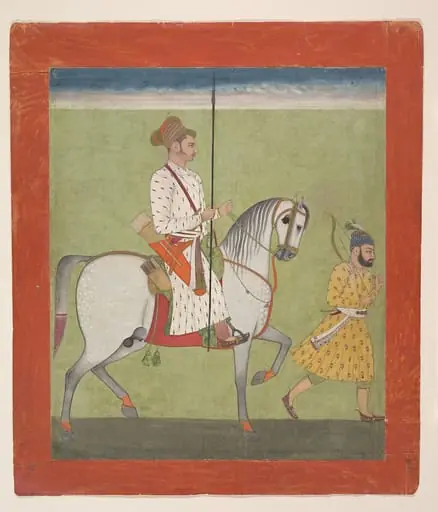
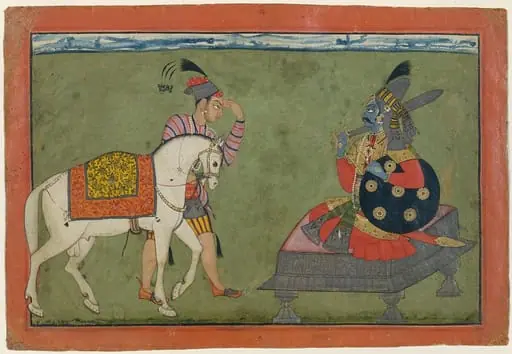
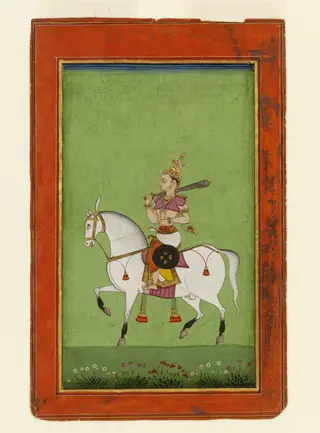
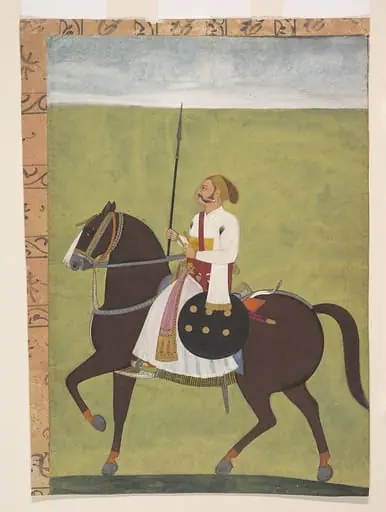
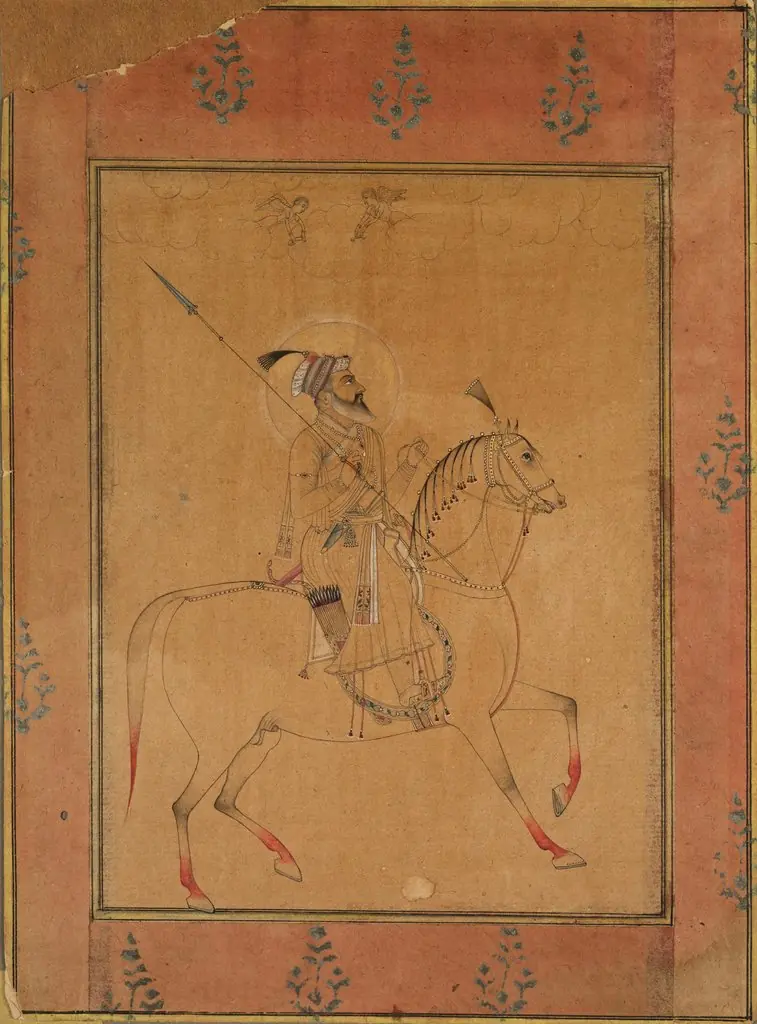
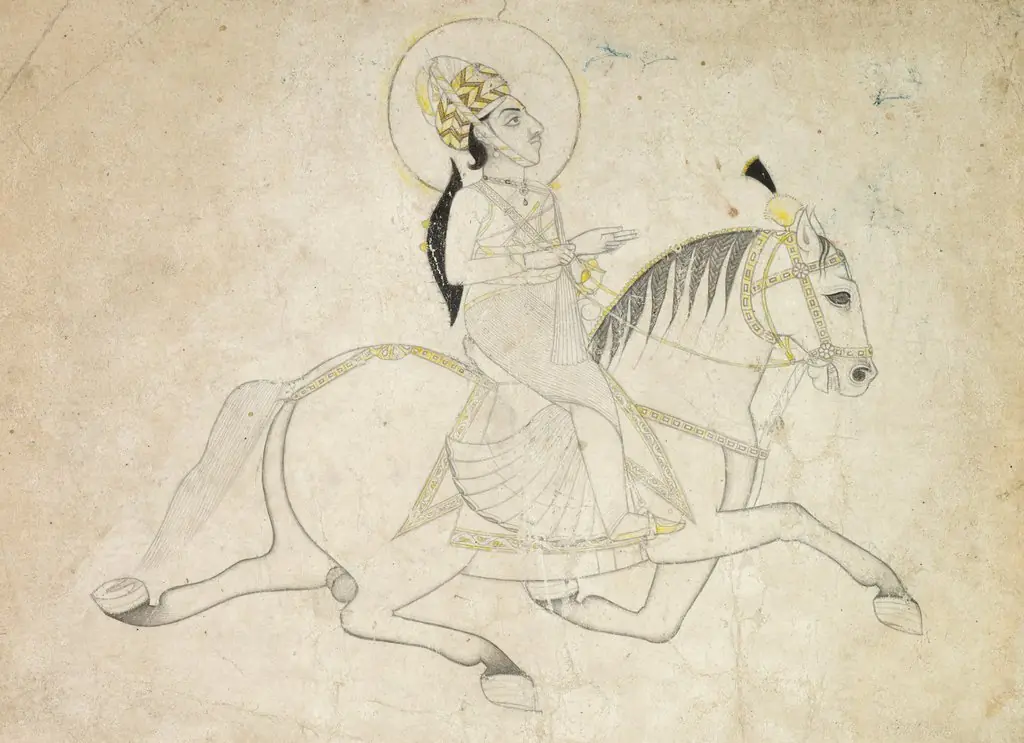
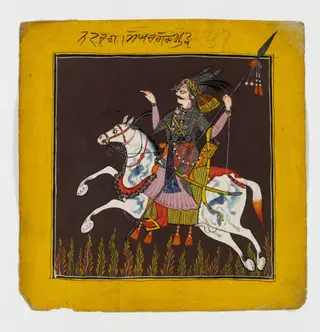
Classified as a history painting and dated 1753, this ink and opaque watercolor work on paper depicts an equestrian scene featuring a man mounted on a horse and wielding a bow and arrow. The combination of mounted warrior and archery equipment situates the imagery within the martial traditions of Rajasthani court painting, where such figures commonly represent noble horsemen or hunting scenes associated with Rajput valor. The small-scale format and subject matter are consistent with illustrated manuscripts or single-page studies produced in Rajasthan during the mid-eighteenth century, conveying themes of martial prowess and aristocratic identity.
Technique & Style
Created in 1753 in Rajasthan, this anonymous work is executed in ink and opaque watercolor on paper, a traditional medium for South Asian manuscripts and miniatures. The support is a flat sheet of paper, measuring 15.2 cm in height and 11.4 cm in width. The handling of the opaque watercolor allows for solid, flat areas of color typical of the region's painting traditions, while the ink likely defines the contours and details of the figures.
Stylistically, the composition focuses on an equestrian scene, depicting a man on horseback holding a bow and arrow, characteristic of history painting genres from this period and location. The formal qualities reflect the specific aesthetic conventions of 18th-century Rajput art, prioritizing narrative clarity and stylized representation over naturalistic perspective.
History & Provenance
The work titled Untitled was created in 1753 in Rajasthan by an anonymous painter, as documented in its internal catalog and corroborated by its Wikidata entry.
The work titled Untitled was created in 1753 in Rajasthan by an anonymous painter, as documented in its internal catalog and corroborated by its Wikidata entry. Executed in ink and opaque watercolor on paper, it belongs to the history_painting genre and portrays a bow and arrow, a horse, and equestrian themes. The painting entered the collection of the Metropolitan Museum of Art, where it remains on display, with its accession recorded as part of the museum's holdings.
No commissioning patron is identified in the available records, and the attribution remains unknown, reflecting the work's status as an anonymous piece of 18th‑century Indian art.
The work is held by the Metropolitan Museum of Art, New York, inventoried as 1992.180. Accession records indicate it entered the collection in 1992. The painting was exhibited at the Metropolitan Museum of Art in 2018 as part of the display "Peacock in the Desert: The Royal Arts of Jodhpur, India."
Legacy
The work, dated 1753 and produced in Rajasthan, is classified as a history painting and is held in the Metropolitan Museum of Art, a status that reflects its recognized importance in the study of 18th‑century Indian art. Its imagery of a mounted archer with a bow and arrow exemplifies equestrian motifs that have been examined in analyses of martial symbolism within the region’s miniature traditions. As part of a major museum’s collection, the painting contributes to ongoing scholarly discussion of anonymous workshop practices and the diffusion of martial iconography across South Asian artistic centers.
Overview
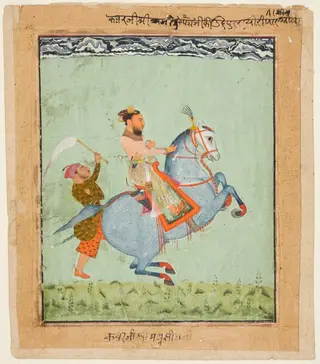
This untitled painting, rendered in ink and opaque watercolor on paper, originates from Rajasthan, India. It depicts a dynamic scene where a man on a rearing white horse aims a bow and arrow at a bird in flight. The rider's attire, including his turban and garments, features vibrant reds and blues, contrasting with the horse's white coat. This small-scale work exemplifies the detailed miniature tradition of the region.
Artist & collection