Artwork
Untitled
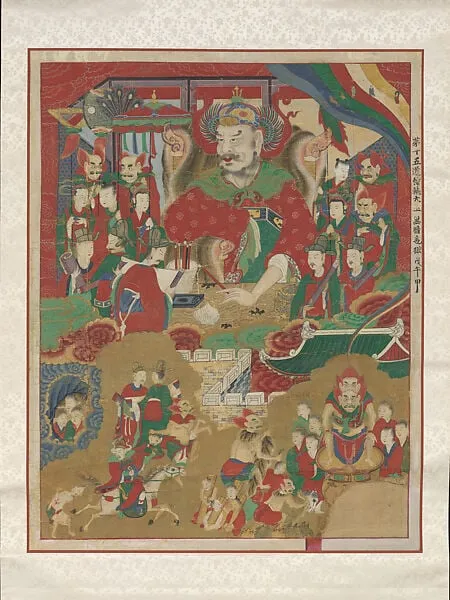
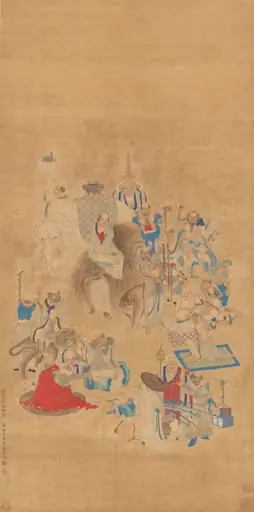
Untitled is an ink painting. It dates from 1798 and is held in the collection of the Metropolitan Museum of Art.
About this work
Technique & Style
The medium of ink and pigment on silk allows for the specific rendering of these figures within the vertical format of the scroll.
Created in 1798, this untitled work is executed as a hanging scroll utilizing ink and color applied to a silk support. As a history painting attributed to an anonymous artist, the piece employs traditional materials characteristic of the genre to depict a king, a man, and a horse. The medium of ink and pigment on silk allows for the specific rendering of these figures within the vertical format of the scroll.
The artwork is currently held in the collection of the Metropolitan Museum of Art, where it remains classified as a painting. The handling of the materials reflects the stylistic conventions of late 18th-century history painting, focusing on narrative representation through the chosen medium and support.
History & Provenance
The artwork titled Untitled is a hanging scroll executed in ink and color on silk, created in 1798. Attributed to an anonymous painter, the piece falls within the genre of history painting and depicts a king, a man, and a horse. While the specific commission details and the identity of the original patron remain unrecorded in the available documentation, the work's creation is firmly dated to the year 1798.
The current provenance chain leads to the Metropolitan Museum of Art, where the painting is part of the permanent collection. The museum holds the work as a significant example of anonymous historical portraiture from the late eighteenth century, preserving the visual record of the figures and the equestrian subject matter portrayed within the silk medium.
Context
Scholarship on the 1798 hanging scroll Untitled identifies it as an anonymous work within the history‑painting genre, reflecting Qing‑era practices of collective authorship and narrative composition. The painting, executed in ink and color on silk, depicts a horse, a king and a man, motifs that have been linked to contemporary courtly symbolism. Its classification as a painting in the Metropolitan Museum of Art’s collection underscores its importance as a rare example of late‑18th‑century Chinese scroll art preserved outside East Asia.
Critical discussion highlights the work’s ambiguous authorship and its role in illustrating the transmission of courtly imagery through private patronage.
Overview
This untitled painting, rendered in ink and color on silk, depicts a dynamic equestrian scene. Presented as a hanging scroll, the artwork features two figures on horseback, distinguished by their robes, one red and one blue. The composition captures a moment of vigorous movement, suggesting a journey or a hunt, characteristic of historical Korean painting traditions.
Subject & Meaning
The central figure, clad in vibrant red robes, is identified as a king from Korea’s Joseon dynasty. His presence on horseback, alongside another rider in blue, suggests a narrative of royal procession, military engagement, or perhaps a leisure activity like hunting. Such depictions often served to glorify the monarch or to record significant historical events during the period.
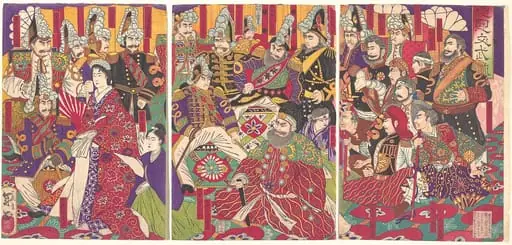
Artist & collection

- Untitled
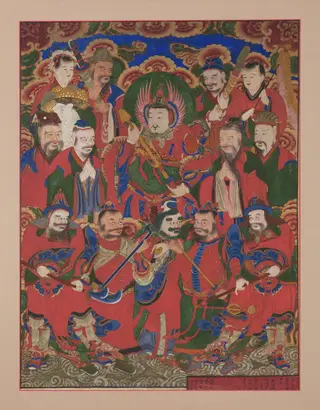 The Heavenly Dragon General with Attendants
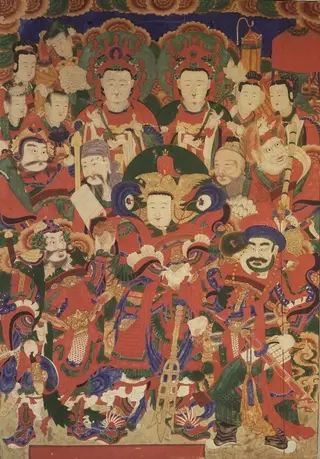 The Five Guardian Generals (O Bang Jang Kun)
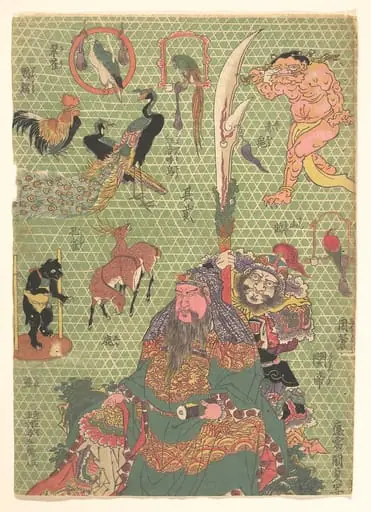 歌川国貞画 「籠細工 浪花細工人 一田庄七郎」|Basketry Work: By the Craftsman Ichida Shōshichirō of Naniwa (Kagozaiku Naniwa saikunin Ichida Shōshichirō)
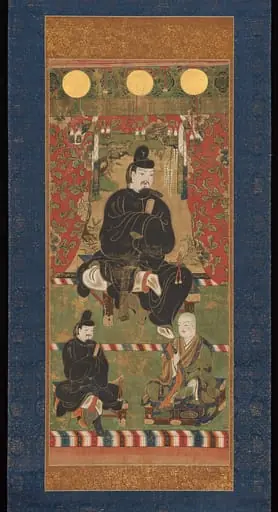 藤原鎌足像|Fujiwara no Kamatari as a Shinto Deity
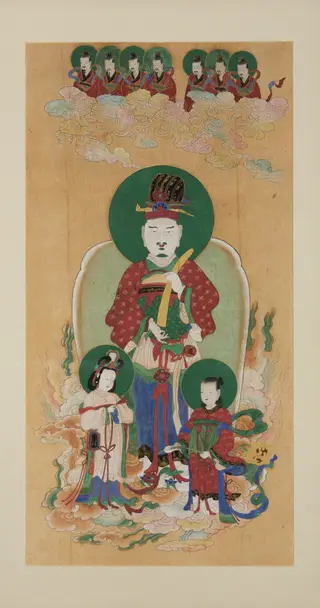 Daoist Official of Heaven with Seven Stars and Jade Maidens
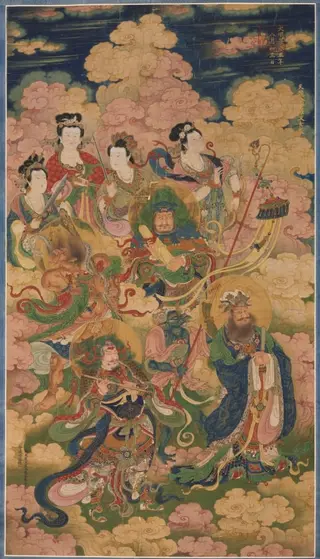 The Eight Hosts of Deva, Naga, and Yakshi
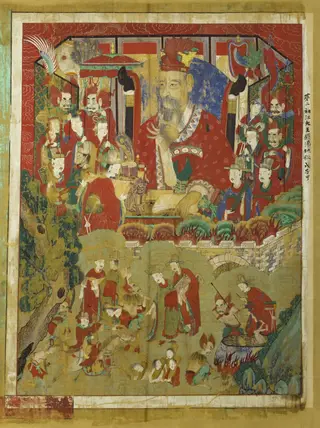 Six of the Ten Kings of Hell
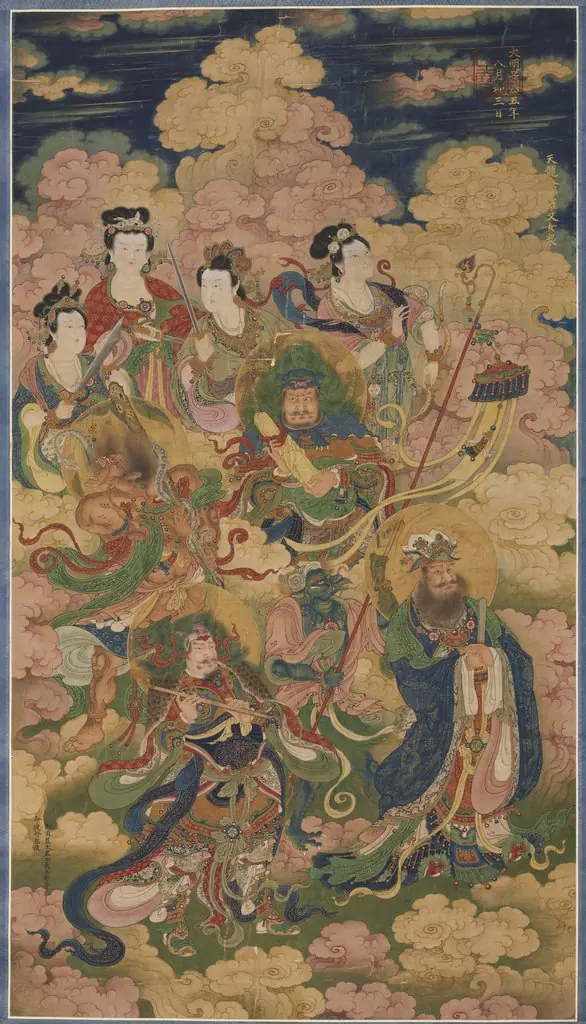 The Eight Hosts of Deva, Naga, and Yakshi
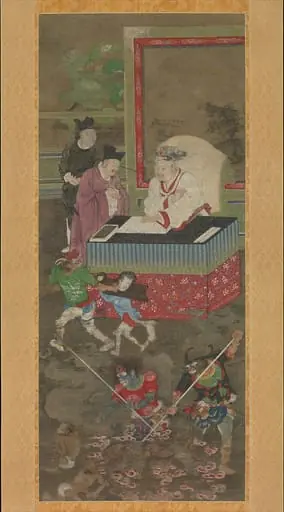 南宋 金處士 十王圖 軸|Ten Kings of Hell
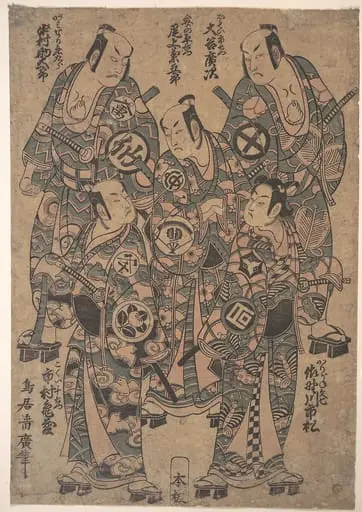 Untitled
 Bathing of the Buddha Festival