Artwork
南宋 金處士 十王圖 軸|Ten Kings of Hell
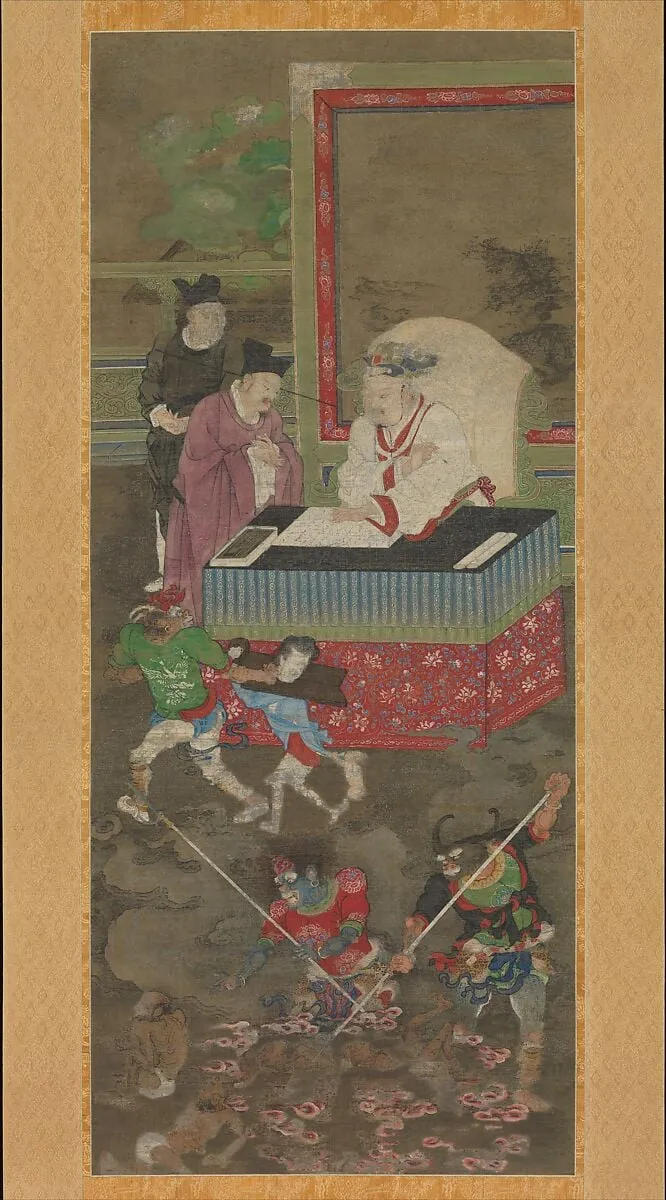
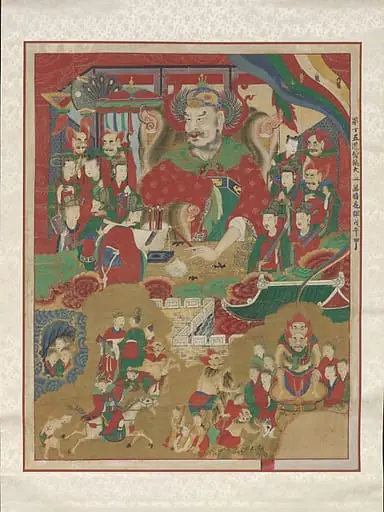
南宋 金處士 十王圖 軸|Ten Kings of Hell is an ink painting by the Song dynasty painting artist Jin Chushi. It dates from 1195 and is held in the collection of the Metropolitan Museum of Art.
- Accession no.
- 30.76.291
- Credit line
- Rogers Fund, 1930
About this work
Subject & Meaning
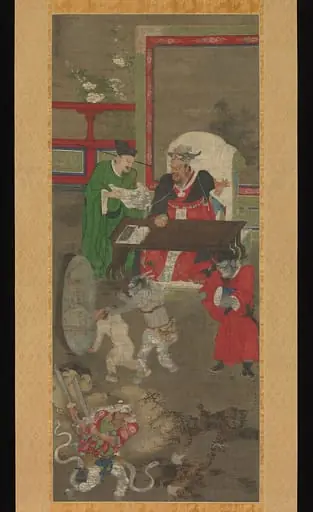
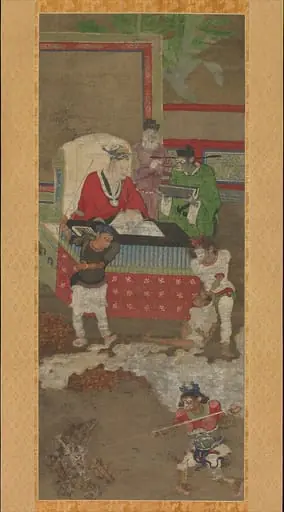
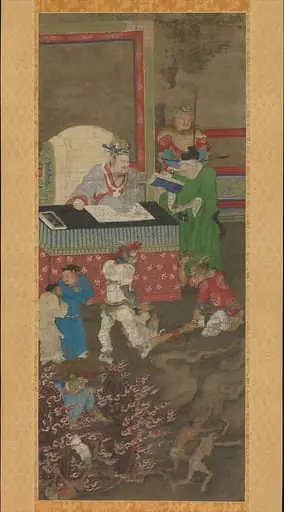
Demonic attendants and tormented souls populate the scenes, symbolizing the various tortures meted out for sins such as greed, violence, and deceit.
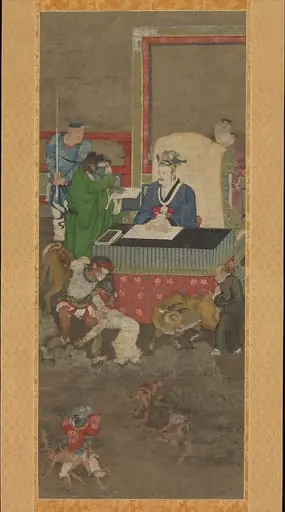
The scroll illustrates the Ten Kings of Hell, a Buddhist judicial hierarchy that governs the after‑life realms of punishment and rebirth. Each king, depicted as a regal figure enthroned amidst fiery landscapes, oversees a specific court where souls are judged for their karmic deeds. Demonic attendants and tormented souls populate the scenes, symbolizing the various tortures meted out for sins such as greed, violence, and deceit.
The work thus serves as a visual didactic tool, reinforcing moral teachings by vividly portraying the consequences of ethical transgressions within the Buddhist cosmology of hell.
Technique & Style
Created in 1180 by Jin Chushi, this work is one of five surviving hanging scrolls from an original set of ten depicting the Ten Kings of Hell. Executed on silk, the artist employed ink and color to render the religious iconography. The medium and support are consistent with Southern Song dynasty painting practices, utilizing the absorbency of silk to achieve detailed linework and tonal variation.
As part of a larger narrative sequence, the formal style integrates Buddhist themes with depictions of kings, men, and demons associated with the underworld. The Metropolitan Museum of Art holds this specific scroll, which serves as a key example of Jin Chushi's contribution to religious art of the period.
Context
The Ten Kings of Hell scroll, executed by Jin Chushi in 1180, exemplifies Southern Song religious painting through its integration of Buddhist cosmology with vivid narrative illustration. As one of ten hanging scrolls, the work combines ink and polychrome on silk to dramatize the judicial authority of infernal monarchs, reflecting contemporary monastic concerns about moral accountability. Its iconography, documented in both scholarly catalogues and the Metropolitan Museum of Art’s collection records, links the depicted demons and kings to broader East Asian conceptions of karmic retribution.
Positioned within Jin Chushi’s oeuvre, the piece contributes to the development of narrative scroll painting that merged devotional subject matter with sophisticated compositional strategies, marking a pivotal phase in the secularization of Buddhist imagery during the late twelfth century.
Overview
Created in 1195 by the Southern Song artist Jin Chushi, Ten Kings of Hell is a hanging scroll executed in ink and color on silk. This work constitutes one of five surviving scrolls from an original set of ten, each depicting a specific judge of the underworld in Chinese Buddhist eschatology. The composition features a central figure, one of the Ten Kings, seated at a desk wearing a tall hat and long robes, presiding over the judgment of souls.
The scene is populated by grotesque demons with wild hair and claws, alongside terrified human figures undergoing various forms of post-mortem punishment. The visual narrative illustrates the Buddhist belief that the deceased face judgment in ten stages, with each king overseeing a specific period and aspect of the afterlife. The depiction of graphic torments, such as the sawing of a condemned soul, serves as a didactic warning against moral transgression.
As a product of the Southern Song dynasty, the scroll reflects the period's sophisticated religious painting traditions and the integration of Buddhist cosmology into visual culture. The work remains a significant example of Chinese hell scrolls, demonstrating the artist's skill in rendering complex narrative scenes and expressive figures within a rigid hierarchical structure.
Artist & collection

Artist
Jin Chushi was a Chinese Buddhist painter active at the port city of Ningbo (Mingzhou) during the Southern Song dynasty in the thirteenth century.